How to Choose the Right Kitchen Apron for Everyday Home Cooking
The complete guide for home cooks, busy moms, and everyday chefs — from material to fit to fade-proof washing.
How do you choose the right kitchen apron?
To choose the right kitchen apron, focus on these 6 key steps:
- Choose your material — cotton canvas for durability, coated polyester for waterproofing
- Pick the right style — bib (full) apron for maximum coverage every day
- Check the length — 34–40 inches covers chest to just above the knee
- Look for 2–4 deep pockets at waist level for tools and towels
- Confirm machine-washable, colorfast fabric so colors don’t fade
- Test adjustability — adjustable neck strap and long waist ties fit all body types
🧾 Kitchen Apron Feature Checklist at a Glance
Before we dive into each topic, here is a quick reference table. Furthermore, you can use this checklist every time you shop for a new apron. As a result, you will always make the smartest choice.
| Feature | What to Look For | Why It Matters for Home Use |
|---|---|---|
| Material | Heavy cotton, canvas, denim, or coated polyester | Balances comfort, durability, and stain/water resistance |
| Length | 34–40 inches chest-to-hem for a full apron | Protects from chest to just above the knee without limiting movement |
| Pockets | 2–4 deep pockets at waist level | Enough storage without adding uncomfortable bulk |
| Stitching & Reinforcement | Double stitching, reinforced corners, bar tacking | Extends lifespan and prevents tearing at high-stress points |
| Washability & Colorfastness | Machine washable, colorfast reactive dyes | Withstands frequent washing without fading or shrinking |
| Waterproof / Stain Resistance | Coated or treated surface finish | Stops liquids from soaking through during busy cooking sessions |
| Comfort & Fit | Adjustable neck + waist straps, cross-back option | Reduces neck strain and keeps the apron stable all day long |
| Eco-Friendly Option | Organic cotton, recycled fabric, OEKO-TEX certified | Better for the environment and safe for everyday skin contact |
1. Why a Good Kitchen Apron Matters for Home Cooks
First of all, a kitchen apron is not just about keeping your clothes clean. In fact, it is a piece of kitchen gear that directly affects how comfortable, safe, and confident you feel when you cook. Because more people are cooking at home than ever before, the demand for high-quality aprons is growing fast.
According to market research, the global cooking apron market is expanding at around 5–6.5% CAGR. Furthermore, household use already makes up about 65% of total apron market value. This means that home cooks — not restaurants — are the main force driving the industry forward.
“More families are investing in better kitchen tools, and the apron is no exception. A quality apron protects your clothes, keeps you safer near heat and splashes, and makes cooking feel more enjoyable.” — Favor Houseware Product Team
Additionally, a well-made apron can save you money in the long run. Instead of replacing cheap aprons every few months, one durable, washable apron can last for years. Therefore, choosing carefully the first time is always worth the effort.
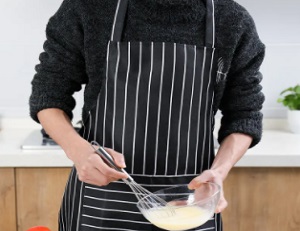
2. Key Factors When Choosing a Kitchen Apron
So, how do you choose a kitchen apron that truly works for your life? The process is simpler than you might think. However, you do need to ask yourself a few key questions before you buy.
Start by Defining Your Cooking Style
First, think about what you actually do in the kitchen most often. For example, do you fry, bake, grill, or mostly handle meal prep? Each cooking style creates different mess levels and splash risks. As a result, your ideal apron may look quite different from someone else’s.
- Daily family cooking — needs full coverage, waterproof or water-repellent finish
- Baking — flour and butter splashes call for a full bib apron with deep pockets
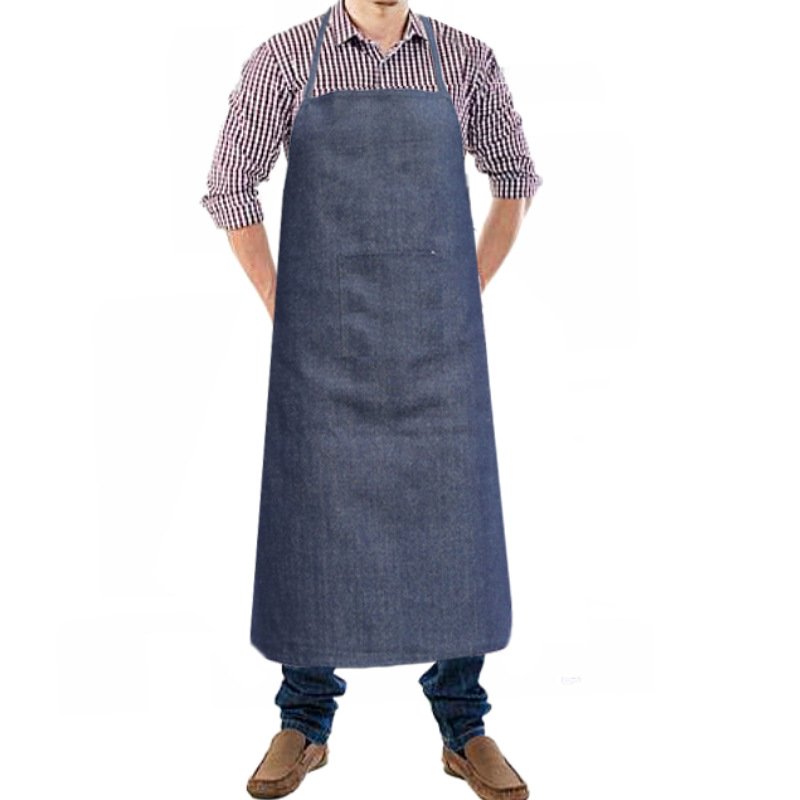
- BBQ / grilling — look for heat-resistant, thick canvas or denim material
- Professional-style meal prep — prioritize chef apron construction with reinforced seams
Your Core Apron Checklist
After defining your cooking style, use these factors as your shopping checklist. Moreover, checking all of these will help you avoid a frustrating purchase.
- Material — Does it match your durability and waterproof needs?
- Coverage length — Does it protect from chest to knee?
- Pockets — Are there enough deep pockets for your tools?
- Adjustability — Can you adjust the neck strap and waist ties?
- Care instructions — Is it machine washable and colorfast?
- Construction quality — Does it have reinforced stitching at stress points?
3. Best Apron Materials for Home Cooking
Without a doubt, the fabric is the single most important decision you make when choosing a kitchen apron. Because different materials offer different levels of protection, breathability, and durability, understanding your options helps you choose wisely.
According to The Spruce Eats, cotton canvas and denim remain the top-recommended materials for everyday kitchen aprons because they combine natural comfort with genuine durability. Furthermore, for moms and active home cooks who deal with a lot of liquid, a water-repellent finish on any of these fabrics adds an extra layer of practical protection.
✅ Natural Fabrics (Cotton, Denim)
- Breathable and cool near the stove
- Soften and improve with washing
- Eco-friendly and skin-safe
- Natural look and feel
💧 Synthetic / Coated Fabrics
- Fully waterproof against splashes
- Easy wipe-clean surface
- More stain-resistant finish
- Dries much faster after washing
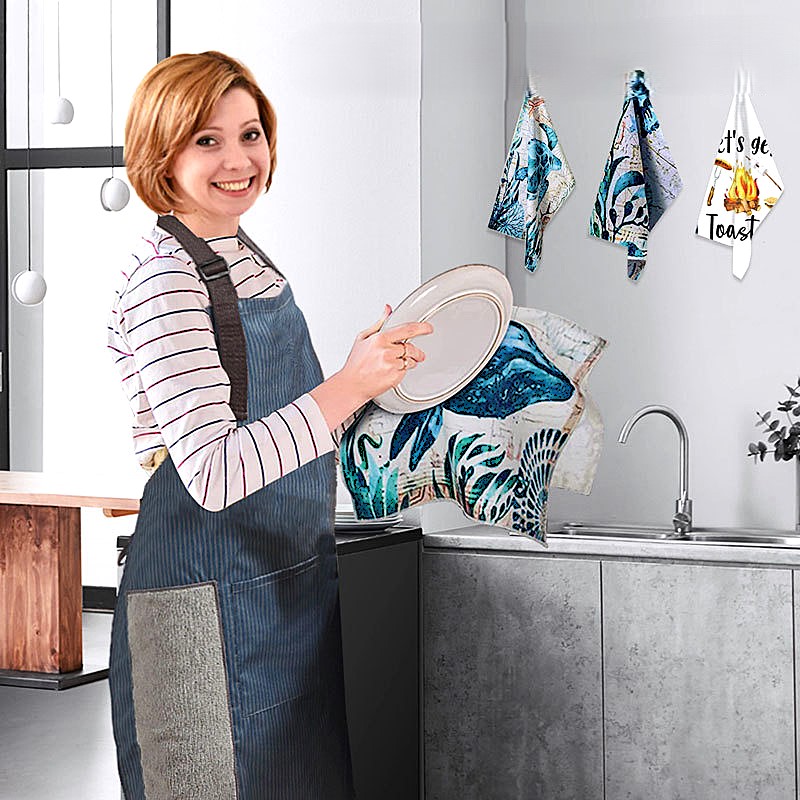
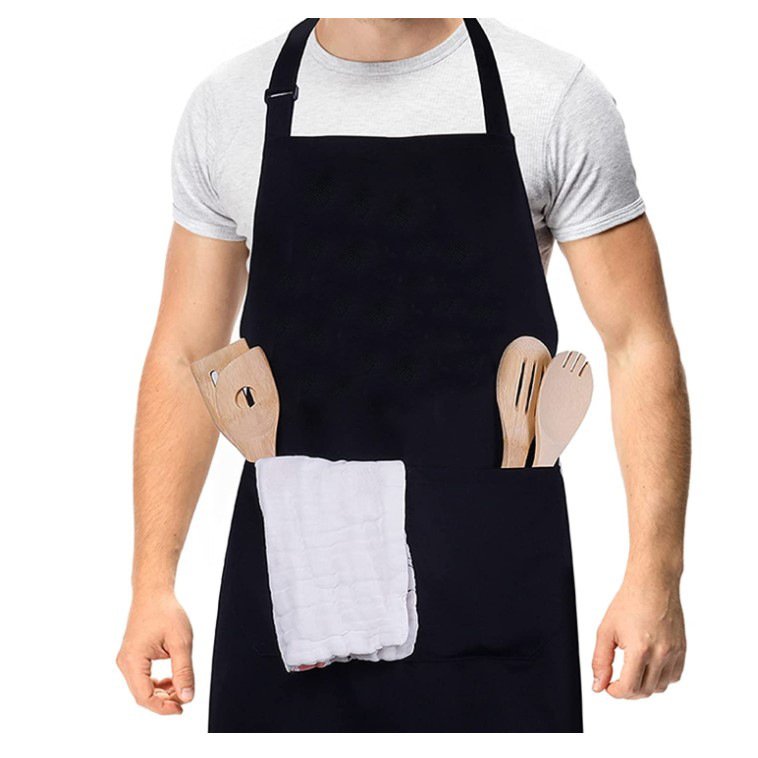
4. Waterproof Kitchen Aprons for Busy Moms
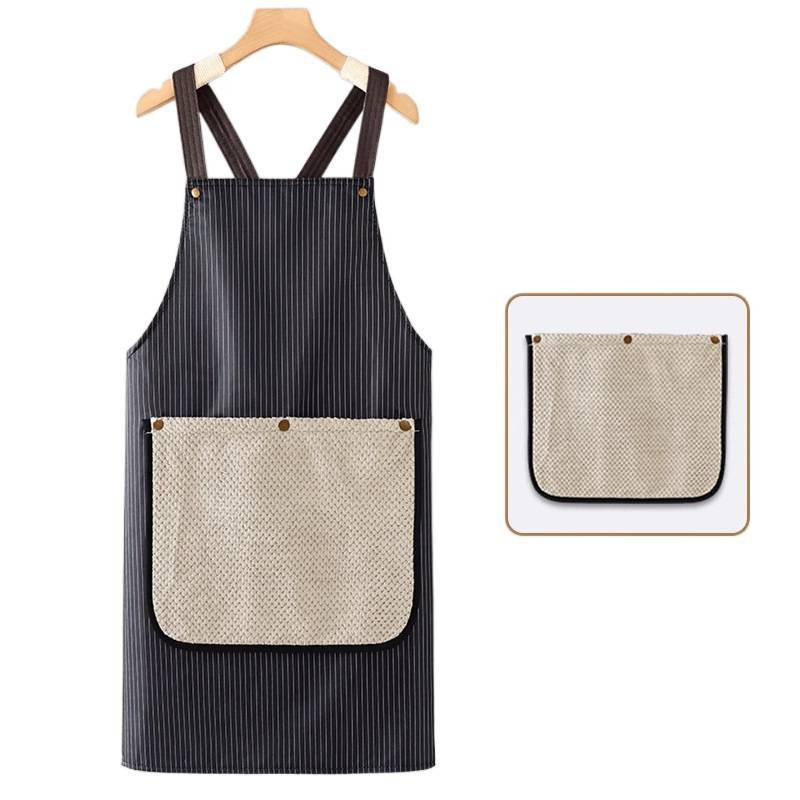
If you are a busy mom, a waterproof kitchen apron is honestly one of the best investments you can make for your kitchen routine. Because moms deal with soup splashes, dishwashing, kids’ drink spills, and everything in between, a regular fabric apron soaks through far too quickly.
Why Waterproof Matters for Moms
First, a waterproof apron creates a strong barrier between liquids and your clothes. As a result, you save time on laundry and avoid the frustration of changing outfits mid-cooking. Additionally, many waterproof aprons are wipe-clean, which means you can clean them up in seconds rather than running a full wash after every use.
“For moms juggling school pickups and dinner prep, a waterproof apron is not a luxury — it is a time-saving essential. One quick wipe and you are ready to go.” — Favor Houseware Customer Feedback
What to Look for in a Waterproof Kitchen Apron
However, not all waterproof aprons are created equal. Therefore, here is what you should specifically look for when choosing a waterproof kitchen apron for moms:
- Lightweight waterproof fabric — so it doesn’t feel heavy or stiff during long cooking sessions
- Soft interior backing — a coated exterior with a soft cotton inner layer keeps it comfortable against your clothes
- Adjustable cross-back or neck straps — so it stays in place whether you are bending, lifting, or moving quickly
- Large front pockets — deep enough for a phone, kitchen timer, or small tools
- Easy-clean surface — a TPU-coated or PVC-backed fabric wipes clean without staining
- Machine washable — because even waterproof aprons need a full wash regularly
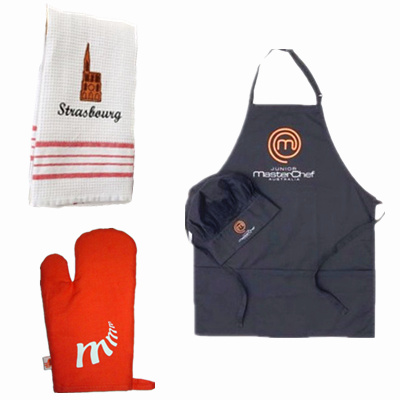
Furthermore, pairing your apron with a set of high-quality kitchen towels and oven mitts creates a complete kitchen protection set that handles every messy situation with ease.
5. Durable Chef Aprons for Everyday Use
When you wear an apron every single day, durability becomes the most important factor. In fact, a well-constructed durable chef apron for everyday use can last significantly longer than a cheaper alternative — sometimes up to 50% longer — thanks to specific construction details.
Construction Details That Add Real Durability
First, let’s look at where most aprons fail and, consequently, what separates a lasting apron from a disposable one.
| Construction Feature | What It Does | Why It Matters |
|---|---|---|
| Double Stitching | Two rows of stitching at all seam lines | Prevents seams from splitting during washing or heavy pulling |
| Reinforced Pocket Corners | Extra stitching at the top corners of every pocket | Stops pockets tearing away when loaded with heavy tools |
| Bar Tacking | Dense cross-stitching at strap attachment points | The #1 place aprons break — bar tacking prevents this entirely |
| Metal Hardware | Metal D-rings, buckles, or strap adjusters | Plastic breaks under daily tension; metal lasts for years |
| Heavy-Gauge Thread | Thick polyester thread throughout the apron | Resists breaking, fading, and weakening after many washes |
| Thick Base Fabric | Canvas, Oxford, or denim base material | Resists thinning, tearing, and pilling over time |
Additionally, the strap system plays a huge role in how long a chef apron lasts. Specifically, look for waist ties that are at least 1 inch wide and at least 30 inches long. Furthermore, neck straps should always be adjustable so they don’t put constant strain on a fixed point.
At Favor Houseware, all of our durable chef aprons go through a strict quality inspection process — from raw materials to the final packed product. Moreover, our manufacturing process includes weaving, cutting, sewing, and a detailed inspection stage before any apron leaves our facility.
6. Washable Kitchen Aprons That Don’t Fade
One of the most common complaints about cheap kitchen aprons is that they fade fast. After just a few washes, colors become dull and the apron looks old and tired. Therefore, if you want a washable kitchen apron that does not fade, you need to look closely at how the fabric is dyed and treated.
What Makes a Fabric Colorfast?
Simply put, a colorfast fabric is one where the dye bonds deeply with the fiber, rather than sitting on the surface. Here is what to look for specifically:
- Reactive dyeing — the dye forms a chemical bond with cotton fibers, producing deep, vibrant, long-lasting color
- ISO 105-C06 colorfast testing — a standard test that measures how well a fabric keeps its color after repeated washing
- High-quality polyester thread — thread fades separately from fabric, so matching thread quality matters
- OEKO-TEX 100 certification — confirms the dyes and finishes used are safe and stable
Washing Tips to Preserve Apron Color
Even with a high-quality colorfast apron, how you wash it also makes a difference. As a result, following these simple tips will keep your apron looking bright much longer:
- Wash at or below 40°C (104°F) for most fabric aprons
- Turn the apron inside out before washing to protect the outer color surface
- Use a mild detergent without bleach or harsh brighteners
- Avoid direct sunlight when drying — UV rays accelerate fading
- For waterproof-coated aprons, air dry to preserve the coating longer
“A truly colorfast apron should maintain its color and shape through at least 50 wash cycles when made with reactive dyes and quality construction.” — Favor Houseware Quality Control Standard
All Favor Houseware kitchen aprons use reactive dyes tested to international colorfast standards. Furthermore, our fabrics carry OEKO-TEX 100 and SGS certifications, confirming they are safe, durable, and fade-resistant for long-term home use.
For more on fabric care and sustainable kitchen textiles, the Good Housekeeping Institute offers detailed guidance on washing kitchen linens to preserve both color and structure.
7. Apron Length and Coverage: Getting the Fit Right
A kitchen apron that doesn’t fit properly is frustrating to wear. It either covers too little, feels too tight, or keeps slipping out of place. Fortunately, getting the right fit is straightforward once you know what to measure.
Standard Apron Length Guide
Most full adult kitchen aprons fall between 34 and 40 inches in length from chest to hem. This range covers from the chest down to just above the knee, which gives you plenty of protection while still allowing free movement.
| Apron Type | Typical Length | Best For |
|---|---|---|
| Full Bib Apron | 34–40 inches | Everyday cooking, frying, baking, dishwashing |
| Knee-Length / Long Apron | 40–45 inches | Cooks who stand at the sink or handle lots of liquid |
| Half / Waist Apron | 18–24 inches | Light baking, serving, or tasks with minimal splash risk |
| Kids’ Apron | 18–26 inches | Children aged 4–12 cooking with supervision |
How to Measure Yourself for the Right Apron
Measuring yourself takes less than two minutes. Additionally, it saves you from the hassle of returning an ill-fitting apron.
- Length — Measure from just below your collarbone straight down to slightly above your knee
- Width — Measure across your hips at the widest point, then add 6–8 inches for comfortable wrap and tie
- Neck strap — Confirm the apron has an adjustable strap that works for your neck-to-shoulder length
According to Serious Eats, the right apron length for most home cooks is a standard 36-inch bib apron, because it balances coverage with freedom of movement without tripping hazards.
8. Pocket Layout: How Many Pockets Do You Really Need?
Pockets on a kitchen apron sound like a small detail. However, they make a surprisingly big difference to how practical your apron actually is. Therefore, it is worth thinking carefully about pocket design before you buy.
The Ideal Number of Pockets
For kitchen work, 2–4 pockets is generally the sweet spot. More than four pockets adds bulk and can make the apron feel heavy and uncomfortable. On the other hand, fewer than two pockets leaves you without enough storage for the tools you reach for most often.
- 2 pockets — perfect for light cooks who just need a towel and a thermometer
- 3 pockets — ideal for most home cooks, with a divided center pocket plus two side pockets
- 4 pockets — great for serious home chefs who need to carry multiple utensils and tools at once
Waist vs. Chest Pockets — Which Is Better?
Both pocket positions serve different purposes. Furthermore, the best aprons include both to maximize usefulness.
👇 Waist-Level Pockets
- Ideal for heavier items like tongs or spatulas
- Easy to reach while keeping hands free
- Good for folded kitchen towels
- Best for meat thermometers and timers
👆 Chest Pockets
- Perfect for phones and recipe cards
- Quick access without bending down
- Good for slim tools like a pen or small knife
- Keeps items visible and easy to grab
In addition, pocket construction quality matters just as much as the number of pockets. Specifically, look for:
- Reinforced bar-tack stitching at both top corners of each pocket
- A minimum depth of 6–7 inches for waist pockets
- A clean interior seam that prevents small items from catching or tearing the lining
9. Safety and Comfort Features Home Cooks Overlook
Most shoppers focus on looks and price when buying a kitchen apron. However, some of the most important features are the ones that keep you safe and comfortable during long cooking sessions. Therefore, pay attention to these often-overlooked details.
Breathability Matters Near the Stove
Cooking near a hot stove for 30–60 minutes generates a lot of body heat. As a result, an apron made from non-breathable synthetic fabric can trap heat and make cooking genuinely uncomfortable. Here is how different materials compare:
- Cotton and linen — naturally breathable, stay cooler near heat sources
- Polyester and coated fabrics — less breathable, but easier to wipe clean
- Poly-cotton blends — balance breathability and practicality well
Strap Design for Neck and Shoulder Comfort
First, a poorly designed neck strap is one of the most common causes of discomfort during long cooking sessions. Furthermore, many home cooks experience neck and shoulder strain simply because their apron strap is too thin, too short, or fixed at an awkward angle.
Here is what to look for in a comfortable strap system:
- Cross-back (X-back) straps — distribute weight across both shoulders, eliminating neck strain entirely
- Adjustable neck buckle — lets you set the exact height so the apron sits level across your chest
- Wide waist ties (1 inch+) — narrow ties dig into your sides during long wear
- Long waist ties (30 inches+) — enough length to tie comfortably without pulling the apron out of position
For detailed kitchen safety guidance around clothing and protective gear, the National Fire Protection Association (NFPA) provides reliable home cooking safety resources that every home cook should review.
10. Eco-Friendly and Sustainable Apron Choices
Today, more and more shoppers are thinking about the environmental impact of what they buy. Fortunately, the apron industry has responded by introducing more sustainable options. Additionally, choosing a sustainable apron is often also choosing a more durable apron — which means less waste over time.
What Makes an Apron Eco-Friendly?
- Organic cotton — grown without synthetic pesticides or fertilizers, softer on skin and on the environment
- Recycled fabric — materials made from post-consumer recycled fibers, such as recycled polyester
- Biodegradable materials — natural fibers that break down safely at end of life
- OEKO-TEX 100 certified fabric — confirms the material contains no harmful chemicals
- Low-impact dyes — reactive dyes that use less water and release fewer toxins during production
Why Durable = Sustainable
Moreover, simply choosing a durable, well-made apron is itself an eco-friendly decision. Because a quality apron lasts for years instead of months, you reduce the number of aprons you throw away. As a result, you generate less textile waste overall — which is one of the biggest environmental problems in the fashion and home goods industry today.
At Favor Houseware, we are committed to eco-friendly manufacturing practices. Specifically, this includes using sustainable raw materials, minimizing production waste, and offering OEKO-TEX 100 certified fabrics across our product range. Furthermore, our company values place environmental responsibility at the center of everything we produce.
11. How to Choose the Best Apron Style for Your Cooking Routine
After deciding on material and features, the next step is choosing the right apron style for the way you actually cook. Because different styles protect different parts of your body, matching the style to your cooking routine makes a real difference.
Bib Apron (Full Apron) — The Best All-Around Choice
First, the bib apron is the most popular and practical style for everyday home cooking. It covers the chest, stomach, and thighs — which means maximum protection against splashes, spills, and grease. Furthermore, it is the standard style in both home and professional kitchens worldwide.
Best for: Frying, baking, soup preparation, BBQ, and any messy recipe that involves liquids or flying oil.
Half Apron / Waist Apron
Next, the waist apron covers from the waist down only. As a result, it gives you free upper body movement, which some bakers and servers prefer. However, it leaves your shirt exposed to splashes, so it works best for lower-risk tasks.
Best for: Baking with minimal splash risk, serving meals, or tasks where pocket storage is the main priority.
Cross-Back Apron
Additionally, the cross-back apron uses straps that cross at the back instead of tying around the neck. As mentioned earlier, this design eliminates neck strain — making it ideal for moms and home cooks who spend long periods in the kitchen.
Best for: Long cooking sessions, busy moms, and anyone who has experienced neck discomfort from traditional neck-strap aprons.
Cobbler / Smock Apron
Finally, the smock apron covers both front and back. While it offers the most full-body coverage, it is less common in home kitchens because it can feel restrictive. However, it works very well for messy baking or crafting activities.
“For most home cooks, a full bib apron with adjustable neck strap and cross-back option is the single best all-around choice. It protects the most, fits the best, and works for every type of cooking.” — Favor Houseware Design Team
12. How to Measure Yourself for a Comfortable Kitchen Apron
Finding the right-sized apron is easier than it sounds. In fact, you only need a soft measuring tape and two measurements to get it right. Furthermore, most quality aprons include enough adjustability to cover a wide range of body sizes with a single set of measurements.
Step-by-Step Measurement Guide
-
Measure your length:
Start just below your collarbone and measure straight down to slightly above your knee. Most adults fall between 32 and 40 inches. Therefore, a standard full apron (34–38 inches) fits the majority of people comfortably. -
Measure your width:
Measure across your hips at the widest point. Add 6–8 inches to this measurement. Consequently, you will have enough fabric to wrap comfortably and tie securely at the back. -
Check the strap length:
Measure from the top of one shoulder, across the back of your neck, to the top of the other shoulder. Make sure the apron’s neck strap adjusts through this range. Additionally, confirm the waist ties are long enough to reach around your body and tie in front or back comfortably.
Explore our full range of apron sizes and styles at favor-houseware.com/apron-manufacturer. Furthermore, we offer custom sizing options for wholesale and brand clients with no minimum order quantity on printing.
13. When to Replace Your Kitchen Apron
Even the best apron eventually needs to be replaced. However, knowing exactly when to replace it — versus when to simply repair it — can save you money and reduce unnecessary waste. Therefore, here are the clear signs it is time for a new apron.
Clear Signs Your Apron Needs Replacing
- Thinning or worn-through fabric — if you can see light through the fabric, it no longer protects properly
- Persistent stains that won’t wash out — especially oil or protein stains absorbed deep into old fabric
- Broken or corroded hardware — buckles that snap, D-rings that rust, or adjusters that slip all compromise fit and function
- Torn pocket corners — once pockets start tearing from the body, the damage usually spreads quickly
- Faded, dull color — severe color loss usually indicates the fabric structure has also weakened
- Weakened stitching at seams — fraying seams mean the apron could fall apart during use
How Long Should a Kitchen Apron Last?
First, the lifespan of a kitchen apron depends enormously on quality. Specifically:
- Low-quality aprons — often show wear after 3–6 months of daily use
- Mid-range aprons — typically last 1–2 years with regular washing
- High-quality, reinforced aprons — can last 3–5 years or more with proper care
Furthermore, using a colorfast, machine-washable apron with bar-tacked stress points greatly extends the useful life of the product. As a result, investing a little more upfront pays off in years of reliable use.
14. Frequently Asked Questions About Kitchen Aprons
Below are the most common questions people ask about choosing and using kitchen aprons. Furthermore, these answers are optimized to give you the most useful information as quickly as possible.
15. Why Choose Favor Houseware for Your Kitchen Apron
Now that you know exactly how to choose the right kitchen apron, the next question is: where do you source one you can genuinely trust? For home brands, retailers, and buyers worldwide, Favor Houseware is a leading China-based apron manufacturer with a long track record of quality, customization, and reliable delivery.
What Makes Favor Houseware Different
- Custom design capabilities with no MOQ for printing — perfect for brands and promotional orders of any size
- Premium and sustainable materials — including organic cotton, OEKO-TEX certified fabrics, and recycled options
- Eco-friendly manufacturing — committed to low-impact production processes from start to finish
- Strict quality control — from raw material inspection through weaving, sewing, finishing, and final shipment
- Low MOQ — supporting small businesses, startups, and large wholesale buyers equally
- Personalized branding — custom labels, tags, packaging, and logo embroidery for wholesale and promotional orders
- Certified and verified — BSCI, OEKO-TEX 100, SGS, and FDA certifications confirm quality and safety standards
- Fast turnaround — stock availability enables quick shipping for time-sensitive orders
- Free samples available — pay only the freight cost to evaluate quality before committing to a full order
Our Manufacturing Process
At Favor Houseware, every apron goes through a 7-stage production process: weaving → printing → cutting → sewing → inspecting → packing → shipping. Consequently, every single apron that leaves our facility meets consistent quality standards — whether you order 50 units or 50,000.
Related Products You May Also Need
In addition to our kitchen aprons, Favor Houseware offers a complete range of kitchen and household textiles to complement your cooking setup:
- 🧤 Oven Mitts — heat-resistant mitts that pair perfectly with your kitchen apron
- 🧺 Kitchen Towels — fast-drying, colorfast towels for professional-quality home kitchens
- 🧹 Microfiber Cleaning Cloths — for streak-free surfaces and quick kitchen cleanup
Conclusion: Choose Smarter, Cook Happier
Choosing the right kitchen apron does not have to be complicated. In fact, when you know what to look for, it becomes a simple, satisfying decision. To summarize, start with the right material for your cooking style, confirm quality construction details like bar tacking and double stitching, choose a length and style that fits your body and routine, and always verify that the fabric is machine washable and colorfast.
Furthermore, whether you need a waterproof kitchen apron for busy moms, a durable chef apron for everyday use, or simply the best apron for home cooking that looks great and lasts for years — the principles in this guide apply every time.
Most importantly, invest in quality once instead of replacing cheap aprons repeatedly. As a result, you will save money, reduce waste, and cook with more confidence every single day.
Ready to Find Your Perfect Kitchen Apron?
Browse Favor Houseware’s full range of durable, waterproof, and colorfast kitchen aprons — or get a custom quote for wholesale and branded orders. Free samples available. No MOQ on printing. Certified quality you can trust.
Views: 4