Have you ever wrapped a wet towel around your neck on a hot day and felt instant relief? That is not magic. It is science. In this guide, you will learn exactly why cooling towels feel cold, how they work, and what to look for before you buy or order them in bulk.
Key Takeaways: Cooling Towel Quick Facts
| Fact | Detail |
|---|---|
| How it cools you | Evaporative cooling, the same process behind sweating |
| How to activate | Soak in water, wring it out, snap it once, and wear |
| Cooling duration | Roughly 30 to 60 minutes per activation, depending on conditions |
| Best conditions | Dry, moving air speeds up evaporation and cooling power |
| Common materials | PVA (firmer, high water retention) and microfiber mesh (soft, breathable) |
| Reusability | Fully reusable by re-soaking, no ice or refrigeration needed |
Quick Answer: Cooling towels feel cold because the water stored in the fabric evaporates and pulls heat away from your skin. As a result, the towel’s surface temperature drops below your body temperature. This is the exact same principle that makes sweat cool you down and that makes a breeze feel refreshing.
1. What Is a Cooling Towel?
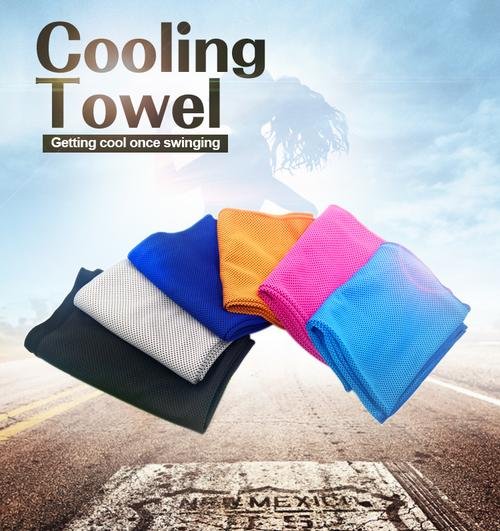
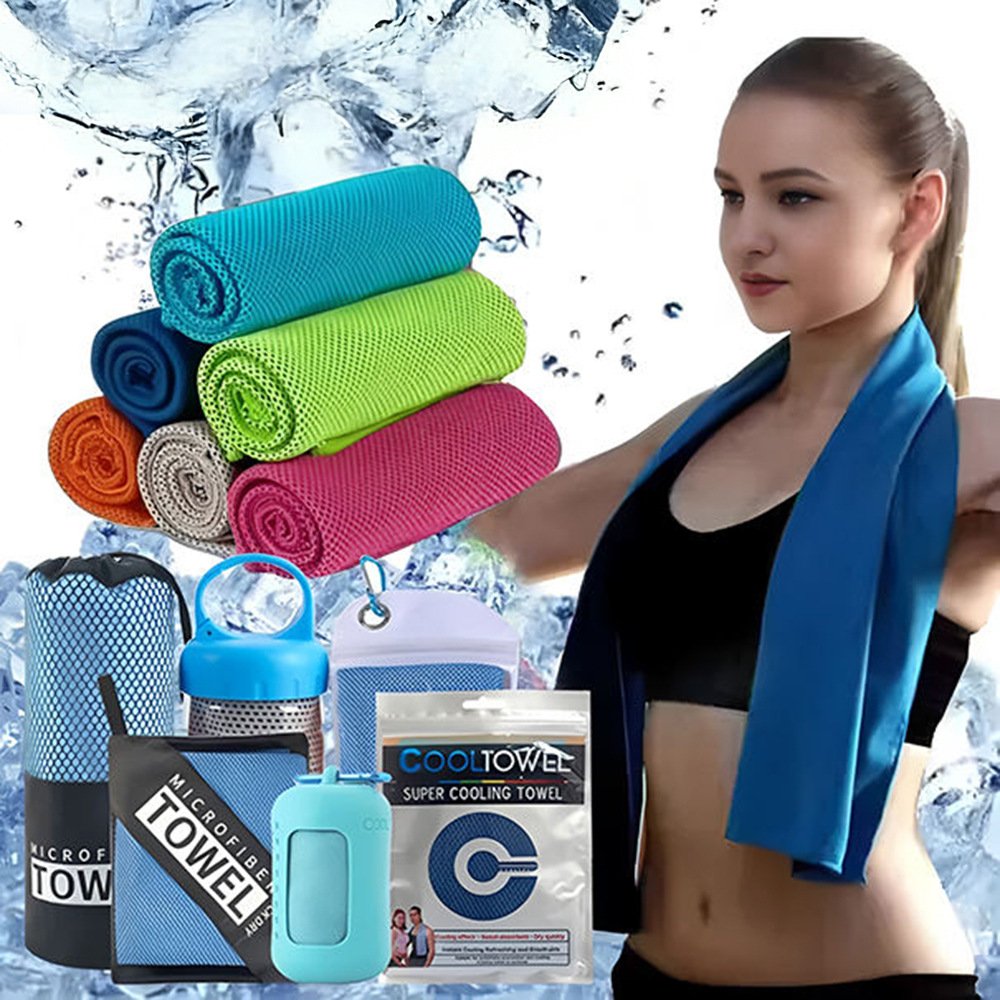
A cooling towel is a lightweight fabric strip that is built to soak up water and release it slowly through evaporation. Unlike a regular bath towel, it is engineered with special fibers so it holds more moisture and dries out gradually instead of all at once. Because of this, wearers get a longer, steadier cooling sensation. Cooling towels are popular among athletes, outdoor workers, and anyone who needs quick relief from heat without carrying ice packs.
If you want to browse the full range of styles and fabrics, you can view our complete beach towel manufacturer catalog for wholesale and custom options.
2. Why Does a Cooling Towel Feel Cold?
This is the question most people search for first, so here is the short answer. A cooling towel feels cold because water trapped inside the fabric changes from a liquid into a vapor. That change of state, known as evaporation, requires energy. The towel pulls that energy, in the form of heat, directly from your skin. Consequently, your skin loses heat and feels cooler almost right away.
“Cooling towels work through evaporative cooling. When the towel is soaked and exposed to air, water evaporates from the fibers and pulls heat away from the skin, creating a cool sensation.”
This process is not unique to towels. In fact, your own body uses the same trick every day. When you sweat, your skin gets wet, and as that sweat evaporates, it removes heat from your body. Likewise, a breeze feels cooler than still air because moving air speeds up evaporation on your skin.
3. How Do Cooling Towels Work?
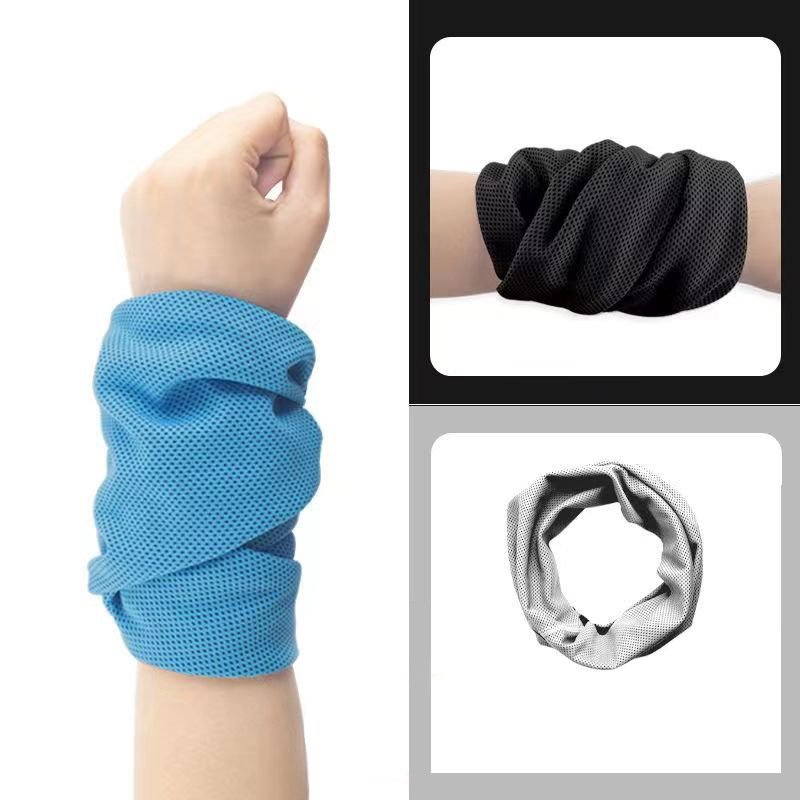
The process behind a cooling towel is simple, and that simplicity is exactly why it works so well. First, you soak the towel in cool water so the fibers absorb as much liquid as possible. Next, you wring out the extra water so the towel is damp rather than dripping. Then, you wear or drape the towel on your neck, wrist, or forehead. Finally, as air moves across the fabric, moisture evaporates and pulls heat away from your skin.
- Step 1: Soak the towel fully in water.
- Step 2: Wring out excess water so it feels damp, not soaking wet.
- Step 3: Snap the towel once or twice to open up the fibers.
- Step 4: Wear it on your neck, head, or wrists for instant cooling.
Because the fabric is designed to release moisture slowly, the cooling effect lasts far longer than it would with an ordinary towel.
4. The Science of Evaporative Cooling
At a deeper level, evaporative cooling happens because liquid water molecules need extra energy to break free and become vapor. That energy is pulled from the nearest heat source, which in this case is your skin. As a result, your skin surface temperature drops. This principle is called latent heat of vaporization, and it explains why sweating, misting fans, and cooling towels all work in a similar way.
In simple terms: Water absorbs heat to turn into vapor. Since that heat comes from your skin, you feel cooler once the water evaporates.
For readers who want to dig deeper into fiber science and how textiles manage moisture, Textile World publishes ongoing research on performance fabrics and moisture management technology.
5. Which Materials Are Used in Cooling Towels?
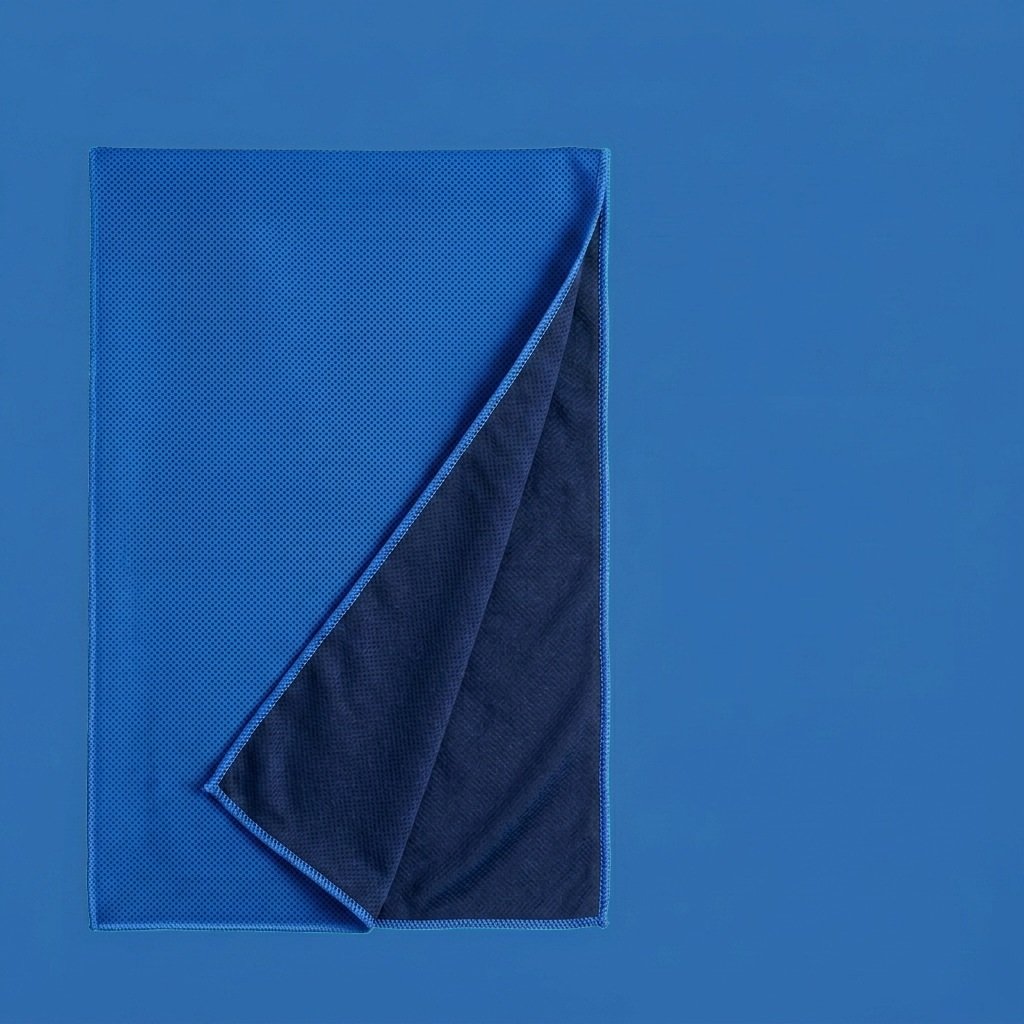
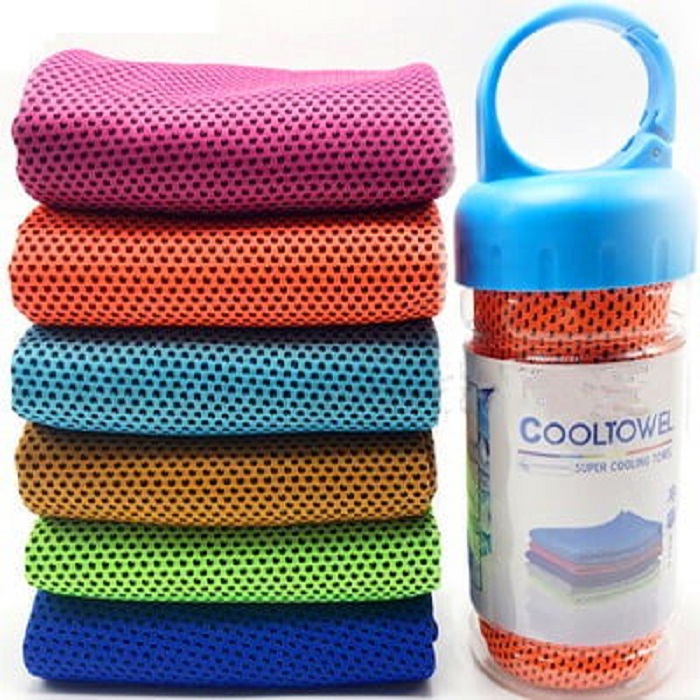
Most cooling towels on the market are made from one of two materials: PVA (polyvinyl alcohol) or microfiber mesh. Each one manages water differently, so the feel and performance vary.
| Material | Feel | Best For |
|---|---|---|
| PVA | Firm and rubbery when dry, soft when wet | Maximum water retention, intense sports use |
| Microfiber Mesh | Soft, textile-like, more like a normal towel | Everyday comfort, wearing against skin longer |
Our microfiber towel collection uses tightly woven fibers that are chosen specifically for fast water absorption and quick-drying performance, which supports steady evaporative cooling.
For brands that want an eco-friendly angle, our recycled beach towel line shows how sustainable fibers can still deliver strong absorption and durability.
6. Why Cooling Towels Work Better in Dry Air
Humidity has a direct effect on how well a cooling towel performs. In dry air, water molecules escape from the fabric quickly, so the evaporation process runs at full speed. On the other hand, humid air is already full of moisture, so it cannot absorb much more water from the towel. Therefore, evaporation slows down, and the cooling sensation feels weaker or fades faster.
Good to know: If you live in a humid climate, your cooling towel may still help, but you may need to re-soak it more often to keep the effect strong.
7. How Long Does a Cooling Towel Stay Cool?
There is no single fixed answer here, since cooling duration depends on several factors working together. Temperature, airflow, humidity, and fabric thickness all play a role. That said, most product guides report that users get roughly 30 to 60 minutes of noticeable cooling per activation under typical outdoor conditions. Thicker fabrics tend to hold water longer, while thinner mesh styles cool faster but dry out sooner.
- Hot and dry conditions: Faster evaporation, shorter cooling window, but strong intensity.
- Hot and humid conditions: Slower evaporation, longer cooling window, but weaker intensity.
- Windy or moving air: Speeds up evaporation significantly, boosting the cooling effect.
8. How to Activate a Cooling Towel
Activating a cooling towel takes less than a minute, and the steps stay the same no matter which material you choose.
- Run the towel under cool tap water until it is fully saturated.
- Wring it firmly to remove extra water, leaving it damp rather than dripping.
- Snap or shake the towel once so the fibers separate and air can move through them.
- Wrap it around your neck, wrist, or head, or drape it over your shoulders.
Once the towel warms up again, simply repeat these steps to reactivate the cooling effect. This makes it a practical, reusable tool for long days outdoors.
9. How to Wash and Reuse a Cooling Towel
Proper care keeps your cooling towel performing well for a long time. Most care guides recommend washing with a mild detergent and gentle hand or machine wash on a cold cycle. After washing, air dry the towel instead of using a hot dryer, since high heat can damage the performance fibers that control water absorption.
Washing Checklist:
- Use mild or gentle detergent, avoiding bleach.
- Wash in cold or lukewarm water.
- Air dry flat or hang dry, away from direct heat.
- Check the product label, since care steps can vary by material.
10. Cooling Towels for Sports, Work, and Outdoor Use
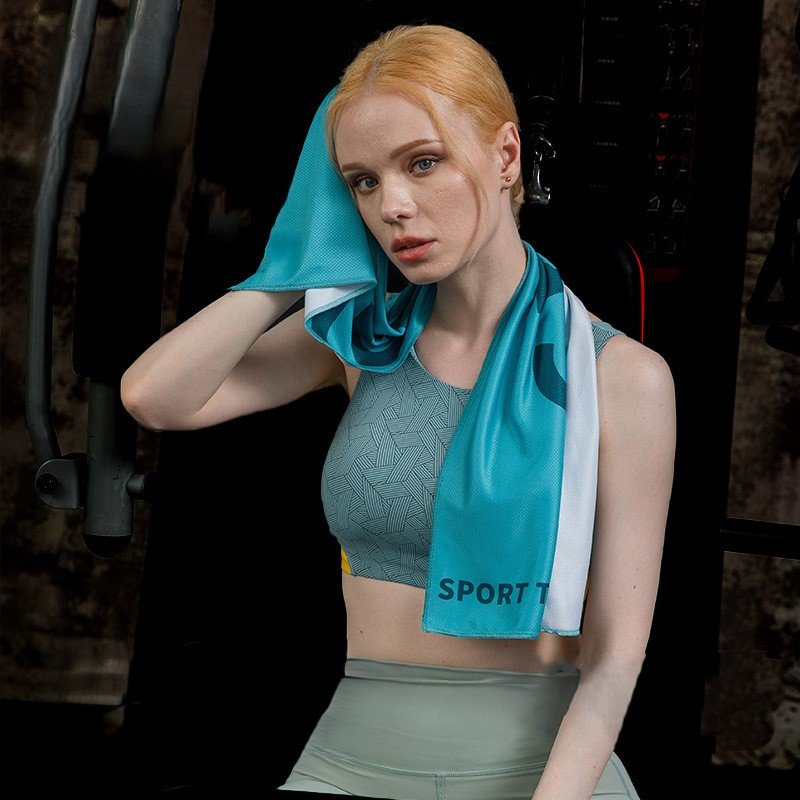
Cooling towels are widely used across sports, physical labor, and outdoor recreation because they offer fast relief without ice or electricity. Runners and cyclists use them during training to manage body heat. Meanwhile, construction crews and warehouse workers rely on them during long shifts in the heat. Hikers and campers also pack them since they are lightweight and easy to reactivate with any water source.
If your customers also need post-activity gear, our surf poncho towels and surf change robes pair well with cooling towels for beach and watersport brands.
11. Cooling Towels vs Regular Wet Towels
A regular wet towel can offer some cooling relief too, so what makes a purpose-built cooling towel different? The answer lies in the fabric engineering.
| Feature | Cooling Towel | Regular Wet Towel |
|---|---|---|
| Water retention | High, engineered for slow release | Lower, dries quickly and unevenly |
| Cooling duration | Longer, often 30 to 60 minutes | Shorter, cools quickly then warms |
| Weight | Lightweight and compact | Often bulkier and heavier when wet |
| Reusability | Built for repeated soak-and-wear cycles | Works, but fibers were not designed for this |
In short, a regular towel can cool you down temporarily, but a purpose-built cooling towel is optimized for comfort, portability, and repeated use.
12. What Buyers Should Look for in a Cooling Towel
If you are sourcing cooling towels for retail, promotional giveaways, or wholesale distribution, a few details matter most. First, check the fabric type, since PVA and microfiber offer different feel and performance. Second, confirm certifications, because safety and quality standards vary by market. Third, ask about customization options, especially if you plan to add logos or branding.
Wholesale Note: As a factory-direct manufacturer based in Yiwu, Zhejiang Province, Favor Houseware Co., Ltd. offers cooling and sports towels with an MOQ starting from just 100 pieces, and no MOQ at all for digital printing. This makes it easier for both small businesses and large brands to order custom designs. We hold BSCI, OEKO-TEX 100, SGS, and FDA certifications, and we offer free samples so you can test quality before placing a bulk order.
You can learn more about our full production capabilities, from weaving to final inspection, on our company overview page, or reach out directly through our contact page to request samples.
According to third-party market research, the global cooling towel market is estimated between roughly USD 287.4 million and USD 520.3 million, with forecasts ranging from about USD 521.3 million to USD 930.1 million by the mid-2030s, and reported annual growth rates between 5.48% and 6.8%. Because estimates vary by source, it is best to treat these as directional industry ranges rather than exact figures.
13. Are Cooling Towels Safe to Use?
Yes, cooling towels are generally safe when used as intended, and they are a popular tool for outdoor heat relief. However, they are not a substitute for proper hydration, shade, or medical care during serious heat illness. If you or someone nearby shows signs of heat exhaustion or heat stroke, such as dizziness, confusion, or a rapid heartbeat, seek medical help right away rather than relying on a cooling towel alone.
For families with children or pets, cooling towels are generally safe for supervised use, since they contain no chemicals or refrigerants. Still, always supervise young children during use and avoid wrapping any fabric tightly around the neck. For more detailed guidance on heat safety, the CDC’s heat and health resource offers useful, up-to-date recommendations.
14. Common Mistakes That Reduce Cooling Performance
Even a high-quality cooling towel will underperform if it is used the wrong way. Fortunately, these mistakes are easy to avoid once you know what to watch for.
- Wringing out too much water: This leaves too little moisture for evaporation to work well.
- Using it in still, humid air: Without airflow, evaporation slows down dramatically.
- Skipping reactivation: Waiting too long to re-soak reduces the cooling effect over time.
- Drying with high heat: This can damage the fibers responsible for water retention.
- Folding it too tightly: This traps water unevenly and slows down consistent cooling.
15. Cooling Towel FAQs
How do cooling towels actually work?
They store water in specially engineered fibers, and as that water evaporates, it pulls heat away from your skin, creating a cooling sensation without ice or refrigeration.
Why do cooling towels feel cold?
They feel cold because evaporating water removes heat energy from the towel’s surface and, in turn, from your skin, lowering the temperature you feel.
Do cooling towels really work?
Yes, cooling towels do work because evaporating water removes heat from the skin. Their effectiveness is strongest when air is dry and moving, and weaker when humidity is high.
How long do cooling towels stay cool?
Most users notice cooling for about 30 to 60 minutes per activation, though this varies with temperature, humidity, and airflow.
Are cooling towels better than regular towels?
Cooling towels are usually designed to hold water and spread it efficiently for slower, more controlled evaporation. A regular towel can also cool you if it is wet, but purpose-built cooling fabrics are often better optimized for comfort and reusability.
Do cooling towels work in humidity?
They can still provide some relief, but performance drops because humidity slows evaporation. In very humid regions, expect a shorter and milder cooling effect.
What are cooling towels made of?
Common materials include PVA and microfiber mesh, both chosen for water retention and quick evaporation behavior. PVA towels often feel firmer when dry, while microfiber versions are usually softer and more textile-like.
How do you use a cooling towel?
Soak it in water, wring out the extra moisture, snap it once, and wear it on your neck, wrist, or head for instant relief.
Can you wash a cooling towel?
Yes. Most care guides recommend mild detergent, gentle washing, and air drying instead of high heat, since dryer heat can damage performance fibers.
Are cooling towels safe for kids and pets?
Generally yes, when used under supervision, since they contain no chemicals or refrigerants. Still, avoid wrapping any fabric tightly and always monitor young children during use.
Conclusion: Stay Cool With Science-Backed Towels
To sum up, cooling towels feel cold because of evaporative cooling, the same natural process behind sweating and refreshing breezes. When you soak, wring, and wear one, trapped water slowly evaporates and pulls heat away from your skin, keeping you comfortable during sports, work, or outdoor adventures. Choosing the right material, caring for your towel properly, and avoiding common mistakes will help you get the most out of every activation.
Whether you need a small batch for personal use or a bulk wholesale order for your brand, Favor Houseware Co., Ltd. is ready to help. With 15 years of manufacturing experience, certifications including BSCI, OEKO-TEX 100, SGS, and FDA, and an MOQ starting from just 100 pieces, we make it simple to bring high-performance cooling towels to market.
Ready to Source Custom Cooling Towels?
Request a free sample today and see the quality for yourself, or talk to our team about custom branding for your next order.
Request a Free Sample Browse Our CatalogViews: 8