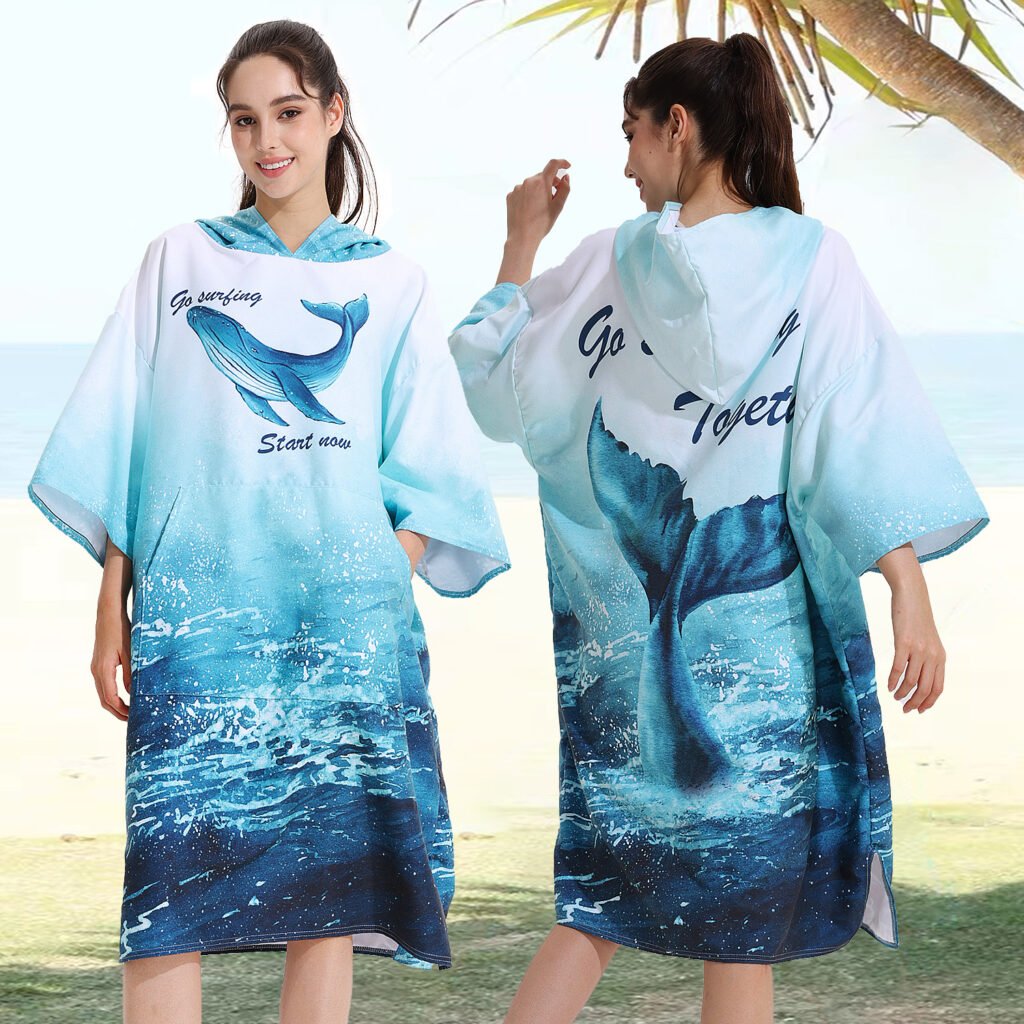
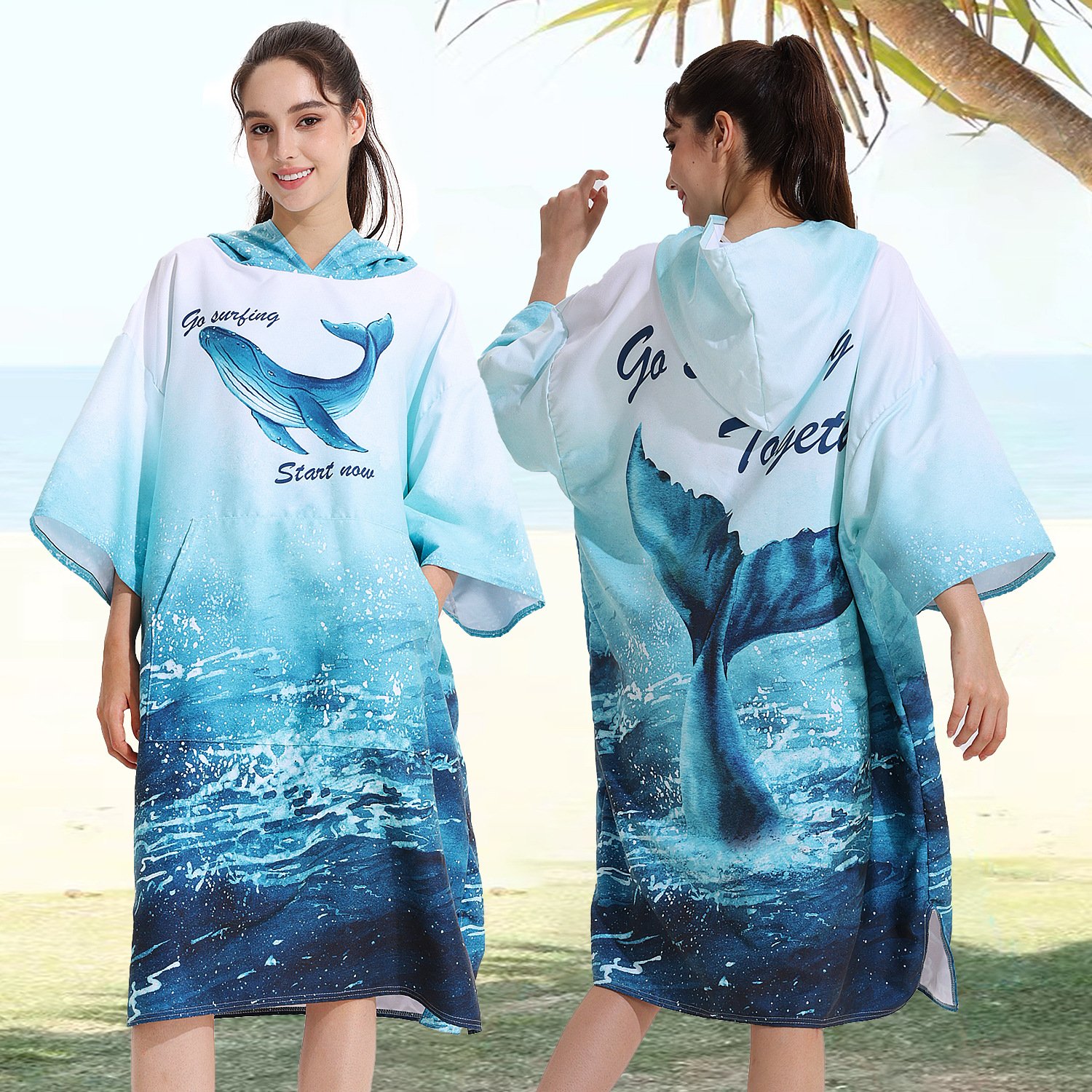
A surf poncho towel is a wearable, hooded towel you pull over your head. It lets you change out of a wetsuit or swimwear in public without exposing yourself. It also dries your body, keeps you warm after cold-water sessions, and leaves both hands free. Surfers, swimmers, triathletes, and outdoor adventurers all use them as a smarter, more convenient alternative to regular beach towels.
Key Takeaways at a Glance
| Topic | What You Need to Know |
|---|---|
| What it is | A hooded, wearable towel for changing in public and drying after water sports |
| Best for | Surfers, swimmers, triathletes, SUP paddlers, van-lifers, beach campers |
| Top benefit | Private changing + warmth + hands-free drying — all in one product |
| Best fabric | Cotton (warm & soft), microfiber (light & quick-dry), RPET (eco-friendly) |
| Poncho vs beach towel | Poncho wins for active use; flat towel wins for sunbathing |
| Poncho vs changing robe | Poncho = lighter & cheaper; Robe = warmer for cold/rainy conditions |
| Custom options | Logo, embroidery, colour, size, pocket, print — full OEM/ODM available |
| Market growth | Global beach towel market forecast to reach $6.22B by 2033 (6.7% CAGR) |
| MOQ | From 100 pieces at Favor Houseware |
1. What Is a Surf Poncho Towel and Who Is It For?
If you spend time in or near the water, you have probably struggled with the same problem. How do you change out of a wetsuit or swimwear in a crowded car park — without putting on a show for everyone around you? That is exactly the problem a surf poncho towel solves.
Simply put, a surf poncho towel is a wearable, over-the-head towel with a hood. It is wide enough and long enough for you to comfortably change your clothing underneath it, completely hands-free. It dries your body at the same time as it covers you.
You might also hear it called a surf changing robe or a wetsuit changing poncho. These terms often refer to the same basic product, though they sometimes differ slightly:
- Surf poncho towel: A towelling garment — usually cotton or microfiber — focused on drying, modesty, and basic warmth.
- Surf changing robe: Can refer to either a towelling poncho or a heavier, more weatherproof garment, depending on the brand.
- Wetsuit changing poncho: A poncho cut specifically wide and long enough to allow wetsuit removal. It usually has a generous hem that reaches mid-thigh or lower.
Who Uses a Surf Poncho Towel?
Surf ponchos are no longer just for professional surfers. Today, a wide variety of people rely on them as part of their routine:
- Surfers — for fast wetsuit changes between sessions at the beach
- Open-water swimmers — to warm up and dry off quickly after cold-water swims
- SUP (stand-up paddleboard) riders — for convenience at remote launch spots
- Triathletes — for rapid transitions during training and race days
- Van-lifers and beach campers — as a portable changing room wherever they park
- Parents with young children — to change kids quickly and keep them warm at the beach
- Wild swimmers and cold-water enthusiasts — especially popular in the UK, Ireland, and Scandinavia
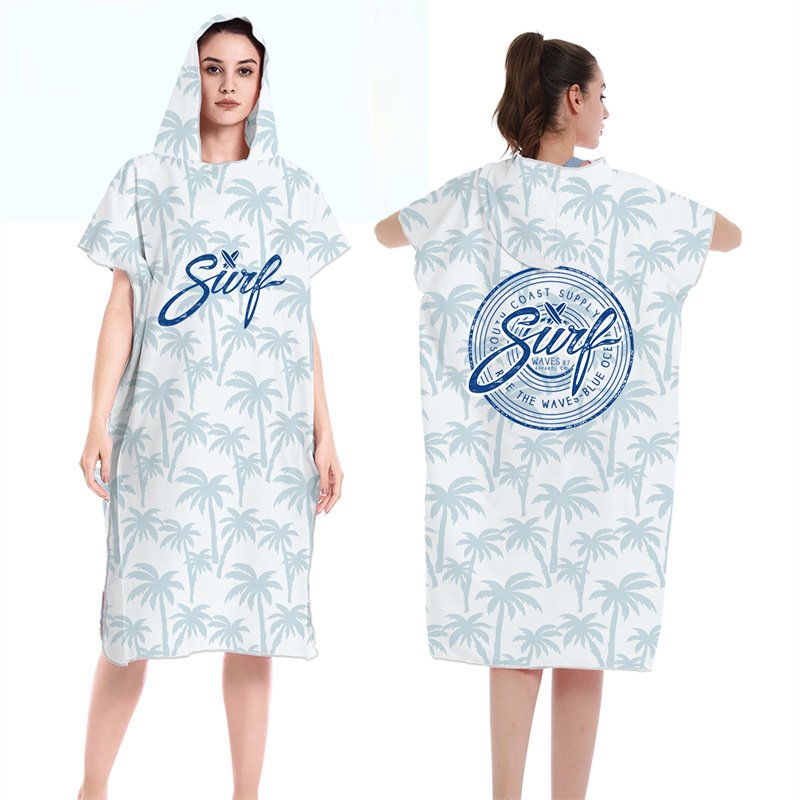
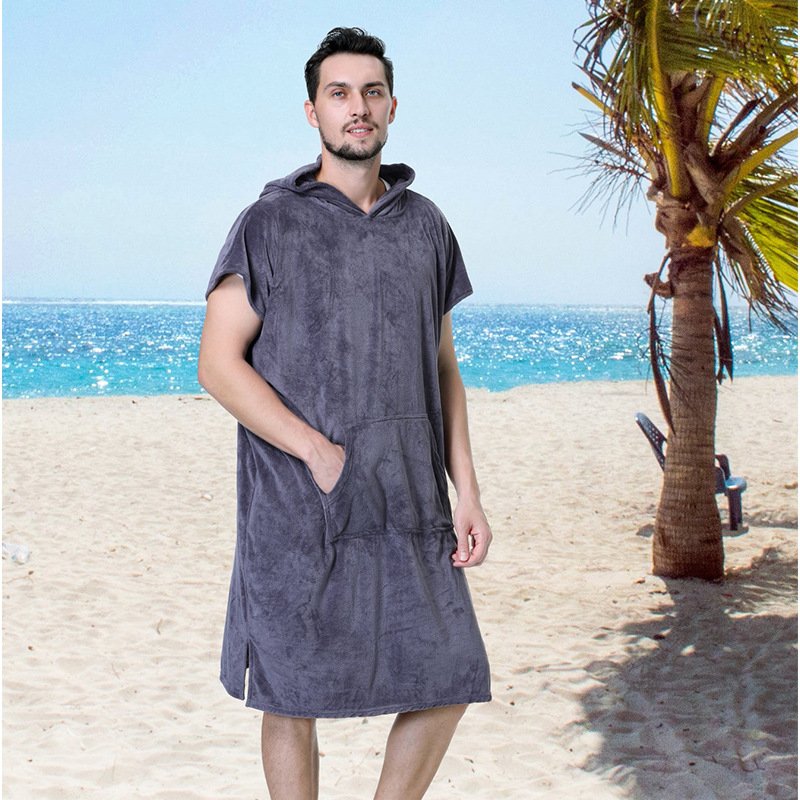
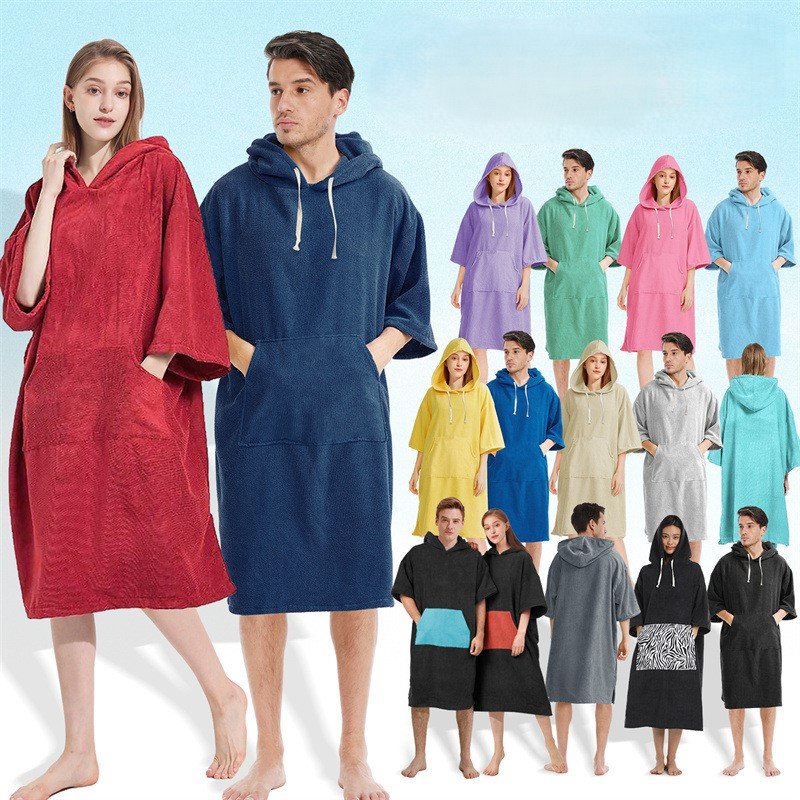
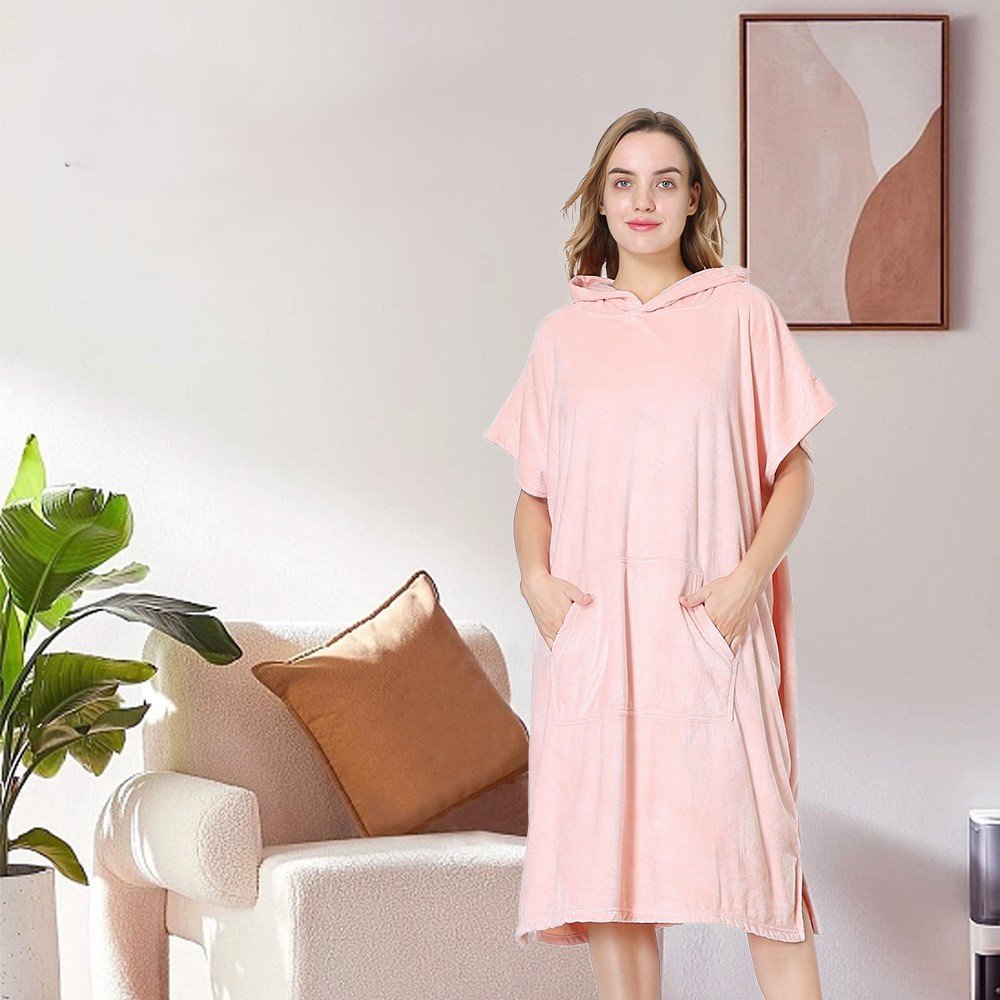
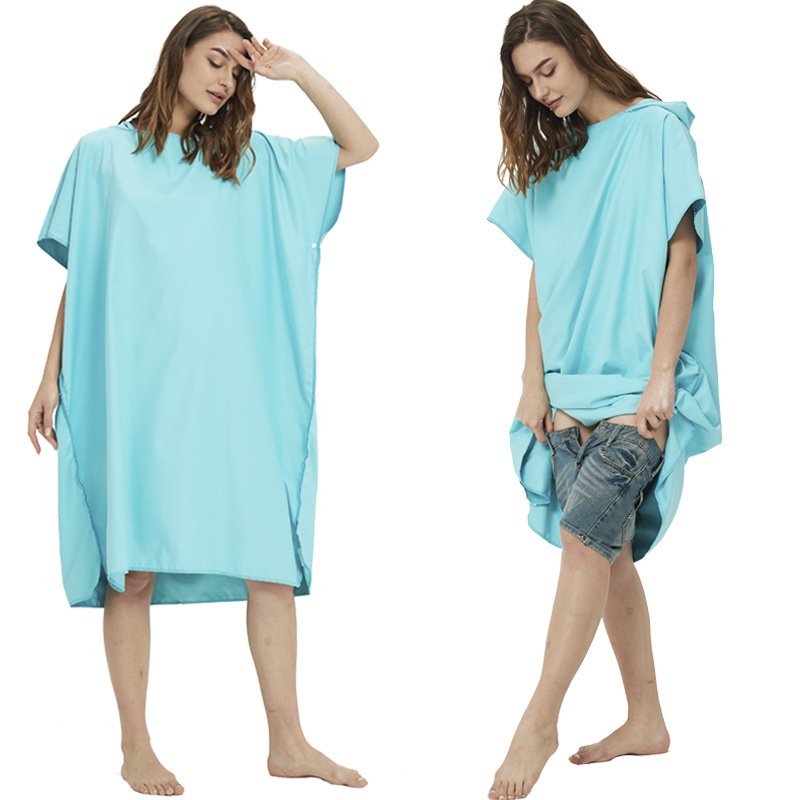
👆 Scroll sideways to see more styles — all customizable via Favor Houseware
2. Surf Poncho vs Beach Towel: Key Differences
So, is a surf poncho better than a normal beach towel? The honest answer is: it depends on how you use it. However, for active water sports, the surf poncho wins in almost every practical category. Let’s break it down clearly.
Side-by-Side Comparison Table
| Feature | Surf Poncho Towel | Classic Beach Towel |
|---|---|---|
| Privacy for changing | ✅ Full coverage — change in public with zero exposure | ❌ Very limited — easy to slip or expose yourself |
| Warmth | ✅ Acts like a wearable blanket — retains body heat after cold water | ❌ Only covers part of the body — less insulation in wind |
| Hands-free use | ✅ Wearable — keeps hands free for boards, car keys, kids | ❌ Must hold or wrap manually — can slip off easily |
| Absorbency | ✅ Thick cotton or microfiber — high absorption for wetsuits | ⚠️ Standard 400–500 gsm — good for skin, not built for wetsuits |
| Wind protection | ✅ Hood and wrap design blocks wind chill | ❌ Offers no wind protection at all |
| Portability | ✅ Compact when folded — especially microfiber versions | ⚠️ Bulky and heavy when wet |
| Lying on the sand | ❌ Not designed as a mat | ✅ Perfect for sunbathing and lying down |
| Price range | Mid-range ($25–$75) | Budget to mid-range ($10–$40) |
When Should You Choose a Surf Poncho vs a Beach Towel?
Choose a surf poncho towel if you:
- Surf, swim, or paddleboard regularly and need to change in public spaces
- Surf in cold water or face windy conditions after leaving the water
- Wear a wetsuit and need a way to change without awkward towel-wrestling
- Want a hands-free product that lets you manage kids or gear simultaneously
Stick with a classic beach towel if you:
- Mainly sunbathe or relax on the sand
- Only need to dry off quickly after a dip in the pool
- Prefer a flat surface to lie on at the beach
Many regular surfers carry both — a flat beach towel to lie on the sand, and a surf poncho to change and warm up. Together, they cover every situation perfectly.
3. Top Surf Poncho Benefits Backed by Real-World Use
Beyond the basics, the surf poncho benefits are real and practical. Here is a look at the top reasons why surfers and water sports fans have embraced the changing poncho towel — and why, once they switch, almost none of them go back to a regular towel.
🌊 Benefit 1: Warmth and Insulation After Cold Water
Exiting cold water quickly drops your body temperature. Furthermore, wind chill on a wet body speeds up heat loss even faster. A surf poncho wraps around your whole torso and covers your head, trapping body heat immediately. This is especially important for surfers and open-water swimmers in cold climates, where staying warm after a session helps prevent muscle strain and discomfort.
🔒 Benefit 2: Privacy — Your Portable Changing Room
A surf changing robe essentially turns any location into a private changing room. Whether you are in a busy car park, on a crowded beach, or at the side of a triathlon course, the generous poncho shape gives you full coverage to undress and dress without any “wardrobe malfunctions.” This is one of the most cited reasons people first buy a surf poncho.
⚡ Benefit 3: Faster Drying and Greater Comfort
High-quality surf ponchos — particularly those made from microfiber — absorb moisture rapidly. In fact, microfiber towels can absorb up to four times their own weight in water. As a result, your body dries quickly, which in turn makes the changing process faster and more comfortable. Many users describe the experience as significantly more pleasant than wrapping a cold, wet towel around themselves.
🤲 Benefit 4: Hands-Free Convenience
Once you pull a surf poncho over your head, both hands are immediately free. Therefore, you can pack your bag, take off your wetsuit, help a child, lock the car, or grab a snack — all while the poncho is actively drying you. A regular beach towel simply cannot do that.
🎽 Benefit 5: Multi-Purpose Versatility
A surf poncho is not limited to just one use. Additionally, it functions as a lightweight robe for resting between sessions, a small blanket when sitting on the beach, and even a windbreaker when waiting in line or walking to the surf break. Its versatility makes it one of the best value items in any surfer’s kit bag.
“Once surfers make the switch to a good surf poncho towel, very few of them ever go back to using a basic flat towel for changing. The difference in convenience and comfort is simply too big to ignore.” — Feedback from water sports communities
Furthermore, the surf poncho market is growing alongside a major global trend. The global beach towel segment — which includes premium products like surf ponchos and changing robes — is forecast to reach approximately $6.22 billion USD globally by 2033, growing at around 6.7% CAGR. This growth is driven by rising surf tourism, outdoor leisure activities, and increasing demand for functional beach textiles.
4. Surf Poncho vs Changing Robe: Full Comparison
One of the most common questions buyers ask is: “What is the difference between a surf poncho and a changing robe?” At first glance, they look similar. However, they are designed for quite different conditions. Here is a clear breakdown.
Towelling Surf Poncho
A towelling surf poncho — or changing poncho towel — is made from cotton, microfiber, or a blend of both. Its primary purpose is absorption and modesty. It is designed for mild to warm climates and is the most popular choice for everyday surfers worldwide.
✅ Pros
- Lightweight and easy to pack
- Excellent at absorbing water quickly
- More affordable (usually $25–$75)
- Easy to wash and dry
- Comfortable for warm and mild weather
❌ Cons
- Less warmth in very cold or rainy conditions
- No waterproof outer layer
- Not suitable for sitting outside in heavy rain
Weatherproof Changing Robe
A weatherproof changing robe (sometimes called a dry robe or winter surf robe) is a multi-layer product. It typically features a waterproof or windproof outer shell combined with a thick fleece or sherpa inner lining. Consequently, it provides serious warmth in cold, wet, or extremely windy conditions.
✅ Pros
- Excellent warmth in cold and wet climates
- Waterproof outer layer handles rain and spray
- Ideal for winter surfing in the UK, Ireland, Scandinavia
❌ Cons
- Heavy and bulky to carry
- Expensive (usually $100–$250+)
- Less absorbent — not primarily a drying towel
- Overkill for warm-weather destinations
Head-to-Head Comparison Table
| Feature | Towelling Surf Poncho | Weatherproof Changing Robe |
|---|---|---|
| Best climate | Mild to warm | Cold, windy, rainy |
| Main benefit | Drying and modesty | Insulation and weather protection |
| Weight & packability | ✅ Light — packs small | ❌ Heavier and bulkier |
| Absorbency | ✅ High — designed to dry you | ⚠️ Moderate — fleece absorbs some moisture |
| Price level | Mid-range ($25–$75) | Premium ($100–$250+) |
| Best for | Everyday surfers, travel, families | Cold-water surfers, winter sessions |
| Customization options | ✅ Wide — print, embroidery, colour | ⚠️ More limited due to outer shell |
For most surfers in mild or warm climates, a towelling surf poncho is the smarter choice. However, if you regularly surf in cold and rainy conditions — such as winter sessions in cold-water surf destinations like Ireland or the Pacific Northwest — a weatherproof changing robe may be worth the extra investment.
5. Design Your Own Surf Poncho Towel: Key Choices
Whether you run a surf school, manage an outdoor brand, or want to create a promotional product, designing your own custom surf poncho towel is easier than you might think. At Favor Houseware — a certified Chinese towel manufacturer with over 15 years of experience — we handle everything from fabric selection to custom packaging. Here is a step-by-step guide to the key design choices.
🧵 Fabric Options
Your fabric choice defines the feel, performance, and market positioning of your poncho. Here are the three main options:
| Fabric | Key Qualities | Best For |
|---|---|---|
| 100% Cotton Terry | Soft, natural, highly absorbent, slightly heavier when wet | Premium retail, cold climates, comfort-first buyers |
| Microfiber | Lightweight, fast-drying, compact, great for printing | Travel, warm-weather markets, sports brands, kids’ ponchos |
| Recycled RPET | Made from recycled plastic bottles, eco-friendly, quick-dry, durable | Sustainable brands, eco-conscious surf and outdoor markets |
Favor Houseware also produces recycled RPET beach towels and applies the same sustainable technology to surf ponchos — making it simple to offer an eco-friendly product line.
⚖️ GSM and Thickness
GSM (grams per square metre) measures fabric weight. It directly affects warmth, absorbency, and packability. Here is a simple guide:
- 250–350 GSM: Lightweight — ideal for travel, warm weather, and kids’ ponchos. Fast drying, compact.
- 400–500 GSM: Medium to heavy — great balance of warmth, absorbency, and drying time. Most popular range.
- 500+ GSM: Plush and very warm — best for cold-climate markets and premium positioning. Takes longer to dry.
Heavier GSM = warmer and more absorbent, but bulkier. Lighter GSM = compact and fast-drying, but less insulating. Choose based on your target climate and customer.
📐 Shape, Size, and Fit
Getting the cut right is crucial. A good surf poncho needs to be wide enough and long enough for users to move their arms freely underneath it during changing. Here are the key sizing guidelines:
- Oversized body cut: Wide enough to allow arm movement and wetsuit removal under the poncho
- Hem length: Mid-thigh to knee length for full coverage — longer is better for wetsuit changing
- Side slits or underarm openings: Allow easier changing without needing to lift the hem
- Kids sizes: Typically 55×55cm up to 70×70cm with shorter hood proportions
- Youth sizes: 70×70cm to 80×80cm
- Adult standard: 85×85cm to 95×95cm — suits most adults comfortably
- Adult XL / oversized: 100×100cm+ — recommended for tall users and wetsuit-focused ponchos
🔧 Functional Features
These features are what separate a basic poncho from a great one. Consider including:
- Hood: For drying hair, blocking wind, and adding warmth — the most essential feature
- Kangaroo pocket: A front pouch to store keys, a phone, or wax while changing — hugely popular with surfers
- Hidden zip pocket: Secure storage for valuables — especially useful for triathletes and van-lifers
- Thumb loops at cuffs: Keep sleeves in place during changing — a nice practical touch
- Snap buttons or adjustable sides: Add ventilation and a better fit
- Carry bag or stuff sack: Great for retail presentation and gifting
🎨 Branding and Customization for Buyers
This is where Favor Houseware truly shines. We offer a full range of branding and customization options, all of which are available across our surf poncho and surf changing robe range:
- All-over digital print: Full-colour photographic or graphic prints across the entire poncho — with no minimum order quantity for printing
- Jacquard woven patterns: Premium patterns woven directly into the fabric — elegant and durable
- Embroidery: For logos, text, or motifs — excellent on cotton and waffle fabrics
- Woven labels and hang tags: Custom brand labels sewn inside the hood or neckline
- Custom packaging: Branded boxes, poly bags, or matching stuff sacks for retail-ready presentation
Because Favor Houseware already produces custom promotional beach towels, microfiber towels, and other custom textile products, we apply the exact same customization capabilities to every surf poncho order. Our certifications include BSCI, OEKO-TEX 100, SGS, and FDA — so your products meet the strictest international quality and safety standards.
“Favor Houseware has 15 years of experience producing custom beach towels and surf textiles for global brands. MOQ starts from just 100 pieces, and free samples are available — you only pay freight.” — About Favor Houseware Co., Ltd.
6. How to Choose the Right Surf Poncho for Your Needs
With so many options available, choosing the right surf poncho towel can feel overwhelming. However, breaking it down into a few clear questions makes the decision simple. Here is a practical buying guide.
Step 1: Think About Your Water Temperature and Climate
First and most importantly, consider where you surf or swim most often. Cold-water locations — such as the UK, Ireland, Northern Europe, Canada, and Northern California — benefit from heavier-weight cotton ponchos (400–500 GSM+). In contrast, warm-water destinations like tropical surf spots in Southeast Asia, the Caribbean, or Australia are well-served by lighter microfiber ponchos (250–350 GSM).
Step 2: Match the Poncho to Your Primary Use
- Regular wetsuit changing: Choose a long-hem, oversized poncho (95cm+ width) with side slits for easy movement
- Family beach days: A medium-weight cotton or blend poncho in a fun colour or print works perfectly
- Camping and van-life: Go microfiber for compactness and fast drying — you want it to fit in a small bag
- Triathlon transitions: A lightweight microfiber poncho with a kangaroo pocket for race-day ease
Step 3: Check the Length and Width
This is one of the most overlooked factors. Specifically, choose a poncho that:
- Reaches at least mid-thigh — knee-length is even better for full modesty during wetsuit removal
- Is wide enough for you to comfortably move both arms under the fabric at the same time
- Has a generously sized hood that fits comfortably over your head without pulling the whole garment up
Step 4: Look for Features That Match Your Lifestyle
- Need to store your keys? → Choose a model with a kangaroo pocket or hidden zip pocket
- Changing in cold and windy spots? → Prioritise a well-fitted hood with a drawstring
- Travel light? → Choose microfiber or RPET fabric — it folds down to almost nothing
- Cold-water surfing? → Go for 400–500 GSM cotton terry for maximum warmth
Step 5: Consider Size Guide for Adults vs Kids
| User | Recommended Size | Hem Length |
|---|---|---|
| Children (2–8 yrs) | 55×55cm – 65×65cm | Knee length |
| Youth (8–14 yrs) | 70×70cm – 80×80cm | Mid-thigh |
| Adult Standard | 85×85cm – 95×95cm | Mid-thigh |
| Adult XL | 100×100cm+ | Knee length or lower |
7. Market Growth Snapshot: Why Surf Ponchos Are a Growing Niche
Beyond individual surf sessions, there is a much bigger story here. The surf poncho sits within a rapidly growing global market for premium beach and outdoor textiles. The numbers speak clearly — and they make a strong case for brands and retailers to get into this product category now.
Market Data Table
| Metric | Value | Reference Period |
|---|---|---|
| Global beach towel market size | $4.48 billion USD | 2026 estimate |
| Forecast market size | $6.22 billion USD | 2033 forecast |
| Forecast CAGR | 6.7% (2026–2033) | 2026–2033 |
| Microfiber share in beach towel segment | ~45% of sales | 2022 estimate |
| Steady annual growth (earlier research) | 3–4% per year | 2022–2032 trend |
Surf ponchos and changing robes sit firmly within the “premium/functional” sub-segment of beach textiles — the fastest-growing part of this market. Growth is driven by several powerful trends:
- Surf tourism growth: Global surf tourism continues to expand as more destinations develop surf infrastructure
- Van-life and outdoor lifestyle trends: More people living and travelling outdoors, creating demand for compact, functional gear
- Performance fabric adoption: Microfiber products now account for nearly half of beach towel sales in some segments — and the same trend applies to surf ponchos
- Cold-water swimming boom: Open-water and wild swimming have grown dramatically in popularity, especially in Europe and North America since 2020
- Sustainability demand: Eco-conscious consumers are actively seeking RPET and organic cotton options
“Specialized changing gear like surf ponchos is growing alongside the wider beach towel segment. The global beach towel market is forecast to reach around $6.22 billion USD by 2033 at a 6.7% CAGR — driven by surf tourism, outdoor leisure, and the demand for functional textiles.”
8. How to Care for Surf Poncho Towels So They Last Longer
A good surf poncho towel is an investment. Moreover, with the right care, it will stay soft, absorbent, and looking great for years. Here is a simple care guide based on standard textile best practices:
🌊 After Every Session
- Rinse out saltwater and sand thoroughly. Salt and sand both degrade textile fibres over time, especially in microfiber. A quick rinse after every beach session extends the life of your poncho significantly.
- Shake out any remaining sand while the poncho is still wet — it comes out much more easily than when dry.
🧺 Washing Instructions
- Machine wash at 30–40°C (86–104°F) with a mild detergent. Avoid high heat — it can damage fibres and fade printed designs.
- Do NOT use fabric softener on microfiber ponchos. Fabric softener coats the tiny fibres and significantly reduces their ability to absorb water.
- Wash with similar colours to prevent colour transfer, especially for printed ponchos.
- Avoid bleach — it weakens fibres and fades colours over time.
🌬️ Drying Instructions
- Line dry in the shade whenever possible. Sunlight can fade prints and weaken fibres over time. Air drying also preserves elasticity in the fabric.
- Tumble dry on low heat only. High heat tumble drying can cause shrinkage in cotton ponchos and damage microfiber technology.
- Do not iron directly on printed areas — use a cloth barrier or iron inside-out.
At Favor Houseware, all our surf ponchos are produced with colour-fast dyes and high-grade fibres that maintain their performance wash after wash. We work with surf schools, tourism brands, and outdoor retailers who rely on durable, long-lasting products for daily use. Contact us to learn about our quality testing process.
9. FAQ — People Also Ask About Surf Poncho Towels
Below are the most common questions people ask when researching surf poncho towels. Each answer is based on real-world textile knowledge and practical surfing experience.
A surf poncho towel lets you change in and out of swimwear or a wetsuit in public while staying completely covered. At the same time, it dries your body and keeps you warm after being in the water. It also leaves both hands free — something a regular towel cannot do.
For surfers and open-water swimmers, yes — ponchos are generally more practical. They offer hands-free changing, better coverage, and extra warmth. However, normal beach towels are still better suited for sunbathing and general beach use. Many surfers use both.
A surf poncho usually refers to a towelling garment made from cotton or microfiber — focused on drying and modesty. A changing robe often means a heavier, multi-layer product with a weatherproof outer shell and a thermal inner lining — designed for cold and rainy conditions. Changing robes cost more but offer better insulation in extreme conditions.
Yes, absolutely. Most surf ponchos can be used to dry off just like a normal towel. In addition, they work as a wearable robe while you relax on the beach or wait between sessions. They are essentially a towel that you wear, rather than hold.
Thick cotton is best for softness and absorbency. Microfiber is ideal for fast drying and compact packing. Recycled RPET fibres offer an eco-friendly option with good durability and quick-dry performance. The best choice depends on your climate and priorities. Favor Houseware offers all three — explore our surf poncho range.
Yes, they are still very useful. Even on warm beaches, a surf poncho provides privacy when changing in crowded car parks or on busy beach fronts. You do not need maximum insulation to benefit from the convenience and modesty a poncho provides.
Choose a poncho that reaches at least mid-thigh. It should also be wide enough for you to comfortably move both arms inside to remove a wetsuit or bikini without lifting the sides. When in doubt, always size up — a larger poncho is far more practical than one that is too small.
Medium to heavy weights — around 300–500 GSM — offer the best balance of warmth, absorbency, and drying time. Very thick fabrics (500+ GSM) give more warmth but take longer to dry. Lighter fabrics (250–350 GSM) are more compact and quicker drying, but less insulating.
Towelling ponchos provide good warmth and wind protection for mild to cool conditions. However, in very cold, windy, or rainy winter conditions, many cold-water surfers prefer an insulated weatherproof changing robe for better heat retention. A thick cotton surf poncho (450+ GSM) is a good compromise for milder winter use.
Wash with similar colours using a mild detergent at 30–40°C. Avoid bleach and strong fabric softeners (especially on microfiber, as softener reduces absorbency). Line dry in the shade or tumble dry on low to protect absorbency and preserve printed designs. Rinse out saltwater after every sea session.
Yes, absolutely. Manufacturers like Favor Houseware that already produce custom beach towels and promotional textiles can produce fully custom surf ponchos with your logo, colours, sizes, and packaging. MOQ starts from just 100 pieces, and free samples are available. Get in touch here.
Yes. Some suppliers — including Favor Houseware — use RPET yarns made from recycled plastic bottles to produce beach towels and surf ponchos. This combines quick-dry performance with a significantly reduced environmental impact. It is an excellent choice for sustainability-focused brands and outdoor retailers.
Conclusion: Ready to Design Your Own Surf Poncho Towel?
The surf poncho towel has earned its place as an essential piece of kit for anyone who spends serious time in the water. From its clear advantages in any surf poncho vs beach towel comparison, to the concrete surf poncho benefits of warmth, privacy, and hands-free convenience, it is a product that simply outperforms a regular towel in almost every real-world situation.
Moreover, the market opportunity is real and growing. With the global beach towel segment forecast to reach $6.22 billion by 2033, surf ponchos sit right at the premium end of this exciting growth curve. Whether you are a surf school looking to brand your gear, a retailer searching for a high-value product, or an outdoor brand wanting to add a functional item to your range — now is a great time to act.
At Favor Houseware Co., Ltd., we bring 15 years of manufacturing experience, full OEM and ODM capabilities, and certifications including BSCI, OEKO-TEX 100, SGS, and FDA. Our MOQ starts from just 100 pieces. Additionally, we offer free samples (you only pay freight), fast turnaround, and global shipping to any destination.
Finally, whatever your needs — cotton or microfiber, custom print or embroidery, eco-friendly RPET or classic terry — we have the expertise and production capacity to bring your surf poncho design to life, on time and on budget.
Start Designing Your Custom Surf Poncho Today
Get a free sample, a custom quote, and expert design support from Favor Houseware — China’s trusted surf poncho manufacturer with 15 years of experience.
📩 Request a Free Quote Now Or explore our full range: Surf Poncho Towels · Surf Changing Robes · Custom Beach TowelsViews: 0