
Heat Resistant Oven Mitts: Temperature Ratings, Materials & How to Choose the Right Pair
Everything you need to know — from basic cotton to commercial-grade silicone — in one clear, easy guide.
Heat resistant oven mitts are protective gloves designed to shield your hands from extreme temperatures during cooking. For most home kitchens, mitts rated 400–450 °F work perfectly well. For professional or commercial kitchens, look for mitts rated 500–685 °F. The best material depends on your heat level: silicone offers waterproof protection up to 500 °F, while aramid-based mitts handle temperatures beyond 600 °F. Always match the rating to your actual cooking environment.
So, you are looking for the best heat resistant oven mitts — but you are not quite sure which temperature rating is right for you. Moreover, you might be a business owner wondering how to find a reliable custom oven mitts supplier. Either way, you have landed in the right place.
In this guide, we will cover everything. First, we will explain what “heat resistant” actually means. Then, we will break down materials, temperature ratings, safety standards, and smart buying tips. Finally, we will show you exactly how Favor Houseware can help you get the perfect custom oven mitt — whether you run a restaurant, manage a brand, or simply want the best protection in your kitchen.
Let’s dive in. 🔥
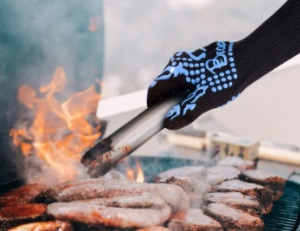
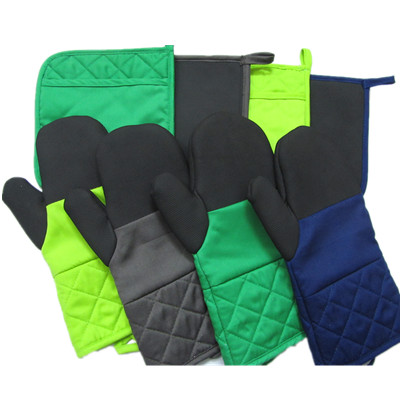
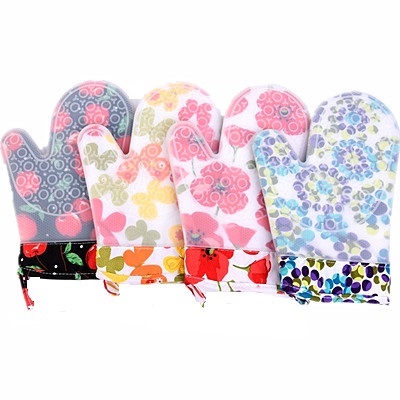
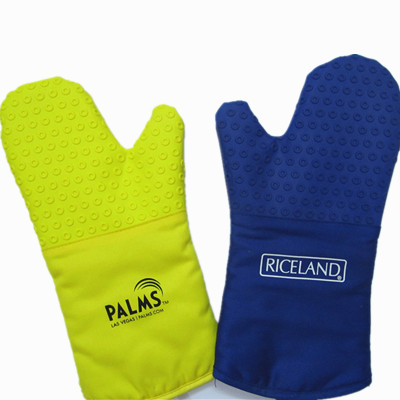
1. What Does “Heat Resistant” Really Mean for Oven Mitts?
First of all, let’s clear up a very common misunderstanding. When a product says it is “heat resistant up to 500 °F,” that does not mean you can hold a 500 °F object all day. Instead, it means the mitt can handle that temperature for a brief contact period — usually a few seconds — without burning your skin.
Additionally, two key factors determine how well a mitt actually protects you:
- Material type — cotton, silicone, neoprene, and aramid all behave very differently under heat.
- Thickness and insulation layers — a thicker mitt slows down heat transfer, giving you more safe seconds of contact time.
“Think of a heat resistant oven mitt like a seatbelt. It protects you within its design limits. Push beyond those limits, and protection breaks down quickly.” — Favor Houseware Kitchen Safety Team
Furthermore, moisture plays a big role. A wet cotton mitt, for example, transfers heat much faster than a dry one. That is why steam burns are so common — and why silicone-coated mitts offer an important advantage in wet cooking environments.
In short, always check the material, the thickness, and the temperature rating before you buy. And always stay within the product’s tested limits for safe use.
2. Typical Temperature Ratings for Different Oven Mitt Materials
Now that you understand what “heat resistant” means, let’s look at the numbers. Below is a clear breakdown of the most common oven mitt materials and their typical temperature ratings.
| Material Type | Typical Rating (°F) | Best Use Case | Waterproof? |
|---|---|---|---|
| Basic Cotton | ~200–250 °F | Light home baking, short contact | ❌ No |
| Neoprene | Up to ~400 °F | Home & light professional kitchens | ✅ Yes |
| Consumer Silicone | ~446–500 °F | General baking, grilling, steam blocking | ✅ Yes |
| Silicone + Cotton Lining | ~450–484 °F | Home users wanting extra comfort + protection | ✅ Partial |
| Commercial Silicone Hot Mitt | ~600–685 °F | Restaurant kitchens, very hot ovens | ✅ Yes |
| Aramid Fiber (Nomex/Kevlar) | 600 °F+ | Open-flame cooking, industrial kitchens, BBQ | ❌ No |
As you can see, basic cotton mitts are really only suitable for light tasks. Meanwhile, if you frequently work with high-heat equipment, a commercial silicone or aramid mitt is a much smarter — and safer — choice.
For a full range of heat resistant oven mitts across all these material types, visit Favor Houseware’s oven mitt collection.
3. How Long Can an Oven Mitt Safely Hold a Hot Pan?
This is one of the most important questions you can ask — yet most people never think about it until it’s too late. The temperature rating on a mitt tells you how hot it can handle. But how long it protects you is just as important.
Testing sites have measured insulation time by having people hold a 500 °F cast-iron pan until the heat becomes unsafe. Here is how different mitts performed:
In other words, a well-built mitt with quality insulation gives you a much larger safety window. This matters most when you are juggling multiple things in the kitchen. For more expert tips on kitchen safety, check out this helpful resource from the National Safety Council.
4. Choosing the Right Temperature Rating for Home vs. Commercial Kitchens
Not all kitchens are the same. As a result, not all oven mitts are the right fit for every situation. Let’s compare what home cooks need versus what professional chefs require.
🏠 Home Kitchen
- Typical oven temps: 300–450 °F
- Recommended rating: 400–450 °F
- Best materials: Cotton blend or consumer silicone
- Contact time: Usually 2–5 seconds
- Priority: Comfort + ease of washing
- Cuff length: Standard (12–13 inches) is fine
🏪 Commercial Kitchen
- Typical oven temps: 500–700 °F+
- Recommended rating: 500–685 °F+
- Best materials: Commercial silicone or aramid
- Contact time: May be longer, more frequent
- Priority: Maximum protection + durability
- Cuff length: Extended (17–20 inches) recommended
For home use, a mid-range silicone or hybrid mitt works perfectly. On the other hand, if you run a restaurant, pizzeria, or commercial bakery, investing in higher-rated mitts is not optional — it is a workplace safety requirement.
“In a commercial kitchen, the right oven mitt is just as important as the right knife. Both protect you — and both require the right spec for the job.” — Commercial Kitchen Safety Handbook
Furthermore, the OSHA Personal Protective Equipment guidelines recommend that food service workers always use properly rated PPE for high-heat tasks. Choosing the wrong mitt is not just uncomfortable — it can be a liability issue for your business.
5. Design Features That Improve Heat Protection (Length, Lining, Grip)
Beyond the material itself, the design of an oven mitt plays a huge role in how well it protects you. Therefore, here are the key features to look for — whether you are buying for personal use or sourcing in bulk.
🧤 Cuff Length
Standard mitts cover your hand and wrist — about 12–13 inches. However, extended cuffs reaching 17–20 inches also protect your forearm. This is especially important when you reach deep into a commercial oven or work near open flames. For most home users, standard length is fine. But for restaurant kitchens, longer cuffs are strongly recommended.
🧱 Insulation Lining
The lining inside the mitt traps air and slows heat transfer. Terry cloth and quilted cotton are the most popular choices because they are soft, absorbent, and comfortable. A good lining also helps prevent steam burns — which can actually be worse than dry heat burns because steam carries more energy.
✋ Non-Slip Grip Surface
A silicone grip pattern on the outside of the mitt prevents slipping. This is critical because dropping a heavy, hot pan can cause serious burns or kitchen accidents. Look for mitts with raised silicone dots or stripes for the best grip. Avoid mitts where the grip is simply printed on, as it wears off quickly after washing.
💧 Steam and Water Resistance
Plain cotton soaks up water and conducts heat fast. Consequently, a silicone exterior creates a protective barrier against steam and hot liquids. This feature is particularly useful for home cooks who drain boiling pasta or remove lids from steaming pots.

6. Key Safety Standards and Test Methods for Heat Resistant Mitts
If you are sourcing oven mitts professionally, understanding safety certifications and test standards is essential. These certifications tell you — and your customers — that the product has been independently verified.
As a certified manufacturer, Favor Houseware holds BSCI, OEKO-TEX Standard 100, SGS, and FDA-related compliance certifications. Therefore, our buyers have strong documentation support when entering international markets.
7. Why Custom Oven Mitts Are Popular With Food Brands and Restaurants
The global commercial oven mitt market is estimated at over $500 million USD — and it is projected to grow to around $700 million at approximately 5% annually. So, what is driving that growth? In large part, it is the surge in custom branded oven mitts.
Here is why so many restaurants, food brands, and promotional companies are ordering custom heat resistant oven mitts:
- Daily brand visibility — every time a chef puts on a mitt, your logo is seen.
- Safety + promotion in one product — mitts serve a real function, so they are never thrown away like flyers.
- Open-kitchen trend — with open-concept restaurants growing, staff equipment is visible to customers.
- Food delivery branding — branded kitchen gear reinforces professionalism in delivery kitchen operations.
- Corporate gifting — custom oven mitts make memorable, practical gifts for culinary brands and cooking schools.
- Retail product lines — retailers use custom designs to differentiate their kitchen accessory ranges.
“An oven mitt with your logo on it is one of the most cost-effective forms of daily brand exposure in any kitchen environment.” — B2B Promotional Products Insight Report
Additionally, growth in online food delivery and stronger workplace safety awareness are both fueling demand for high-quality, branded kitchen safety equipment. As a result, businesses are increasingly turning to specialized custom oven mitts suppliers rather than generic retail options.
You can also pair custom oven mitts with other branded kitchen products — such as custom aprons and kitchen towels — for a complete, coordinated brand look.
8. Customization Options You Can Get From a China Oven Mitts Supplier
China is the world’s leading manufacturer of heat resistant oven mitts — and for good reason. The combination of material supply chains, production scale, and OEM/ODM expertise makes China-based suppliers like Favor Houseware extremely competitive.
Here is a complete overview of what you can customize when working with a professional China oven mitts supplier:
| Customization Area | Available Options |
|---|---|
| Material | Cotton, silicone, neoprene, aramid fiber, or hybrid combinations |
| Temperature Target | 200 °F all the way up to 685 °F+ for commercial specs |
| Size & Cuff Length | Standard (12–13″) or extended (17–20″) — or fully custom dimensions |
| Color | Any Pantone color match for brand consistency |
| Logo Application | Screen printing, sublimation, embroidery, silicone mold, woven label |
| Packaging | OPP bag, retail box, hang tag, custom inner/outer carton |
| OEM / ODM | Manufacture to your design (OEM) or develop new products together (ODM) |
| MOQ | Flexible — from small sample runs to large retail orders |
| Wholesale Price Range | Approximately $0.80–$3.00 per piece depending on spec and quantity |
At Favor Houseware, we have been producing and exporting custom textile products since 2005. Furthermore, our manufacturing process covers every step in-house — from weaving and printing to cutting, sewing, inspecting, and packing. This means consistent quality from start to finish.
We also offer free samples (you only pay freight), so you can verify quality before committing to a bulk order. Our clients span North America, Europe, Asia, and beyond — including importers, supermarket chains, e-commerce brands, and corporate gift companies.
If you also need complementary products, we can bundle oven mitts with aprons, kitchen towels, and cleaning cloths for a complete kitchen textile solution.
9. How to Read Product Specs When Sourcing Heat Resistant Oven Mitts
When you source oven mitts in bulk, reading product specifications correctly can save you from costly mistakes. Here is exactly what to look for:
✅ Checklist: What to Check in Every Product Spec Sheet
- Temperature rating — Is it clearly stated? Does it specify material AND construction, or just one?
- Contact time assumption — Does the rating apply to 5 seconds of contact, or 30 seconds?
- Material composition — Full breakdown of outer layer, inner lining, and any coating.
- Cuff length — Stated in inches or cm? Measured from fingertip or from the cuff opening?
- Steam resistance — Is the outer layer waterproof? This is often omitted from basic spec sheets.
- Certifications — Which standards does it comply with? EN 407, FDA, SGS? Ask for documentation.
- Washing instructions — Machine washable? At what temperature? How many cycles before degradation?
🏭 For B2B Orders — Also Confirm:
- MOQ (Minimum Order Quantity) — Is it different for standard vs. custom designs?
- Lead time — Typically 30–45 days for custom production. Does this match your campaign timeline?
- Production capacity — Can the supplier scale up if your order grows?
- Printing and embroidery capability — Ask for samples of past logo work.
- Packaging options — Retail-ready vs. bulk packing. Does packaging include barcodes?
- Payment terms and trade security — Look for suppliers supporting L/C, T/T, and secure trade processes.
For detailed sourcing guidance, the Textile World resource hub offers industry-level technical information on textile performance and manufacturing standards.
10. Care and Replacement Guidelines to Keep Oven Mitts Heat Safe
Even the best heat resistant oven mitts eventually wear out. Therefore, knowing how to care for them — and when to replace them — is critical for maintaining kitchen safety.
🧺 How to Care for Your Oven Mitts
- Cotton mitts: Machine wash on a gentle cycle with mild detergent. Avoid bleach, as it weakens fibers. Air dry when possible.
- Silicone mitts: Wipe clean with a damp cloth or place in the dishwasher. They are non-absorbent, so cleaning is very easy.
- Aramid fiber mitts: Spot clean only. Machine washing can damage the fiber structure and reduce heat resistance.
- Flame-retardant treated cotton: Do not machine wash, as it strips the treatment. Follow manufacturer instructions carefully.
🔴 Signs You Need to Replace Your Oven Mitts — Immediately
- Visible burn holes or scorch marks
- Thinning or compressed insulation (the mitt feels flatter)
- Hardened or cracked silicone exterior
- Worn-through grip surface
- Frayed stitching at seams or cuff edges
- You felt heat through the mitt during recent use
“There is no fixed replacement schedule for oven mitts. Instead, replace them as soon as they show any sign of damage — because once insulation fails, the mitt is no longer protecting you at its rated temperature.” — Kitchen Safety Best Practice Guide
In commercial settings, we recommend implementing a regular monthly inspection routine for all kitchen PPE, including oven mitts. Additionally, keeping spare mitts on hand means you never have to use a compromised one.
FAQ: Heat Resistant Oven Mitts & Custom Suppliers
These are the most common questions people ask about heat resistant oven mitts. We have answered each one clearly and simply below.
Conclusion: Find the Right Heat Resistant Oven Mitts for Your Needs
By now, you have a complete picture of what makes a great heat resistant oven mitt — from temperature ratings and materials to design features, safety standards, and sourcing tips. Most importantly, you know how to match the right mitt to the right kitchen environment, whether that is a home oven or a high-output commercial kitchen.
To summarize the key takeaways:
- “Heat resistant” means short-contact protection up to the stated rating — not unlimited protection.
- Silicone and aramid mitts offer the highest ratings; cotton suits light home use only.
- Insulation quality, cuff length, and grip surface are just as important as material type.
- Commercial kitchens should always use mitts rated 500 °F or higher, with extended cuffs.
- Custom branded mitts are a smart, high-visibility investment for restaurants and food brands.
- Always request samples and certifications when sourcing from a new supplier.
Whether you are a retail buyer, a restaurant owner, or a brand manager building a custom kitchen product line, Favor Houseware is ready to help. As a trusted custom oven mitts supplier from China since 2005, we offer the full package — quality materials, flexible customization, reliable certifications, and professional export service.
You can also explore our wider range of kitchen and lifestyle textile products, including custom aprons, kitchen towels, microfiber towels, and beach towels — all available for OEM/ODM customization.
Ready to Source Custom Heat Resistant Oven Mitts?
Get a free sample. Request a custom quote. Our team responds within 24 hours — and we ship worldwide.
📩 Contact Favor Houseware Today🧤 Browse Our Oven Mitt Collection
Want more kitchen textile guides? Visit our Favor Houseware Blog for expert sourcing tips and product updates.
Views: 0