Picking the right apron for a professional kitchen is more important than most people think. The wrong apron can slow down your team, create safety risks, and even fail health inspections. In fact, restaurant workers suffer cuts and burns at more than three times the national average. So, the right chef apron is not just a uniform — it is a piece of safety equipment.
Whether you are a restaurant owner, a chef, or a buyer sourcing bulk aprons for a hotel chain, this guide covers everything. First, let’s start with the key facts you need right away.
⚡ Key Takeaway Snapshot: Professional Chef Aprons at a Glance
| Data Point | Key Figure | Why It Matters |
|---|---|---|
| Global apron market size (2028) | $901.42 million USD | Fast-growing industry driven by foodservice |
| Cooking aprons market (2025) | $195.27 million USD | Commercial demand is the #1 growth driver |
| Market growth rate (CAGR 2023–2030) | 4.99% per year | Steady, reliable industry expansion |
| Restaurant worker cut/laceration rate | 23.6 per 10,000 workers | 3× higher than the national average |
| Search spike for “chef apron” (Nov 2024) | +67% surge | Strong Q4 seasonal demand — order early |
| Recommended replacement cycle | Every 6–12 months | For heavy commercial use |
Sources: Industry market reports, U.S. Bureau of Labor Statistics, Google Trends.
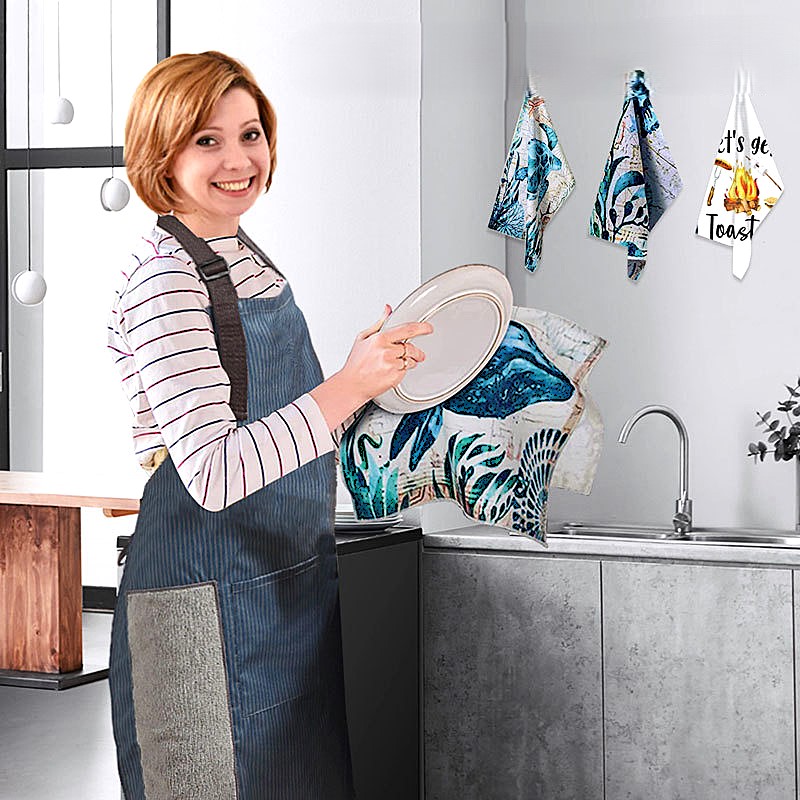
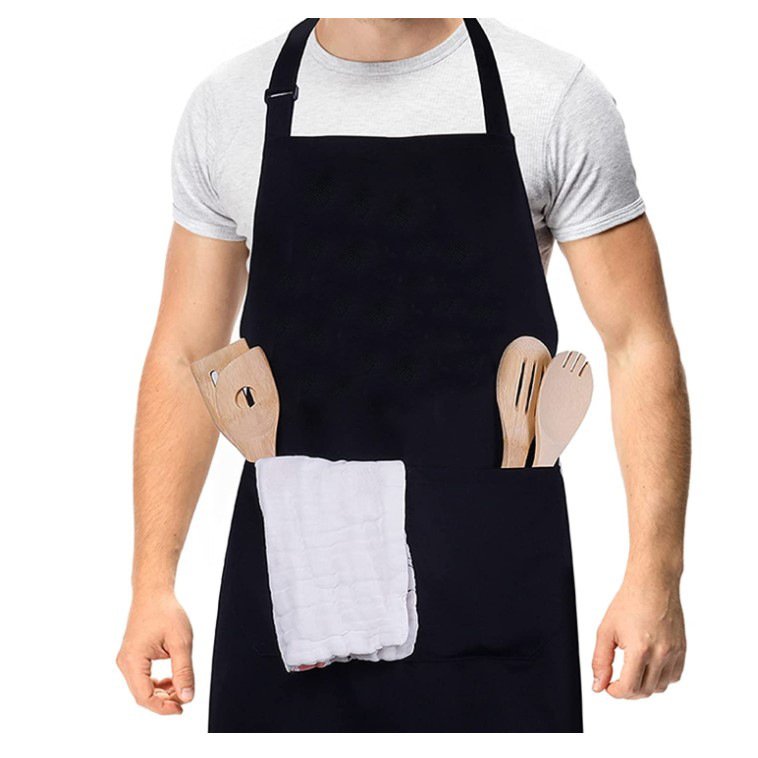

1. What Makes a Professional Chef Apron Different From a Home Apron?
A professional chef apron is designed as protective equipment for commercial kitchens. It is built with thicker fabric, stronger stitching, and more coverage than a typical home apron. Home aprons focus on style and light use. Professional aprons focus on safety, hygiene, and durability.
Think of it this way. A home apron is like a raincoat you wear once in a while. A professional chef apron is like a work uniform you wear every day in a dangerous environment. The difference in construction is huge.
Here are the key differences at a glance:
| Feature | 🏠 Home Apron | 🍳 Professional Chef Apron |
|---|---|---|
| Primary purpose | Light cooking, style | Safety, hygiene, professionalism |
| Fabric weight | 4–6 oz (lightweight) | 8–16 oz (heavy-duty) |
| Coverage | Waist or short bib | Full chest-to-knee coverage |
| Stitching | Single stitch | Double/triple stitch + bartack |
| Straps | Fixed or basic tie | Adjustable D-ring or cross-back |
| Pockets | Decorative, 0–1 pocket | 2–4 utility pockets + towel loop |
| Wash cycles | 50–100 home washes | 200–500+ industrial washes |
| Custom branding | Rarely available | Logo embroidery, screen print, labels |
| Bulk ordering | Not needed | MOQ from 50–500+ units |
Furthermore, in a commercial kitchen, aprons are changed between tasks to prevent cross-contamination. For example, a cook will change aprons after handling raw chicken before moving to salad prep. This rarely happens at home — but it is standard practice in professional food service.
2. Key Safety and Hygiene Benefits of Chef Aprons in Commercial Kitchens
Safety is one of the biggest reasons professional kitchens require aprons. The numbers tell a clear story. Therefore, it is important to understand just how risky commercial kitchens can be.
“In a high-risk environment where restaurant workers face injury rates more than three times higher than the average worker, a heavy-duty apron becomes part of basic safety PPE — not just a uniform.” — Industry safety analysis based on U.S. Bureau of Labor Statistics data
Beyond cuts and burns, there is also the issue of food hygiene. Additionally, health codes in most countries require protective clothing in professional kitchens. Here is why aprons are a critical part of kitchen safety:
- 🔥 Burn protection: Aprons provide a barrier against hot oil splashes, steam, and accidental contact with hot surfaces.
- 🦠 Cross-contamination prevention: Changing aprons between raw and cooked food prep reduces the risk of spreading harmful bacteria.
- 🩸 Cut and laceration shield: Heavy-duty fabrics slow the impact of knife slips or sharp tool contact.
- 🧼 Hygiene compliance: Aprons protect street clothes and keep loose fibers away from food, meeting most food safety regulations.
- 👁️ Professional image: Clean, matching aprons signal hygiene standards to guests and health inspectors alike.
- 🌡️ Splatter control: Full bib coverage stops grease and liquids from soaking through to the skin.
According to FoodSafety.gov, proper protective clothing is a key part of food handling standards. As a result, every commercial kitchen — from fast food to fine dining — should treat aprons as part of their PPE policy.
3. Restaurant Kitchen Apron vs. Home Apron — Materials, Coverage, and Durability
Now let’s go deeper into the materials. After all, the fabric is what determines how well an apron protects you — and how long it lasts. Commercial kitchens need fabrics that survive daily industrial laundering, heat, and staining.
Most Common Materials in Professional Chef Aprons
| Material | Weight | Best For | Durability |
|---|---|---|---|
| 100% Cotton Canvas | 8–12 oz | General kitchen, long shifts | ⭐⭐⭐⭐ |
| Cotton-Poly Blend | 7–10 oz | Fast-paced kitchens, easy care | ⭐⭐⭐⭐ |
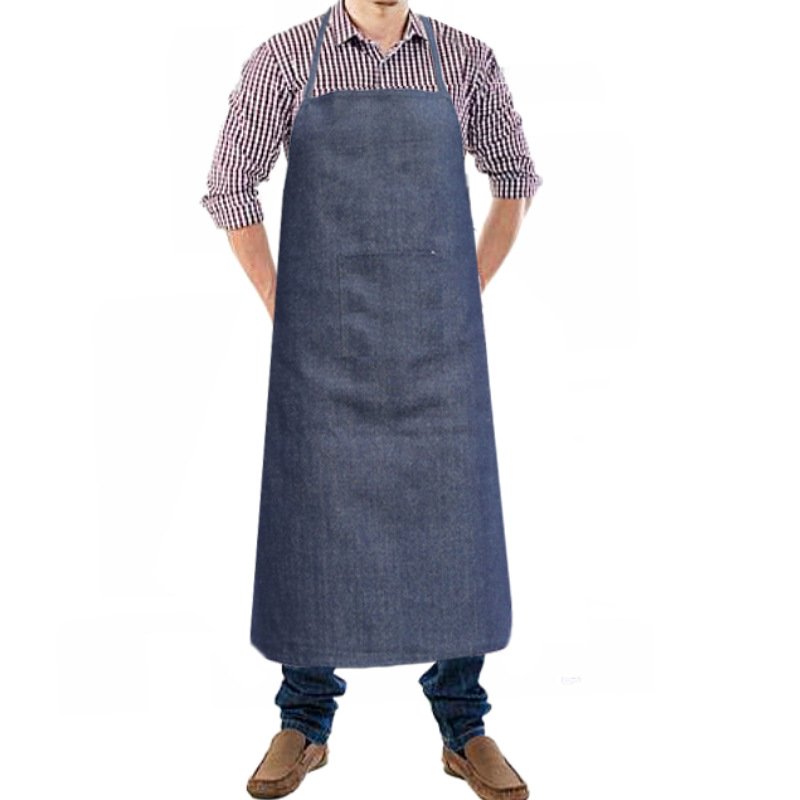
| Denim | 10–14 oz | Trendy restaurants, brunch spots | ⭐⭐⭐⭐ |
| Waxed Canvas | 12–16 oz | Fish prep, bar use, wet stations | ⭐⭐⭐⭐⭐ |
| Leather | Heavy | BBQ, artisan chefs, butchery | ⭐⭐⭐⭐⭐ |
| PVC / Waterproof | N/A | Dishwashing, industrial processing | ⭐⭐⭐⭐⭐ |
| Lightweight Cotton/Linen | 4–6 oz | Home cooking only | ⭐⭐ |
Coverage: Why Full-Length Matters
Home aprons often stop at the waist. However, professional chef aprons should cover from chest to knee. This is especially important for line cooks who work near fryers and open flames. A spill of hot oil from knee height can cause serious burns if legs are not protected.
- Full bib aprons — chest to knee; the standard for commercial kitchens
- Waist aprons — hip to knee; used by front-of-house and servers
- Cobbler aprons — wrap-around; ideal for bakeries and pastry prep
Additionally, the U.S. Occupational Safety and Health Administration (OSHA) recommends appropriate PPE — including protective clothing — in environments with burn and chemical exposure hazards. A commercial kitchen qualifies on both counts.
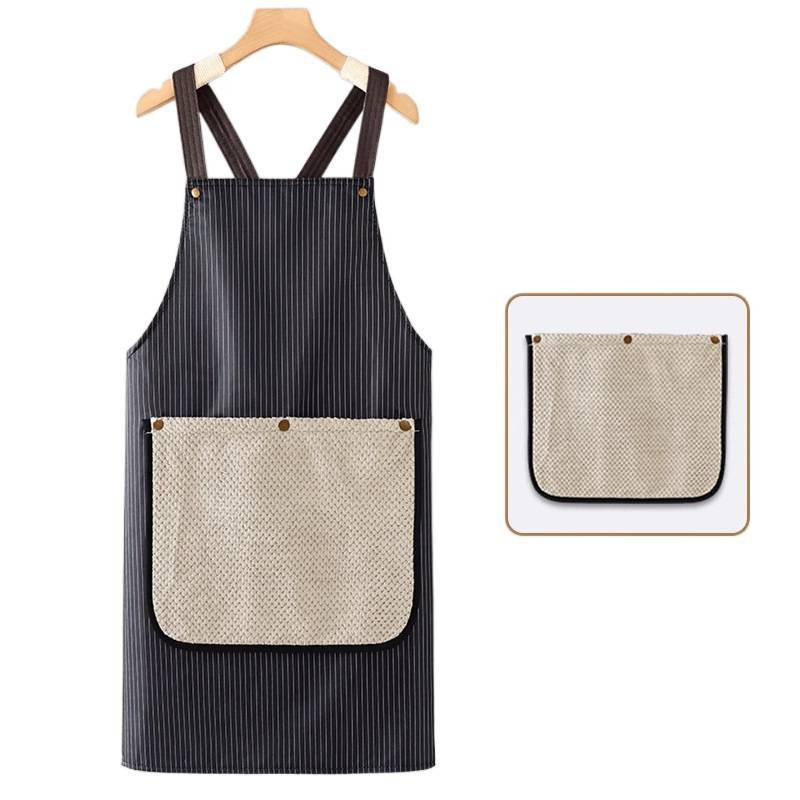
4. Best Apron Features for Line Cooks (Heat, Splatter, and Speed)
Line cooks work in one of the toughest environments of any job. Think about it: extreme heat, flying oil, sharp tools, and 8–12 hour shifts. Therefore, the best apron for line cooks must handle all of this at once.
“Multiple pockets are a game-changer for line cooks. They keep thermometers, pens, and towels within reach — which is critical when you can’t slow down.” — Common feedback from professional kitchen staff
Here is exactly what to look for in a line cook apron:
| Feature | Line Cook Recommendation | Why It Matters |
|---|---|---|
| Style | Full bib apron, chest-to-knee | Maximum protection from splashes |
| Fabric weight | Medium/heavy cotton or waxed canvas (10–14 oz) | Resists hot oil and abrasion |
| Strap style | Adjustable neck strap + wide waist ties | Reduces fatigue during long shifts |
| Pockets | 2–4 tool pockets plus towel loop | Keeps tools accessible at all times |
| Washability | Machine washable, colorfast fabric | Survives daily commercial laundering |
| Reinforcements | Bartack stitching at stress points | Prevents tearing at pocket corners and strap joins |
Also note: cross-back aprons are becoming very popular with line cooks. They distribute weight across both shoulders instead of the neck. This makes a huge difference over a 10-hour shift. As a result, many modern restaurant groups are switching from traditional loop-neck designs to cross-back styles.
5. Heavy-Duty Chef Aprons for Commercial Kitchen Use: Fabrics and Construction
Some kitchen environments push aprons to the extreme. Therefore, not every commercial kitchen can use the same apron. A grill cook working over live fire needs a very different apron from a hotel pastry chef. Here is a breakdown of heavy-duty chef aprons by use case:
| Kitchen Environment | Recommended Apron Type | Key Feature |
|---|---|---|
| 🔥 High heat / grill / live fire | 100% cotton canvas (12–14 oz) | Won’t melt near open flame |
| 🐟 Fish prep / wet station | Waxed canvas or PVC-coated | Water-resistant surface |
| 🥩 Butchery / meat processing | Leather or waxed canvas | Cut-resistant and easy to wipe |
| 🍳 General brigade cooking | Cotton-poly canvas (10–12 oz) | Balance of comfort and protection |
| 🍞 Bakery / pastry kitchen | Full bib cotton, cobbler style | Full coverage for flour-heavy work |
| 🍽️ Industrial dishwashing | PVC or rubber | Chemical-resistant and waterproof |
| 🍹 Bar / mixology | Waxed canvas waist apron | Style + liquid resistance |
Construction Details That Make the Difference
Heavy-duty aprons are not just about fabric weight. Furthermore, the way an apron is built determines how long it survives in a harsh environment. Look for these construction features:
- Double or triple stitching at all seams for tear resistance
- Bartack reinforcements at pocket corners and strap attachment points
- Metal D-ring hardware — resists corrosion and won’t snap under pressure
- Metal rivets at high-stress corners (similar to workwear jeans)
- Colorfast fabric treatments so aprons stay presentable after 200+ washes
- Pre-shrunk fabric so sizing stays consistent after the first wash
Importantly, polyester-heavy blends should be avoided near open flame. Polyester can melt when exposed to direct heat, creating a burn hazard. For high-heat stations, always specify 100% cotton or natural fiber fabrics.
Looking for a reliable source? Our heavy-duty apron manufacturing page shows the full range of commercial-grade options — from canvas bib aprons to PVC-coated waterproof styles. Additionally, our oven mitts and kitchen towels complement any full kitchen uniform package.
6. Pocket Layouts, Straps, and Fit — Ergonomics for Long Shifts
An apron that feels great at 9 AM can feel like torture by 9 PM. Therefore, ergonomics — how an apron fits and moves with the body — really matter for shift workers. Comfort is not a luxury in a professional kitchen. It directly affects performance and safety.
Strap Styles: Which One is Right?
| Strap Type | Best For | Comfort Level (Long Shift) |
|---|---|---|
| Traditional neck loop | Short shifts, front-of-house | ⭐⭐⭐ (can strain neck over time) |
| Adjustable neck strap (D-ring) | General kitchen staff | ⭐⭐⭐⭐ |
| Cross-back straps | Long-shift brigade cooks | ⭐⭐⭐⭐⭐ (distributes weight evenly) |
| Wide waist ties (1.5–2 inch) | All professional settings | ⭐⭐⭐⭐⭐ (stays secure during movement) |
Pocket Layout Best Practices
Smart pocket placement is one of the most underrated features of a professional apron. Here is what a well-designed layout looks like:
- Chest pocket — for pens, markers, and small notes
- Wide center pocket — for a folded kitchen towel or side towel
- Split front pocket — for thermometers, knives, or scissors
- Towel loop — keeps a hand towel at the hip for quick access
Sizing and Fit
A well-fitting apron should not be so tight that it restricts movement. Additionally, it should not be so loose that it catches on equipment. Professional suppliers should offer a range of sizes — at minimum S, M, L, and XL. For commercial kitchens with diverse staff, look for suppliers who offer XS through 3XL.
7. Custom Aprons for Restaurants — Branding, Compliance, and Bulk Ordering
Custom aprons are one of the smartest branding investments a restaurant can make. Moreover, they are surprisingly affordable when ordered in bulk from the right supplier. A well-designed staff apron shows up in social media photos, impresses health inspectors, and builds team identity.
Customization Options Available
- 🪡 Embroidery — premium, durable, survives industrial washing; best for logos
- 🖨️ Screen printing — cost-effective for large designs and multi-color artwork
- 🏷️ Woven neck labels — adds a high-end, branded finish inside the apron
- 🔥 Heat transfer printing — ideal for photographic or detailed artwork
- 🎨 Custom Pantone color — match your brand’s exact color specifications
- ✂️ Bespoke construction — custom pocket placement, strap style, and length
Compliance and Hospitality Standards
Beyond branding, custom aprons also help with compliance. Many hotels and restaurant chains require all front-line staff to wear matching, clean uniforms. As a result, custom aprons with consistent color and sizing help operators pass internal audits and health inspections.
Q4 Ordering: Timing Your Bulk Apron Order
Here is an important insight for restaurant buyers. Search interest for “chef apron” spikes +67% in November and peaks in December. This means that holiday season creates a surge in demand — and longer lead times from suppliers. Therefore, place your custom apron orders in September or October to guarantee delivery before the Q4 rush.
We hold BSCI, OEKO-TEX 100, SGS, and FDA certifications — so your custom aprons meet international safety and sustainability standards. Additionally, our fabrics are eco-friendly and sourced responsibly, which aligns with the growing demand for sustainable hospitality products. Learn more about our approach on our About page.
8. How to Choose the Right Apron Supplier (Including Overseas Manufacturers in China)
Choosing the right apron supplier is just as important as choosing the right apron. In particular, commercial buyers need a supplier who can handle scale, consistency, and customization — not just low price. Here is a complete checklist:
✅ Supplier Evaluation Checklist
- Do they own their factory, or subcontract to unknown third parties?
- Do they hold certifications like BSCI, OEKO-TEX, ISO 9001, or SGS?
- Can they handle your required order volume — from small batches to large chains?
- Do they offer OEM/ODM services — custom design, not just catalog products?
- What is their fabric quality and consistency across batches?
- Do they perform wash-cycle testing on finished products?
- Can they handle international shipping, customs paperwork, and labeling?
- Do they offer free samples before bulk production?
- Is there a dedicated account manager for ongoing orders?
- What are their payment terms and trade security options?
Why China Manufacturers Are a Top Choice for Commercial Aprons
China-based manufacturers dominate the global apron supply market for good reasons. First of all, they offer significantly lower production costs without sacrificing quality — when you choose certified suppliers. Furthermore, they typically have the infrastructure to handle both small test orders and large-scale repeat orders.
Importantly, not all China manufacturers are equal. The key is choosing a vertically integrated factory with verifiable certifications. According to TXM Manufacturing case studies, the best Chinese manufacturers succeed by combining strong quality systems with efficient, scalable production.
We offer low MOQ, free samples (pay freight only), multiple secure payment methods, and personalized branding for wholesale and promotional orders. Contact us for a quote →
Additionally, our product range extends beyond aprons. We manufacture kitchen towels, microfiber towels, oven mitts, and other textile products — making us a one-stop supplier for full kitchen uniform packages.
9. Apron Market Trends — Growth, Popular Styles, and Seasonal Demand Spikes
The global apron market is growing steadily. Importantly, commercial foodservice — not home use — is the biggest driver of this growth. Here is what the numbers show:
| Market Data Point | Figure |
|---|---|
| Global apron market size (2028 forecast) | $901.42 million USD |
| Market CAGR (2023–2030) | 4.99% per year |
| Cooking aprons market (2025) | $195.27 million USD |
| Cooking aprons market (2026 forecast) | $210.72 million USD |
| Key growth driver | Foodservice and hospitality demand |
| Search spike — “chef apron” (Nov 2024) | +67% vs average |
| Search spike — “kitchen apron” (Nov 2024) | +61% vs average |
| Peak demand month | December (holiday cooking season) |
Popular Styles Trending Right Now
- Cross-back canvas aprons — growing fast in modern restaurant groups
- Denim bib aprons — popular in casual dining, brunch spots, and coffee shops
- Waxed canvas aprons — favored in craft cocktail bars and artisan food businesses
- Sustainable/organic cotton aprons — driven by eco-conscious hospitality brands
- Wipeable and waterproof aprons — growing in fast-casual and food court settings
What This Means for B2B Buyers
The Q4 demand spike has important implications for procurement teams. First, lead times from manufacturers get longer in October and November. Therefore, restaurants and retailers should place bulk apron orders by August–September for holiday season delivery. Furthermore, annual uniform refresh projects — including rebranding with custom logos — should be planned well ahead of Q4.
At Favor Houseware, we maintain pre-dyed fabric inventory in our most popular colors year-round. As a result, we can fulfill standard orders faster than most competitors — even during peak season. Browse our blog for more sourcing guides and industry updates.
10. Care, Washing, and Replacement Cycles for Professional Aprons
Even the best apron will wear out fast if it is not cared for correctly. Moreover, proper care dramatically extends the lifespan of commercial aprons — saving restaurants real money. Here is a complete care guide by material type:
| Material | Washing Instructions | Drying | Special Care |
|---|---|---|---|
| Cotton canvas | Machine wash at 60°C max | Tumble dry medium | No bleach on colored fabric |
| Cotton-poly blend | Machine wash 40–60°C | Low-heat tumble dry | Wrinkle-resistant; easy iron |
| Denim | Cold wash to prevent shrinkage | Air dry for first 5 washes | Wash inside-out to preserve color |
| Waxed canvas | Spot clean only — NO machine wash | Air dry flat | Re-wax annually with beeswax |
| Leather | Wipe with damp cloth | Air dry away from heat | Condition with leather oil every 3–6 months |
| PVC / Waterproof | Wipe clean with mild detergent | Air dry | No machine wash; avoid folding sharp creases |
Industrial Laundry Best Practices
For restaurants using commercial laundry services, follow these tips to extend apron life:
- Always separate aprons from sharp items (knives, peelers) in laundry bags
- Wash at 60°C rather than 90°C — high heat degrades fabric faster
- Use color-safe commercial detergent to maintain appearance
- Opt for low-heat tumble dry — high heat destroys strap hardware
- Inspect D-rings, buckles, and bartack stitching at each wash cycle
- Use mesh laundry bags to protect apron hardware and embroidery
When to Replace Professional Aprons
As a general guideline, evaluate your commercial aprons every 6–12 months for heavy use. Furthermore, replace them immediately if any of the following apply:
- Strap integrity is compromised or hardware fails
- Fabric shows through-wear, thinning, or holes at stress points
- Color fading or staining affects brand presentation
- Stitching is unraveling at pocket corners or seams
- The apron no longer meets your kitchen’s hygiene inspection requirements
11. Frequently Asked Questions About Professional Chef Aprons
What is the difference between a chef apron and a regular kitchen apron?
Chef aprons are designed as professional protective garments for high-risk commercial kitchens. They feature thicker materials, more coverage, and features like multiple pockets and adjustable straps. Regular home kitchen aprons focus more on comfort and style for light, occasional use.
Do chefs really need to wear aprons?
Yes, absolutely. Aprons protect against burns, spills, and splashes. They also reduce cross-contamination between raw and cooked foods. Furthermore, they help kitchens meet hygiene regulations required for food preparation areas in most countries.
What material is best for a chef apron?
Durable cotton or cotton-poly blends are the most popular choice. They balance comfort, breathability, and washability well. For more intensive cooking environments, heavier fabrics like denim or waxed canvas provide extra protection and ruggedness.
What kind of apron do line cooks wear?
Line cooks typically wear full bib aprons covering chest to knee. These are made from sturdy, machine-washable fabrics with multiple pockets and adjustable straps. This style allows quick movement while providing maximum protection from hot oil and food splatter.
How many aprons does a restaurant worker need?
There is no fixed rule. However, most commercial kitchens keep 3–5 clean aprons per worker. This allows staff to change between tasks for hygiene, and replace heavily soiled aprons during a long shift without interruption.
How often should chef aprons be washed or replaced?
Aprons should be washed after every shift — or immediately when soiled. For replacement, evaluate commercial aprons every 6–12 months under heavy use. Replace whenever fabric thins, stitching fails, or hygiene standards can no longer be maintained.
Are custom logo aprons worth it for restaurants?
Yes — especially at bulk pricing. Custom logo aprons strengthen brand identity and create a professional look that guests notice. They also help pass hospitality uniform standard inspections. When ordered in bulk from a direct manufacturer like Favor Houseware, the per-unit cost is very competitive.
What should I look for in a commercial apron supplier?
Look for suppliers that own their factory, hold certifications like BSCI or OEKO-TEX, can handle bulk orders, and offer reliable customization. Additionally, they should maintain consistent quality across batches and support ongoing re-orders for multi-location operators.
Conclusion: The Right Chef Apron Protects Your Team and Builds Your Brand
Choosing the right professional chef apron is not complicated — once you know what to look for. To summarize, here are the key takeaways from this guide:
- Professional chef aprons are safety equipment first, uniforms second
- Commercial kitchens need heavier fabrics, stronger construction, and full coverage that home aprons simply do not offer
- Line cooks benefit most from full bib or cross-back designs in 10–14 oz cotton or canvas
- Heavy-duty environments need specialized materials — waxed canvas, PVC, leather, or treated cotton
- Custom branded aprons are an affordable branding tool — especially when ordered in bulk from a direct manufacturer
- Proper care and a 6–12 month replacement cycle maximizes ROI on commercial aprons
- Order before Q4 — demand spikes 61–67% in November and December
Finally, the right apron supplier makes all the difference. Whether you need 50 aprons or 50,000, you need a manufacturer who understands your business — not just your order.
Ready to Source Professional Chef Aprons?
Favor Houseware Co., Ltd. is a certified China apron manufacturer with 15+ years of experience. We offer low MOQ, free samples, OEKO-TEX certified fabrics, custom branding, and fast global shipping.
Get a Free Quote Today →🔗 Explore more: Apron Manufacturer · Kitchen Towels · Oven Mitts · Microfiber Towels · About Us · Blog
Views: 0