By Favor Houseware · Updated 2026 · 15-min read
⚡ Key Takeaways — Professional Chef Apron at a Glance
Short on time? Here are the most important facts before you read on.
| What You Want to Know | Quick Answer |
|---|---|
| Best fabric for line cooks | Cotton-poly blend (65/35), 230–280 GSM |
| Best apron style for long shifts | Cross-back bib apron — reduces neck strain |
| Restaurant vs home apron — main difference | Heavier fabric, reinforced stitching, safety-rated materials |
| How often to wash commercial aprons | Daily, or between every shift change |
| Key safety standards to look for | EN ISO 13688, EN 1186, OEKO-TEX Standard 100 |
| How long should a chef apron last | 1–3 years with proper care in commercial use |
| Global apron market size (2023) | ~$100 billion USD, growing to $141.56B by 2031 |
| Can I use a restaurant apron at home? | Yes — it will simply last much longer than needed |
Choosing the right professional chef apron matters more than most people think. Therefore, whether you manage a busy restaurant kitchen or you are a line cook on your feet for 12 hours, the right apron protects you, helps you work better, and keeps your kitchen up to standard.
In this guide, we break down everything you need to know. First, we compare restaurant kitchen aprons vs home aprons. Then, we explore the best aprons for line cooks, key safety standards, fabric choices, and much more. Additionally, we include a full buying guide so restaurants and food businesses can make smart decisions.
Let’s get started.
What Is a Professional Chef Apron? (Quick Answer)
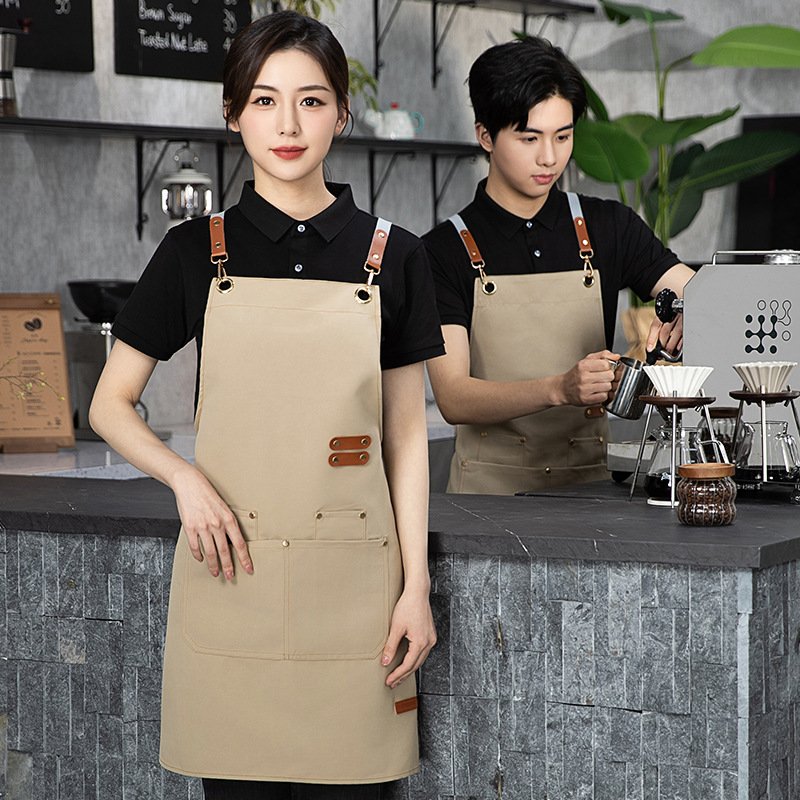
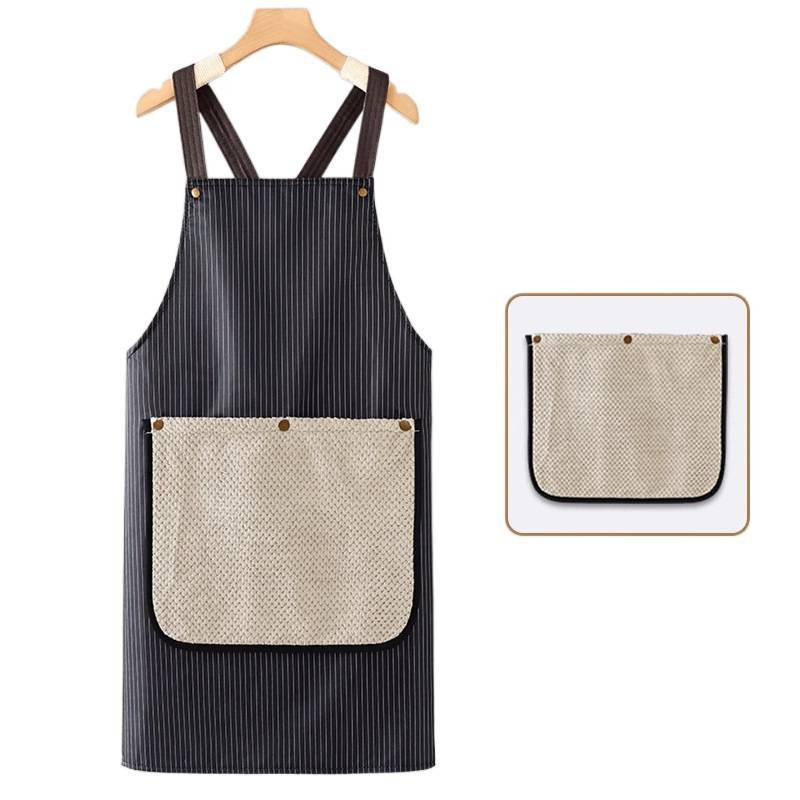
📌 Featured Answer: A professional chef apron is a heavy-duty protective garment worn by kitchen staff in restaurants, hotels, and commercial food operations. It uses thicker, more durable fabrics, reinforced stitching, and functional features like deep pockets and adjustable straps — all designed for long shifts, high heat, spills, and daily industrial washing. It is very different from a casual home apron.
So, what exactly makes a chef apron “professional”? The answer comes down to three things: materials, construction, and function.
First, professional aprons use heavier fabrics — think thick canvas or cotton-poly blends with a GSM (grams per square metre) of 230 or above. Furthermore, they are built with reinforced seams at every stress point. And most importantly, they include practical features that a home cook simply does not need — multiple deep pockets, cross-back strap systems, and safety-rated materials.
- ✅ Built for daily use in hot, fast-paced kitchens
- ✅ Made with heavier, more durable fabrics (200–300+ GSM)
- ✅ Features reinforced stitching and bar-tack at stress points
- ✅ Includes multiple pockets for tools, pens, and thermometers
- ✅ Often adjustable with cross-back or wide neck straps
- ✅ Meets food safety and hygiene standards for commercial use
- ✅ Designed to survive industrial laundering over many cycles
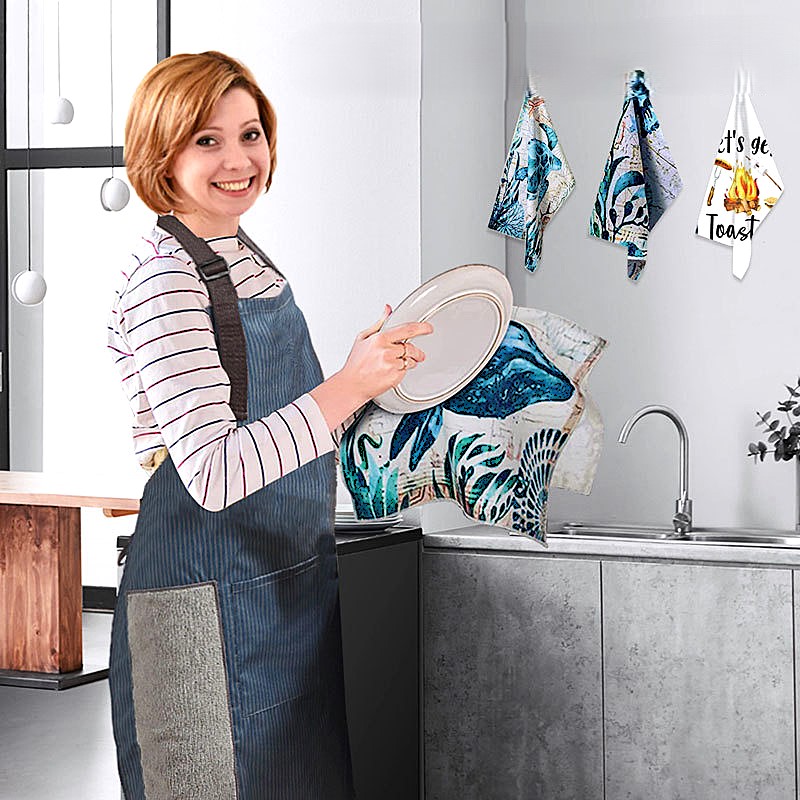
In contrast, a home apron is lighter, simpler, and built mainly for looks. It works well for weekend cooking. However, it would fall apart quickly in a professional kitchen setting.
Restaurant Kitchen Apron vs Home Apron: Materials, Features, and Durability
Now let’s go deeper. The difference between a restaurant kitchen apron and a home apron is significant. Moreover, understanding those differences helps buyers make smarter choices — whether they are equipping a kitchen brigade or stocking up for home use.
Side-by-Side Comparison
| Feature | Restaurant / Commercial Kitchen Apron | Home Apron |
|---|---|---|
| Typical Fabric | Heavy-duty cotton canvas, cotton-poly blend, coated or non-porous options | Lightweight cotton, linen, or decorative fabric |
| Fabric Weight (GSM) | 200–300+ GSM | 120–180 GSM |
| Durability | Designed for daily, high-stress use; reinforced seams; thick fabric | Occasional use; less abrasion resistance |
| Safety | May include flame-retardant treatment; full coverage for hot oil and spills | Rarely flame-retardant; lighter coverage |
| Hygiene | Part of food safety procedures; strict washing protocols | Casual washing; no formal protocols |
| Pocket Design | Multiple deep pockets; tool-specific compartments | One or two basic pockets |
| Strap System | Adjustable, cross-back, or wide padded straps | Simple neck loop and waist ties |
| Wash Durability | Industrial laundry rated; 50+ wash cycles | Home washing; 20–30 cycles before fading |
| Average Lifespan | 1–3 years with daily commercial use | 2–4 years with occasional home use |
| Primary Purpose | Protection, hygiene compliance, function | Style, light protection, casual comfort |
As you can see, the gap is wide. Therefore, using a home apron in a commercial kitchen is not just impractical — it can also be a safety and hygiene risk.
“In a professional kitchen, an apron is not an accessory. It is part of your safety kit. The wrong apron in the wrong environment can lead to burns, contamination, and premature wear.” — Industry guidance from professional kitchen operators

Key Fabric Choices: Cotton, Polyester, and Blends for Chef Aprons
Fabric is the most important part of any professional chef apron. Furthermore, the fabric you choose affects comfort, safety, durability, and how easy the apron is to clean. So let’s break down the three main options.
📌 Quick Answer — Best Fabric for a Chef Apron: For most restaurant and commercial kitchen use, a cotton-polyester blend (65/35) at 230–280 GSM is the best choice. It combines comfort, durability, easy care, and color retention in one fabric.
| Fabric | Advantages | Disadvantages | Best Use Cases | Typical GSM Range |
|---|---|---|---|---|
| 100% Cotton | Breathable, soft, comfortable in heat; natural feel | Shrinks and fades faster; not water-resistant | Home kitchens, bakeries, lighter restaurant tasks | 180–230 GSM |
| 100% Polyester | Very colorfast; easy care; supports bold printing and logos | Poor breathability; feels hot in busy kitchens | Front-of-house (FOH), branded aprons, light foodservice | 150–200 GSM |
| Cotton-Poly Blend (65/35) | Combines comfort and durability; less shrink/fade; versatile | Usually not fully water-resistant | Line cooks, general restaurant use, commercial kitchens | 230–280 GSM |
| Heavy Canvas | Extremely tough; great for grill and prep stations | Heavier to wear; takes longer to dry | Grill stations, butcher, prep kitchens | 280–350 GSM |
| Coated / Non-Porous | Liquid-proof; easy to wipe clean; hygienic | Less breathable; higher cost | Dish stations, fish prep, chemical-heavy areas | Varies |
Why GSM Matters for Professional Aprons
GSM stands for grams per square metre. Simply put, it measures how thick and heavy a fabric is. Consequently, higher GSM = more durable and more protective. Here is a simple guide:
- Under 180 GSM — Too light for professional kitchen use
- 180–230 GSM — Suitable for light restaurant tasks or FOH staff
- 230–280 GSM — The sweet spot for most line cooks and commercial kitchens
- 280 GSM and above — Heavy-duty use: grill stations, prep kitchens, industrial environments
For more information on how professional textiles are engineered for the foodservice industry, you can explore resources from Textile World, a leading industry publication covering fabric innovation and manufacturing standards.
Heavy-Duty Aprons for Line Cooks and Commercial Kitchens
Line cooks have one of the most demanding jobs in the food world. Therefore, they need aprons that are genuinely heavy-duty — not just marketed that way. Here is what separates a true heavy-duty commercial kitchen apron from a basic one.
What “Heavy-Duty” Actually Means
- Fabric weight: 250 GSM or above for canvas and blended aprons
- Double or triple stitching at all seams, especially stress points
- Bar-tack reinforcement at pocket corners and strap attachment points
- Full front coverage — from chest down to at least the knee
- Wide or cross-back straps to reduce shoulder and neck fatigue
- Multiple reinforced pockets for thermometers, pens, and order pads
- Non-porous or coated options for areas exposed to heavy liquids
Line Cook Apron vs Standard Kitchen Apron
| Feature | Heavy-Duty Line Cook Apron | Standard Kitchen Apron |
|---|---|---|
| Fabric Weight | 250–320 GSM | 180–230 GSM |
| Seam Construction | Double/triple stitched + bar-tack | Single stitched |
| Coverage Area | Chest to knee or full-length | Waist or mid-thigh |
| Pocket Count | 3–5 pockets, compartmentalized | 1–2 basic pockets |
| Strap System | Cross-back or wide adjustable | Standard neck loop |
| Wash Rating | 50+ industrial cycles | 20–30 home wash cycles |
| Use Case | Grill, prep, line station — daily use | Occasional restaurant or home use |
Additionally, if you are pairing your aprons with other kitchen safety gear, consider matching them with quality oven mitts for complete hand and body protection at the stove and grill.
Safety and Hygiene Standards for Restaurant and Commercial Aprons
Food safety is not optional. Therefore, the aprons your kitchen staff wear must meet real hygiene and safety standards — especially in commercial environments. Here is what to look for.
📌 Quick Answer — Key Safety Standards for Commercial Aprons: Look for EN ISO 13688 (protective clothing), EN 1186 (food contact materials in the EU), OEKO-TEX Standard 100 (no harmful substances), and FDA-related compliance for US markets. These certifications confirm that your apron is safe, non-toxic, and fit for food environments.
| Aspect | Key Point | Why It Matters |
|---|---|---|
| Hygiene | Non-porous or easy-clean materials reduce transfer of spills, acids, and food residues | Prevents cross-contamination between food prep areas |
| EN ISO 13688 | General requirements for protective clothing — covers sizing, labelling, and minimum performance | Ensures the garment meets basic EU safety standards |
| EN 1186 | Materials and articles in contact with food — EU standard | Confirms fabric dyes and finishes are food-safe |
| OEKO-TEX Standard 100 | Every component tested for over 100 harmful substances | Safe for prolonged skin contact; no toxic dyes or finishes |
| FDA Compliance (US) | Relevant for food-contact materials and coated aprons used in direct food prep | Required for US restaurant and foodservice compliance |
| BSCI Certification | Business Social Compliance Initiative — ethical supply chain | Ensures responsible manufacturing for conscious buyers |
Hygiene Best Practices for Commercial Kitchen Aprons
- 🧼 Change aprons between different food prep tasks (e.g., raw meat to vegetable prep)
- 🧼 Wash aprons daily or after each shift — never reuse unwashed aprons
- 🧼 Use colour-coded aprons to separate allergen-risk areas (a practice recommended by FDA food safety guidelines)
- 🧼 Inspect aprons regularly for tears or fraying that could trap bacteria
- 🧼 Store clean aprons in a sealed, clean area away from raw food zones
Must-Have Features in the Best Aprons for Line Cooks
Not all aprons are created equal. Consequently, the best aprons for line cooks include a specific set of features that make a real difference during a 10–14 hour shift. Here is the complete checklist.
- Cross-back or wide straps — Distributes weight evenly and eliminates neck pain on long shifts
- Full bib coverage — Protects from chest to knee against hot oil splashes and food spills
- Multiple deep pockets — At least 3 pockets: one for a pen, one for a thermometer, one for a side cloth
- Reinforced bar-tack stitching — Prevents tearing at pocket corners and strap joints
- Heavy-duty fabric (250+ GSM) — Holds up to daily industrial washing without losing shape
- Heat and splash resistance — Canvas or coated fabric for grill and fry stations
- Adjustable waist ties — Allows a secure, custom fit for every body type
- Easy-clean surface — Smooth weave or wipeable finish for fast clean-ups during service
- Color-fast dye — Stays looking professional after 50+ washes
- Lightweight enough to move in — Heavy-duty does not mean stiff; freedom of movement is essential
“The right apron lets you forget you’re wearing it. The wrong one is all you think about during service.” — Common feedback from professional line cooks
Furthermore, many experienced chefs recommend testing a new apron on a full shift before committing to a bulk order. Therefore, always ask your supplier for pre-production samples before placing a large commercial order.
Choosing the Right Apron Style: Bib, Waist, Cross-Back, and Full-Body
Different kitchen roles need different apron styles. Therefore, choosing the wrong style — even with the right fabric — can make a big difference in comfort and protection. Here is a full breakdown.
📌 Quick Answer — Best Apron Style for Line Cooks: The cross-back bib apron is the most recommended style for line cooks. It eliminates neck strain, provides full chest-to-knee coverage, and allows free movement — all critical for long shifts at a hot station.
| Apron Style | Coverage Level | Best For | Key Benefit |
|---|---|---|---|
| Bib Apron | Chest to knee | Line cooks, prep chefs, grill stations | Maximum upper-body protection |
| Cross-Back Bib Apron | Chest to knee | Chefs on long shifts, sous chefs | Eliminates neck strain; better weight distribution |
| Waist / Bistro Apron | Waist to knee | Servers, bartenders, front-of-house | Full leg movement; pocket-rich; stylish |
| Full-Body / Long Apron | Neck to ankle | Butcher, fishmonger, heavy prep areas | Maximum full-body protection against liquids |
| Cobbler / Pinafore Apron | Full front and back | Pastry chefs, bakery staff | Protects clothing from all sides; easy to remove |
Which Style Is Right for Your Kitchen Role?
- Executive Chef: Cross-back bib apron — professional look, all-day comfort
- Line Cook / Grill: Heavy bib or cross-back — maximum coverage and heat protection
- Prep Cook: Full-body or long apron — protection from heavy splashing and raw proteins
- Pastry / Baker: Cobbler or lightweight bib — easy to remove between tasks, flour-resistant
- Server / FOH: Waist or bistro apron — functional, stylish, and brand-aligned
- Barista / Café: Short bib or waist — lightweight, clean-looking, with 2–3 pockets
How to Size and Fit a Professional Chef Apron for Long Shifts
Even the best apron fabric means nothing if the fit is wrong. Above all, a poorly fitted apron creates discomfort, limits movement, and becomes a safety hazard. Here is how to get the fit right.
Length
A professional chef apron should reach at least to the knee. This length protects the thighs from hot spills and oil splatter. However, it should not drag on the floor, as that creates a tripping hazard in a busy kitchen.
Strap Adjustment
Always choose aprons with fully adjustable straps. Neck straps should be adjustable by at least 6 inches to fit different body heights. Additionally, waist ties should be long enough to wrap around and tie comfortably at the front or back.
Width and Coverage
The bib should be wide enough to cover the full torso. A narrow bib leaves the sides of the body exposed to splashes and heat. Therefore, look for bib widths of at least 30–35 cm for complete protection.
Movement Test
Before approving any apron for commercial use, ask staff to perform these movements while wearing it:
- Reach both arms above the head — does the apron ride up?
- Bend at the waist — does the apron restrict movement?
- Turn side to side quickly — do the straps stay in place?
- Walk briskly — does the apron length create any tripping risk?
If the answer to any of these is yes, then the fit needs adjustment. Consequently, always test samples before a bulk commercial order.
Care, Washing, and Replacement: How Long Should a Chef Apron Last?
📌 Quick Answer — How Often to Wash a Restaurant Apron: Commercial kitchen aprons should be washed daily — or after every shift change. In high-contamination areas (raw protein prep, fish stations), they should be changed mid-shift as well. This is a food safety requirement, not just a hygiene preference.
Washing Guidelines for Commercial Aprons
| Apron Type | Wash Frequency | Recommended Temperature | Special Notes |
|---|---|---|---|
| Cotton / Canvas Bib | After every shift | 60°C (industrial wash) | Tumble dry low; do not bleach unless rated |
| Cotton-Poly Blend | After every shift | 40–60°C | Dries faster; colourfast at recommended temperatures |
| Coated / Non-Porous | Wipe down during service; full wash daily | 40°C max | High heat can crack coatings — follow manufacturer instructions |
| Heavy Canvas | After every shift or every other shift | 60°C | Allow full drying before reuse to prevent mildew |
Signs It’s Time to Replace Your Apron
- 🔴 Fraying or torn seams — especially at stress points like pockets and straps
- 🔴 Thinning fabric — visible wear in high-friction areas reduces protection
- 🔴 Permanent stains that won’t wash out — a hygiene and presentation issue
- 🔴 Broken or stretched strap hardware — a fit and safety issue
- 🔴 Loss of colour or shape — impacts professional appearance and fabric integrity
With proper care, a high-quality professional chef apron should last 1–3 years under daily commercial use. However, lower-quality aprons may need replacement after just 3–6 months.
Sustainability Trends in the Global Apron Market
The global apron market is growing steadily. Furthermore, sustainability is becoming one of the most important purchase factors for restaurants, hotel groups, and foodservice brands worldwide.
Global Apron Market Size
| Year | Estimated Global Apron Market Value (USD) | Notes |
|---|---|---|
| 2023 | ~$100 billion | Baseline market size across hospitality, healthcare, food services, and manufacturing |
| 2031 (forecast) | ~$141.56 billion | Projected value; CAGR of 4.5% from 2024–2031, driven by foodservice growth and personalization trends |
Consequently, this growth is being driven by several key trends. First, there is increasing demand from the restaurant and hospitality sector. Second, buyers are increasingly choosing durable aprons that last longer — which reduces textile waste over time. And third, eco-friendly and recycled fabric options are becoming more mainstream.
Sustainable Apron Options to Look For
- ✅ Recycled cotton or polyester — Made from post-consumer textile waste
- ✅ Organic cotton — Grown without harmful pesticides
- ✅ Eco-friendly dyes — Reactive dyes with lower water and chemical use
- ✅ Durable construction — Longer-lasting aprons = less waste over time
- ✅ Sustainable packaging — Recycled or biodegradable packaging for bulk orders
For a broader look at how sustainability is reshaping commercial textile manufacturing, the Textile World industry journal provides excellent coverage of emerging eco-materials and production trends.
How Restaurants Customize Aprons With Logos and Branding
Branded aprons are one of the most cost-effective ways to reinforce a restaurant’s identity. Therefore, many restaurants, hotel groups, and café chains invest in custom aprons as part of their overall brand uniform strategy.
Common Customization Methods
| Method | Best For | Detail Level | Durability |
|---|---|---|---|
| Embroidery | Logos, names, small icons | Medium | Very high — survives industrial washing |
| Screen Printing | Large logos, patterns, full-colour artwork | High | High with correct ink and fabric choice |
| Heat Transfer / Vinyl | Complex full-colour designs, gradients | Very high | Medium — can peel over time with heavy washing |
| Woven Label | Brand tags, care labels, neck labels | Medium | Permanent |
| Custom Color / Pantone Match | Full uniform colour coordination | N/A | Depends on dye quality |
Which Fabric Works Best for Branding?
Polyester and poly-cotton blends are especially suitable for screen printing and heat transfer. These fabrics hold ink more evenly and produce sharper, more vibrant logo results. In contrast, 100% cotton canvas is the best choice for embroidery — the tight weave holds embroidery thread firmly for a clean, professional look.
Buying Guide: What Restaurants Should Look for in Commercial Kitchen Aprons
Ready to source aprons for your restaurant or food business? First, use this structured checklist. Then, use the comparison framework below to evaluate suppliers before committing to an order.
The Commercial Apron Buyer’s Checklist
- Fabric weight confirmed — Request GSM certification from the supplier (aim for 230–280 GSM minimum for line cooks)
- Stitch quality verified — Ask for stitch density (8–12 stitches per inch) and bar-tack reinforcement details
- Safety certifications present — OEKO-TEX, EN ISO 13688, FDA, or BSCI depending on your market
- Wash durability tested — Request wash cycle data (minimum 30 industrial cycles; 50+ is preferred)
- Samples ordered before bulk — Always trial samples on a real shift before committing to a large order
- Custom branding capability confirmed — Can the supplier handle your logo, colour, and packaging requirements?
- MOQ and lead time agreed — Standard custom lead time is 30–60 days; plan accordingly
- Pricing benchmarked — Direct factory sourcing from China can reduce unit cost by 40–60% vs. domestic wholesale
- Volume rotation planned — A typical commercial kitchen needs a 3:1 or 4:1 apron-to-staff ratio for laundry rotation
- Sustainability preference noted — Ask about recycled fibre or organic cotton options if relevant to your brand values
Key Questions to Ask Your Apron Supplier
- What is the exact GSM and fabric composition of this apron?
- What certifications does the fabric and dye hold?
- How many industrial wash cycles has this apron been tested for?
- Can you provide a sample before the bulk order?
- What is the minimum order quantity for custom branded aprons?
- What customization methods do you support (embroidery, screen print, etc.)?
- What is the typical production and shipping lead time?
- Do you hold OEKO-TEX, BSCI, or other relevant certifications?
Expert Tips From Manufacturers: How to Choose Aprons for Different Kitchen Roles
Different kitchen positions have very different needs. Therefore, a one-size-fits-all approach to apron sourcing often leads to unhappy staff or unnecessary cost. Here is a role-by-role guide based on real manufacturing and kitchen expertise.
| Kitchen Role | Recommended Style | Ideal Fabric | Key Features to Prioritise |
|---|---|---|---|
| Executive Chef | Cross-back bib apron | Heavy cotton canvas | Premium finish, logo embroidery, long-lasting colour |
| Sous Chef | Cross-back bib apron | Cotton-poly blend 260 GSM | All-day comfort, multiple pockets, adjustable straps |
| Line Cook / Grill | Heavy bib apron | Canvas or coated 280 GSM | Heat resistance, coverage to knee, reinforced stitching |
| Prep Cook | Full-body / long apron | Coated or cotton-poly 250 GSM | Full coverage, waterproof or wipeable, easy to change |
| Pastry Chef | Cobbler or bib apron | Lightweight cotton 200 GSM | Flour-resistant, easy removal, breathable fabric |
| Server / FOH | Waist / bistro apron | Poly-cotton blend 180–200 GSM | Branded logo, 2–3 pockets, stylish colours |
| Barista / Café Staff | Short bib or waist apron | Cotton-poly blend 200 GSM | Stylish design, easy-care, durable pocket stitching |
| Butcher / Fish Prep | Full-body long apron | Non-porous / coated PVC | Full waterproofing, easy wipe-down, heavy-duty construction |
Additional Expert Tips
- Standardise within stations — Use the same apron style and colour per kitchen station. Consequently, it makes hygiene management and laundry rotation much simpler.
- Order 3x your staff count — Always keep three aprons per staff member in rotation. One being worn, one being washed, one in reserve.
- Test before bulk buy — Send one sample apron through your full laundry cycle ten times. Furthermore, have a cook wear it for a full shift. Only then should you confirm a large order.
- Match apron colour to your brand — Particularly for FOH staff, the apron colour is part of your dining room’s visual identity. Therefore, Pantone-matched custom aprons are worth the investment for brand-conscious restaurants.
For more expert guidance on textile performance in commercial foodservice settings, the FDA Retail Food Protection resources and Textile World provide excellent reference material for buyers and operators.
Frequently Asked Questions
What is the difference between a restaurant apron and a home apron?
A restaurant apron uses heavier fabric (200–300+ GSM), reinforced stitching, and safety-rated materials. It is built for daily use in hot, fast-paced commercial kitchens. A home apron, by contrast, uses lighter fabric and is designed mainly for casual, occasional cooking. It prioritises style over protection.
What makes a chef apron “professional”?
A professional chef apron is made from heavy-duty fabric (230+ GSM), features reinforced bar-tack stitching at stress points, includes multiple functional pockets, and uses adjustable straps designed for long-shift comfort. Additionally, it is rated for industrial laundering and may meet food safety compliance standards such as OEKO-TEX or EN ISO 13688.
What is the best fabric for a chef or line cook apron?
A cotton-polyester blend (65/35) at 230–280 GSM is the best choice for most line cooks. It combines the breathability of cotton with the durability and colour-fastness of polyester. For the heaviest kitchen stations (grill, butcher), heavy canvas at 280+ GSM provides even more protection.
Are cotton or polyester aprons better for restaurant kitchens?
For back-of-house kitchen staff, cotton or cotton-poly blends are better because they are more breathable in hot environments. Polyester aprons are better for front-of-house staff because they support vivid logo printing, resist fading, and are easier to care for in lighter use.
What is the best apron style for line cooks — bib vs waist vs cross-back?
The cross-back bib apron is the best style for line cooks. It eliminates neck strain during long shifts by routing straps across the back instead of around the neck. It also provides full chest-to-knee coverage, which protects against hot oil splatter and spills at the stove and grill.
How should a chef apron fit for long shifts?
A chef apron should reach at least to the knee for adequate protection. The straps should be fully adjustable to fit different body sizes. The bib should be wide enough to cover the full torso without restricting arm movement. Additionally, waist ties should be long enough to tie comfortably at the front or back.
Are professional kitchen aprons flame-resistant or heat-resistant?
Some professional kitchen aprons — particularly those used at grill stations or open-flame ranges — are made with flame-retardant-treated fabrics or naturally heat-resistant materials like heavy canvas. Look for aprons that reference flame-resistance standards if your kitchen uses open flames regularly. However, most standard commercial aprons are not fully flame-resistant — they are designed to be splash and heat-resistant, not fireproof.
How often should restaurant staff change or wash their aprons?
Restaurant kitchen aprons should be washed after every shift — ideally daily. In high-risk areas like raw protein prep or fish stations, aprons should also be changed mid-shift to prevent cross-contamination. This is a food safety best practice recommended by FDA and food hygiene guidelines.
Can I use a restaurant-grade apron at home?
Absolutely — and it will simply last much longer than a home apron. A commercial-grade apron used for occasional home cooking will easily last 5–10 years. However, the extra cost and weight may be unnecessary for most home cooks. A lighter 180–200 GSM cotton apron is perfectly adequate for home kitchen use.
What safety or food-contact standards should commercial aprons meet?
For EU markets, look for EN ISO 13688 (protective clothing) and EN 1186 (food contact materials). For global markets, OEKO-TEX Standard 100 confirms that all fabric components are free from harmful substances. For US buyers, FDA-related compliance is relevant for aprons used in direct food contact scenarios. Additionally, BSCI certification demonstrates ethical and responsible manufacturing.
How do restaurants customize aprons with logos and branding?
Restaurants typically use embroidery, screen printing, or heat transfer to apply logos to aprons. Embroidery is the most durable and professional-looking option for heavy-use commercial aprons. Screen printing works well for larger, multi-colour designs. When sourcing custom branded aprons at scale, working directly with an OEM manufacturer like Favor Houseware allows full control over colour, design, and packaging — often at significantly lower cost than buying pre-branded wholesale.
Conclusion: Choose the Right Professional Chef Apron for Your Kitchen
Choosing the right professional chef apron is one of the smartest investments a restaurant or food business can make. Therefore, let’s quickly recap what we have covered:
- ✅ Restaurant kitchen aprons are fundamentally different from home aprons in fabric weight, construction, and safety standards
- ✅ The best fabric for line cooks is a cotton-poly blend at 230–280 GSM — breathable, durable, and easy to care for
- ✅ Heavy-duty commercial aprons need double stitching, bar-tack reinforcement, and proper GSM rating — not just a “heavy-duty” label
- ✅ Food safety compliance matters — look for OEKO-TEX, EN ISO 13688, and FDA-related certifications
- ✅ The cross-back bib apron is the most recommended style for long-shift kitchen workers
- ✅ Custom branding is achievable through embroidery, screen printing, and Pantone colour matching
- ✅ Sourcing directly from a certified China apron manufacturer can reduce cost by 40–60% for medium-to-large orders
Above all, the apron your kitchen team wears every day is not an afterthought. It is a piece of equipment that protects your staff, supports hygiene compliance, and reflects your brand’s professionalism.
Ready to Source Professional Chef Aprons?
Favor Houseware has been manufacturing and exporting professional-grade aprons since 2005. We supply restaurants, hotel groups, catering companies, and foodservice brands across North America, Europe, and Asia.
✔ BSCI & OEKO-TEX Certified | ✔ Full OEM & ODM | ✔ MOQ from 200 pcs | ✔ Custom Logo & Branding
View Our Apron Collection Request a Custom QuoteAlso explore: Kitchen Towels · Oven Mitts · Microfiber Towels · Read Our Blog
Views: 0