🎯 Quick Takeaways: What You Need to Know Right Now
- Microfiber towels clean better than cotton because their split fibers trap dust and moisture instead of pushing dirt around
- Look for 70/30 blend (70% polyester, 30% polyamide) for the best balance of absorbency and durability
- GSM matters: Low GSM for glass, medium for general cleaning, high GSM for car drying
- Never use fabric softener when washing microfiber—it ruins the fibers and reduces cleaning power
- Quality microfiber lasts longer and saves money compared to cheap alternatives, especially for businesses
Microfiber vs Cotton: Head-to-Head Comparison
| Factor | Microfiber Towels | Cotton Towels |
|---|---|---|
| Fiber Structure | Split, star-shaped fibers trap particles | Round fibers push dirt around |
| Absorbency | Holds 7-8x its weight in liquid | Holds 3-4x its weight |
| Cleaning Performance | Works effectively with just water | Usually requires cleaning chemicals |
| Drying Speed | Dries quickly (30-60 minutes) | Takes longer to dry (2-4 hours) |
| Durability | Lasts 500+ washes when cared for properly | Breaks down after 50-100 washes |
| Chemical Use | Minimal or none needed | Often requires cleaners |
| Cost Over Time | Lower (reusable, long-lasting) | Higher (needs replacement more often) |
| Best For | All surfaces, professional cleaning | Basic household tasks |
Technical Specifications: What Makes Quality Microfiber
| Specification | Typical Value | Why It Matters |
|---|---|---|
| Fiber Composition | 70% polyester / 30% polyamide | Balances strength and absorbency |
| Fiber Thickness | 1/100th of a human hair | Thinner fibers = better dust capture |
| Fibers Per Inch | Over 200,000 fibers | More fibers = more cleaning surface |
| GSM Range | 200-600 GSM | Determines thickness and absorbency |
| Fiber Structure | Split, star-shaped cross-section | Creates tiny hooks to grab particles |
What Is a Microfiber Towel and How Does It Work?
A microfiber towel is made from incredibly tiny synthetic fibers, usually a blend of polyester and polyamide. To understand just how small these fibers are, imagine something that’s 100 times thinner than a single human hair. That’s how fine microfiber really is!
What makes microfiber towels special, however, is not just their size. During manufacturing, these fibers are split into even tinier strands. Consequently, each fiber develops a star-shaped cross-section. Think of it like this: if a regular fiber is a smooth rope, then a microfiber is like a rope that’s been split into dozens of tiny strings.
Furthermore, this special structure works like a magnet for dirt. When you wipe a surface with a microfiber towel, those split fibers actually trap particles inside the star-shaped spaces. In contrast, regular cotton towels just push dirt around because their fibers are smooth and round.
Here’s what happens when you clean with microfiber:
- Capture: The split fibers grab microscopic particles, including dust, grease, and bacteria
- Hold: The star-shaped structure traps these particles deep inside the towel
- Release: When you wash the towel, the particles are released and washed away
Additionally, microfiber’s incredible absorbency comes from all those tiny spaces between the split fibers. A quality microfiber towel can hold seven to eight times its own weight in water. That’s why professionals in hotels, hospitals, and car detailing shops trust microfiber for serious cleaning jobs.
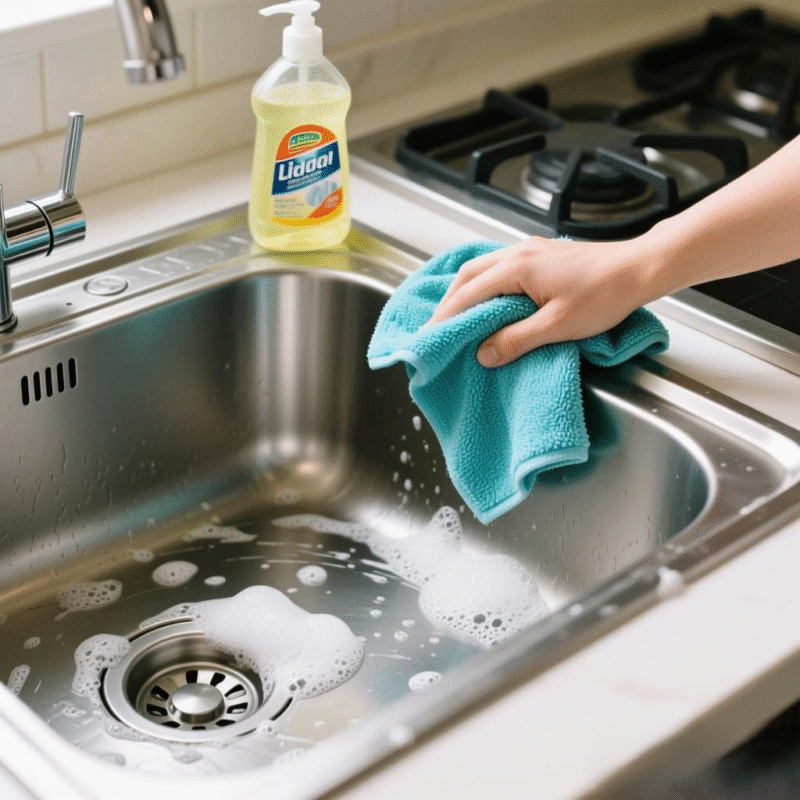
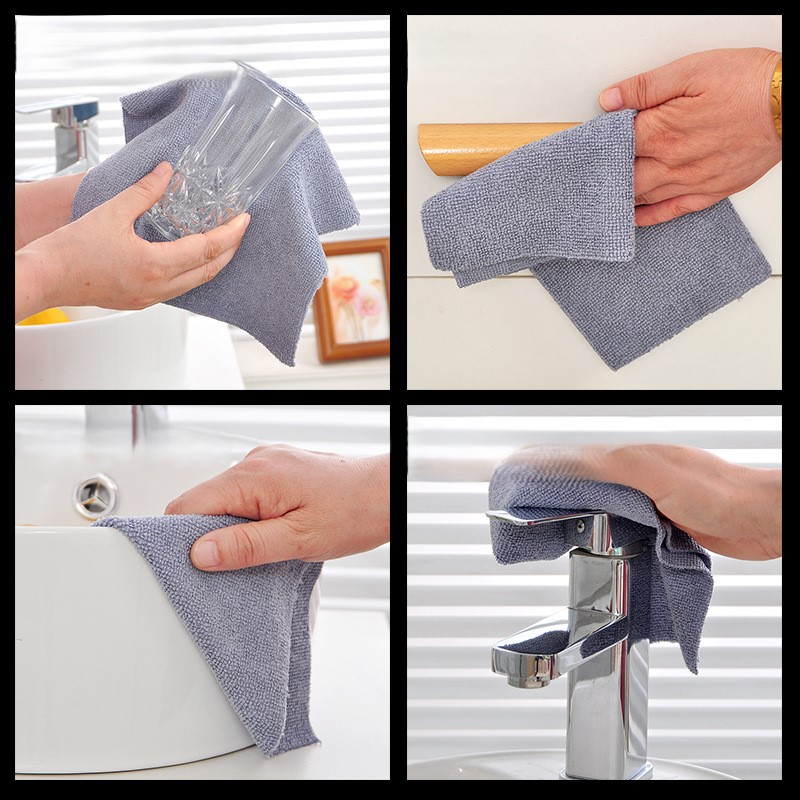
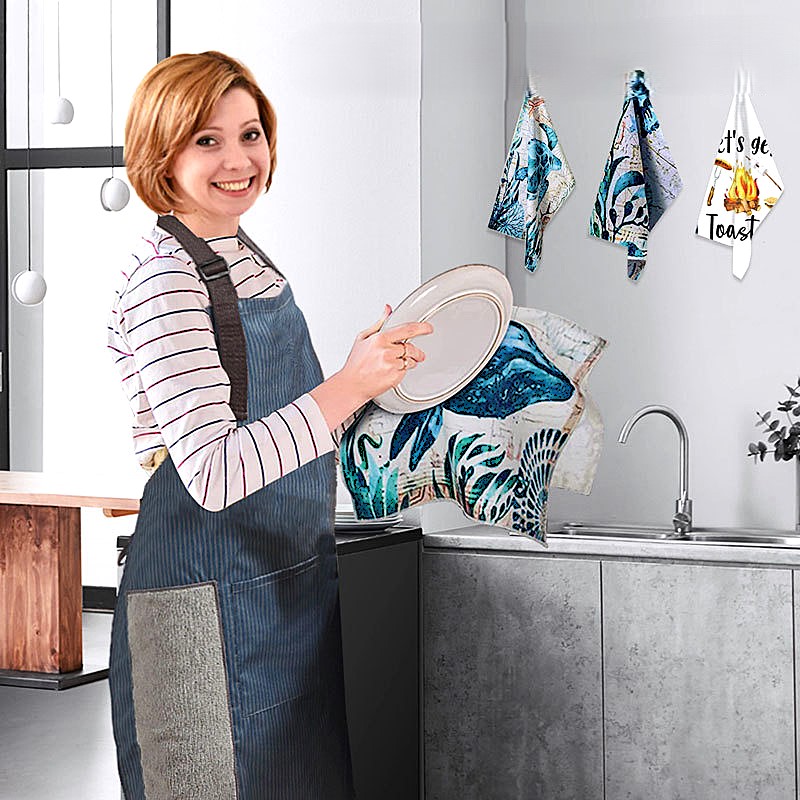
Microfiber vs Cotton: Which Cleans Better?
If you’re wondering whether microfiber towels are really better than traditional cotton towels, the answer is a clear yes for most cleaning tasks. Let’s break down exactly why microfiber outperforms cotton, so you can make an informed decision.
Cleaning Power: The Science Behind the Difference
Microfiber towels clean more effectively than cotton because of their unique fiber structure. While cotton fibers are round and smooth, microfiber fibers are split and star-shaped. As a result, they create millions of tiny hooks that actually grab and hold dirt, grease, and moisture.
In fact, when you wipe a surface with cotton, you’re mostly just moving dirt from one spot to another. On the other hand, microfiber traps particles inside the towel. This means you’re actually removing dirt instead of spreading it around.
Chemical-Free Cleaning
One of the biggest advantages of microfiber is that it cleans effectively with just water. This is particularly important because:
- Healthier homes: Less exposure to harsh cleaning chemicals means fewer skin irritations and respiratory issues
- Cost savings: You’ll spend less money on expensive cleaning products
- Environmental benefits: Fewer chemicals going down your drains and into the water supply
- Safer for children and pets: No toxic residues left on surfaces
Cotton towels, however, usually require cleaning solutions to be effective. Moreover, they often leave behind lint and streaks, especially on glass and stainless steel surfaces.
Durability and Cost-Effectiveness
Although microfiber towels might cost more upfront, they actually save money in the long run. Here’s why:
Lifespan Comparison: Microfiber vs Cotton
- Quality microfiber: Lasts 500+ washes when properly cared for (2-5 years for commercial use)
- Cotton towels: Break down after 50-100 washes (6-12 months typical lifespan)
- Cost per use: Microfiber costs significantly less over its lifetime
For businesses like hotels, restaurants, and cleaning companies, this durability is crucial. Additionally, microfiber’s longevity means less waste and fewer towels ending up in landfills.
Absorbency: Holding More Liquid
When it comes to soaking up spills or drying surfaces, microfiber is the clear winner. A quality microfiber towel can absorb 7-8 times its weight in water, while cotton typically holds only 3-4 times its weight.
Furthermore, microfiber dries much faster than cotton. After washing, a microfiber towel might be ready to use again in 30-60 minutes, whereas cotton can take 2-4 hours to fully dry. Therefore, you need fewer towels in rotation.
Real-World Performance for Commercial Users
Professional cleaners and businesses have switched to microfiber for good reasons. In hospitality settings, for example, housekeeping teams report faster cleaning times and better results. Similarly, automotive detailers trust microfiber because it won’t scratch delicate paint finishes.
Healthcare facilities, meanwhile, appreciate that microfiber removes more bacteria from surfaces than cotton alternatives. This makes it an essential tool for maintaining hygiene standards.
If you’re considering making the switch, check out our full range of professional microfiber cleaning towels designed for various applications.
How to Choose the Right Microfiber Towel for Your Needs
Choosing the right microfiber towel can feel overwhelming with so many options available. However, by understanding a few key factors, you’ll be able to select the perfect towel for any cleaning task. Let’s walk through what matters most.
Understanding GSM: What Does It Mean?
GSM stands for “Grams Per Square Meter,” and it tells you how thick and absorbent a towel is. Think of it like this: a higher GSM means more fibers packed into the same space, which generally means a thicker, more absorbent towel.
📊 GSM Quick Reference Guide
Low GSM (200-300): Lightweight & Quick-Drying
- Best for: Glass, mirrors, stainless steel, windows
- Why it works: Thin fabric glides smoothly without leaving streaks
- Perfect for: Detail work where you need to see the surface clearly
Medium GSM (300-400): All-Purpose Champion
- Best for: Kitchens, bathrooms, countertops, general dusting
- Why it works: Balances absorbency with flexibility
- Perfect for: Daily household cleaning tasks
High GSM (400-600+): Maximum Absorbency
- Best for: Car drying, waxing, buffing, heavy spills
- Why it works: Holds tons of water and provides a plush, safe surface
- Perfect for: Professional detailing and large surface drying
For instance, if you’re cleaning windows, you’ll want a low GSM towel that won’t leave lint or streaks. Conversely, if you’re drying a car after washing, a high GSM towel will soak up water much more efficiently.
Why 70/30 Blend Is the Gold Standard
When shopping for microfiber towels, you’ll often see numbers like “70/30” or “80/20.” These numbers refer to the blend ratio of polyester to polyamide (also called nylon). Understanding this blend is crucial because each material plays a different role.
Polyester (The Workhorse):
- Provides structure and durability to the towel
- Gives the towel its scrubbing power
- Makes the towel last through hundreds of washes
- Resists shrinking and maintains shape
Polyamide (The Absorber):
- Creates the super-absorbent quality microfiber is famous for
- Attracts and holds oils and liquids
- Provides the soft, plush feel
- Helps the towel grab and trap dirt particles
Some manufacturers offer 80/20 blends, which are slightly more durable but less absorbent. Meanwhile, blends with more polyamide (like 60/40) are softer and more absorbent but may not last quite as long. For most users, however, the 70/30 blend offers the best overall performance.
Weave Types and Their Applications
Beyond GSM and blend ratio, the weave pattern of your microfiber towel significantly affects its performance. Here are the main types you’ll encounter:
Standard Terry Weave:
- Most common type, with loops on both sides
- Great all-purpose option for general cleaning
- Good balance of absorbency and scrubbing power
Waffle Weave:
- Has a textured, waffle-like pattern
- Excellent for glass and streak-free surfaces
- Dries very quickly, ideal for professional use
Suede/Smooth Weave:
- Very soft with a smooth surface
- Perfect for electronics, eyeglasses, and delicate surfaces
- Won’t scratch sensitive materials
Edge Finishing: A Detail That Matters
The edges of your microfiber towel might seem like a minor detail, but they actually affect performance, especially for automotive work. Here are the main edge types:
- Edgeless: No border or stitching—safest for car paint and delicate surfaces
- Satin edge: Soft, silky border that’s still relatively safe
- Overlock stitching: Standard sewn edge—fine for general cleaning but avoid on cars
- Ultrasonic cut: Heat-sealed edge that prevents fraying
If you’re planning to use towels on automotive paint, always choose edgeless or satin-edge towels to minimize the risk of scratches.
Size Considerations
Microfiber towels come in various sizes, and choosing the right one depends on your task:
- 12″ x 12″ (30 x 30 cm): Detail work, quick wipes, small surfaces
- 16″ x 16″ (40 x 40 cm): Most versatile size for general cleaning
- 16″ x 24″ (40 x 60 cm): Larger surfaces, car drying, buffing
- 20″ x 40″ (50 x 100 cm): Professional car drying, body towels
For most household users, a collection of 16″ x 16″ towels will handle nearly every cleaning task. Professionals, however, often keep different sizes for different jobs.

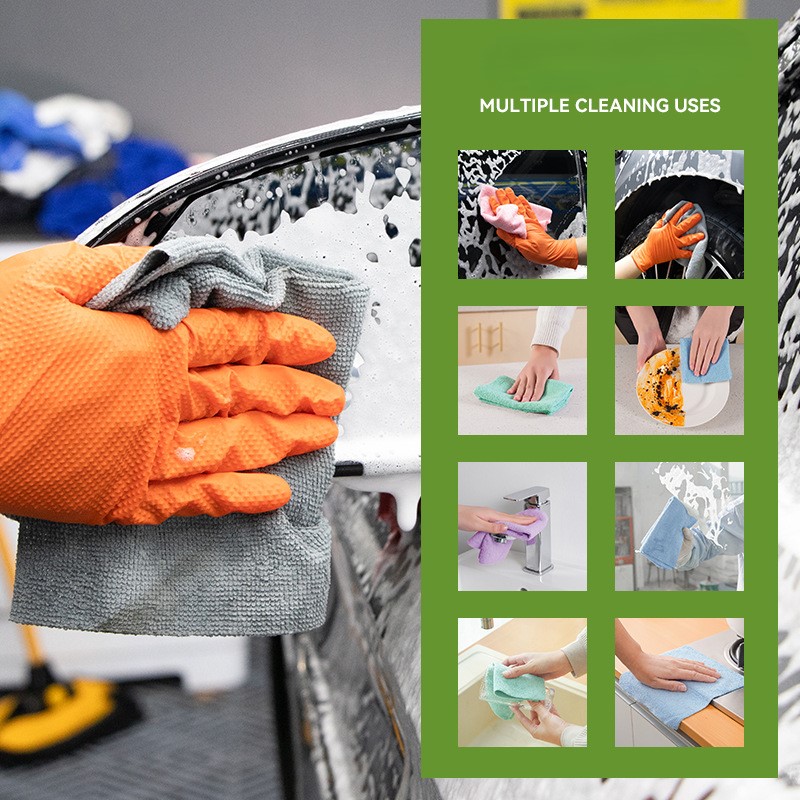

Making Your Decision: A Simple Framework
To make choosing easier, ask yourself these three questions:
- What surface am I cleaning? (Glass needs low GSM, cars need high GSM)
- How often will I use these towels? (Frequent use = invest in quality 70/30 blend)
- What’s my budget? (Remember: quality towels last longer and cost less over time)
For professional applications or bulk purchases, consider exploring our range of custom microfiber solutions designed for specific industries.
Types of Microfiber Cleaning Towels and Their Best Uses
Not all microfiber towels are created equal. In fact, manufacturers design different types of microfiber towels for specific cleaning tasks. By using the right towel for each job, you’ll get better results and make your towels last longer. Let’s explore the main types and when to use them.
General-Purpose All-Surface Towels
What they are: These are the workhorses of the microfiber world. They typically feature a medium GSM (300-400) and a standard terry weave. Therefore, they’re versatile enough to handle most everyday cleaning tasks.
Best uses:
- Kitchen countertops and appliances
- Bathroom sinks and fixtures
- Dusting furniture and shelves
- Wiping down tables and desks
- General household cleaning
Why they work: General-purpose towels balance absorbency with scrubbing power. Additionally, they’re tough enough to remove stuck-on grime but soft enough not to scratch most surfaces. For most homes and businesses, these should make up the bulk of your microfiber towel collection.
If you’re stocking up for a cleaning business or hotel, our bulk microfiber towel options offer excellent value for general-purpose cleaning.
Glass and Stainless-Steel Towels
What they are: These towels are thinner and lighter, usually with a GSM between 200-300. They often feature a waffle weave or very tight knit pattern. As a result, they leave behind no lint or streaks.
Best uses:
- Windows and glass doors
- Mirrors and glass tables
- Stainless steel appliances (refrigerators, ovens)
- Chrome fixtures and faucets
- TV and computer screens (with appropriate care)
Why they work: The lightweight construction allows these towels to glide smoothly across glass without leaving streaks. Moreover, their tight weave prevents lint from transferring to the surface. Many professionals actually clean glass with just water and these specialized towels—no glass cleaner needed!
Automotive Detailing Towels
What they are: Automotive towels come in various GSM levels depending on their specific purpose. They’re typically made with extra-soft fibers and feature edgeless designs or satin edges to protect delicate car paint.
Types and best uses:
Drying Towels (High GSM 500-600):
- Safely dry entire vehicle after washing
- Absorb huge amounts of water quickly
- Reduce drying time and water spots
Polish and Wax Towels (Medium GSM 300-400):
- Apply and buff waxes, sealants, and polishes
- Remove excess product without scratching
- Create a perfect shine on paint
Detail Towels (Low-Medium GSM 250-350):
- Clean interior surfaces, dashboards, and trim
- Wipe glass and mirrors inside the car
- Remove fingerprints and light dust
Why they work: Car paint is surprisingly delicate and can easily be scratched by rough towels or trapped dirt. High-quality automotive microfiber towels are designed to be ultra-soft and safe. Furthermore, their high absorbency means fewer passes over the paint, which reduces the chance of scratching.
Professional detailers often color-code their towels: for example, blue for exterior paint, yellow for wheels, and gray for interior. This system prevents cross-contamination that could damage delicate surfaces.
Specialty Towels for Specific Applications
Floor Cleaning Pads and Mops:
- Attach to flat mops for hardwood, tile, and laminate floors
- Trap dirt and hair more effectively than traditional mops
- Can be washed and reused dozens of times
- Work great with just water for everyday cleaning
Electronics and Lens Cloths:
- Ultra-soft suede or smooth finish
- Safe for eyeglasses, camera lenses, and phone screens
- Remove fingerprints and smudges without scratching
- Small, portable size for on-the-go cleaning
Kitchen and Bar Towels:
- Designed for food service and hospitality environments
- Often feature color-coding for food safety compliance
- Quick-drying to prevent bacterial growth
- Highly absorbent for spills and dishware drying
If you need specialized towels for food service, you might also be interested in our commercial kitchen towel options and professional aprons for complete kitchen solutions.
Choosing the Right Type for Your Needs
Here’s a simple guide to help you stock your cleaning arsenal:
🏠 For Homeowners:
- 6-8 general-purpose towels for everyday cleaning
- 2-3 glass towels for windows and mirrors
- 1-2 electronics cloths for screens and gadgets
- 4-6 kitchen-specific towels for dishes and counters
🚗 For Car Enthusiasts:
- 2-3 large drying towels (high GSM)
- 4-6 polish/wax towels (medium GSM)
- 3-4 interior detail towels
- 2-3 glass towels for windows
- 4-6 wheel and tire towels (kept separate)
🏨 For Businesses (Hotels, Offices, Cleaning Services):
- Large quantities of general-purpose towels
- Color-coded towels for different areas (bathrooms, kitchens, offices)
- Specialized towels for glass and stainless steel
- Backup inventory for rotation during washing
For wholesale or bulk purchases, explore our custom microfiber towel solutions where we can provide color-coding and custom sizing for your specific needs.
Industry Applications: Where Microfiber Excels
Microfiber towels have revolutionized cleaning across numerous industries. In fact, once businesses discover the benefits of microfiber, they rarely go back to traditional cleaning methods. Let’s explore how different sectors use microfiber to improve efficiency, hygiene, and cost-effectiveness.
Hotels and Hospitality
The hospitality industry was one of the first to embrace microfiber technology, and for good reason. Hotels, resorts, and vacation rentals face constant pressure to maintain spotless rooms quickly and efficiently. Therefore, microfiber has become an essential tool.
How hotels use microfiber:
- Room cleaning: Housekeeping staff can clean bathroom fixtures, mirrors, and glass surfaces faster without multiple products
- Dusting: Microfiber grabs and holds dust instead of spreading it, which is especially important for guests with allergies
- Color-coding systems: Different colored towels for bathrooms, bedrooms, and public areas prevent cross-contamination
- Cost savings: Fewer chemical products needed and longer-lasting towels reduce operational costs
Furthermore, guests increasingly appreciate eco-friendly cleaning practices. Hotels that use microfiber with minimal chemicals can market themselves as environmentally conscious, which appeals to sustainability-minded travelers.
In addition to microfiber cleaning towels, many hotels also invest in quality beach towels and Turkish hammam towels to enhance the guest experience.
Healthcare Facilities
In hospitals, clinics, and care facilities, cleanliness literally saves lives. Consequently, healthcare facilities have strict requirements for cleaning products and methods. Microfiber towels meet these demanding standards exceptionally well.
Healthcare benefits of microfiber:
- Superior bacteria removal: Studies show microfiber removes up to 99% of bacteria from surfaces, compared to 67% for cotton
- Reduced chemical use: Less reliance on harsh disinfectants means safer environments for patients with sensitivities
- Color-coding for infection control: Prevents cross-contamination between patient rooms, bathrooms, and common areas
- Improved efficiency: Faster cleaning allows staff to maintain high standards even during busy periods
Additionally, microfiber’s durability means fewer towels end up in medical waste, which supports healthcare facilities’ sustainability goals.
Automotive Detailing Shops
Professional car detailers were among the earliest adopters of microfiber technology. In this industry, the wrong towel can cause thousands of dollars in paint damage. Therefore, detailers rely exclusively on high-quality microfiber.
Why detailers trust microfiber:
- Paint-safe cleaning: Properly designed microfiber won’t scratch or swirl delicate clear coats
- High absorbency: Removes water quickly without multiple passes over the paint
- Professional results: Creates the mirror-like finish customers expect
- Versatility: Different towels for washing, drying, polishing, waxing, and interior cleaning
- Cost-effective: Despite higher upfront cost, quality towels last through hundreds of details
Moreover, detailers often maintain extensive collections of microfiber towels, sometimes numbering in the hundreds. They carefully separate towels used for different purposes to prevent any possibility of cross-contamination that could damage a vehicle.
Home Cleaning Services
Professional cleaning companies have discovered that microfiber towels make their teams more productive and their clients happier. In fact, many cleaning services now advertise their use of microfiber as a premium feature.
Advantages for cleaning businesses:
- Faster service: Cleaners can complete jobs more quickly with effective tools
- Better results: Clients notice the difference in cleanliness, leading to higher satisfaction and retention
- Reduced product costs: Less spending on cleaning chemicals improves profit margins
- Professional image: Using quality tools demonstrates attention to detail and expertise
- Employee satisfaction: Workers appreciate tools that make their jobs easier
For cleaning services looking to upgrade their supplies, check out our disposable microfiber cleaning cloth rolls for high-volume applications.
Food Service and Restaurants
Restaurants, cafes, and commercial kitchens face unique cleaning challenges. They must maintain spotless conditions for health inspections while working in busy, fast-paced environments. Microfiber helps them succeed on both fronts.
Restaurant applications:
- Kitchen cleaning: Removing grease and food residue from stainless steel surfaces
- Dishware drying: Quick-drying towels that don’t leave lint on glassware
- Spill management: High absorbency handles accidents quickly
- Food safety compliance: Color-coded systems prevent cross-contamination between raw and cooked food areas
Many restaurants also use specialized commercial kitchen towels alongside microfiber for a complete cleaning solution.
Office Buildings and Commercial Spaces
Office cleaning presents its own set of challenges, from maintaining glass conference rooms to sanitizing shared workspaces. Microfiber towels help janitorial teams keep commercial spaces looking professional.
Office cleaning benefits:
- Streak-free glass: Perfect for the abundance of windows and glass partitions in modern offices
- Dust control: Captures dust from desks, electronics, and surfaces instead of dispersing it into the air
- Quiet cleaning: Less need for noisy equipment and spraying chemicals
- Eco-friendly image: Supports companies’ sustainability initiatives
Gyms and Fitness Centers
Gyms must constantly wipe down equipment between users, making microfiber towels perfect for this high-frequency cleaning environment.
Fitness facility uses:
- Quick wipe-downs of equipment between users
- Effective cleaning of mirrors throughout the facility
- Sanitizing locker room surfaces
- Absorbing sweat and moisture
Additionally, many gyms provide small microfiber towels to members for personal use during workouts, which has become a popular amenity.
Global Microfiber Market: Size and Growth Trends
The microfiber cleaning towel market has experienced impressive growth over the past decade. Understanding these market trends helps businesses and consumers recognize why microfiber has become the standard for professional cleaning worldwide.
Current Market Size
Recent industry analyses show that the global microfiber cleaning towel market is substantial and growing. While exact figures vary depending on how researchers define the market, most estimates place the current market size in the billions of dollars.
| Metric | 2024-2025 Estimates | 2033 Projections |
|---|---|---|
| Global Market Size | Approximately $5 billion USD | Projected $9 billion USD |
| Annual Growth Rate (CAGR) | Estimated 5-8% through early 2030s | |
| Largest Regional Market | Asia-Pacific, followed by North America and Europe | |
| Fastest Growing Segment | Commercial and institutional cleaning applications | |
Note: Market figures are approximate and vary by source and methodology. Data compiled from various industry research reports on microfiber cleaning products.
Key Growth Drivers
Several important factors are pushing the microfiber market forward. Understanding these trends helps explain why demand continues to increase:
1. Heightened Hygiene Awareness
Recent global health concerns have made cleanliness a top priority for businesses and households. Consequently, more organizations are investing in effective cleaning tools like microfiber towels. The superior bacteria-removal capabilities of microfiber make it especially attractive for healthcare, hospitality, and food service sectors.
2. Sustainability and Environmental Concerns
As businesses and consumers become more environmentally conscious, they’re seeking reusable alternatives to disposable cleaning products. Microfiber towels align perfectly with this trend because they:
- Replace thousands of disposable wipes over their lifetime
- Reduce chemical cleaner usage and associated packaging
- Lower water consumption in cleaning processes
- Decrease waste sent to landfills
Organizations looking to meet sustainability goals increasingly turn to microfiber as part of their green cleaning programs.
3. Growing Hospitality and Healthcare Sectors
The expansion of hotels, resorts, hospitals, and care facilities worldwide drives demand for professional-grade cleaning tools. These industries value microfiber for its efficiency and effectiveness, making it a standard supply item.
4. Rising Automotive Ownership
As global car ownership increases, particularly in developing markets, so does demand for automotive care products. Professional detailers and car enthusiasts need quality microfiber towels to protect their investments.
5. E-Commerce Accessibility
Online marketplaces have made quality microfiber towels accessible to consumers and businesses worldwide. This ease of purchasing, combined with customer reviews and education, has accelerated adoption.
Regional Market Insights
Asia-Pacific Region:
The Asia-Pacific market is experiencing particularly strong growth. Several factors contribute to this expansion:
- Major manufacturing bases in China, making production cost-effective
- Rapidly growing middle class with increasing spending power
- Expansion of hospitality and healthcare infrastructure
- Rising awareness of hygiene and cleaning standards
China, in particular, serves as both a major producer and consumer of microfiber products. Manufacturing capabilities in China have made microfiber towels more affordable and accessible globally.
North America and Europe:
These mature markets show steady growth driven by:
- Replacement of older cleaning methods with microfiber systems
- Stringent health and safety regulations in commercial settings
- Strong environmental consciousness among consumers
- Professional cleaning service industry growth
Market Challenges and Opportunities
While the market is growing, it also faces some challenges. However, these challenges present opportunities for quality manufacturers like Favor Houseware:
Challenge: Low-quality products flooding the market confuse consumers and hurt the industry’s reputation.
Opportunity: Educating buyers about quality indicators and providing reliable, tested products builds long-term customer relationships.
Challenge: Environmental concerns about microfiber shedding into waterways.
Opportunity: Developing improved washing techniques, filtration systems, and more sustainable fiber compositions.
Challenge: Price sensitivity in cost-conscious markets.
Opportunity: Demonstrating total cost of ownership and long-term savings compared to disposable alternatives.
Why Microfiber Towels Support Sustainable Cleaning
As environmental awareness grows worldwide, businesses and consumers are seeking cleaning solutions that are both effective and eco-friendly. Microfiber towels check both boxes, making them an important tool in sustainable cleaning practices. Let’s explore exactly how microfiber supports environmental goals.
Reducing Single-Use Product Waste
One of the biggest environmental benefits of microfiber is its reusability. A single quality microfiber towel can replace thousands of disposable wipes, paper towels, and cleaning pads over its lifetime.
Consider these comparisons:
- One microfiber towel lasting 500 washes replaces approximately 2,000-3,000 paper towels
- A set of 20 microfiber towels for a hotel could eliminate tens of thousands of disposable wipes annually
- Professional cleaning companies using microfiber significantly reduce their contribution to landfills
Furthermore, manufacturing disposable products requires enormous amounts of resources, including trees, water, and energy. By switching to reusable microfiber, we reduce the environmental impact of these production processes.
Minimizing Chemical Cleaner Usage
Traditional cleaning often relies heavily on chemical cleaners, which create multiple environmental problems:
- Chemical production consumes energy and creates industrial waste
- Plastic packaging for cleaners adds to pollution
- Chemicals washed down drains enter water systems and can harm aquatic life
- Indoor air quality suffers from volatile organic compounds (VOCs) in many cleaners
Microfiber towels, however, clean effectively with just water for many tasks. This dramatic reduction in chemical use benefits both the environment and human health. Even when cleaners are necessary, microfiber requires much smaller amounts compared to traditional methods.
Water Conservation Benefits
Efficient cleaning with microfiber also conserves water in several ways:
- Less rinsing needed: Microfiber towels don’t require multiple rinses like mops and cotton rags
- Damp cleaning suffices: You often don’t need buckets of water—a slightly damp towel works perfectly
- Efficient washing: Microfiber loads in commercial washers use less water than equivalent cotton loads
- Quick drying: Faster drying times mean less energy used in industrial dryers
For businesses operating in water-scarce regions or committed to water conservation, microfiber offers a practical way to reduce water consumption without sacrificing cleaning quality.
Energy Savings Through Efficiency
Microfiber’s efficiency translates directly into energy savings:
- Faster cleaning: Shorter cleaning times mean less electricity used for lighting and equipment
- Lower drying temperatures: Microfiber can be dried at lower heat settings than cotton, reducing energy consumption
- Reduced equipment use: Less need for electric floor scrubbers and other powered cleaning equipment
Long Service Life Reduces Manufacturing Impact
When properly cared for, a quality microfiber towel lasts several years of regular use. This longevity means:
- Fewer resources needed for replacement products
- Less transportation fuel used for shipping new supplies
- Reduced packaging waste
- Lower overall carbon footprint per clean
Supporting Green Building and Certification Programs
Many businesses pursue environmental certifications like LEED (Leadership in Energy and Environmental Design) or Green Seal. Using microfiber cleaning systems helps organizations earn points toward these certifications because it demonstrates:
- Reduced chemical usage
- Lower water consumption
- Decreased waste generation
- Improved indoor air quality
For hotels, recycled towel products combined with microfiber cleaning systems create a comprehensive sustainability story that appeals to eco-conscious guests.
Important Environmental Considerations
While microfiber offers many sustainability benefits, it’s important to be honest about challenges as well:
Microfiber Shedding: Like all synthetic textiles, microfiber can shed tiny plastic fibers during washing. These microplastics can enter waterways. To minimize this issue:
- Use front-loading washers, which are gentler on fabrics
- Wash full loads to reduce friction
- Consider using microfiber-catching laundry bags or washing machine filters
- Choose quality towels that shed less
Manufacturing Impact: Microfiber production does require petroleum-based materials. However, the long-term reduction in disposable products and chemicals typically offsets this initial environmental cost.
End-of-Life Disposal: When microfiber towels finally wear out, they’re not biodegradable like cotton. However, some programs are developing textile recycling specifically for synthetic fabrics, offering a potential solution for the future.
The Bottom Line on Sustainability
When we consider the full lifecycle, microfiber towels are significantly more sustainable than disposable cleaning products and often more eco-friendly than frequently replaced cotton alternatives. The key is choosing quality products and caring for them properly to maximize their lifespan.
Organizations committed to sustainability should view microfiber as one component of a broader green cleaning strategy that includes proper training, efficient procedures, and ongoing evaluation of environmental impact.
Care and Washing Instructions to Extend Towel Life
Proper care is absolutely crucial for getting the most out of your microfiber towels. In fact, the way you wash and maintain these towels directly affects how well they clean and how long they last. Many people unknowingly destroy their microfiber towels in the laundry, so let’s make sure you know exactly how to care for them correctly.
The Golden Rules of Microfiber Washing
Before we dive into detailed instructions, here are the most important rules to remember. Breaking these rules will damage your towels:
⚠️ Never Do These Things:
- Never use fabric softener (liquid or dryer sheets)—it coats the fibers and destroys absorbency
- Never use bleach—it breaks down the synthetic fibers
- Never wash with cotton items—cotton sheds lint that clogs microfiber
- Never use high heat when drying—it melts and damages the fibers
- Never iron microfiber—the heat will ruin it
These mistakes are unfortunately very common. However, once you avoid them, caring for microfiber becomes simple and straightforward.
Step-by-Step Washing Instructions
Follow these steps to keep your microfiber towels in excellent condition:
- Separate your towels: Wash microfiber towels separately from all other laundry, especially cotton items. Cotton lint will embed in the microfiber and reduce cleaning performance.
- Shake out debris: Before washing, shake each towel outdoors or over a trash can to remove loose dirt, hair, and dust. This prevents your washing machine from recirculating dirt.
- Check for heavy soiling: Heavily soiled towels (like those used on greasy surfaces) benefit from a pre-wash rinse. Simply run a quick rinse cycle before the main wash.
- Use the right detergent: Choose a simple, liquid detergent without added dyes, fragrances, or fabric softeners. Powdered detergent can leave residue in the fibers. Use about half the amount you’d use for cotton.
- Select appropriate water temperature: Warm water (105-120°F/40-50°C) works well for most cleaning. However, cold water is fine for lightly soiled towels, while heavily soiled towels can handle hot water (140°F/60°C maximum).
- Choose the right cycle: A normal wash cycle with moderate agitation is perfect. You don’t need any special settings. Avoid sanitize cycles unless absolutely necessary, as extreme heat damages fibers.
- Skip fabric softener: This bears repeating because it’s so important. Fabric softener coats the fibers with chemicals that prevent them from absorbing moisture and trapping dirt. Once this happens, your towels are essentially ruined.
Drying Your Microfiber Towels
Drying is just as important as washing. Fortunately, microfiber dries quickly and easily when you follow these guidelines:
Air Drying (Best Option):
- Hang towels on a line or drying rack
- Provides longest towel life by avoiding heat exposure
- Microfiber typically air-dries in 30-60 minutes
- Saves energy costs
Machine Drying (Convenient Option):
- Use low or medium heat only (never high heat)
- Remove towels while still slightly damp if possible
- Never use dryer sheets—they’re essentially fabric softener
- Clean your dryer’s lint trap before drying microfiber to prevent lint transfer
Storage Best Practices
How you store your microfiber towels between uses affects their performance and longevity:
- Store in a clean, dry location: A dedicated cabinet or shelf keeps towels away from dust and contaminants
- Implement color-coding: Keep different colors separate for different tasks (blue for windows, yellow for bathrooms, etc.)
- Fold neatly: Proper folding prevents permanent creases and keeps towels ready to use
- Avoid compressed storage: Don’t pack towels too tightly—they need air circulation
- Separate clean from dirty: Use a dedicated laundry bag for used towels to prevent cross-contamination
Special Washing Considerations for Different Uses
Automotive Towels:
Car detailing towels need extra care because any contaminants can scratch paint:
- Wash after every use—never reuse without washing
- Inspect towels before washing and discard any with embedded particles
- Keep wheel/tire towels permanently separated from paint towels
- Consider a separate laundry load for heavily soiled automotive towels
Kitchen and Food Service Towels:
Towels used in food preparation areas require thorough sanitization:
- Wash after each shift or daily use
- Use hotter water (140°F/60°C) for proper sanitization
- Follow local health department guidelines for commercial kitchens
- Replace towels that develop odors even after washing
For comprehensive kitchen solutions, explore our commercial kitchen towel collection.
Healthcare Facility Towels:
Medical environments have the strictest cleaning requirements:
- Follow facility protocols for laundering contaminated items
- Use approved disinfectants compatible with microfiber
- Track towel usage and washing cycles for quality control
- Replace towels on schedule regardless of appearance
When to Replace Your Microfiber Towels
Even with perfect care, microfiber towels eventually wear out. Watch for these signs that it’s time for replacement:
- Reduced absorbency: If towels no longer soak up water effectively, their fibers may be damaged
- Lint or fuzz formation: Visible pilling or fuzz indicates fiber breakdown
- Persistent odors: Smells that won’t wash out suggest bacterial buildup in damaged fibers
- Stiffness: Towels that feel hard or scratchy have likely been exposed to too much heat or fabric softener
- Visible damage: Holes, tears, or separated seams obviously require replacement
Quality microfiber towels from reliable manufacturers like Favor Houseware typically last 500+ wash cycles when cared for properly. That translates to 2-5 years for commercial users and even longer for residential applications.
Reviving Old or Damaged Microfiber
If your towels have lost some performance, try this revival method before replacing them:
- Deep clean: Wash towels in hot water with a cup of white vinegar (no detergent). Vinegar helps dissolve residue buildup.
- Second wash: Run another cycle with detergent only, no vinegar.
- Air dry completely: Allow towels to dry naturally without heat.
- Test performance: If absorbency has improved, continue using. If not, it’s time to replace.
This process removes detergent residue, fabric softener contamination, and mineral buildup that might be affecting performance. However, it won’t fix physically damaged fibers.
Why Quality Matters: Cheap vs Professional-Grade Towels
Walk into any store or browse online, and you’ll find microfiber towels at wildly different prices. Some sell for less than a dollar each, while professional-grade towels cost $5, $10, or even more per towel. This price difference isn’t arbitrary—it reflects genuine quality differences that significantly impact performance and value.
What Makes Cheap Towels Underperform
Low-cost microfiber towels cut corners in ways that seriously compromise their effectiveness. Understanding these shortcuts helps you avoid wasting money on products that won’t meet your needs.
Fiber Quality Issues:
- Thicker, less-split fibers: Cheap towels often use fibers that aren’t split properly or at all. These lack the star-shaped cross-section that makes microfiber effective.
- Wrong fiber blend: Many budget towels are 100% polyester, which provides structure but little absorbency. Without polyamide, they can’t absorb oils and moisture properly.
- Lower fiber density: Fewer fibers per square inch means less cleaning surface and reduced effectiveness
Construction Shortcuts:
- Poor stitching: Weak seams that unravel after just a few washes
- Incorrect GSM: Often lower than advertised, resulting in thin, ineffective towels
- Rough edges: Poorly finished edges that can scratch surfaces or fray quickly
- Inconsistent sizing: Towels that shrink dramatically after washing
The True Cost of Budget Towels
Initially, cheap towels seem like a bargain. However, when you calculate their actual cost over time, they’re often more expensive than investing in quality from the start.
Let’s compare the real costs:
💰 5-Year Cost Comparison
Cheap Towels ($1-2 each):
- Typical lifespan: 25-50 washes (3-6 months of regular use)
- Replacement frequency: 6-10 times over 5 years
- Cost for 20 towels over 5 years: $200-400
- Performance: Poor cleaning, requires more effort and time
Professional-Grade Towels ($5-10 each):
- Typical lifespan: 500+ washes (3-5 years of regular use)
- Replacement frequency: 1-2 times over 5 years
- Cost for 20 towels over 5 years: $150-300
- Performance: Excellent cleaning, saves time and effort
Additional savings with quality towels:
- Less time spent cleaning (faster, more effective)
- Fewer cleaning chemicals needed
- Less frequent shopping and replacement hassle
- Better results reduce need for re-cleaning
Therefore, quality microfiber towels actually cost less over their lifetime while delivering significantly better performance. For businesses where time equals money, this difference becomes even more dramatic.
Quality Indicators to Look For
When shopping for microfiber towels, check these indicators of quality:
Clear Specifications:
- GSM rating clearly stated (not just “thick” or “heavy”)
- Exact fiber blend percentage (look for 70/30 or 80/20)
- Actual dimensions provided
- Weight information available
Manufacturing Details:
- Information about fiber splitting process
- Edge finishing type described
- Washing durability claimed (number of washes)
- Country of manufacture disclosed
Physical Tests You Can Perform:
- Water absorption test: Quality microfiber should absorb water immediately when you pour a small amount on it
- Grip test: Run your hand across the surface—it should have a slightly sticky or grabby feel
- Stretch test: Quality microfiber has some give but springs back to shape
- Visual inspection: Look for tight, even weaving with no loose threads or gaps
Manufacturer Reputation:
- Established company with verifiable history
- Clear warranty or satisfaction guarantee
- Detailed care instructions provided
- Professional website and customer service
Working with a reputable manufacturer like Favor Houseware ensures consistent quality and allows for customization to meet specific needs.
When Budget Options Make Sense
While professional-grade towels offer the best value for most users, there are limited situations where budget options might be acceptable:
- One-time projects: If you truly need towels for a single use (though this defeats microfiber’s reusability benefit)
- Very rough applications: Tasks where towels might be damaged or contaminated beyond reuse
- Learning period: Testing microfiber for the first time before committing to a larger investment (though this can backfire if poor towels give a bad impression)
However, even for these scenarios, mid-grade towels often provide better value than the absolute cheapest options.
The Professional’s Perspective
Ask any professional cleaner, car detailer, or hotel housekeeper about towel quality, and they’ll tell you the same thing: quality microfiber is non-negotiable. These professionals depend on their tools to make a living, and they’ve learned through experience that cheap towels cost more in the long run through:
- Extra time required to achieve good results
- Customer complaints about poor cleaning quality
- Surface damage from inferior towels
- Constant replacement costs and shopping time
- Staff frustration with tools that don’t work properly
Furthermore, in industries like automotive detailing, using the wrong towel can cause thousands of dollars in damage to a vehicle’s paint. The risk simply isn’t worth the small savings from cheap towels.
Why Source Microfiber Towels from a Chinese Manufacturer
When businesses need microfiber towels, many find that working directly with Chinese manufacturers offers significant advantages. China has become the global center for textile manufacturing, particularly for technical fabrics like microfiber. Understanding why and how to source from China can help you make informed purchasing decisions.
Manufacturing Excellence and Experience
China has developed unmatched expertise in microfiber production over several decades. This experience translates into several benefits:
Advanced Production Capabilities:
- State-of-the-art machinery for fiber splitting and weaving
- Established quality control systems refined over years
- Technical knowledge about different microfiber applications
- Ability to produce various GSM levels and weave patterns efficiently
Scale and Efficiency:
- Large-scale production facilities that reduce per-unit costs
- Streamlined processes developed through high-volume manufacturing
- Access to raw materials at competitive prices
- Established supply chains for consistent production
Companies like Favor Houseware leverage these advantages to provide high-quality microfiber towels at competitive prices. Our manufacturing expertise ensures consistent quality across large orders.
Customization and Flexibility
One of the biggest advantages of working directly with Chinese manufacturers is the ability to customize products exactly to your specifications. This flexibility is especially valuable for businesses with specific needs.
Customization Options Available:
- GSM levels: Specify exact thickness for your application
- Sizes and dimensions: Create towels in any size you need
- Colors: Match your brand or implement color-coding systems
- Edge finishing: Choose edgeless, satin edge, or other options
- Weave patterns: Select terry, waffle, suede, or custom weaves
- Branding: Add logos, labels, or packaging with your company information
- Blend ratios: Adjust polyester/polyamide ratios for specific performance characteristics
For example, a hotel chain might order towels in specific sizes with their logo woven in, while an automotive detailing company might request edgeless towels in various colors for different vehicle sections.
Cost Advantages for Bulk Purchasing
Direct sourcing from Chinese manufacturers typically offers significant cost savings, especially for larger orders. These savings come from:
- Elimination of middlemen: No distributor markups eating into your budget
- Bulk pricing: Lower per-unit costs for larger quantity orders
- Freight optimization: Full container loads reduce shipping costs per unit
- Long-term relationships: Established partnerships often lead to better pricing over time
However, it’s important to remember that the absolute lowest price doesn’t always mean the best value. Quality control, reliability, and communication matter just as much as price. That’s why choosing experienced manufacturers with proven track records is crucial.
Quality Control and Assurance
When working with reputable Chinese manufacturers, quality control is a top priority. At Favor Houseware, we implement multiple quality checkpoints:
- Raw material inspection: Verifying fiber quality before production begins
- In-process monitoring: Checking specifications during manufacturing
- Final product testing: Comprehensive evaluation before shipping
- Performance verification: Testing absorbency, durability, and cleaning effectiveness
- Documentation: Providing detailed specifications and test results
Moreover, established manufacturers understand international quality standards and can provide certifications like ISO, Oeko-Tex, or other required documentation for your market.
Communication and Support
Modern Chinese manufacturers have adapted to international business needs. Many, including Favor Houseware, offer:
- English-speaking sales and technical teams
- Regular communication throughout the production process
- Sample programs to test products before large orders
- Technical consultation to help choose the right specifications
- After-sales support for any issues
Furthermore, digital communication tools have made working with overseas manufacturers easier than ever. Video calls, instant messaging, and email make distance largely irrelevant for business operations.
Growing Asia-Pacific Market Presence
The Asia-Pacific region represents the fastest-growing market for microfiber products. Manufacturing in this region provides several advantages:
- Proximity to growing Asian markets reduces shipping times and costs
- Understanding of regional preferences and requirements
- Ability to serve both local and international customers efficiently
- Access to emerging markets and opportunities
Practical Steps for Working with Chinese Manufacturers
If you’re considering sourcing microfiber towels from China, follow these best practices:
- Research potential partners: Look for established companies with verifiable history and positive reviews. Visit their websites and learn about their capabilities.
- Request samples: Always test products before placing large orders. Pay attention to fiber quality, stitching, and overall construction.
- Communicate specifications clearly: Provide detailed requirements including GSM, blend ratio, size, color, and any special features.
- Discuss minimum order quantities (MOQs): Understand minimum requirements and plan accordingly. Some manufacturers offer lower MOQs for first-time customers.
- Clarify pricing and terms: Make sure you understand all costs including shipping, customs, and any additional fees. Discuss payment terms and methods.
- Establish timelines: Get clear production and shipping schedules. Build in extra time for potential delays.
- Arrange quality inspection: Consider third-party inspection services for large orders, or request detailed photo/video documentation before shipping.
- Build relationships: Treat your manufacturer as a partner rather than just a supplier. Good relationships lead to better service and priority treatment.
Favor Houseware: Your Trusted Manufacturing Partner
At Favor Houseware, we specialize in manufacturing high-quality microfiber towels for businesses worldwide. Our comprehensive product line includes:
- Professional microfiber cleaning towels in various specifications
- Disposable microfiber cleaning cloth rolls for high-volume applications
- Beach towels and recycled beach towels for hospitality
- Turkish hammam towels for spa and wellness facilities
- Kitchen towels for food service applications
- Specialty products like surf poncho towels and surf change robes
We welcome inquiries from businesses of all sizes and offer flexible solutions to meet your specific needs. Visit our contact page to discuss your requirements with our team.
Frequently Asked Questions About Microfiber Towels
Are microfiber towels better than cotton towels for cleaning?
Yes, microfiber towels generally clean more effectively than cotton because their ultra-fine, split fibers grab and hold dust, grease, and moisture instead of just pushing it around. Furthermore, they work well with just water, which reduces the need for chemical cleaners in homes, hotels, and healthcare facilities. The star-shaped fiber structure traps particles, while cotton’s round fibers simply move dirt from one place to another.
What GSM is best for microfiber cleaning towels?
The best GSM depends on your specific task. For general household cleaning, medium-weight microfiber towels around 300-400 GSM provide a good balance of flexibility and absorbency. However, lower GSM (200-300) suits glass and stainless steel where a thinner, tightly woven towel helps achieve a streak-free finish. Higher GSM (400-600) is often preferred for car drying and polishing because it provides maximum absorbency and a plush, safe surface for delicate paint.
What is the best microfiber blend for cleaning?
A 70% polyester / 30% polyamide blend is widely recommended for many cleaning tasks because it offers strong absorbency and softness while remaining durable. This blend has become the gold standard in the industry. Polyester provides structure and longevity, while polyamide creates the super-absorbent quality that makes microfiber effective. Some specialized towels may adjust the ratio slightly, but 70/30 remains the most common benchmark for quality microfiber cloths.
How long do microfiber towels last?
With proper washing—no fabric softener, mild detergents, and moderate drying temperatures—microfiber towels can withstand 500 or more wash cycles before losing performance. This typically translates to 2-5 years for commercial users in hospitality and healthcare settings, or even longer for residential applications. The key is avoiding fabric softeners and high heat, which are the two main things that destroy microfiber prematurely. Quality towels from reputable manufacturers last significantly longer than cheap alternatives.
How should microfiber towels be washed and dried?
Microfiber towels should be washed separately from cotton to avoid lint transfer and should never be washed with fabric softeners, which coat the fibers and reduce absorbency. Use warm water, a gentle detergent, and low to medium heat in the dryer to protect the tiny fibers and maintain performance. Even better, air-dry your towels when possible to maximize their lifespan. Never use bleach, and avoid high heat settings that can melt or damage the synthetic fibers.
Are microfiber towels eco-friendly?
Microfiber towels support more sustainable cleaning because they are reusable and reduce reliance on disposable wipes and heavy chemical cleaners. One quality microfiber towel can replace thousands of paper towels over its lifetime. Additionally, microfiber cleans effectively with just water, which reduces chemical usage and associated environmental impacts. However, buyers should also consider that microfiber is made from synthetic materials and can shed microplastics during washing. Using proper washing techniques and choosing quality towels that last longer helps minimize environmental impact.
What are microfiber towels used for?
Microfiber towels are used for general home cleaning, glass and stainless steel, car washing and detailing, hotel housekeeping, food-service sanitation, and healthcare environmental services. Their ability to trap fine dirt and moisture makes them versatile for both residential and professional environments. Different types of microfiber towels are designed for specific applications—lightweight towels for glass, medium-weight for general cleaning, and heavyweight for absorbent tasks like car drying. Color-coding systems help prevent cross-contamination in commercial settings.
Do microfiber towels need chemicals to clean effectively?
Microfiber towels can often clean effectively with just water because their split fibers mechanically lift and trap dirt and microorganisms. The star-shaped fiber structure creates millions of tiny hooks that grab particles without needing chemical assistance. In many cases, this reduces the volume and strength of chemical cleaning agents needed in homes and businesses. However, for heavily soiled surfaces or sanitization requirements, appropriate cleaners can still be used with microfiber—just use less than you would with traditional cleaning methods.
Why are some microfiber towels so cheap, and are they worth it?
Low-cost microfiber towels often use thicker, less-split fibers, lower GSM, and weaker stitching, which reduces their absorbency and durability compared with professional-grade products. These shortcuts mean cheap towels don’t clean as well and need replacement much sooner. Investing in higher-quality towels usually results in better cleaning performance and a longer lifespan, which is more economical for frequent users like hotels, cleaning companies, or car detailers. When you calculate cost per use over the towel’s lifetime, quality options often cost less than repeatedly buying cheap replacements.
Is microfiber safe for car paint and delicate surfaces?
Microfiber towels designed for automotive use are engineered to be soft and non-abrasive, helping protect paintwork when washing or drying cars. However, not all microfiber is created equal—choosing the correct GSM and edge finishing for detailing tasks helps minimize the risk of swirls or scratches on delicate surfaces. Professional detailers prefer edgeless or satin-edge towels and use different towels for different tasks. Always keep wheel and tire towels separate from paint towels, and inspect towels regularly for embedded particles that could cause scratches.
Final Thoughts: Making the Smart Choice
After exploring everything about microfiber towels—from their unique fiber structure to their applications across industries—one thing becomes clear: quality microfiber towels are an investment that pays off in performance, durability, and long-term savings.
Whether you’re a homeowner looking to improve your cleaning routine, a business seeking to enhance efficiency and hygiene, or an automotive enthusiast protecting your vehicle’s finish, choosing the right microfiber towels makes a significant difference.
Key Takeaways to Remember
- Specifications matter: Look for 70/30 blend, appropriate GSM for your task, and clear quality indicators
- Care determines longevity: Never use fabric softener, avoid high heat, and wash separately from cotton
- Quality costs less long-term: Professional-grade towels outlast cheap alternatives by 10x or more
- Customization creates value: Working with manufacturers allows you to specify exactly what you need
- Sustainability supports your goals: Microfiber reduces waste, chemical use, and environmental impact
For businesses and organizations looking to upgrade their cleaning systems, partnering with an experienced manufacturer ensures you get exactly the right products for your applications. For ongoing tips and updates about cleaning solutions, visit our blog regularly.
Ready to Experience Professional-Quality Microfiber Towels?
Favor Houseware has been manufacturing premium microfiber products for businesses worldwide. Whether you need standard products or custom solutions, we’re here to help.
What we offer:
- ✓ Full customization: GSM, colors, sizes, branding
- ✓ Quality assurance: Rigorous testing at every stage
- ✓ Competitive pricing: Direct manufacturer pricing with no middlemen
- ✓ Expert consultation: Help choosing the right specifications
- ✓ Sample programs: Test before you invest in bulk orders
- ✓ Global shipping: Reliable delivery worldwide
Get Started Today:
Request a Quote View Our Products Learn More About UsHave questions? Our team is ready to help you find the perfect microfiber solution for your needs. Contact us today!
Favor Houseware – Your trusted partner for quality microfiber towels and textile solutions since [year]. Serving businesses worldwide with commitment to quality, customization, and customer satisfaction.
Views: 19