Eco Friendly Beach Towel Materials: Quick Comparison
| Aspect | Organic Cotton Beach Towel | Recycled Microfiber (rPET) Beach Towel |
|---|---|---|
| Main Fiber | Organic cotton (GOTS or similar) | Recycled polyester + polyamide from PET bottles |
| Key Eco Benefit | No synthetic pesticides, better soil & water | Diverts plastic bottles from waste stream |
| Feel on Skin | Natural, soft, breathable | Smooth, lightweight, often very soft |
| Drying Speed | Slower, heavier when wet | Quick-dry, often 3× faster than standard cotton |
| Weight & Packability | Bulkier, traditional terry | Very compact, ideal for travel |
| Sand Resistance | Standard terry can trap sand | Flat-weave microfiber sheds sand more easily |
| Certifications | GOTS, OEKO-TEX | GRS, OEKO-TEX |
What You’ll Learn in This Guide
- How to identify truly eco friendly beach towels using certifications and materials
- The difference between organic cotton and recycled microfiber beach towels
- Why sustainable beach towels are growing 40% yearly in the market
- How about 20 plastic bottles become one beach towel through recycling
Eco Friendly Beach Towels: Recycled, Organic & Sustainable Options Explained
More people are choosing eco friendly beach towels than ever before. In fact, the sustainable towel market is expected to grow significantly over the next decade. Therefore, understanding your options helps you make better choices for both the planet and your beach experience. Moreover, sustainable beach towels offer excellent performance alongside their environmental benefits.
In this complete guide, we’ll explore everything about sustainable beach towels, from organic cotton to recycled microfiber options. As a result, you’ll know exactly which type fits your needs best.
Quick Guide: Choosing Your Eco Friendly Beach Towel (Checklist Format)
Before diving into details, let’s start with what matters most. Consequently, here’s a practical checklist to help you choose the right eco friendly beach towel for your needs.
Your Eco Friendly Beach Towel Checklist
- Material certifications to look for: Check for GRS (Global Recycled Standard), GOTS (Global Organic Textile Standard), or OEKO-TEX labels that prove sustainability claims
- GSM and weight considerations: Look for mid-range GSM (350-500) that balances absorbency without being too heavy for travel
- Durability features: Choose towels with reinforced hems, colorfast dyes, and quality printing to extend product life
- Packaging standards: Opt for brands using recycled or plastic-free packaging materials
- Production transparency: Select manufacturers that share information about water use, dyeing processes, and ethical labor practices
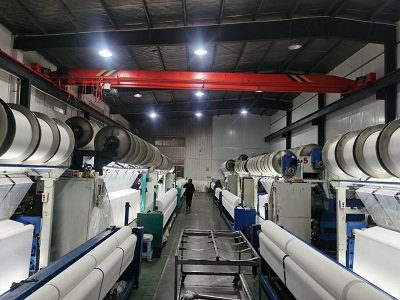
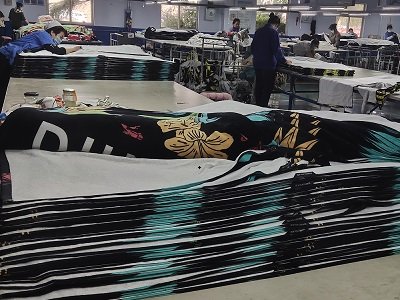
Manufacturer Insight from Favor-Houseware: At our beach towel manufacturing facility, we implement strict quality controls at every stage. Additionally, we source certified organic cotton and recycled rPET materials from verified suppliers. Furthermore, our production process includes water-saving dyeing techniques and comprehensive testing for colorfastness and durability.
What Makes a Beach Towel Eco Friendly?
An eco friendly beach towel goes beyond just being a towel. Instead, it focuses on reducing environmental impact throughout its entire lifecycle. Let’s explore what makes these towels truly sustainable.
Recycled Fibers: Turning Waste into Beach Essentials
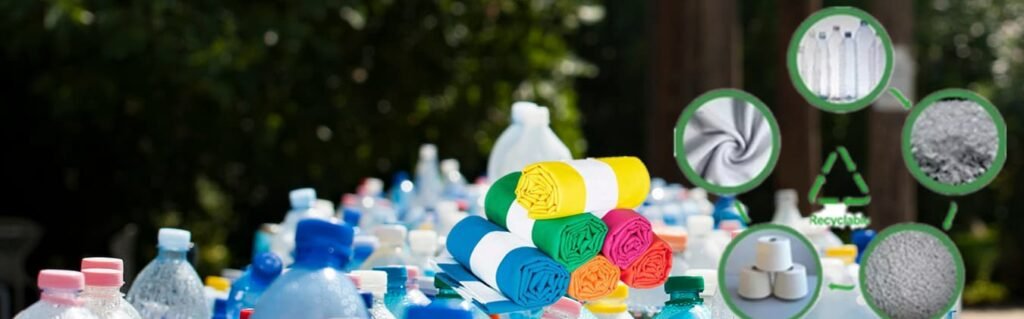
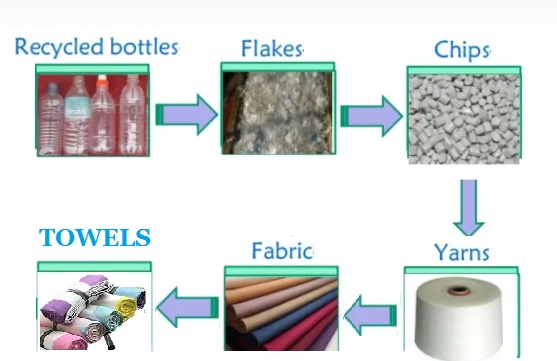
Many sustainable beach towels use recycled fibers, especially rPET (recycled polyethylene terephthalate). Specifically, manufacturers collect post-consumer plastic bottles, clean them thoroughly, and process them into soft yarn. As a result, these microfiber towels help divert plastic waste from oceans and landfills.
Organic Cotton: The Natural Alternative
On the other hand, organic cotton beach towels avoid synthetic pesticides and fertilizers entirely. Consequently, this farming method protects soil health and reduces water pollution. Moreover, organic cotton feels naturally soft and breathable against your skin.
Sustainable Dyeing and Reduced Water Use
Traditional towel dyeing consumes massive amounts of water and energy. However, eco friendly manufacturers now use low-impact dyes and innovative techniques. Therefore, water consumption drops dramatically while colors remain vibrant and long-lasting.
Plastic-Free and Recycled Packaging
Truly sustainable brands extend their commitment beyond the towel itself. Instead of plastic bags, they use recycled paper, compostable materials, or reusable packaging. Thus, the entire product arrives with minimal environmental footprint.
Longer Product Lifespan Equals Better Sustainability
Here’s an important point: a durable towel that lasts five years is far more sustainable than a cheap one replaced yearly. Consequently, eco friendly beach towels focus on quality construction, reinforced stitching, and colorfast materials. As a result, you reduce waste while enjoying better performance.
“The most sustainable product is the one you don’t have to replace. Quality and durability are essential elements of truly eco friendly beach towels.” – Textile Sustainability Expert
Understanding Key Certifications
Certifications help verify sustainability claims. Here are the most important ones:
- GRS (Global Recycled Standard): Verifies recycled content and tracks materials from source to final product
- GOTS (Global Organic Textile Standard): Certifies organic fibers and ensures environmental and social criteria throughout processing
- OEKO-TEX Standard 100: Tests for harmful substances, ensuring the towel is safe for human health
When shopping, look for these certifications on product labels. Furthermore, reputable manufacturers like Favor-Houseware proudly display their certifications and testing results.
Why Sustainable Beach Towels Are Growing Fast (Market Data)
The market for sustainable beach towels is expanding rapidly. Moreover, consumer demand drives innovation and better options every year. Let’s look at the compelling numbers.
| Metric | Value / Trend |
|---|---|
| Global beach towels market 2024 | ~USD 33.4 million |
| Forecast beach towels market 2034 | ~USD 50.9 million |
| CAGR 2025–2034 (beach towels) | ~4.3% |
| Broader beach towel revenue 2025 | ~USD 4.2 billion |
| Forecast beach towel revenue 2035 | ~USD 7.9 billion |
| Share of microfiber in beach towels 2024 | ~45.8% by material, driven by quick-dry performance |
| Leading region for beach towels 2024 | North America ~37.8% share, strong eco demand |
These statistics reveal exciting trends. First, the beach towel market is projected to grow from approximately USD 33.4 million in 2024 to USD 50.9 million by 2034. Additionally, the broader beach towel revenue is expected to nearly double from USD 4.2 billion in 2025 to USD 7.9 billion by 2035.
Even more impressive, microfiber already dominates with 45.8% of the material market share. This is largely because consumers value quick-dry performance and portability. Furthermore, North America leads with 37.8% market share, reflecting strong demand for eco conscious products.
“This growth means more eco friendly options are available now than ever before. Consumers have real choices that don’t compromise on quality or performance.”
According to industry research from Grand View Research, sustainability and premium performance are key drivers. Moreover, younger consumers actively seek brands with strong environmental commitments.
Organic Cotton Beach Towels: The Natural Choice
Organic cotton beach towels represent the traditional approach to eco friendly textiles. However, they offer modern benefits that appeal to health-conscious and environmentally aware consumers.
What Makes Organic Cotton Special?
Unlike conventional cotton, organic cotton farming avoids all synthetic pesticides and fertilizers. Consequently, this protects soil health, conserves water, and supports biodiversity. Additionally, organic cotton farms often use crop rotation and natural pest control methods.
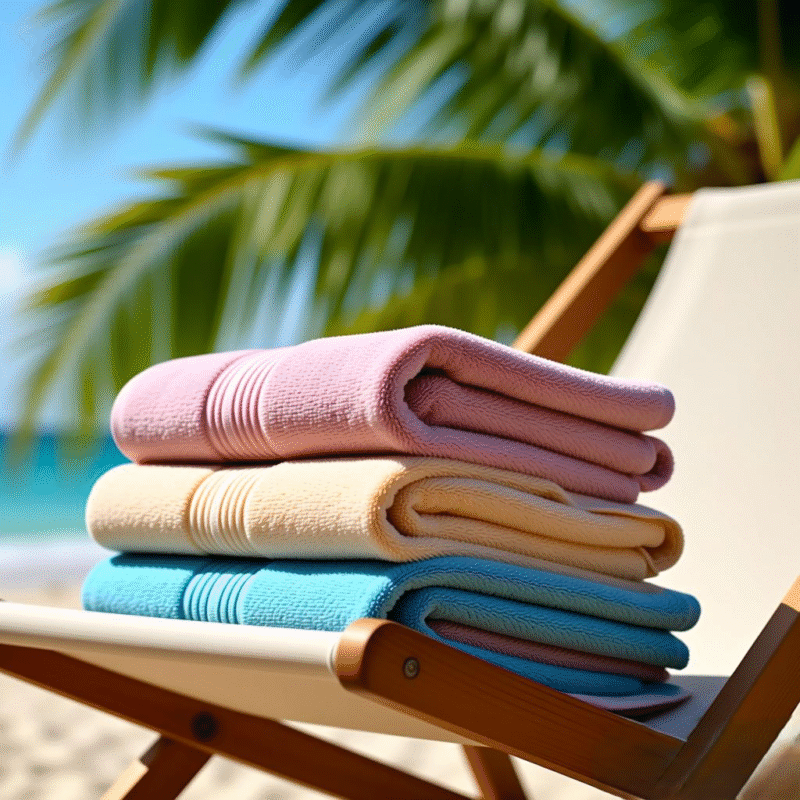
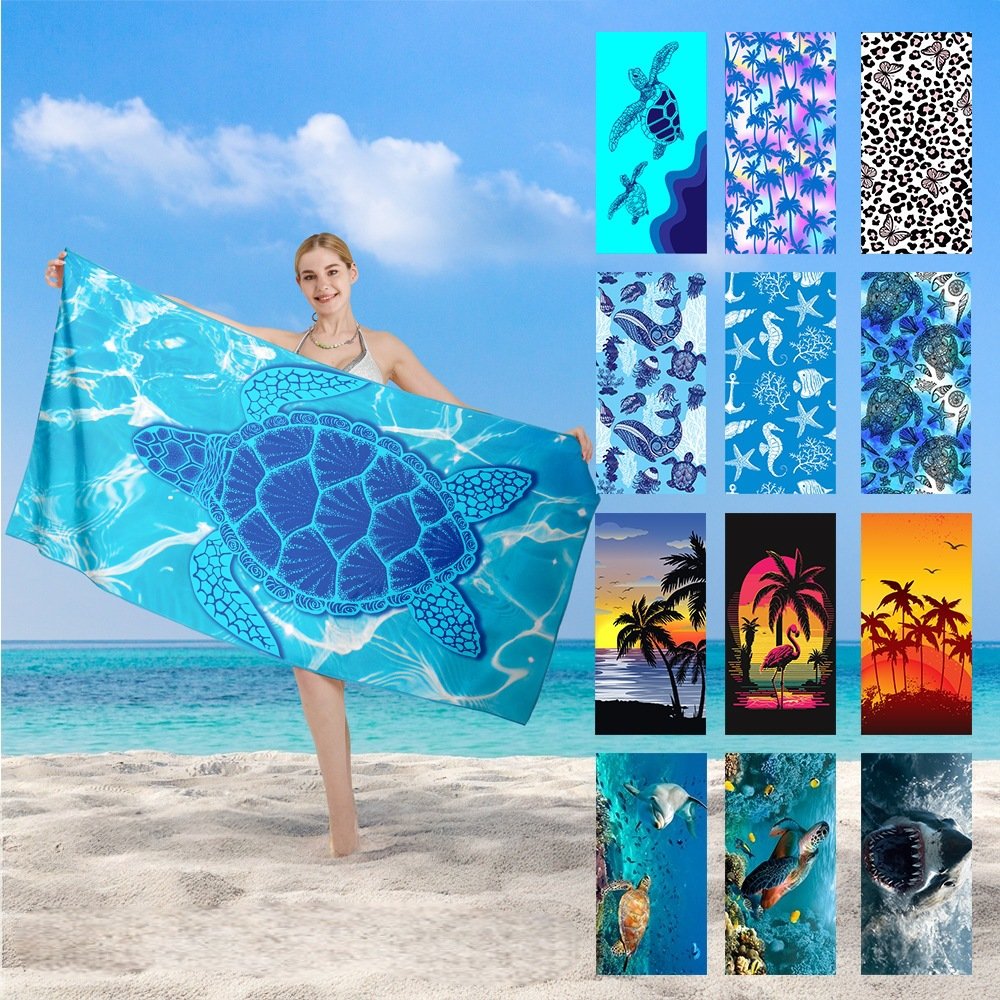
Here are the key benefits of organic cotton beach towels:
- No synthetic pesticides or fertilizers: Protects farmworkers, wildlife, and surrounding ecosystems
- Healthier soil and cleaner water: Organic practices improve long-term agricultural sustainability
- Soft, breathable, and hypoallergenic: Natural fibers feel gentle and comfortable on skin
- Perfect for sensitive skin: No harsh chemical residues that might cause irritation
Organic Cotton Market Growth
The organic cotton industry is experiencing explosive growth. In fact, market projections show remarkable expansion in the coming years.
| Organic Cotton Metric | Value / Trend |
|---|---|
| Global organic cotton fiber 2024 | ~USD 1,325.2 million |
| Forecast organic cotton 2031 | ~USD 14,322.39 million |
| Forecast CAGR 2024–2031 | ~40.5% |
| Europe share of organic cotton 2024 | >30% revenue (~USD 397.6 million) |
| Key uses | Apparel, home textiles, towels |
| Drivers | Eco labels, GOTS, sustainable sourcing |
These numbers are staggering. The organic cotton market is projected to grow from USD 1.3 billion in 2024 to over USD 14.3 billion by 2031. That represents a compound annual growth rate of approximately 40.5%!
Furthermore, Europe currently holds more than 30% of the market share. Meanwhile, Asia-Pacific is expected to show the fastest growth. This shift reflects major brands committing to sustainable sourcing across their entire product lines.
Research from Textile Exchange shows that leading apparel and home textile brands are rapidly increasing their organic cotton usage. As a result, certified suppliers see growing demand and better pricing.
Best For: Who Should Choose Organic Cotton Beach Towels?
Organic cotton beach towels are ideal for:
- Premium hotel and resort use: Guests appreciate the luxury feel and natural materials
- Families with sensitive skin: Hypoallergenic properties reduce irritation risk
- Home and poolside comfort: Perfect for leisurely relaxation where weight isn’t a concern
- Wellness-focused customers: Appeals to those prioritizing natural, chemical-free products
If you value natural fibers, traditional softness, and breathability, then organic cotton beach towels are your best choice. Moreover, they work wonderfully as Turkish hammam towels for spa and home use.
Recycled Microfiber Beach Towels: From Bottles to Beach
Recycled microfiber beach towels represent innovative sustainability. Specifically, they transform plastic waste into high-performance beach gear. Let’s explore how this amazing process works.
How Plastic Bottles Become Beach Towels
The journey from plastic bottle to recycled beach towel involves several fascinating steps. First, consumers place used plastic bottles in recycling bins. Then, recycling facilities collect and sort them by type.
Here’s the step-by-step process explained simply:
- Collection: Post-consumer PET bottles are gathered from recycling programs
- Cleaning: Bottles are thoroughly washed to remove labels, caps, and contaminants
- Shredding: Clean bottles are chopped into small flakes
- Processing: Flakes are melted and extruded into new polyester filaments
- Spinning: Filaments are spun into soft, durable yarn
- Weaving: Yarn is woven into lightweight, quick-dry towel fabric
Amazingly, about 20 plastic bottles equal one large beach towel. Therefore, every recycled microfiber beach towel you buy removes significant plastic from the waste stream. Furthermore, this process uses less energy than creating virgin polyester from petroleum.
According to research from the Ellen MacArthur Foundation, recycling plastic into textiles is a key strategy in the circular economy. Moreover, it helps address the global plastic pollution crisis.
Why Choose Recycled Microfiber?
Recycled microfiber beach towels offer compelling advantages beyond environmental benefits. In fact, many users prefer them over traditional cotton for practical reasons.
- Diverts plastic from oceans and landfills: Each towel removes approximately 20 bottles from the waste stream
- Quick-dry (3× faster than cotton): Perfect for back-to-back beach days or travel
- Lightweight and compact: Takes up minimal space in your beach bag or suitcase
- Sand-resistant: Flat-weave construction sheds sand easily with a simple shake
- GRS certified options: Global Recycled Standard ensures verified recycled content
Additionally, modern microfiber towels feel incredibly soft. Gone are the days of rough, synthetic-feeling materials. Instead, today’s recycled microfiber rivals the softness of cotton.
“Recycled microfiber technology has advanced dramatically. Our customers are often surprised that eco friendly can also mean superior performance.” – Favor-Houseware Product Development Team
Best For: Who Should Choose Recycled Microfiber Beach Towels?
Recycled microfiber beach towels are perfect for:
- Travel and backpacking: Ultra-compact design saves precious luggage space
- Beach and water sports: Quick-dry feature means you’re never stuck with a wet towel
- Gym and yoga: Lightweight portability makes them ideal for active lifestyles
- Anyone who wants quick-dry performance: Especially valuable in humid climates or for frequent use
If you prioritize convenience, performance, and environmental impact, then recycled microfiber beach towels deliver on all fronts. Similarly, they work great as surf poncho towels and change robes for water sports enthusiasts.
Organic Cotton vs Recycled Microfiber: Which Is Right for You?
Now comes the important decision. Both organic cotton beach towels and recycled microfiber beach towels offer excellent eco credentials. However, they serve different needs and preferences. Let’s compare them directly.
| Aspect | Organic Cotton Beach Towel | Recycled Microfiber (rPET) Beach Towel |
|---|---|---|
| Main Fiber | Organic cotton (GOTS or similar) | Recycled polyester + polyamide from PET bottles |
| Key Eco Benefit | No synthetic pesticides, better soil & water | Diverts plastic bottles from waste stream |
| Feel on Skin | Natural, soft, breathable | Smooth, lightweight, often very soft |
| Drying Speed | Slower, heavier when wet | Quick-dry, often 3× faster than standard cotton |
| Weight & Packability | Bulkier, traditional terry | Very compact, ideal for travel |
| Sand Resistance | Standard terry can trap sand | Flat-weave microfiber sheds sand more easily |
| Certifications | GOTS, OEKO-TEX | GRS, OEKO-TEX |
When to Choose Organic Cotton
Choose organic cotton beach towels if you:
- Prefer natural fibers over synthetic materials
- Value traditional plush, terry-cloth texture
- Have sensitive skin that benefits from hypoallergenic materials
- Primarily use towels at home, poolside, or resorts where weight doesn’t matter
- Want maximum breathability for hot, dry climates
When to Choose Recycled Microfiber
Choose recycled microfiber beach towels if you:
- Travel frequently and need compact, lightweight gear
- Want quick-dry performance for daily beach trips or water sports
- Prefer sand-resistant materials that stay cleaner
- Value the environmental benefit of recycling plastic waste
- Need towels that pack small in gym bags or backpacks
Real-World Scenarios
Let’s look at practical examples to help you decide:
Scenario 1: Family Beach Vacation
A family spending a week at a beach resort might choose organic cotton beach towels. Since they’ll leave towels in their room, weight isn’t a concern. Moreover, the kids will appreciate the soft, plush texture. Furthermore, the hotel can launder them between uses without worry.
Scenario 2: Solo Backpacking Trip
A solo traveler backpacking through coastal towns definitely needs recycled microfiber beach towels. They pack into a tiny space, dry overnight even in humid conditions, and won’t add unnecessary weight. Additionally, they can double as yoga mat covers or light blankets.
Scenario 3: Local Beach Club Membership
Someone with a local beach club membership who visits several times weekly would benefit from both types. They might use organic cotton beach towels on leisurely weekend visits and keep recycled microfiber beach towels in their car for quick after-work swims.
Ultimately, both options are truly eco friendly beach towels. The best choice depends on your specific lifestyle and priorities. Moreover, many environmentally conscious consumers own both types for different situations.
Common Questions About Eco Friendly Beach Towels (FAQ Section)
Let’s answer the most frequently asked questions about sustainable beach towels. These answers will help clarify any remaining doubts.
Are beach towels eco friendly?
Standard beach towels are not automatically eco friendly. Unfortunately, many use conventional cotton and virgin polyester. Specifically, conventional cotton production involves high water use, synthetic pesticides, and intensive farming practices. Similarly, virgin polyester comes from fossil fuels.
However, more eco friendly options are now widely available. Specifically, look for towels made from organic cotton, recycled polyester (rPET), or other sustainable fibers. Additionally, responsible manufacturers use low-impact dyeing processes and reduced-plastic packaging. Therefore, conscious consumers can easily find truly sustainable alternatives.
What is a recycled beach towel?
A recycled beach towel is made using fibers produced from recycled raw materials. Most commonly, manufacturers use recycled polyester derived from post-consumer plastic bottles. Specifically, PET bottles are collected, cleaned, processed into flakes, melted, and extruded into new yarn.
Additionally, some brands blend recycled cotton or other reclaimed fibers into the yarn. As a result, these towels reduce reliance on virgin materials and lower environmental impact. Furthermore, they help address plastic pollution by giving waste a second life.
You can explore our complete range of recycled beach towels to see certified options.
How many plastic bottles make one recycled microfiber beach towel?
A typical full-size recycled microfiber beach towel uses the equivalent of approximately 20 post-consumer plastic bottles in its fabric. However, the exact number depends on several factors.
Specifically, these factors include:
- Towel size: Larger towels obviously require more material
- GSM (grams per square meter): Heavier towels use more yarn
- Yarn specifications: Different yarn weights affect the calculation
- Weave density: Tighter weaves require more fiber
Therefore, reputable manufacturers should calculate and state their own “bottles per towel” figures. This transparency helps consumers understand the environmental impact of their purchase. At Favor-Houseware, we clearly communicate recycled content for all our products.
Is organic cotton better than regular cotton for beach towels?
Yes, organic cotton offers significant advantages over conventional cotton for beach towels. Specifically, organic cotton is grown without synthetic pesticides and fertilizers. Consequently, this farming method reduces soil and water contamination significantly. Moreover, it improves biodiversity and supports healthier ecosystems.
For beach towel performance, organic cotton provides the same excellent softness and absorbency as regular cotton. However, it appeals much more strongly to eco-conscious consumers. Furthermore, it helps retailers meet their sustainable sourcing goals and corporate responsibility commitments.
According to the Soil Association, organic cotton uses 91% less water than conventional cotton. Additionally, it requires 62% less energy to produce. Therefore, the environmental benefits are substantial and well-documented.
Are microfiber towels bad for the environment?
This is a nuanced question that deserves a thoughtful answer. Virgin microfiber does rely on fossil-fuel-based polymers, which raises sustainability concerns. Additionally, microfiber can shed tiny fibers during washing. Unfortunately, these microfibers may enter waterways and oceans.
However, using recycled microfiber (rPET) significantly improves the environmental profile. Specifically, recycled microfiber reduces demand for new plastic production. Moreover, it reuses existing PET bottles that might otherwise pollute oceans or sit in landfills.
To minimize microfiber shedding, consumers can take several steps:
- Use washing bags designed to capture microfibers
- Wash towels less frequently when possible
- Choose high-quality towels with better fiber retention
- Support improved wastewater treatment infrastructure
Research from the Ellen MacArthur Foundation emphasizes that recycled materials are essential for a circular economy. Therefore, while microfiber shedding requires attention, recycled microfiber remains a valuable sustainable option.
How do I wash eco friendly beach towels?
Proper care extends the life of your eco friendly beach towels and maintains their sustainable benefits. Fortunately, washing them correctly is simple and straightforward.
Follow these care guidelines:
- Water temperature: Wash in cold or low-temperature water (30°C/86°F or below) to save energy and protect fibers
- Detergent: Use mild, eco-friendly detergent without harsh chemicals
- Avoid bleach: Never use bleach, which damages fibers and fades colors
- Skip fabric softener: Fabric softener reduces absorbency and can coat quick-dry coatings
- Drying method: Air dry when possible, or use low-heat tumble dry to reduce energy consumption
- Washing frequency: Only wash when truly needed; many beach towels can be rinsed and air-dried between proper washes
These practices reduce energy use and extend towel lifespan. As a result, your environmental impact decreases even further. Moreover, your towels will maintain their softness, absorbency, and color for many years.
Which is better for travel: organic cotton or recycled microfiber beach towels?
For travel, recycled microfiber beach towels are almost always the superior choice. Here’s why travelers consistently prefer them:
First, they’re incredibly lightweight and compact. Specifically, microfiber towels pack down to a fraction of cotton’s size. Therefore, they leave more room in your luggage for other essentials. Additionally, airlines and backpackers appreciate the weight savings.
Second, they dry up to 3× faster than cotton. Consequently, you can wash your towel at night and have it completely dry by morning. This feature is invaluable when you’re moving between destinations daily. Furthermore, quick-drying prevents musty odors and mildew growth.
Third, microfiber sheds sand easily. After a beach day, simply shake your towel and the sand falls right off. In contrast, terry cotton traps sand in its loops, making cleanup more difficult.
On the other hand, organic cotton beach towels feel more traditional and plush. They’re ideal for home and resort use. However, they’re bulkier, heavier when wet, and slower to dry. Therefore, they’re better suited for stationary vacation stays rather than backpacking or multi-city trips.
Many of our travel-focused customers love our lightweight microfiber towels for exactly these reasons.
Are eco friendly beach towels more expensive?
Yes, eco friendly beach towels often have higher unit prices compared to conventional options. However, understanding the reasons helps explain the value proposition.
Several factors contribute to higher costs:
- Certified fibers: Organic cotton and GRS-certified recycled materials cost more than conventional alternatives
- Recycled raw materials: Processing recycled PET bottles into quality yarn requires specialized equipment
- Stricter environmental standards: Low-impact dyeing, reduced water use, and ethical labor practices add costs
- Certification fees: GOTS, GRS, and OEKO-TEX certifications require testing and annual renewal fees
- Quality construction: Durable towels with reinforced hems and colorfast dyes use better materials
Nevertheless, these towels target a premium segment willing to pay more for sustainability. Moreover, consumers increasingly recognize that higher quality means longer lifespan. Therefore, the cost per use often equals or beats cheaper alternatives.
For retailers and brands, sustainable beach towels offer several advantages:
- Higher perceived value supports better retail margins
- Strong storytelling creates emotional connections with customers
- Growing consumer demand, especially among millennials and Gen Z
- Differentiation in crowded marketplaces
- Alignment with corporate sustainability goals
Research from Nielsen shows that 73% of global consumers would change their consumption habits to reduce environmental impact. Furthermore, they’re willing to pay premium prices for sustainable products. Therefore, the market supports higher pricing for authentic eco friendly options.
Your Trusted Partner for Eco Friendly Beach Towel Manufacturing
Choosing the right manufacturing partner is crucial for brands entering the sustainable beach towels market. At Favor-Houseware, we combine decades of expertise with genuine commitment to environmental responsibility. Moreover, we serve brands worldwide with consistent quality and reliable service.
Why Choose Favor-Houseware for Your Sustainable Towel Needs?
As an experienced beach towel manufacturer in China, we offer comprehensive solutions for eco conscious brands. Here’s what sets us apart:
Available Sustainable Materials:
- Organic cotton: GOTS-certified organic cotton sourced from verified farms
- Recycled microfiber (rPET): GRS-certified recycled polyester from post-consumer bottles
- Bamboo blends: Naturally antimicrobial and sustainable bamboo fibers
- Recycled cotton: Post-industrial and post-consumer cotton fibers
Comprehensive Certifications:
We maintain strict certification standards to verify our sustainability claims. Specifically, our certifications include:
- GRS (Global Recycled Standard): Verifies recycled content and responsible production
- GOTS (Global Organic Textile Standard): Certifies organic fiber processing
- OEKO-TEX Standard 100: Tests for harmful substances to ensure product safety
- ISO 9001: Quality management system certification
These certifications aren’t just paperwork. Instead, they represent our commitment to transparency, quality, and environmental responsibility. Furthermore, they give your brand credible proof points for marketing.
Advanced Printing Techniques:
We offer multiple customization options to bring your brand vision to life:
- Sublimation printing: Vibrant, full-color designs with excellent durability
- Digital printing: High-resolution graphics with quick turnaround times
- Jacquard weaving: Woven designs that are incredibly soft and long-lasting
- Embroidery: Premium branding with raised texture and luxury feel
- Screen printing: Cost-effective for simple logos and designs
Each technique suits different needs and budgets. Therefore, our team helps you select the best method for your specific project. Additionally, we provide samples before full production runs.
Flexible Business Terms:
- MOQ (Minimum Order Quantity): We work with various order sizes to support growing brands
- Lead times: Typically 30-45 days for production, depending on order complexity
- Payment terms: Flexible options to support different business models
- Sample development: Quick turnaround on samples and prototypes
Quality Control Standards:
Quality matters just as much as sustainability. Therefore, we implement rigorous quality control at every production stage:
- Raw material inspection upon arrival
- In-process quality checks during weaving and printing
- Pre-shipment final inspection of finished products
- Colorfastness testing to ensure long-lasting vibrancy
- Absorbency and performance testing
- Packaging verification
As a result, defect rates remain consistently low. Moreover, our customers report excellent feedback from their end consumers.
Custom Eco Friendly Beach Towels for Your Brand
We partner with diverse businesses seeking sustainable beach towels. Our OEM/ODM services support:
Retailers and Lifestyle Brands:
Many retailers now seek private-label eco friendly beach towels to differentiate their offerings. We help you develop unique products that reflect your brand values. Additionally, we can match specific Pantone colors, create custom sizes, and develop exclusive designs.
For example, we’ve worked with surf brands to create surf poncho towels using recycled materials. Similarly, we’ve helped yoga studios develop branded towels from organic cotton.
Resort and Hospitality Solutions:
Hotels, resorts, and spas increasingly want sustainable amenities. Our organic cotton beach towels deliver the luxury feel guests expect while supporting your environmental commitments. Moreover, we can weave logos directly into the fabric using jacquard techniques.
We also supply other hospitality textiles like kitchen towels and bath linens to provide complete solutions.
Corporate and Promotional Options:
Companies use branded beach towels for corporate gifts, employee wellness programs, and promotional campaigns. Our customization capabilities ensure your logo looks professional and lasts through countless washes.
Additionally, sustainable products strengthen your corporate social responsibility message. Therefore, eco friendly towels work particularly well for environmentally conscious organizations.
Why China Manufacturing Makes Sense:
Some buyers wonder about choosing Chinese manufacturers for sustainable products. However, China leads global textile production with advanced technology and established supply chains. Moreover, many Chinese manufacturers now prioritize environmental standards.
According to TXM case studies, Chinese manufacturers can deliver excellent quality when partnered with experienced sourcing teams. Furthermore, competitive pricing allows brands to invest more in marketing and growth.
At Favor-Houseware, we combine China’s manufacturing advantages with international quality standards. Visit our about page to learn more about our history and capabilities.
Additional Product Lines:
Beyond beach towels, we manufacture complementary products:
- Turkish hammam towels for spa and wellness
- Surf change robes for water sports enthusiasts
- Kitchen towels and home textiles
- Aprons for culinary and hospitality use
This diverse capability means you can consolidate suppliers and streamline your supply chain. Moreover, we maintain consistent quality across all product categories.
Conclusion: Make the Sustainable Choice Today
The future of beach towels is undeniably sustainable. As we’ve explored, both organic cotton beach towels and recycled microfiber beach towels offer excellent eco friendly alternatives to conventional options. Moreover, the market growth clearly shows that consumers demand better choices.
Whether you prefer the natural softness of organic cotton or the high-performance convenience of recycled microfiber, eco friendly beach towels deliver on both sustainability and quality. Furthermore, choosing sustainable products helps protect oceans, reduce plastic pollution, and support healthier ecosystems.
For brands and retailers, the opportunity is clear. Consumer demand for sustainable beach towels continues growing at impressive rates. Additionally, premium pricing and strong storytelling create compelling business advantages. Therefore, partnering with an experienced manufacturer becomes essential for success.
Ready to Launch Your Eco Friendly Beach Towel Line?
At Favor-Houseware, we’re passionate about helping brands create sustainable products that customers love. With our extensive experience, comprehensive certifications, and flexible customization options, we’re ready to bring your vision to life.
Here’s how to get started:
Request Free Samples Get Custom Quote Read More InsightsOur team responds to inquiries within 24 hours. Let’s work together to create eco friendly beach towels that make a difference for your brand and the planet.
Contact us today to discuss your project requirements, minimum order quantities, and customization options. We look forward to becoming your trusted manufacturing partner!
Want to stay updated on sustainable textile trends? Visit our blog for regular insights, industry news, and product innovation updates.
Views: 2