Quick Answer: Beach Towel Size Comparison
| Type | Dimensions | Best For | Material | Price Range |
|---|---|---|---|---|
| Standard Beach Towel | 30″ × 60″ (76 × 152 cm) | 1 adult or teen; basic lounging | Cotton or microfiber | $10-$25 |
| Oversized/XL Towel | 35″ × 70″ (90 × 180 cm) | Taller users; extra coverage | Microfiber, cotton blend | $20-$45 |
| Family Beach Towel | 50″ × 80″ (127 × 203 cm) | 2 adults or parent with kids | Quick-dry microfiber | $35-$70 |
| Beach Blanket/Double XL | 59″ × 79″ (150 × 200 cm) | 2-4 people; family picnics | Sand-free microfiber, canvas | $45-$100 |
Key Takeaways: Beach Towel Market 2026
- 📈 The global beach towel market is projected to grow from USD 4.2 billion in 2025 to USD 7.9 billion by 2035 (6.2% annual growth)
- 🧵 Microfiber holds 45% market share by revenue, making it the most popular material for oversized beach towels
- 🛒 Online sales represent 38% of total beach towel purchases, highlighting the importance of e-commerce
- 🌍 North America leads the market, while Asia-Pacific shows the fastest growth rate
Are you tired of fighting for space on a tiny beach towel? Or maybe you’ve dealt with sand sticking to every fiber after a beach day? You’re not alone. Consequently, more families are switching to oversized beach towels and sand-free family beach blankets for better comfort and convenience.
In this complete guide, we’ll explore everything you need to know about extra large beach towels, XL beach towels, and family beach towels. Moreover, we’ll share market insights, size charts, material comparisons, and expert care tips. By the end, you’ll know exactly which towel fits your family’s beach adventures.
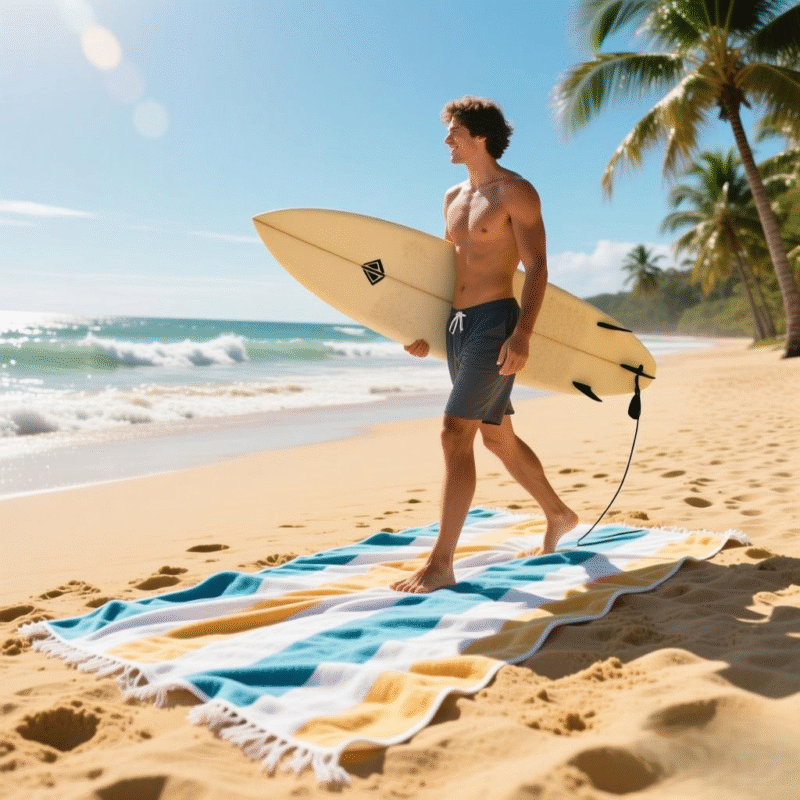
Large beach towel ideal for family beach activities
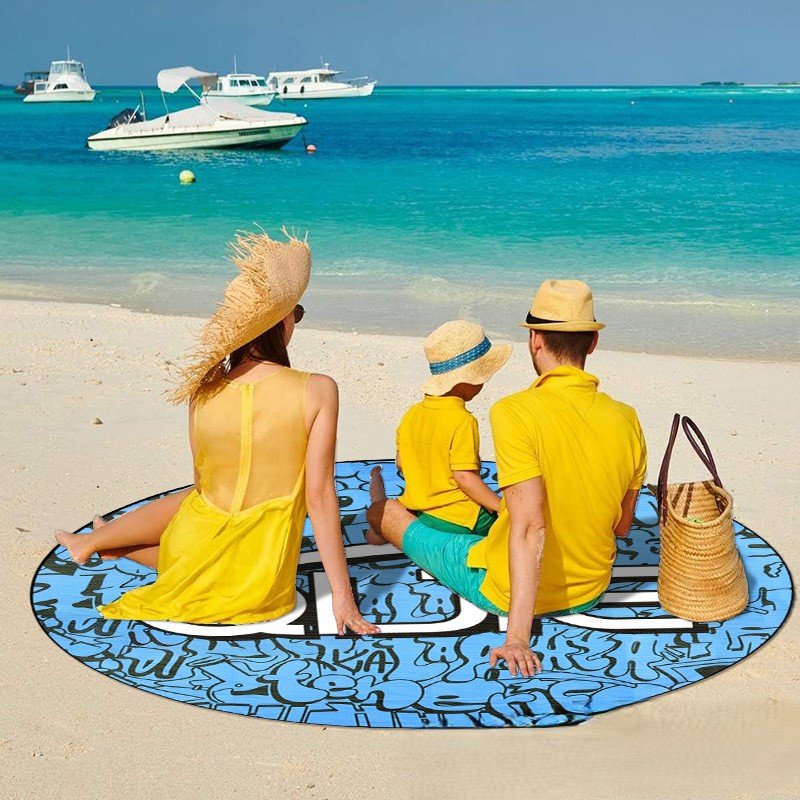
Vibrant beach towel designs in various colors and patterns
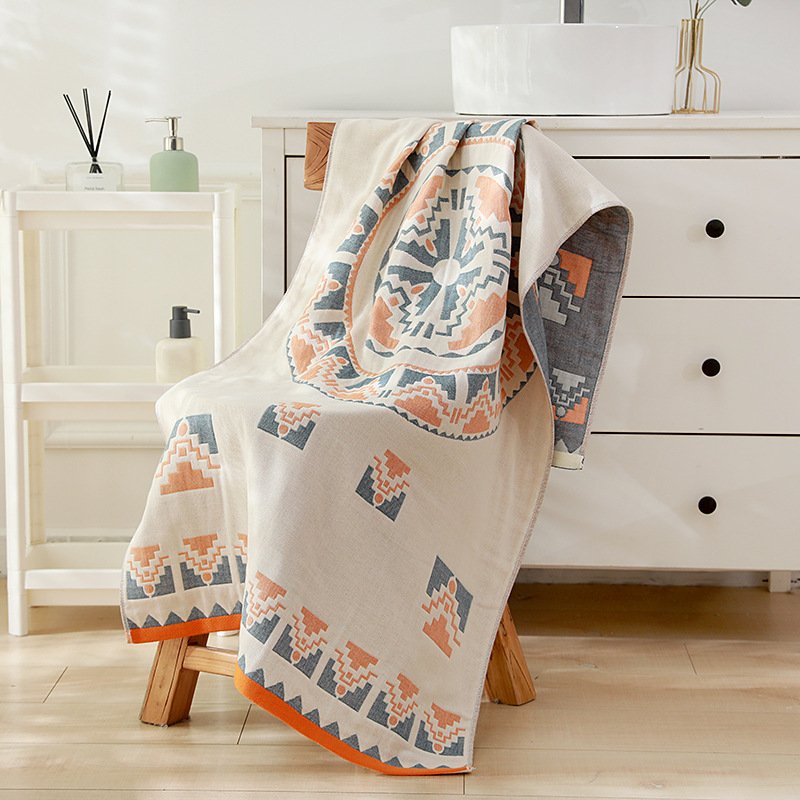
Premium beach towel collection showcase
What Size Is An Oversized Beach Towel? (Complete Dimensions Chart)
First, let’s clarify what “oversized” actually means. In fact, many people are confused about the difference between standard and oversized beach towels. Therefore, understanding exact dimensions helps you make the right choice.
Standard vs XL vs Family Beach Towel Sizes
A standard beach towel typically measures around 30 inches by 60 inches (76 × 152 cm). While this size works for basic drying off, it often leaves you with limited space for lounging. On the other hand, an oversized beach towel usually starts at 35 inches by 70 inches (90 × 180 cm), which is roughly the size of a twin bed sheet.
Furthermore, family beach towels go even bigger. These towels typically measure around 50 inches by 80 inches (127 × 203 cm) or larger. Some premium family beach blankets can reach 150 × 200 cm (approximately 59″ × 79″), comfortably fitting multiple people.
| Towel Type | Typical Dimensions | Main Use Case | Visual Reference |
|---|---|---|---|
| Standard Beach Towel | 30″ × 60″ / 76 × 152 cm | 1 adult or teen; basic lounging | Size of a yoga mat |
| Oversized/XL Towel | 35″ × 70″ / 90 × 180 cm | Taller users; extra coverage and comfort | Twin bed sheet size |
| Family Towel | 50″ × 80″ / 127 × 203 cm | 2 adults or 1 adult + 2 kids | Full bed sheet size |
| Beach Blanket/Double XL | 150 × 200 cm / 59″ × 79″ | 2-4 people; family picnics and beach days | Queen bed sheet size |
“Choosing the right beach towel size makes a huge difference. An extra large beach towel gives you room to stretch out without touching hot sand, while a family beach blanket creates a comfortable space for everyone.” – Beach Gear Magazine
As a leading beach towel manufacturer, we produce towels in all these size categories. Additionally, we offer custom dimensions to meet specific wholesale and retail needs.
Family Beach Towel vs Extra Large Beach Towel: What’s The Difference?
Although the terms sound similar, there’s an important distinction between family beach towels and extra large beach towels. Understanding this difference helps you choose the right product for your needs.
Clear Definitions
Extra Large (XL) Beach Towels are designed for individual use with extra space. Typically, they measure around 35″ × 70″ to 40″ × 75″. These towels focus on giving one person maximum coverage and comfort. In other words, they’re perfect if you’re tall or simply want more personal space at the beach.
Meanwhile, Family Beach Towels are specifically designed for multiple people. They usually start at 50 inches wide or wider (often 150 × 200 cm). These towels work great for couples, parents with kids, or small groups who want to share one large surface.
Key Use Cases For Each Type
Choose an XL Beach Towel if you:
- Are over 6 feet tall and need extra length
- Want generous personal space for sunbathing
- Prefer easier portability than family-size options
- Like wrapping yourself completely after swimming
Choose a Family Beach Towel if you:
- Travel with a partner, kids, or friends
- Want one large blanket instead of multiple towels
- Plan beach picnics or group activities
- Need space for beach bags, toys, and snacks
According to REI’s beach gear guide, family-sized options have become increasingly popular because they reduce the hassle of managing multiple towels. Similarly, our microfiber towel collection includes both XL individual and family-sized options.
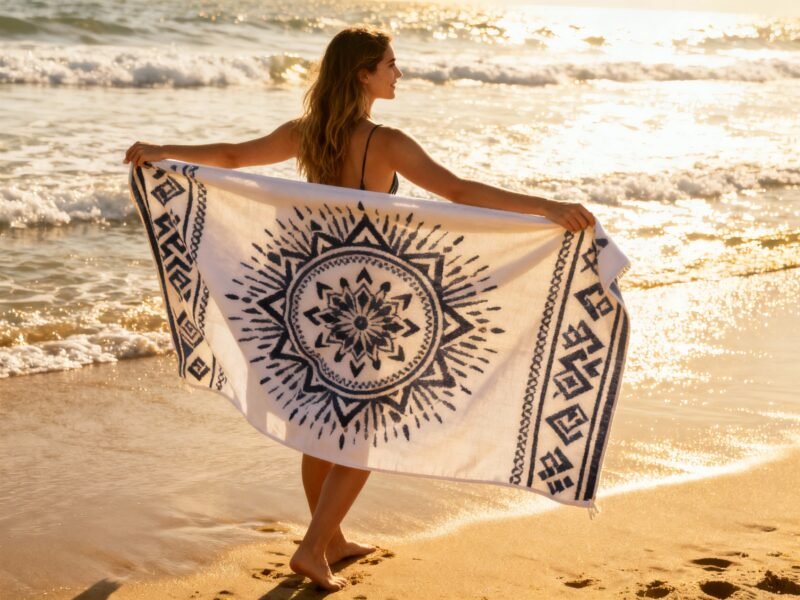
Lightweight microfiber beach towel with quick-dry technology
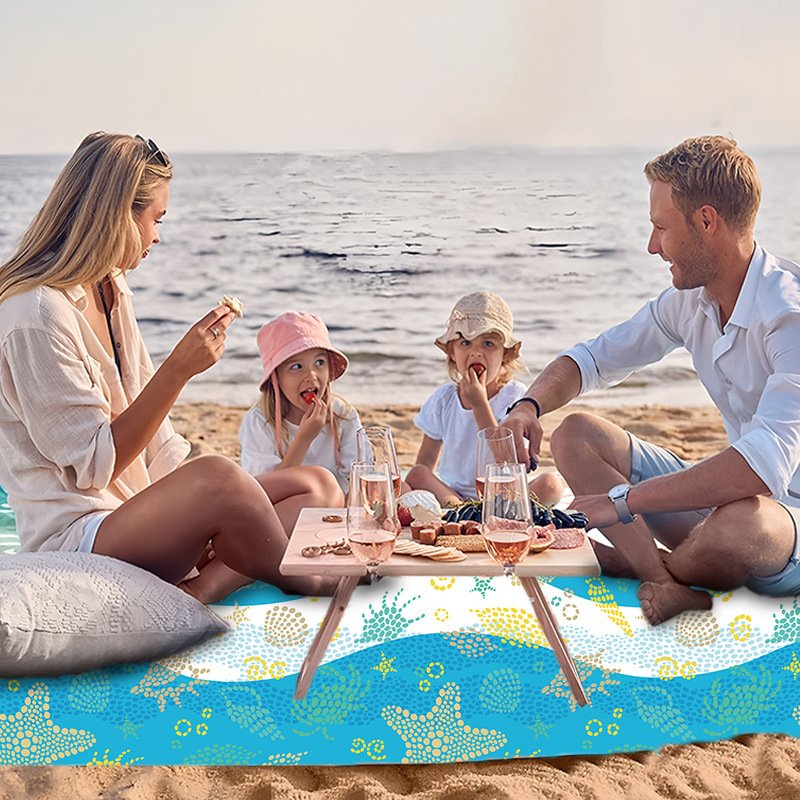
Spacious beach towel perfect for multiple users
Why Oversized And Sand Free Beach Towels Are Trending In 2026
The beach towel industry is experiencing remarkable growth. In fact, consumer preferences are shifting dramatically toward larger, more functional products. Let’s explore the market data behind this trend.
Market Growth Data (USD 4.2B → USD 7.9B by 2035)
The global beach towel market demonstrates impressive expansion. Specifically, industry analysts estimate the market at approximately USD 4.2 billion in 2025. Furthermore, projections show it reaching USD 7.9 billion by 2035, representing a compound annual growth rate (CAGR) of 6.2%.
Another market analysis values the segment at around USD 33 million in 2022, growing toward nearly USD 49 million by 2032 at roughly 4% annual growth. These numbers clearly indicate strong consumer demand for beach towel products.
Regional Insights (North America + Asia-Pacific Growth)
Geographically, North America currently leads the market in both volume and revenue. However, the Asia-Pacific region shows the fastest growth rate, driven by rising disposable incomes and increased beach tourism.
| Market Insight | 2025 Data | Projection/Growth |
|---|---|---|
| Global Market Size | USD 4.2 billion | USD 7.9 billion by 2035 (6.2% CAGR) |
| Microfiber Market Share | 45% by revenue | Growing due to quick-dry demand |
| Online Sales Channel | 38% of total sales | E-commerce continues expanding |
| Leading Region | North America | Mature market, premium segment |
| Fastest Growing Region | Asia-Pacific | Rising tourism and disposable income |
As a China-based beach towel manufacturer, we’re strategically positioned to serve both established North American markets and rapidly growing Asia-Pacific demand. Moreover, our recycled beach towel options align with the sustainability trend mentioned in market reports.
According to Grand View Research, premium and oversized towels are capturing increasing market share, particularly among millennial and Gen Z consumers who prioritize quality and functionality.
Global Market Insights: What Retailers Are Looking For
Retailers worldwide are adapting to changing consumer preferences. Consequently, understanding these trends helps both buyers and manufacturers align their product strategies.
Consumer Preferences Shifting To Larger Sizes
Today’s consumers want more space and comfort from their beach towels. Therefore, retailers report growing demand for oversized beach towels and family beach blankets over standard sizes. In addition, buyers increasingly prioritize multi-functional products that work for various outdoor activities beyond just beach trips.
Market research from Mintel shows that consumers are willing to pay premium prices for larger towels with advanced features like sand resistance and quick-dry technology.
Sustainability And Recycled Materials
Environmental consciousness is shaping purchasing decisions. As a result, eco-friendly and recycled materials are gaining significant traction. Many leading brands now emphasize sustainable sourcing and manufacturing processes. Similarly, our recycled beach towel collection addresses this growing market segment.
E-Commerce Representing 38% Of Sales
Online shopping dominates the beach towel market. Specifically, e-commerce channels account for approximately 38% of total sales, according to recent industry data. This trend accelerated during the pandemic and continues to grow. Consequently, having strong online product descriptions, high-quality images, and detailed specifications becomes essential.
For more insights on manufacturing trends, McKinsey’s retail insights provide valuable data on consumer behavior and e-commerce growth.
Material Guide: Cotton vs Microfiber For Oversized Beach Towels
Choosing the right material significantly impacts your beach towel’s performance. Therefore, let’s compare the two most popular options: cotton and microfiber.
Why Microfiber Holds 45% Market Share
In 2022, microfiber held the largest share of the beach towel market at approximately 45% by revenue. This dominance reflects strong consumer demand for quick-drying and lightweight towels. Moreover, microfiber beach towels offer several compelling advantages:
- Lightning-fast drying: Microfiber dries up to 50% faster than cotton, perfect for consecutive beach days
- Ultra-lightweight: Significantly lighter than cotton, making oversized towels more portable
- Compact packing: Compresses easily into beach bags despite large dimensions
- Sand resistance: Smooth fibers naturally repel sand better than cotton loops
- Durability: Synthetic fibers resist fading, mildew, and wear over time
Furthermore, microfiber technology continues advancing. Modern microfiber towels achieve impressive absorbency while maintaining their quick-dry properties. According to Textile World Magazine, innovations in fiber density and weave patterns are improving microfiber performance every year.
When To Choose Cotton Instead
Despite microfiber’s market dominance, cotton and cotton-blend towels still appeal for their softness and natural feel. In particular, they remain popular in premium and hotel segments. Cotton offers distinct benefits:
- Luxurious softness: Natural cotton fibers feel softer against skin, especially for sensitive users
- Superior absorbency: Cotton loops hold more water per square inch than microfiber
- Breathability: Natural fibers allow better air circulation, staying fresher longer
- Premium appeal: Turkish cotton and Egyptian cotton command higher price points
- Environmental preference: Some consumers prefer natural over synthetic materials
Our Turkish hammam towel collection showcases the premium quality of cotton-based beach towels. Additionally, cotton blends offer a middle ground, combining cotton’s softness with synthetic fibers’ quick-dry benefits.
| Feature | Microfiber | Cotton | Cotton Blend |
|---|---|---|---|
| Absorbency | Good (3-4x its weight) | Excellent (5-7x its weight) | Very Good (4-6x its weight) |
| Dry Time | Very Fast (1-2 hours) | Slow (4-6 hours) | Moderate (2-4 hours) |
| Weight (Oversized) | Lightweight (300-500g) | Heavy (800-1200g) | Medium (500-800g) |
| Durability | Excellent (synthetic) | Good (natural wear) | Very Good |
| Sand Resistance | Excellent | Fair to Good | Good |
| Softness | Good | Excellent (natural) | Very Good |
| Price Range | $20-$45 | $30-$80+ | $25-$60 |
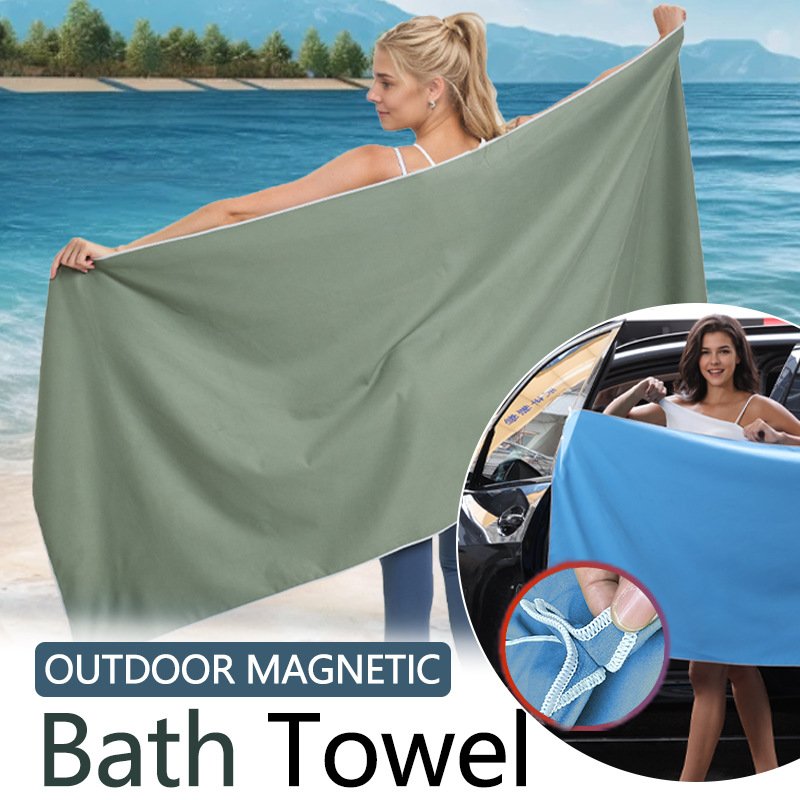
High-quality beach towel with superior comfort and absorbency
Sand Free Beach Blankets: How Do They Actually Work?
One of the most frustrating parts of beach trips is dealing with sand. Fortunately, sand-free beach blankets solve this problem through clever engineering. Let’s explore how this technology works.
The Technology In Simple Terms
Sand-free beach blankets use special fabric constructions that prevent sand from sticking or embedding in fibers. Basically, there are three main approaches manufacturers use:
1. Tightly Woven Microfiber: Ultra-fine synthetic fibers are woven so closely together that sand grains can’t penetrate between threads. Instead, sand sits on the surface where it easily brushes off. This method works similarly to how water beads up on a raincoat.
2. Dual-Layer “Sand Fall-Through” Fabrics: These innovative designs feature two layers with small perforations. Sand falls through the top layer but can’t return up through the bottom. Consequently, you stay on a sand-free surface even when sitting directly on sandy beaches.
3. Smooth, Low-Loop Weaves: Unlike traditional towels with cotton loops that trap sand, these blankets use smooth or very low-profile weaves. Therefore, sand grains have nothing to cling to and slide right off.
Best Materials For Sand Resistance
Not all materials perform equally for sand resistance. In our experience as a beach towel manufacturer, these materials work best:
- Parachute Nylon: Originally designed for parachutes, this tightly woven material naturally repels sand and water
- High-Density Microfiber: Synthetic fibers woven at 200+ GSM create an effective sand barrier
- Ripstop Nylon: Features a crosshatch reinforcement pattern that’s both durable and sand-resistant
- Canvas with Coating: Heavy-duty canvas treated with water-resistant coating blocks sand effectively
Additionally, some premium sand-free family beach blankets combine materials strategically. For example, they might pair a non-absorbent, sand-resistant base with a soft cotton or microfiber top layer for comfort. This hybrid approach offers both functionality and comfort.
“After years of shaking out sandy towels, switching to a sand-free beach blanket changed our beach days completely. Sand literally brushes right off, making cleanup effortless.” – Beach Lifestyle Blog
For more information on textile technologies, ScienceDirect’s textile research provides detailed technical insights.
Key Features To Look For In A Family Beach Towel
When shopping for an oversized beach towel or family beach blanket, certain features dramatically improve your experience. Therefore, here’s a comprehensive checklist to guide your purchase:
- Generous Size: At minimum, look for 50″ × 80″ for families. Larger 150 × 200 cm options accommodate more people comfortably.
- Appropriate GSM Weight: GSM (grams per square meter) indicates thickness. For family towels, 300-500 GSM offers good absorbency without excessive bulk. We’ll explain GSM in detail later.
- Quick-Dry Capability: Essential for multi-day trips. Microfiber or lightweight cotton blends dry fastest, usually within 1-3 hours in sun.
- Sand Resistance: Look for tightly woven fabrics or specific “sand-free” technology. This feature saves significant cleanup time.
- Packability: Despite large dimensions, quality oversized towels compress well. Check if the product includes a carrying pouch or compression strap.
- Durability: Double-stitched edges, reinforced corners, and quality materials ensure your towel lasts multiple seasons. Check customer reviews for longevity feedback.
- Colorfast Dyes: Beach towels face intense sun and saltwater exposure. Quality dyes resist fading, keeping colors vibrant longer.
- Easy Care: Machine-washable towels with simple care instructions make maintenance hassle-free. Avoid towels requiring special washing conditions.
Furthermore, many premium XL beach towels now include bonus features like built-in pockets for phones and keys, corner loops for securing to the ground, or even attached pillows for extra comfort. Our surf poncho towel collection demonstrates how towels can integrate multiple functions.
According to Consumer Reports, the most important factors consumers consider are size, absorbency, and durability—in that order.
Beach Towel Size Comparison Table (Standard, XL, Family, Blanket)
To help you make the best choice, here’s a detailed comparison of all beach towel sizes with specific use cases:
| Type | Typical Dimensions | Main Use Case | Ideal For | Weight Range |
|---|---|---|---|---|
| Standard Beach Towel | 30″ × 60″ (76 × 152 cm) | 1 adult or teen; basic lounging | Solo beachgoers, gym use, poolside | 400-600g |
| Oversized/XL Towel | 35″ × 70″ (90 × 180 cm) | Taller users; extra coverage | People 6’+ tall, sunbathers wanting privacy | 500-800g |
| Family Beach Towel | 50″ × 80″ (127 × 203 cm) | 2 adults or parent with kids | Couples, parent + 1-2 children, beach picnics | 700-1000g |
| Beach Blanket/Double XL | 150 × 200 cm (59″ × 79″) | 2-4 people; family picnics and beach days | Families with multiple kids, group outings | 600-900g (microfiber) |
This table clearly shows how size correlates with capacity. Notably, weight doesn’t always increase proportionally with size because microfiber materials allow for larger dimensions without excessive bulk.
How Many People Fit On A Family Beach Towel?
Understanding capacity helps you choose the right size. Therefore, here’s a practical guide based on actual usage:
Practical Sizing Guide
50″ × 80″ (127 × 203 cm) Family Towels:
- Comfortably fits 2 adults lying side-by-side with minimal touching
- Perfect for 1 adult + 2 small children (under age 8)
- Works for 3-4 children playing or sitting together
- Ideal for couples who want shared space plus room for a beach bag
150 × 200 cm (59″ × 79″) Beach Blankets:
- Accommodates 2-3 adults comfortably with personal space
- Perfect for 2 adults + 2-3 children (family of 4-5)
- Allows room for beach toys, cooler, and bags alongside people
- Great for small group gatherings or beach picnics
However, keep in mind that comfort levels vary by personal preference. Some families prefer more personal space, while others don’t mind closer quarters. Additionally, consider that you’ll likely have beach bags, snacks, toys, and other items sharing the space.
Quick Decision Guide: Which Size Do I Need?
For 1 person: Standard (30″ × 60″) or XL (35″ × 70″) depending on height and preference
↓
For 2 people (couple or adult + child): Family size (50″ × 80″)
↓
For 3-4 people (family with kids): Beach blanket (150 × 200 cm)
↓
For 5+ people or group outings: Multiple blankets or extra-large (200+ cm) options
Our beach towel manufacturing capabilities include custom sizing for wholesale orders, allowing retailers to offer exactly what their customers need.
How Thick Should An Oversized Beach Towel Be? (GSM Guide)
GSM stands for “grams per square meter” and measures fabric weight and thickness. Understanding GSM helps you choose towels with the right balance of absorbency, comfort, and portability.
GSM Explained In Simple Language
Think of GSM like this: imagine weighing a one-meter-square piece of fabric. The weight in grams is the GSM number. Higher GSM means thicker, heavier fabric with more material. Lower GSM means thinner, lighter fabric.
For example, a lightweight t-shirt might be around 150 GSM, while a heavy winter sweater could be 400+ GSM. Beach towels typically range from 300 to 700 GSM, depending on their intended use.
Recommended GSM Ranges For Different Uses
| GSM Range | Thickness | Best For | Pros | Cons |
|---|---|---|---|---|
| 200-300 GSM | Lightweight | Travel, hiking, camping | Ultra-portable, dries very fast, compact | Less absorbent, may feel thin |
| 300-450 GSM | Medium Weight | Beach, pool, everyday use | Good balance of absorbency and weight | Moderate drying time |
| 450-600 GSM | Heavy Weight | Luxury beach towels, spa | Very absorbent, plush feel, durable | Heavier to carry, slower drying |
| 600+ GSM | Ultra Plush | Home use, premium hotels | Maximum luxury and absorbency | Too heavy for practical beach use |
Balance Between Absorbency And Portability
For oversized beach towels and family beach blankets, we recommend the 300-450 GSM range. Here’s why this sweet spot works best:
- Sufficient absorbency to dry off 2-4 people effectively
- Reasonable weight even in larger dimensions (50″ × 80″ or bigger)
- Faster drying than ultra-plush options, important for consecutive beach days
- Easier to pack and transport in beach bags or car trunks
Conversely, very high GSM (600+) in oversized dimensions creates impractically heavy towels. For instance, a 150 × 200 cm towel at 700 GSM would weigh over 2 kilograms (4.4 pounds) when dry—and much more when wet!
At Favor Houseware, we carefully engineer our XL beach towels to optimize GSM for each size category, ensuring portability without sacrificing performance.
How To Choose The Right XL Beach Towel Size For Your Family
Selecting the perfect beach towel involves more than just counting people. Therefore, consider these factors for the best match:
Decision Flowchart
Step 1: Count Your Usual Beach Group
- Solo or couple → Consider 30″ × 60″ or 35″ × 70″
- Small family (3-4 people) → Look at 50″ × 80″
- Large family (5+ people) → Choose 150 × 200 cm or multiple towels
Step 2: Consider Your Activities
- Mostly swimming and drying → Absorbency matters more (cotton or cotton-blend)
- Lounging and sunbathing → Size and comfort are priorities (go larger)
- Beach picnics and games → Sand-resistance is key (microfiber or sand-free designs)
Step 3: Think About Portability
- Walking to beach → Lightweight microfiber essential
- Driving to beach → Can accommodate heavier cotton towels
- Flying for vacation → Compact, quick-dry towels work best
Step 4: Check Special Needs
- Tall family members (6’+) → Minimum 70″ length (35″ × 70″ or larger)
- Young children → Bright colors and soft materials
- Sensitive skin → Natural cotton or hypoallergenic microfiber
Special Considerations
For Kids: Children often prefer their own smaller towels with fun designs. However, having one large family beach blanket as a “home base” where everyone can gather works wonderfully. This approach combines personal towels for drying with a shared space for activities.
For Pets: If you bring dogs to the beach, consider an extra-large, sand-resistant blanket. Dogs shake sand everywhere, so sand-free technology becomes even more valuable. Additionally, choose darker colors that hide paw prints and dirt better.
For Multiple Activities: Many families use their oversized beach towels for more than just beach trips. Consider whether you’ll use it for picnics, outdoor concerts, camping, or poolside lounging. Multi-purpose usage may justify investing in larger, more durable options.
Furthermore, our surf change robe collection shows how beach products can serve multiple functions, similar to how a quality oversized towel works for various outdoor activities.
How To Fold And Carry An Oversized Beach Towel
Despite their large size, extra large beach towels can be surprisingly portable with the right techniques. Here’s how to maximize convenience:
Step-By-Step Rolling Method
- Lay the towel completely flat on a clean surface, smoothing out all wrinkles and bumps
- Fold lengthwise once or twice depending on how wide your towel is. For a 150 × 200 cm blanket, fold it into thirds lengthwise
- Starting from one short end, roll tightly like a sleeping bag, keeping the roll even and compact
- Secure with elastic bands or built-in straps. Place bands at both ends and middle for extra security
This method typically reduces a large family towel to about the size of a large water bottle or small yoga mat. Consequently, it fits easily into beach bags, car trunks, or backpacks.
Storage Tips
- Use mesh bags for storing rolled towels. Mesh allows air circulation, preventing musty odors
- Add dedicated pockets in your beach bag specifically sized for rolled towels
- Consider compression sacks for travel. These work especially well with microfiber towels
- Store clean and completely dry to prevent mildew. Never store damp towels for extended periods
Travel-Friendly Options
Many modern oversized beach towels include built-in portability features:
- Attached elastic loops or velcro straps for compact rolling
- Matching storage pouches that clip to the rolled towel
- Lightweight carabiners for hanging from backpacks
- Water-resistant outer fabric that doubles as a dry bag
At Favor Houseware, we can customize towels with built-in carrying solutions for wholesale orders, adding value for retailers and end consumers alike.
Care Tips: How To Make Sand Free Beach Towels Last Longer
Proper care significantly extends your beach towel’s lifespan. Therefore, follow these expert maintenance tips:
Washing Instructions
For Microfiber Towels:
- Wash in cool or warm water (never hot, which damages synthetic fibers)
- Skip fabric softener completely—it coats microfiber and ruins absorbency
- Use mild detergent without bleach or harsh chemicals
- Wash separately or with similar colors to prevent lint transfer
- Air dry or tumble dry on low heat. High heat can melt or warp fibers
For Cotton and Cotton-Blend Towels:
- Wash in warm water for best cleaning (hot water acceptable for whites)
- Fabric softener is optional but use sparingly to maintain absorbency
- Use regular laundry detergent; color-safe bleach is fine for whites
- Shake vigorously before washing to remove embedded sand
- Tumble dry on medium heat or line dry in shade to prevent fading
Drying Best Practices
Interestingly, how you dry your towels affects their longevity as much as washing:
- Shake out thoroughly before drying to remove sand, salt, and debris
- Line drying in shade preserves colors better than direct sunlight
- If using a dryer, remove promptly when dry to prevent wrinkles and stiffness
- Avoid over-drying which makes fibers brittle and prone to breaking
- For sand-free beach blankets, a quick brush-off before washing protects both fabric and machine
Sand Removal Techniques
The biggest enemy of beach towel longevity is embedded sand. Consequently, remove it before washing:
- Shake vigorously outdoors immediately after beach use while sand is still dry
- Hang and beat gently like a rug to dislodge stubborn particles
- Use a soft brush on stubborn areas, especially on cotton loop towels
- For sand-free microfiber blankets, simply wipe with your hand—sand slides right off
- Rinse in outdoor shower if available before packing up
Long-Term Storage
Between beach seasons, proper storage prevents damage:
- Ensure towels are completely dry before storage (air out for 24 hours minimum)
- Store in cool, dry place away from direct sunlight
- Use breathable storage bags, not sealed plastic
- Add cedar blocks or lavender sachets to prevent musty odors
- Avoid compressed storage for extended periods—allows fibers to recover
According to Good Housekeeping’s towel care guide, following proper care instructions can double or triple towel lifespan.
Additionally, check out our kitchen towel care guides for similar maintenance tips applicable to all household textiles.
Are Oversized Beach Towels Worth It? (Pros & Cons)
Before investing in an oversized beach towel or family beach blanket, consider both advantages and potential drawbacks:
| Aspect | Advantages | Potential Drawbacks |
|---|---|---|
| Size & Coverage |
• More room to stretch out • Keeps you completely off hot sand • Can accommodate multiple people • Doubles as picnic blanket |
• Takes up more space in bags • Harder to find washing machines that fit • May be too large for small balconies/patios |
| Comfort |
• Better privacy when changing • More comfortable for tall people • Can share with partner/kids • Extra padding from sand and rocks |
• Heavier when wet (especially cotton) • May be cumbersome for solo users • Excess fabric can blow in wind |
| Versatility |
• Works for beach, pool, camping, concerts • One towel instead of multiple • Better for group activities • Can layer for extra cushioning |
• Overkill for quick pool dips • Less convenient for gym use • Takes longer to dry between uses |
| Value |
• Replaces multiple standard towels • Better durability per square inch • Premium features (sand-free, quick-dry) • Long-term investment |
• Higher upfront cost ($35-100) • May need special storage solutions • Replacement cost is higher |
When To Invest In Oversized
Oversized beach towels are worth it if you:
- Frequently visit beaches, pools, or outdoor venues
- Have a family or often travel with partners/friends
- Value comfort and don’t mind carrying slightly more weight
- Want multi-purpose outdoor gear
- Have adequate storage and washing facilities at home
When Standard Is Enough
Standard towels may be better if you:
- Primarily use towels at the gym or for quick pool visits
- Travel solo and prioritize ultra-light packing
- Have limited storage space in your home or car
- Visit beaches infrequently (once or twice per year)
- Prefer having multiple smaller options for different family members
Ultimately, many families find the ideal solution is owning both: standard towels for everyday use and one or two extra large beach towels or family beach blankets for special outings.
For businesses considering wholesale purchases, our contact page provides information on bulk ordering both standard and oversized options to serve diverse customer needs.
Custom Oversized & Family Beach Towels From A China Manufacturer
As a leading beach towel manufacturer based in China, Favor Houseware combines global market insights with manufacturing excellence. Therefore, we’re uniquely positioned to serve the growing demand for oversized beach towels and sand-free family beach blankets.
OEM/ODM Capabilities At Favor-Houseware.com
Our manufacturing facility offers comprehensive customization options tailored to your brand requirements:
Size Customization:
- Standard dimensions: 30″ × 60″, 35″ × 70″, 50″ × 80″
- Metric options: 150 × 200 cm, 180 × 200 cm, and custom sizes
- Ability to produce any dimension from 70 × 140 cm up to 200 × 250 cm
- Consistent sizing across production runs for retail inventory
Material Options:
- 100% Cotton: Turkish cotton, Egyptian cotton, organic cotton
- Microfiber: Standard polyester, recycled polyester, premium ultra-fine fibers
- Cotton Blends: Cotton-polyester combinations optimized for quick-dry properties
- Specialty Fabrics: Bamboo blends, sand-free constructions, waterproof backing options
- Sustainable Materials: Our recycled beach towel collection uses post-consumer plastic bottles
GSM Range:
- Lightweight travel towels: 200-300 GSM
- Standard beach towels: 300-450 GSM
- Premium luxury towels: 450-700 GSM
- Custom GSM specifications available based on intended use
Customization Methods:
- Reactive Printing: Vibrant, long-lasting colors perfect for bold designs
- Sublimation Printing: Photo-quality images and complex patterns
- Jacquard Weaving: Woven designs that won’t fade or peel
- Embroidery: Premium branding and monogramming options
- Custom Labels & Tags: Private labeling with your brand identity
Our Product Comparison Table
| Model | Size Options | Material | GSM | MOQ | Customization Available |
|---|---|---|---|---|---|
| Classic Cotton XL | 35″ × 70″ / 90 × 180 cm | 100% Turkish Cotton | 450-500 | 500 pcs | Reactive print, embroidery |
| Microfiber Quick-Dry | 35″ × 70″ / 40″ × 75″ | 100% Polyester Microfiber | 300-350 | 300 pcs | Sublimation print, custom size |
| Family Beach Blanket | 50″ × 80″ / 127 × 203 cm | Cotton-Poly Blend | 380-420 | 500 pcs | All printing methods, jacquard |
| Sand-Free Double XL | 150 × 200 cm / 59″ × 79″ | High-Density Microfiber | 320-360 | 300 pcs | Digital print, corner pockets |
| Eco-Friendly Recycled | Custom (up to 200 × 250 cm) | Recycled PET Microfiber | 300-400 | 500 pcs | All methods, eco-certifications |
Additionally, we offer complementary products like our surf poncho towels and Turkish hammam towels to complete your beach product line.
Why Choose A China-Based Manufacturer?
Partnering with a Chinese manufacturer offers significant advantages for beach towel retailers and distributors:
Cost Efficiency:
- Competitive manufacturing costs without compromising quality
- Economies of scale for larger orders
- Flexible MOQ options accommodate both startups and established brands
- Complete supply chain integration reduces middleman costs
Customization Flexibility:
- In-house design team assists with pattern development
- Rapid prototyping and sampling (7-10 business days)
- Ability to adjust specifications mid-production if needed
- No setup fees for standard customization methods
Export Compliance:
- Full compliance with North American safety standards (CPSIA, California Prop 65)
- EU regulations including REACH and OEKO-TEX certifications
- Asia-Pacific market requirements for growing regional demand
- Transparent documentation for customs and import procedures
Quality Standards:
- ISO 9001 certified manufacturing facilities
- Rigorous quality control at every production stage
- Pre-shipment inspections available
- Consistent color matching across production batches
- Durability testing for colorfastness, shrinkage, and wear resistance
According to TXM Consulting’s China manufacturing case studies, strategic partnerships with Chinese manufacturers continue delivering value through innovation and efficiency improvements.
Learn more about our company and our commitment to quality manufacturing, or explore our industry insights blog for the latest trends in textile manufacturing.
Frequently Asked Questions
What size is considered an oversized beach towel?
An oversized beach towel typically measures around 35 inches by 70 inches (90 × 180 cm) or larger. This is significantly bigger than standard beach towels, which measure about 30″ × 60″. Some extra-large and family-sized towels can reach 150 × 200 cm (59″ × 79″), large enough to comfortably accommodate couples or families.
What is the best size of beach towel for adults?
For most adults, a minimum size of 30 inches by 60 inches works for basic drying and lounging. However, taller users (over 6 feet) or those who prefer extra coverage should choose 35″ × 70″ or wider. This extra size ensures you can lie fully stretched out without touching hot sand.
What is a family beach towel?
A family beach towel is a larger towel or thin blanket specifically designed for multiple people. These towels typically measure at least 50 inches by 80 inches (127 × 203 cm) or around 150 × 200 cm. They comfortably seat or accommodate two to four people, making them perfect for couples, parents with children, or small groups.
Are oversized beach towels worth it?
Yes, oversized beach towels are worth the investment if you frequently visit beaches or pools. They provide significantly more room to lie down, keep you completely off hot sand, and can wrap around your entire body for privacy when changing. The main trade-off is slightly more weight and bulk compared to standard towels, though modern microfiber options minimize this issue.
What material is best for an XL beach towel?
For XL beach towels, microfiber is often the best choice because it remains lightweight despite large dimensions, dries quickly (important for oversized towels), and resists sand effectively. Microfiber held about 45% of the beach towel market in 2022. However, cotton remains preferred for premium softness if you don’t mind the extra weight and longer drying time.
What is a sand-free beach blanket?
Sand-free beach blankets use specially engineered fabrics that prevent sand from sticking to or embedding in the material. They typically employ tightly woven microfiber, dual-layer designs where sand falls through but can’t return, or smooth low-loop weaves. Some premium designs combine a non-absorbent base with a soft top layer for both comfort and sand resistance.
Views: 5