⚡ Quick Key Takeaways — What You Need To Know First
| Fast Fact | What It Means For You |
|---|---|
| 🍶 10–20 bottles saved per towel | One rPET beach towel can divert up to 20 plastic bottles from landfill |
| 🌍 71% of US bottles are wasted | Only 29% of US plastic bottles get recycled — rPET textiles help close this gap |
| ⚠️ rPET can shed more microplastics | Studies show recycled polyester may shed up to 2.3× more fibers — but smart washing helps |
| 🏅 Key certifications to look for | GRS, OEKO-TEX 100, RCS, BSCI — these prove sustainability claims are real |
| 🏭 MOQ from 100 pieces | Custom eco friendly beach towels from China available with low minimum order |
Towels Made From Plastic Bottles: Eco Friendly Custom Beach Towels
Every single minute, roughly one million plastic bottles are purchased around the world. Most of them end up in a landfill — or worse, in the ocean. But here is the good news. Today, those same bottles are being turned into soft, beautiful, eco friendly custom beach towels. And in this guide, we will explain everything you need to know about them.
Whether you are a brand looking for sustainable custom textiles, or simply a curious shopper, this article covers it all. You will learn how rPET towels are made, how many bottles they save, and the honest truth about microplastics. Plus, we will show you how to customize them for your brand.
Let’s dive in.
What Are Towels Made From Plastic Bottles (rPET Beach Towels)?
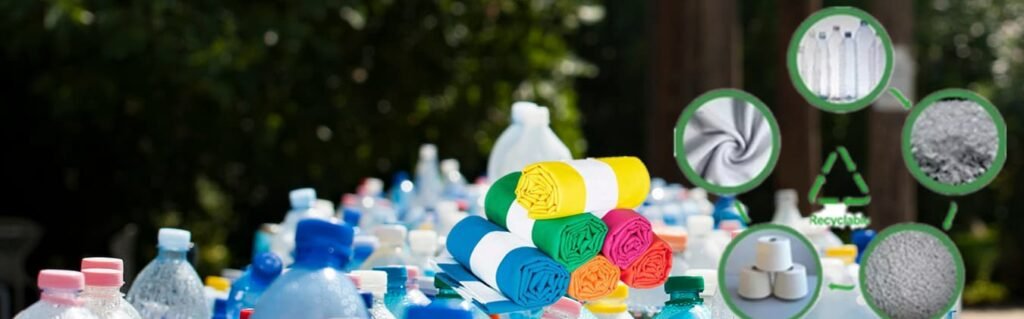
Towels made from plastic bottles are exactly what they sound like. They are towels produced using recycled PET yarn, also known as rPET. PET stands for polyethylene terephthalate — the same plastic used in water bottles and soda bottles every day.
Instead of throwing those bottles away, manufacturers collect them, clean them, and transform them into soft textile fibers. Those fibers are then woven or knitted into high-quality towels. The result? A product that is good for the planet and great for your skin.
“rPET towels give discarded plastic bottles a second life — turning pollution into a product people actually use and love every day.”
How the Recycling Process Works (Step-by-Step)
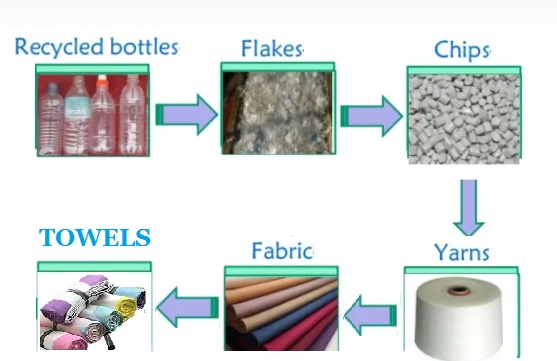
Here is how a used plastic bottle becomes a cozy beach towel. The process is simpler than most people think:
- Collection: Used PET bottles are gathered from recycling centers and sorted by color and quality.
- Cleaning & Shredding: Labels and caps are removed. The bottles are then washed and shredded into tiny flakes.
- Melting & Extruding: The flakes are melted down and pushed through tiny holes to create long, thin filaments — similar to spaghetti.
- Spinning Into Yarn: Those filaments are twisted together to create rPET yarn, ready for weaving.
- Weaving or Knitting: The yarn is woven or knitted into towel fabric using advanced machines.
- Finishing & Printing: The fabric is cut, sewn, printed with designs, and inspected before shipping.
At Favor Houseware, we follow every one of these steps in our own factory in Yiwu, China. This means we control quality from the very first flake to the final folded towel.
How Many Plastic Bottles Make One Beach Towel?
This is one of the most common questions people ask. And the answer depends on the size and weight (GSM) of the towel. However, here is a helpful general guide:
| Towel Size & Weight | Est. 500ml Bottles Used |
|---|---|
| Small towel (300–350g) | ~10–12 bottles |
| Standard beach towel (400–450g) | ~13–16 bottles |
| Large/premium towel (500g+) | ~17–20 bottles |
So, when a customer buys one of our recycled beach towels, they are directly saving up to 20 plastic bottles from entering a landfill or ocean. That is a real, measurable impact — and a powerful selling point for any brand.
Global Plastic Bottle Waste Problem: Why rPET Towels Matter
To truly understand why towels made from plastic bottles matter, we need to look at the size of the problem they are solving. The numbers are, honestly, staggering.
💡 Did You Know?
In the United States alone, 86 billion plastic water bottles were sold in 2021. Of those, only 29% were recycled. That means 61 billion bottles went to waste — in just one country, in just one year.
Furthermore, the global plastic bottle market is enormous and still growing. Here is a clear breakdown of the data:
| Metric (Year) | Value |
|---|---|
| Global plastic bottles market size (2025) | USD 111.6 billion |
| Global plastic bottles market (2035 forecast) | USD 165.1 billion |
| Market growth rate (CAGR 2025–2035) | 4.0% |
| US plastic water bottles sold (2021) | 86 billion units |
| Share recycled (US, 2021) | 29% ≈ 25 billion bottles |
| Share wasted (US, 2021) | 71% ≈ 61 billion bottles |
| Plastic bottle recycling market size (2022) | USD 4.3 billion |
| Plastic bottle recycling market forecast (2031) | USD 6.8 billion (CAGR 5.3%) |
Sources: Industry market reports on PET plastics and recycling sector growth projections. See also: US EPA Plastics Data and UNEP Plastic Pollution Report.
Consequently, the demand for sustainable custom textiles is rising fast. Brands, retailers, and consumers are all actively looking for ways to use recycled materials instead of creating more plastic waste. rPET beach towels are one of the most practical and scalable answers to this demand.
Are Recycled Beach Towels Really Eco Friendly, Or Just Greenwashing?
This is a fair question — and one every smart buyer should ask. The honest answer is: it depends on how the towel is made and certified. Not all “eco” claims are equal. Some brands use recycled materials but still use harmful dyes or excessive plastic packaging. That is greenwashing.
However, a genuinely eco friendly custom beach towel — made with certified rPET, low-impact dyes, and responsible manufacturing — does offer real environmental benefits. Let’s compare the options fairly.
rPET Towels vs Organic Cotton Towels — Honest Comparison
| Feature | rPET (Recycled Plastic) | Organic Cotton |
|---|---|---|
| Diverts plastic waste | ✅ Yes | ❌ No |
| Uses renewable fiber | ❌ No (fossil-fuel origin) | ✅ Yes |
| Dries quickly | ✅ Yes | ❌ Slower |
| Lightweight for travel | ✅ Very lightweight | ⚠️ Heavier |
| Microplastic shedding | ⚠️ Yes (manageable) | ✅ None |
| Water usage in production | ✅ Lower | ❌ Very high |
| Biodegradable | ❌ No | ✅ Yes |
As you can see, neither option is perfect. However, rPET towels win clearly on waste diversion, weight, and drying speed. Meanwhile, organic cotton wins on biodegradability and microplastic safety. That is why many leading brands now offer blended rPET + cotton towels to get the best of both worlds.
At Favor Houseware, we offer both rPET and organic cotton options, as well as blended constructions — so you can choose what aligns best with your brand values. You can also explore our Turkish hammam towels and microfiber towels for additional sustainable alternatives.
Microplastic Shedding — The Honest Truth About Recycled Beach Towels
Let’s talk about recycled beach towel microplastics. This is probably the most important — and most misunderstood — part of the rPET conversation. And we think you deserve the full, honest picture.
First of all, what are microplastics? They are tiny plastic particles, usually smaller than 5mm, that break off from synthetic fabrics during washing. They are so small that most washing machines cannot filter them out. As a result, they flow into waterways and eventually into the ocean.
Now, here is where it gets complicated for recycled beach towels specifically.
⚠️ Important Research Finding
Studies show that recycled polyester fabrics can shed more microplastic fibers than virgin polyester during washing. One study on knitted fabrics found rPET released about 2.3 times more fibers than primary polyester. Another large test involving 51 garments found recycled polyester shed about 54.8% more particles than virgin equivalents.
This does not mean recycled towels are bad. However, it does mean we need to be honest about the trade-off. Using rPET helps divert plastic waste from landfills — but it also requires careful washing habits to minimize microplastic release into waterways.
| Fabric Type / Scenario | Relative Microplastic Shedding |
|---|---|
| rPET knitted fabric vs primary polyester | 2.3× more fibers from rPET |
| Recycled polyester garments vs virgin polyester (51 items tested) | 54.8% more particles from recycled polyester |
| Primary polyester (avg. laundry, 260 kg/year per person) | ≈ 4.45 g microplastic fibers/person/year |
| Recycled fabrics after multiple recycling cycles | Substantially higher release after 2nd–3rd cycles |
Data sourced from peer-reviewed laundering studies on synthetic textile microplastic fiber release. For further reading, see ScienceDirect: Microplastics Research and Plastic Pollution Coalition.
In short, the recycled beach towel microplastic concern is real and worth taking seriously. That is why at Favor Houseware, we engineer tighter weave constructions and offer blended rPET-cotton options — both of which significantly reduce fiber shedding compared to loose-knit pure rPET fabrics.
How To Reduce Microplastic Pollution When Washing Recycled Towels
The good news? There are simple steps that can drastically reduce how many microplastics your towels release during washing. Here is what we recommend:
- 🌡️ Wash at lower temperatures (30°C or below) — heat breaks down fibers faster
- 🔄 Use a gentle/delicate wash cycle — less mechanical friction means less shedding
- 🧺 Use a microfiber-catching laundry bag (like a Guppyfriend bag) — captures loose fibers before they reach water
- 💧 Install a washing machine filter — external filters like Filtrol can capture up to 89% of microfibers
- ☀️ Line-dry when possible — tumble drying causes additional fiber stress and shedding
- 📅 Wash less often — beach towels do not need washing after every single use
- 🧵 Choose quality construction — tighter weaves and higher GSM towels shed significantly less
Key Certifications for Sustainable Custom Beach Towels (rPET + Cotton)
When buying or selling eco friendly custom beach towels, certifications are everything. They are the difference between a genuine sustainability claim and a marketing gimmick. Here are the most important ones to look for — and what each one actually means.
🏅 GRS — Global Recycled Standard
Verifies that a product contains a specific amount of recycled material. It also checks responsible social, environmental, and chemical practices throughout the supply chain. This is the gold standard for rPET towels.
🔬 OEKO-TEX Standard 100
Tests every component of the finished textile for harmful substances. If a towel is OEKO-TEX certified, it is safe for direct skin contact — even for babies. Favor Houseware holds OEKO-TEX 100 certification.
📋 RCS — Recycled Claim Standard
A simpler standard that tracks and verifies recycled content claims through the supply chain. It is often used alongside GRS for broader traceability coverage.
🤝 BSCI — Business Social Compliance Initiative
Ensures manufacturers follow fair labor standards and ethical working conditions. Brands selling to European retailers often require this. Favor Houseware is BSCI certified.
🧪 SGS & FDA
SGS is a global testing and certification company that verifies product safety and quality. FDA certification is important for products entering the US market, ensuring they meet safety requirements.
Additionally, when sourcing sustainable custom textiles from a China manufacturer, always ask to see actual certification documents — not just logos on a website. At Favor Houseware, we provide full documentation for all our certifications including BSCI, OEKO-TEX 100, SGS, and FDA.
Customization Options: Branding, Printing, Sizes for Eco Friendly Custom Beach Towels
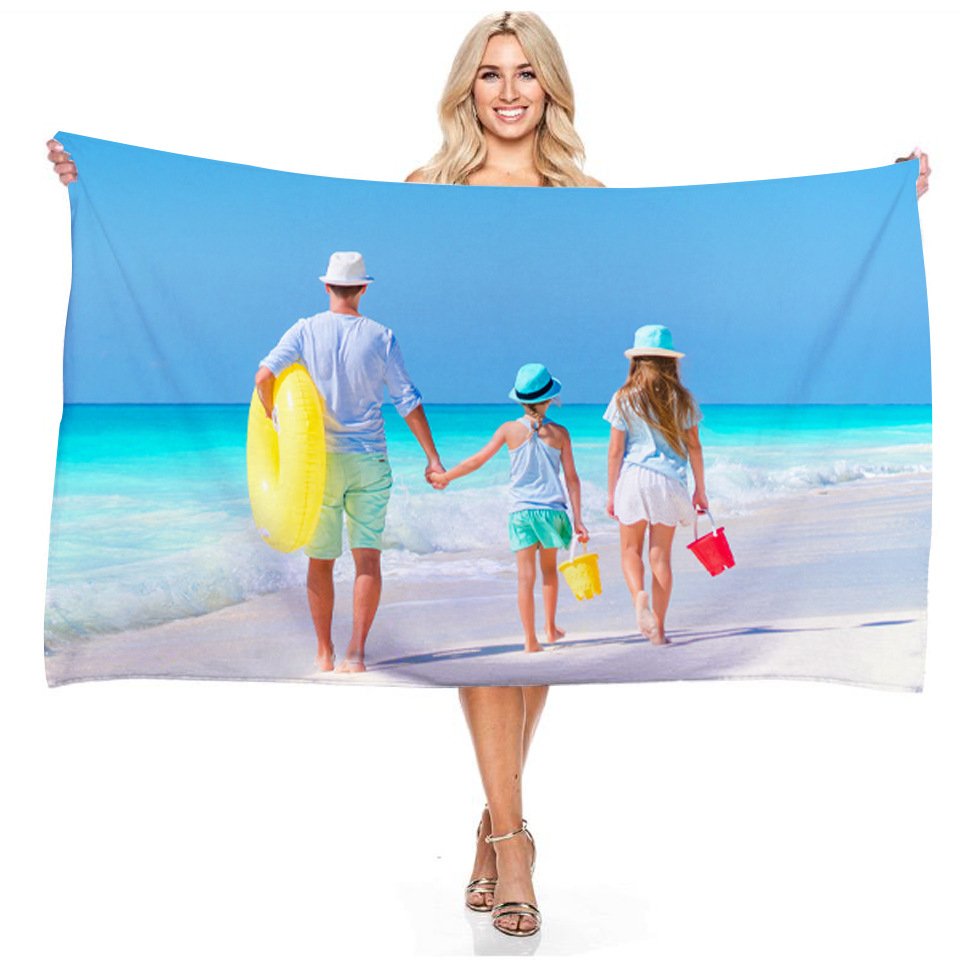
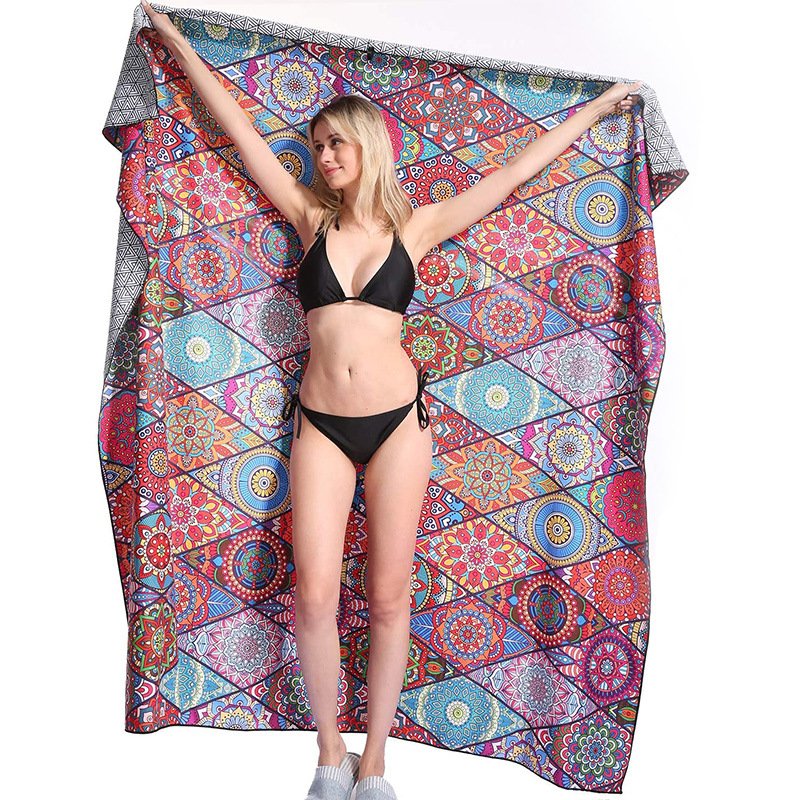
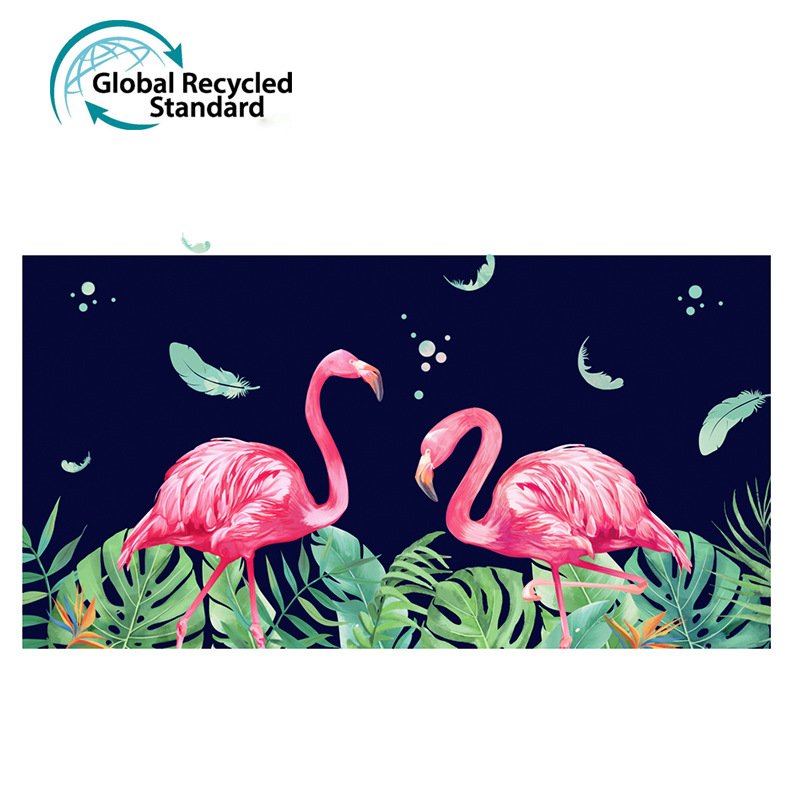
One of the most exciting things about working with a China towel manufacturer like Favor Houseware is the incredible range of customization options available. Whether you need 100 towels or 100,000, we can create the perfect eco friendly custom beach towel for your brand.
Printing & Branding Methods
There are several ways to add your logo and design to an eco friendly custom beach towel. Each method has its own benefits depending on your design and budget:
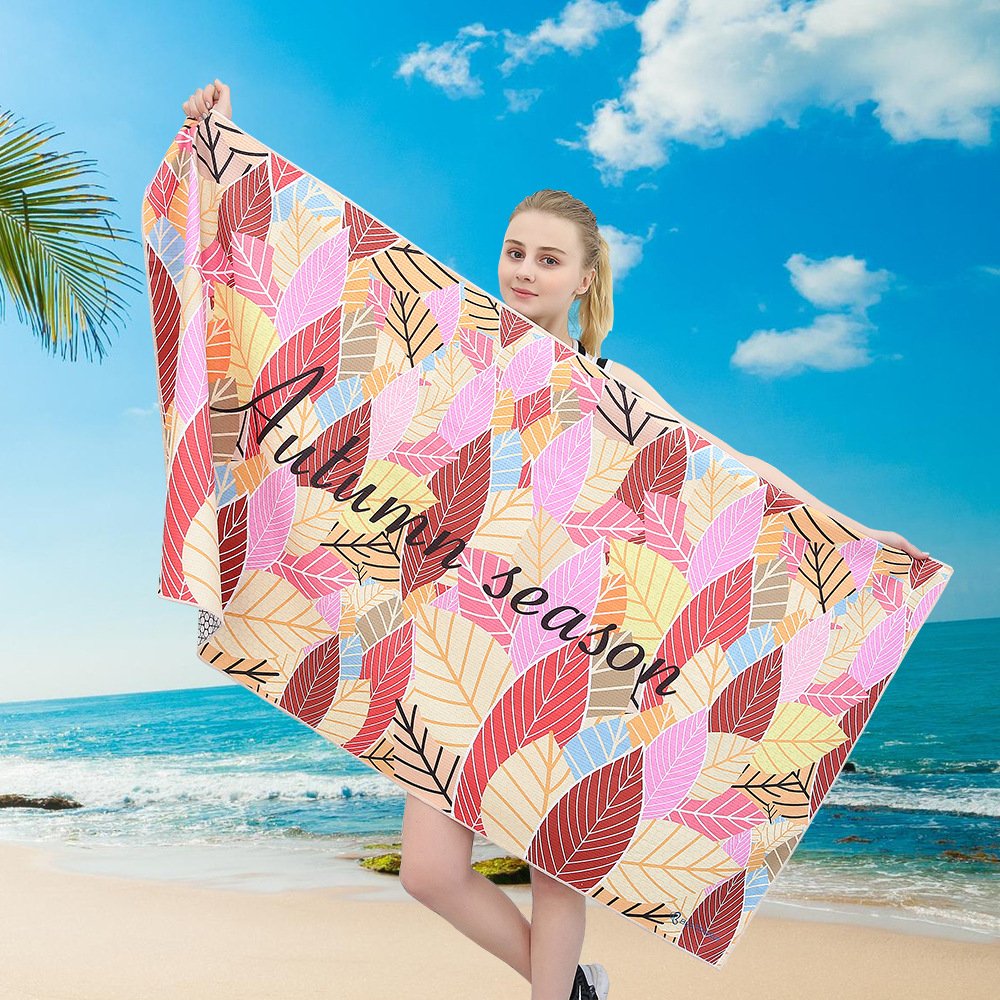
- 🖨️ Sublimation Printing: Best for vibrant, all-over full-color designs on polyester-rich rPET fabrics. Colors are bright, long-lasting, and don’t crack or fade.
- 🎨 Digital Printing: Great for detailed, photorealistic designs with no MOQ restrictions. Favor Houseware offers digital printing with no minimum order quantity.
- 🧶 Jacquard Weaving: The design is literally woven into the fabric itself. This creates a premium, textured look — ideal for high-end branding.
- 🪡 Embroidery: Adds a tactile, luxury finish. Perfect for logos on corners, hems, or labels.
- 🏷️ Custom Labels & Tags: Recycled or organic hang tags, woven labels, and eco packaging complete the sustainable brand story.
Sizes, GSM, and Fiber Blend Options
Furthermore, we offer complete flexibility on specifications. Below are the most popular configurations our clients choose:
- 📏 Sizes: 70×140cm (standard), 80×160cm (large), 100×180cm (XL), round towels (150cm diameter), and custom dimensions
- ⚖️ GSM range: 300 GSM (lightweight travel) up to 600 GSM (plush luxury)
- 🧵 Fiber options: 100% rPET, rPET + cotton blend, rPET + organic cotton, or 100% cotton
- 📦 Packaging: Recycled paper bands, organic cotton pouches, or custom eco boxes
- 🔢 MOQ: Starting from just 100 pieces — ideal for small brands and startups
Beyond beach towels, we also produce a wide range of related products including surf poncho towels, surf changing robes, and microfiber towels — all available with custom branding.
Sustainable Custom Textiles From China — Our rPET Production Process
When you source sustainable custom textiles from China, choosing the right manufacturer makes all the difference. Not every factory has the equipment, certifications, or experience to deliver truly eco-friendly products at scale. That is where Favor Houseware Co., Ltd. stands apart.
Why Source From a China Towel Manufacturer?
China is the world’s largest producer of textile products — and for good reason. The combination of advanced manufacturing technology, experienced workforce, and vertically integrated supply chains means buyers get:
- ✅ Lower cost per unit — without sacrificing quality
- ✅ Full customization capabilities — from fiber to final packaging
- ✅ Fast turnaround — with stock available for express shipping
- ✅ Certified manufacturing — BSCI, OEKO-TEX, SGS, FDA
- ✅ Low MOQ — starting from just 100 pieces for custom orders
Favor Houseware has been manufacturing towels for 15 years, serving brands across Europe, North America, Australia, and beyond. Our factory is based in Yiwu, Jinhua, Zhejiang Province — one of China’s most established textile manufacturing hubs.
“We don’t just make towels. We help brands tell a sustainability story — from the recycled bottle to the finished product on their customer’s doorstep.”
— Favor Houseware Co., Ltd.
Our full production process includes: weaving → printing → cutting → sewing → inspecting → packing → shipping. Every single step is handled in-house, with strict quality control at each stage. This means you get consistent quality — every time, every order.
We also offer free samples (you only pay freight) so you can feel and test the quality before placing your order. Additionally, we support multiple payment methods and secure international trade processes for complete peace of mind.
Ready to get started? Contact our team today or learn more about our factory. You can also browse our blog for more sustainable textile insights.
Care Instructions To Reduce Microplastic Pollution From Towels
Taking care of your recycled beach towel the right way is important — both for the towel’s lifespan and for the environment. Here is a simple, complete care guide you can follow (or share with your customers if you are a brand):
🧺 Complete Care Guide for rPET & Recycled Polyester Towels
| Care Step | Best Practice | Why It Matters |
|---|---|---|
| Wash temperature | 30°C or below | Heat breaks down fibers and increases shedding |
| Cycle type | Gentle/delicate cycle | Less agitation = less microfiber release |
| Laundry bag | Use Guppyfriend or similar microfiber bag | Captures loose fibers before they enter water |
| Drying method | Line-dry in the air when possible | Tumble drying increases fiber stress and shedding |
| Wash frequency | Wash only when needed | Fewer washes = fewer microplastics released over time |
| Machine filter | Install an external lint/microfiber filter | Can capture up to 89% of released microfibers |
Finally, keep in mind that towels with tighter weave constructions and higher GSM naturally shed fewer microplastics. When ordering custom eco towels, ask your manufacturer about weave density — it is one of the single most impactful factors in reducing microplastic release.
FAQs — People Also Ask About Towels Made From Plastic Bottles
Below are the most common questions people search for about towels made from plastic bottles, eco friendly beach towels, and sustainable custom textiles — all answered clearly and concisely.
Are towels made from plastic bottles eco friendly?
Yes — with important nuance. rPET towels made from plastic bottles divert waste from landfills and use less water than cotton. However, they are still synthetic and can shed microplastics during washing. Overall, they are a more eco-friendly choice than virgin polyester, especially when paired with proper washing habits and quality certifications.
How are beach towels made from recycled plastic bottles?
PET bottles are collected, sorted, cleaned, and shredded into flakes. Those flakes are melted and extruded into filaments, which are spun into rPET yarn. The yarn is then woven or knitted into towel fabric, which is cut, sewn, printed, and finished into the final product.
Do recycled beach towels release more microplastics than normal towels?
Research does suggest that recycled polyester fabrics can shed more microplastics than virgin polyester — sometimes up to 2.3 times more, according to lab studies. However, using a microfiber-catching laundry bag, washing at lower temperatures, and choosing tightly woven fabrics can significantly reduce this impact.
How many plastic bottles are used to make one beach towel?
It depends on towel size and weight. Typically, a standard beach towel (400–450g) requires approximately 13–16 standard 500ml plastic bottles. A larger, heavier towel (500g+) may use up to 20 bottles. Each towel purchase directly diverts those bottles from landfill.
Are rPET beach towels safe for skin and children?
Yes — if they carry OEKO-TEX Standard 100 certification. This label means the finished textile has been tested and confirmed free from harmful substances. Favor Houseware’s towels are OEKO-TEX 100 certified, making them safe for direct skin contact for adults and children alike.
What is the difference between rPET towels and organic cotton towels?
rPET towels are made from recycled plastic waste. They dry faster and weigh less, but they are synthetic and can shed microplastics. Organic cotton towels are made from natural, renewable fibers that biodegrade and don’t form persistent microplastics — but they require more water to produce and take longer to dry. Many brands choose a blended construction to combine the benefits of both.
How can brands customize eco friendly beach towels with their logo?
Brands can customize rPET towels using sublimation printing, digital printing (no MOQ), jacquard weaving, or embroidery. Eco-conscious brands often also request water-based inks, low-impact dyes, and plastic-free packaging. Contact Favor Houseware to discuss your specific branding needs.
What certifications should I look for in sustainable custom textiles?
The most important certifications are: GRS (Global Recycled Standard) for recycled content traceability, OEKO-TEX Standard 100 for chemical safety, RCS (Recycled Claim Standard) for supply chain verification, and BSCI/SEDEX for ethical labor practices. Always ask your supplier to provide the actual certificate documents, not just logos.
Are towels made from plastic bottles durable and absorbent?
Yes — well-engineered rPET towels are lightweight, fast-drying, and very durable. They are ideal for beach, gym, and travel use. For maximum absorbency, many brands choose rPET blended with cotton pile constructions, which balance quick-drying with a soft, plush feel.
How should I wash recycled polyester towels to reduce microplastic pollution?
Wash at 30°C or below on a gentle cycle. Use a microfiber-catching laundry bag like a Guppyfriend. Line-dry instead of tumble-drying. Wash only when necessary. Consider installing a washing machine external filter to capture up to 89% of microfibers before they reach waterways.
Conclusion: Make Your Brand Part of the Plastic-Free Movement
Towels made from plastic bottles are one of the most powerful and practical ways for brands to make a real sustainability commitment. They divert real plastic waste, reduce fossil fuel consumption, and tell a story that today’s consumers genuinely care about.
Yes, the recycled beach towel microplastic challenge is real. But with the right construction, the right certifications, and the right washing habits, it is a challenge that can be managed responsibly. The benefits — in terms of waste diversion, brand storytelling, and product performance — far outweigh the trade-offs.
Furthermore, the demand for eco friendly custom beach towels and sustainable custom textiles is growing every single year. Brands that invest in this space today are building the loyalty and trust that tomorrow’s customers will reward generously.
At Favor Houseware Co., Ltd., we have spent 15 years perfecting the art of custom towel manufacturing — and we are ready to help your brand do it sustainably. From recycled rPET beach towels to Turkish hammam towels to surf ponchos, we offer the full range — all customizable, all certified, all shipped fast from our Yiwu factory.
🌿 Ready To Create Your Eco Friendly Custom Beach Towels?
Join hundreds of brands worldwide who trust Favor Houseware for sustainable, certified, fully customized towels. MOQ from just 100 pieces. Free samples available.
Favor Houseware Co., Ltd. | Yiwu, Jinhua, Zhejiang Province, China | favor-houseware.com | Certified: BSCI · OEKO-TEX 100 · SGS · FDA
Views: 3