Shopping for a microfiber cleaning cloth roll can feel tricky. There are so many numbers, blends, and weave types to choose from. However, once you understand a few key ideas — like GSM, polyester vs. polyamide, and weave types — the decision becomes much easier. In this complete buying guide, we break down everything step by step, so anyone can follow along and choose the right microfiber roll with confidence.
⚡ Quick Key Takeaways
- GSM (grams per square metre) measures fabric density — higher GSM = thicker and more absorbent.
- 300–400 GSM covers most general household and janitorial cleaning tasks.
- 80/20 polyester/polyamide is the top all-purpose blend; 70/30 is softer for glass and auto detailing.
- Roll format is the most flexible choice for commercial, industrial, and bulk buyers.
- Always verify blend ratio, GSM tolerance, weave type, and edge finish before placing a wholesale order.
- The global microfiber market is growing fast — estimated at USD 979 million in 2025, heading to USD 1.52 billion by 2035.
At a Glance: Best GSM Range by Cleaning Task
Before we dive deeper, here is your master reference table. Keep this handy whenever you need to quickly match a microfiber cleaning cloth roll to a specific job.
| Use Case / Cloth Type | Recommended GSM | Key Notes |
|---|---|---|
| Glass, mirrors & screens | 250–350 GSM | Low pile, streak-free, lint-free finish |
| All-purpose household / janitorial | 300–400 GSM | Best balance of weight and absorbency |
| Dual-pile general cleaning towels | 300–450 GSM | Plush side for wiping, short side for polishing |
| Super plush drying / auto detailing | 400–600+ GSM | Dense and highly absorbent for large areas |
| Industrial wiping (oils & chemicals) | 300–450 GSM | Enough bulk to hold liquids without dripping |
1. What Is a Microfiber Cleaning Cloth Roll?
Let’s start with the basics. Microfiber is a man-made fabric built from extremely tiny synthetic filaments. These filaments are typically finer than one denier — which, for reference, is much thinner than a single strand of human hair. Most microfiber cleaning cloths combine two main fibers: polyester and polyamide (also known as nylon). Together, these two fibers create a cloth that is strong, soft, and highly absorbent all at once.
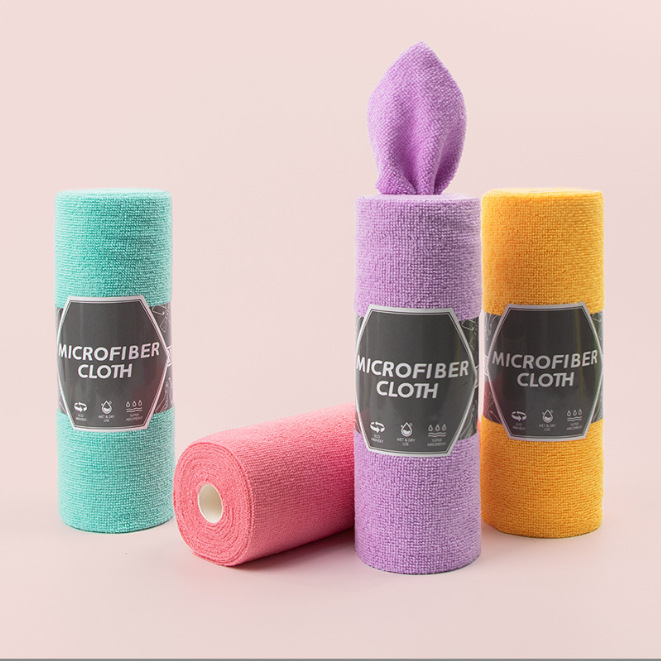
So, what exactly is a microfiber cleaning cloth roll? Instead of individual pre-cut squares, a roll gives you one long, continuous piece of microfiber fabric. You can then cut it to whatever length you need. Rolls come in two main styles:
- Perforated rolls — These have pre-made tear lines, just like paper towels. They are fast and easy to use on the go.
- Continuous rolls — These have no pre-cuts, so you decide exactly how much cloth you need each time.
Because of their versatility, microfiber rolls are especially popular among these buyers:
- ✅ Commercial cleaning companies needing high daily volumes
- ✅ Janitorial and facility management teams
- ✅ Industrial workshops dealing with oils, grease, and chemicals
- ✅ Wholesale distributors and private-label importers
- ✅ Hotels, restaurants, and food service businesses
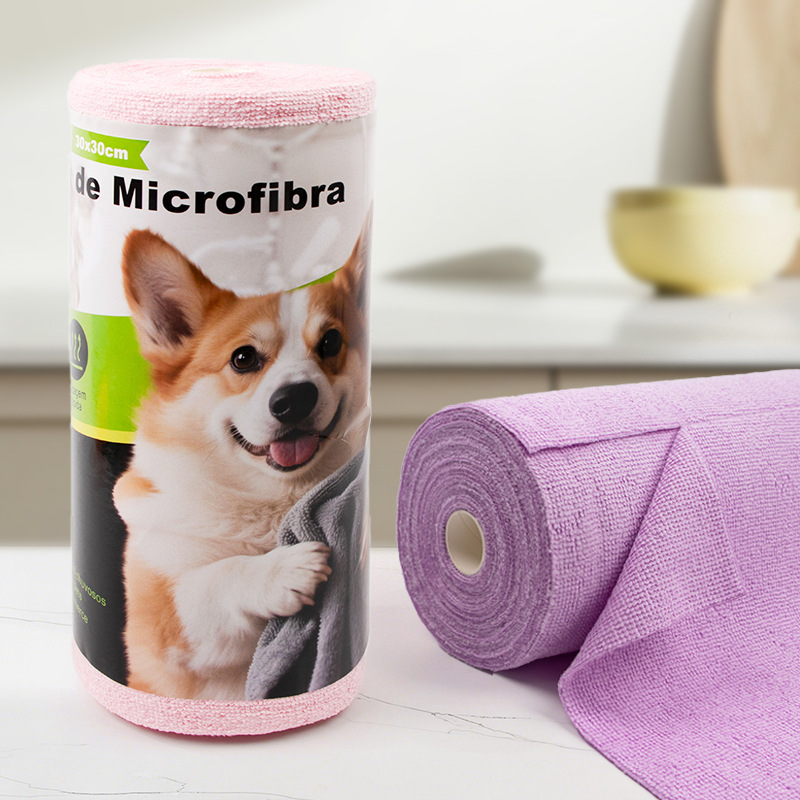
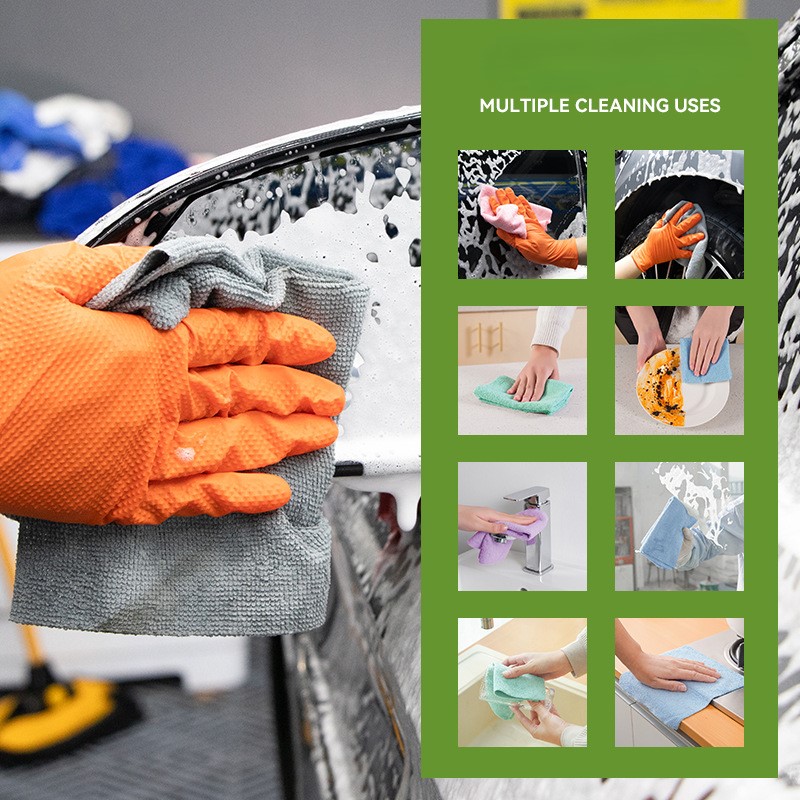
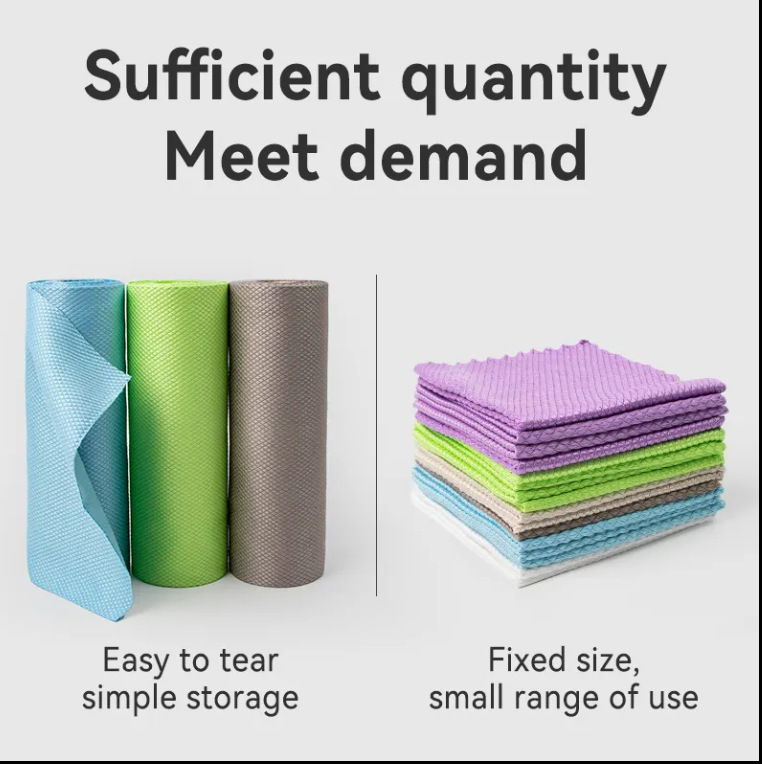
If you are looking for a reliable source, Favor Houseware’s microfiber cleaning cloth rolls are available in custom GSM, sizes, and blends to suit any application.
2. Why GSM Matters for Microfiber Rolls
What Does GSM Mean in Microfiber Cloth?
GSM stands for Grams Per Square Metre. It simply tells you how much the fabric weighs for every square metre of material. Think of it like this: if you cut out a one-metre square of your microfiber cloth and put it on a scale, the number you see in grams is the GSM.
💡 Simple rule: Higher GSM = thicker, heavier, and more absorbent cloth. Lower GSM = thinner, lighter, and better for precision tasks like glass cleaning.
However, here is an important point that many buyers miss: higher GSM is not always better. Instead, you should match the GSM to your specific cleaning task. Choosing a 600 GSM cloth to clean a phone screen, for example, would be overkill — and could leave lint behind. Similarly, using a 200 GSM cloth to dry a car would be frustrating because it soaks up water too slowly.
How GSM Affects Thickness and Absorbency
Here is how GSM affects the most important performance qualities of a microfiber cleaning cloth roll:
- Absorbency: Higher GSM cloths hold more water and liquid because there is simply more fabric per square metre.
- Thickness and softness: More GSM generally means a plusher, softer feel — great for delicate surfaces.
- Durability: Heavier cloths tend to last longer through repeated washing cycles.
- Precision: Lower GSM cloths are thinner and therefore better for tasks where you need control, like cleaning screens or glass.
- Cost: Higher GSM cloths use more raw material, so they cost more per unit — something importers need to factor into pricing.
📌 Remember: Aim for 300+ GSM for general cleaning, and go up to 600 GSM for heavy-duty drying or detailing tasks. For glass and screens, stay in the 250–350 GSM range for the best streak-free results.
3. Recommended GSM Range by Cleaning Application
Now that you understand what GSM means, let’s look at which GSM range works best for each cleaning job. This section is one of the most important parts of any microfiber cleaning cloth roll buying guide, so read carefully.
Glass, Mirrors, and Screens: 250–350 GSM
For glass and screen cleaning, you want a thin, low-pile cloth that glides smoothly without leaving streaks or lint. A GSM in the 250–350 range is perfect here. Additionally, choose a tight suede or waffle weave for the best streak-free finish. Learn more about how to clean glass surfaces properly from Consumer Reports.
All-Purpose Household and Janitorial: 300–400 GSM
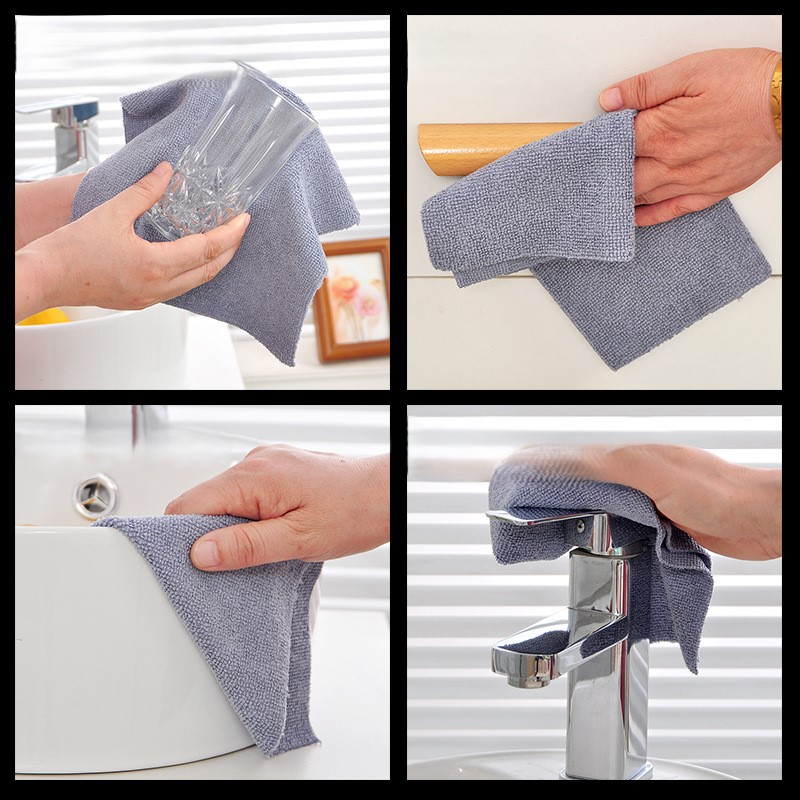
This is the most popular GSM range for a reason. It balances absorbency, durability, and cost very well. Whether you’re wiping kitchen counters, cleaning bathrooms, or stocking a janitorial cart, 300–400 GSM microfiber cloth rolls get the job done efficiently.
Dual-Pile General Cleaning Towels: 300–450 GSM
Some microfiber rolls feature a dual-pile construction — one plush side and one shorter pile side. The plush side absorbs and lifts dirt, while the shorter side polishes and buffs the surface. These versatile cloths work well for everyday household and light commercial use.
Super Plush Drying and Auto Detailing: 400–600+ GSM
For drying cars, buffing wax, or any job where maximum absorbency matters, go for 400 GSM and above. These thick, fluffy cloths soak up a surprising amount of water very quickly. Furthermore, their soft texture greatly reduces the risk of scratching delicate surfaces like car paint.
Industrial Wiping for Oils and Chemicals: 300–450 GSM
In workshop and industrial settings, you need a cloth with enough bulk to hold oils, solvents, and chemicals without dripping. A 300–450 GSM roll in the 80/20 polyester/polyamide blend handles these tasks well. For a wide selection of industrial-grade options, explore Favor Houseware’s microfiber towel range.
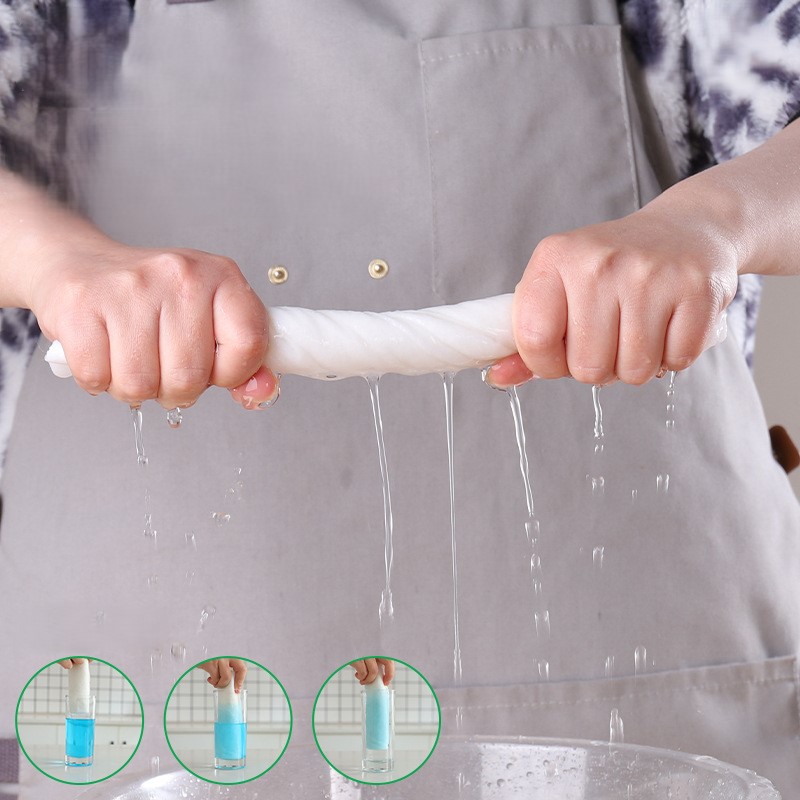
4. Polyester vs. Polyamide: What the Blend Really Means
One of the most common questions in any microfiber cleaning cloth buying guide is: what’s the difference between polyester and polyamide? Understanding each fiber’s role will help you choose the right cloth for any job.
What Does Polyester Do?
Polyester is the main structural fiber in most microfiber cloths. Specifically, it provides:
- Structure and shape — keeps the cloth from stretching and losing form
- Scrubbing power — the slightly rougher texture helps lift stuck-on dirt
- Durability — resists wear and fraying through many wash cycles
- Cost-efficiency — polyester is the less expensive of the two fibers
What Does Polyamide (Nylon) Do?
Polyamide, also called nylon, plays a completely different but equally important role. It adds:
- Softness — makes the cloth gentler on delicate surfaces
- Absorbency — dramatically increases how much water and liquid the cloth can hold
- Chemical resistance — handles cleaning agents and solvents better
- Reduced scratch risk — the softer feel is safer for painted and polished surfaces
🧵 Think of it this way: Polyester does the scrubbing, while polyamide does the absorbing. The best microfiber cloth rolls combine both fibers to get the benefits of each.
It is also worth knowing that microfiber cloths are very different from cotton cloths. According to the US Environmental Protection Agency (EPA), microfiber mops and cloths can remove up to 99% of bacteria from surfaces using only water, compared to far lower rates with cotton and traditional materials.
5. Common Polyester/Polyamide Ratios: 80/20, 70/30, and 100% Polyester
Now that you understand what each fiber does, let’s look at the most common blend ratios you’ll encounter when buying microfiber cleaning cloth rolls — and when to choose each one.
| Blend (Polyester / Polyamide) | Best For | Key Features |
|---|---|---|
| 80 / 20 | Everyday kitchen, bath, dusting, stainless steel | Most durable all-purpose blend; great balance of cleaning power and absorbency |
| 70 / 30 | Glass, mirrors, delicate surfaces, automotive detailing | Softer and more absorbent; ideal where scratch risk must be minimised |
| 75 / 25 | Glass, screen cloths, precision polishing | A middle ground — extra softness with good durability |
| 100% Polyester | Budget industrial or disposable uses | Stronger scrubbing action; less absorbent and softer than blended cloths |
Which Blend Should You Choose?
✅ Quick Answer: Choose 80/20 for everyday cleaning, and 70/30 for delicate or high-end detailing work. Avoid 100% polyester if absorbency and scratch safety are important to you.
Furthermore, it is worth noting that multicomponent microfiber (polyester + polyamide blends) is expected to account for around 58% of total market revenue in 2025. This is because blended microfiber consistently outperforms single-component fibers in both cleaning effectiveness and durability.
6. Weave, Pile, and Edge Types for Cleaning Performance
GSM and blend ratio are crucial. However, weave type, pile height, and edge finish also have a big impact on how a microfiber cleaning cloth roll performs in real use. Let’s break these down simply.
Weave and Pile Types
- Terry / Plush Weave: This is the most common type. It has a high, looped pile — similar in feel to a bath towel. Terry microfiber is excellent for general cleaning, wiping, and drying. It is also the best choice for most household and janitorial rolls.
- Waffle Weave: This weave has a distinctive grid pattern with raised squares. The pattern creates a large surface area that traps water and debris very effectively. Waffle weave is ideal for glass cleaning and large-area drying, like after washing a car or mopping a floor.
- Suede / Flat Weave: This has an ultra-low pile with a smooth, almost velvety surface. It is the best choice for polishing, screen cleaning, and streak-free glass work, because the flat surface slides without snagging.
Edge and Finish Types
The edge of a microfiber cloth might seem like a small detail, but it matters — especially when cleaning delicate surfaces. Here are the three most important edge types:
- Ultrasonic cut edges: The cloth is sealed using high-frequency sound waves. This creates a very clean, smooth edge that will not scratch surfaces. It is the preferred choice for auto detailing and glass cleaning.
- Laser cut edges: Similar to ultrasonic, but the seal is created with a laser. The result is equally smooth and scratch-safe.
- Soft overlock edges: A traditional sewn hem around the edge. This is the most common and affordable option. It adds durability, but the stitching could potentially scratch very delicate surfaces.
✂️ Manufacturer Tip: When ordering microfiber cloth rolls for automotive or glass applications, always request ultrasonic or laser cut edges to protect delicate surfaces during cleaning.
7. How to Choose GSM and Blend for Different Buyers
So far, we’ve covered all the technical details. Now, let’s put it all together. Here is a practical guide for each type of buyer, so you can pick exactly the right microfiber cleaning cloth roll for your needs.
🏠 For Home and Kitchen Use
- Recommended GSM: 300–350 GSM
- Best blend: 80/20 polyester/polyamide
- Best weave: Terry or waffle weave
- Why: This combination handles everyday kitchen spills, bathroom surfaces, and dusting very well. It is durable enough for daily use and easy to wash and reuse.
For related home cleaning products, also check out Favor Houseware’s kitchen towel collection.
🏢 For Janitorial and Facility Cleaning
- Recommended GSM: 300–400 GSM
- Best blend: 80/20 or 75/25 polyester/polyamide
- Best weave: Terry weave with colour-coded options for hygiene zoning
- Why: Commercial cleaning requires cloths that can handle heavy, repeated use. Additionally, colour-coding (red for bathrooms, blue for general areas, etc.) helps prevent cross-contamination in professional settings.
For large-scale janitorial procurement, ISSA (the worldwide cleaning industry association) offers excellent guidance on professional cleaning standards.
🚗 For Car Detailing and Glass Cleaning
- Recommended GSM: 350–450 GSM (glass); 400–600 GSM (drying)
- Best blend: 70/30 or 75/25 polyester/polyamide
- Best weave: Suede or tight waffle weave for glass; plush terry for drying
- Why: Auto surfaces need extra care. A higher polyamide ratio (70/30) means a softer touch that protects paint and glass finishes while delivering excellent water absorption.
🏭 For Industrial and Workshop Use
- Recommended GSM: 300–450 GSM
- Best blend: 80/20 polyester/polyamide or 100% polyester for aggressive scrubbing
- Best weave: Terry or flat weave depending on task
- Why: Industrial cleaning often involves heavy oils, solvents, and machinery grease. A robust 80/20 blend holds up well under tough conditions, and a higher GSM ensures the cloth can absorb large amounts of liquid without dripping.
8. Market Data: Microfiber Cleaning Cloth Industry Growth
If you are a buyer, distributor, or importer, it helps to understand the bigger picture. The global microfiber cleaning cloth market is growing rapidly, and the numbers tell a compelling story.
| Metric | Value / Range |
|---|---|
| Global market size (2025) | ~USD 979.2 million |
| Projected market size (2035) | ~USD 1.52 billion |
| Forecast CAGR (2025–2035) | ~4.5% per year |
| Share of multicomponent microfiber (2025) | ~58% of total revenue |
| Top performing segment | Polyester + polyamide blended cloths |
These figures confirm a clear trend: blended polyester/polyamide microfiber is dominating the market because buyers and businesses increasingly understand its superior performance over single-fiber options. Furthermore, growing awareness of sustainable and reusable cleaning products is pushing more consumers away from disposable paper towels and toward long-lasting microfiber alternatives.
For example, Favor Houseware’s recycled textile range reflects this shift toward eco-conscious manufacturing — a trend that is reshaping both the towel and cleaning cloth industries globally.
🌱 Eco Note: Reusable microfiber cloths significantly reduce waste compared to disposable paper products. According to sustainability research by Greenpeace, choosing durable textile-based cleaning products is one of the easiest ways for businesses to reduce their environmental footprint.
9. Quality Checklist for Importers and Distributors (Including China OEM/ODM)
If you are sourcing microfiber cleaning cloth rolls from China — whether for private label, wholesale distribution, or OEM production — this checklist will help you avoid costly mistakes and ensure consistent quality across every order.
✅ Pre-Order Specification Checklist
- ☐ Confirm GSM and tolerance — Request the exact GSM value plus the acceptable tolerance range (typically ±5–10%). This ensures you receive a consistent product batch after batch.
- ☐ Specify polyester/polyamide blend ratio — State whether you need 80/20, 70/30, 75/25, or 100% polyester. Ask for a lab test report if needed.
- ☐ Check fiber splitting quality — Good microfiber must have properly split fibers. Unsplit fibers clean far less effectively. A simple scratch test on a glass surface can reveal this instantly.
- ☐ Inspect weave type and pile height — Confirm whether you need terry, waffle, suede, or dual-pile construction for your intended application.
- ☐ Verify edge finish type — Request ultrasonic or laser cut for delicate applications, or overlock hem for standard commercial use.
- ☐ Request wash tests — Ask for colour fastness, shrinkage rate, and linting test results after 10–20 wash cycles.
- ☐ Confirm roll specifications — For rolls specifically, confirm roll width, perforation length (if applicable), core diameter, and packaging format (compatible with commercial dispensers if required).
- ☐ Check certifications — Look for suppliers with OEKO-TEX 100, BSCI, SGS, or FDA certifications to ensure product safety and ethical manufacturing standards.
Why Source from a China Microfiber Manufacturer?
China remains the world’s largest producer of microfiber textile products, offering the best combination of manufacturing capability, pricing, customisation flexibility, and MOQ options. As a factory-direct supplier, Favor Houseware Co., Ltd. — based in Yiwu, Zhejiang Province — offers:
- 🏭 Custom GSM from approximately 200 to 600+ GSM
- 🧵 Custom blend ratios — 80/20, 70/30, 75/25, or 100% polyester to your specification
- 📏 Custom roll widths and lengths for any dispenser or packaging format
- 🎨 OEM and private label options with your branding, logo, and colour
- 📦 Low MOQ starting from 100 pieces — supporting both small businesses and large distributors
- 📋 Certifications: BSCI, OEKO-TEX 100, SGS, and FDA
- 🚢 Fast shipping from Yiwu with multiple freight options worldwide
You can also explore the full range of wholesale microfiber towels and related products including custom beach towels, Turkish hammam towels, and surf change robes — all manufactured under the same strict quality standards.
10. FAQ: People Also Ask About Microfiber Cleaning Cloth Rolls
Below are the most common questions buyers ask when researching microfiber cleaning cloth rolls, GSM, and polyester/polyamide blends. Each answer is designed to give you a clear, direct answer right away.
What GSM is best for microfiber cleaning cloths?
For most general cleaning tasks, 300–400 GSM offers the best balance of thickness, absorbency, and durability. For heavy-duty cleaning or drying large surfaces, many buyers prefer 400–600 GSM for a super plush result. For glass and mirrors, thinner cloths in the 250–350 GSM range with a low pile deliver the best streak-free finish. In short, match the GSM to the task rather than always choosing the highest number available.
What does GSM mean in microfiber cloth?
GSM stands for Grams Per Square Metre. It measures how much the fabric weighs per square metre of material. Higher GSM means the cloth is denser, thicker, and more absorbent. Lower GSM means the cloth is thinner, lighter, and better for precision tasks like cleaning glass or screens without leaving streaks.
Is 80/20 or 70/30 microfiber better?
Both blends are widely used, but they serve slightly different needs:
- 80/20 (polyester/polyamide) is the standard all-purpose blend. It offers excellent durability and strong cleaning performance for kitchens, bathrooms, and everyday surfaces.
- 70/30 has more polyamide, which makes the cloth softer and more absorbent. This is the preferred choice for glass, mirrors, and automotive detailing where scratch-free performance is essential.
Simple rule: Choose 80/20 for everyday cleaning, and 70/30 for delicate or high-end detailing work.
What is the best microfiber cloth for glass and mirrors?
For glass and mirrors, choose a low-pile microfiber cloth in the 250–350 GSM range with a suede or waffle weave. A blend with a higher polyamide content — such as 70/30 or 75/25 — reduces scratching risk and delivers a lint-free, streak-free finish. Ultrasonic or laser cut edges further reduce the chance of scratching delicate surfaces.
Are microfiber cleaning cloth rolls reusable?
Yes — most microfiber cleaning cloth rolls made from polyester and polyamide are designed to be reusable and can handle many machine wash cycles if cared for correctly. To preserve performance, avoid fabric softener and high heat drying, as both can coat and damage the fine fibers and reduce absorbency over time. Air drying or tumble drying on low heat is always the better choice.
What is the difference between microfiber and cotton cloth for cleaning?
Microfiber has much finer synthetic fibers with a split structure. As a result, it can trap and hold significantly more dirt, dust, and liquid than cotton of the same size. Microfiber often cleans effectively with just water, leaving fewer streaks and less lint. Cotton, on the other hand, tends to push dirt around rather than trapping it, and typically requires more cleaning chemicals to achieve the same result.
Is 100% polyester microfiber good enough?
100% polyester microfiber is strong and cost-effective, but it is generally less soft and less absorbent than blends that include polyamide. For applications where scratch safety and high absorbency are critical — such as car paint or glass — most buyers prefer polyester/polyamide blends like 80/20 or 70/30. 100% polyester is better suited to budget industrial wiping or disposable-use scenarios.
How long do microfiber cleaning cloths last?
With proper care — no fabric softener, moderate wash temperature below 60°C, and low-heat or air drying — quality microfiber cloths can withstand dozens to hundreds of wash cycles before performance noticeably drops. Durability depends on four key factors: GSM level, blend ratio, fiber splitting quality, and the type of stitching or edge finish used. Higher GSM cloths with overlock or ultrasonic edges typically last the longest.
Conclusion: Find the Right Microfiber Cleaning Cloth Roll for Your Needs
Choosing the right microfiber cleaning cloth roll does not have to be complicated. To summarise everything in this guide:
- ✅ Match GSM to your task — 250–350 GSM for glass, 300–400 GSM for general use, 400–600+ GSM for drying and detailing.
- ✅ Choose your blend wisely — 80/20 for everyday cleaning, 70/30 for delicate surfaces and automotive work.
- ✅ Think about weave and edges — suede or waffle weave for glass, terry for general use, ultrasonic edges for scratch-sensitive jobs.
- ✅ Verify quality specs before placing any bulk or import order — GSM tolerance, blend ratio, wash tests, and certifications all matter.
- ✅ Source smart — working directly with a qualified China manufacturer gives you the best combination of quality, customisation, and competitive pricing.
Whether you are a homeowner looking for a reliable everyday cloth, a janitorial buyer stocking up on commercial-grade supplies, or an importer sourcing a private-label product line — the right microfiber roll is out there. The key is knowing what to ask for.
Ready to Order Custom Microfiber Cleaning Cloth Rolls?
At Favor Houseware Co., Ltd., we manufacture microfiber cleaning cloth rolls to your exact specification — custom GSM, blend ratio, roll size, colour, and branding. With 15+ years of experience, OEKO-TEX and BSCI certifications, and a low MOQ starting at just 100 pieces, we are ready to be your trusted manufacturing partner.
Free samples available (freight only) · Fast shipping from Yiwu, China · OEM & private label welcome
Explore more from Favor Houseware: Microfiber Towels · Beach Towels · Kitchen Towels · Surf Ponchos · Blog
Views: 17