Microfiber Beach Towel: The Complete Guide to Quick Dry, Sand Free & Lightweight Beach Towels
Everything you need to know — from drying speed and absorbency to sizes, GSM, and custom manufacturing — in one place.
⚡ Key Takeaways — Microfiber Beach Towels at a Glance
- Dries up to 4× faster than cotton — typically 1–3 hours outdoors vs. 6–12+ hours for cotton.
- Weighs 3–5× less — a full-size microfiber towel is only about 120–200 g.
- Sand shakes off easily — the smooth weave stops sand from getting trapped in the fibers.
- Packs down small — fits in a carry bag the size of a water bottle.
- Ideal GSM range is 200–300 for the best mix of softness, absorbency, and fast drying.
- Market is growing fast — microfiber is the fastest-growing beach towel material at ~5.8% CAGR.
Are microfiber beach towels good? Yes. A microfiber beach towel dries several times faster than cotton, weighs far less, sheds sand easily, and packs into a tiny pouch. For travel, beach days, sports, and water activities, it is one of the most practical towel choices you can make.
📈 Beach Towel Market Trend Highlights (2024–2033)
- The global beach towel market is worth about USD 2.8 billion in 2024 and is forecast to reach USD 4.2 billion by 2033 (≈4.6% CAGR). (Grand View Research)
- Microfiber holds ~23% market share in 2024 and is growing faster than cotton at ~5.8% CAGR.
- Quick-dry and sand-resistant towels are highlighted as key growth drivers through 2035.
- China’s beach towel market is growing at ~7.5% CAGR (2025–2035), led by manufacturers in Zhejiang Province.
What Is a Microfiber Beach Towel?
A microfiber beach towel is a towel made from ultra-fine synthetic fibers — usually a blend of polyester and polyamide (nylon) — woven into a smooth, dense, and lightweight fabric. Because the fibers are extremely thin and tightly packed, microfiber towels wick moisture quickly, dry much faster than cotton, and help sand shake off with ease.
So, how thin are these fibers exactly? A single microfiber strand is finer than a strand of silk and about 100 times thinner than a human hair. That tiny size creates a huge surface area inside the towel. As a result, the towel can pull water away from your skin very fast — and then release that water into the air just as quickly.
Most microfiber beach towels use an 80% polyester / 20% polyamide blend. The polyester gives the towel its quick-drying strength, while the polyamide adds softness and durability. Furthermore, many towels go through a “split fiber” process during manufacturing. This splits each fiber into tiny wedge shapes. Consequently, each wedge acts like a tiny hook that grabs water and dirt more efficiently.
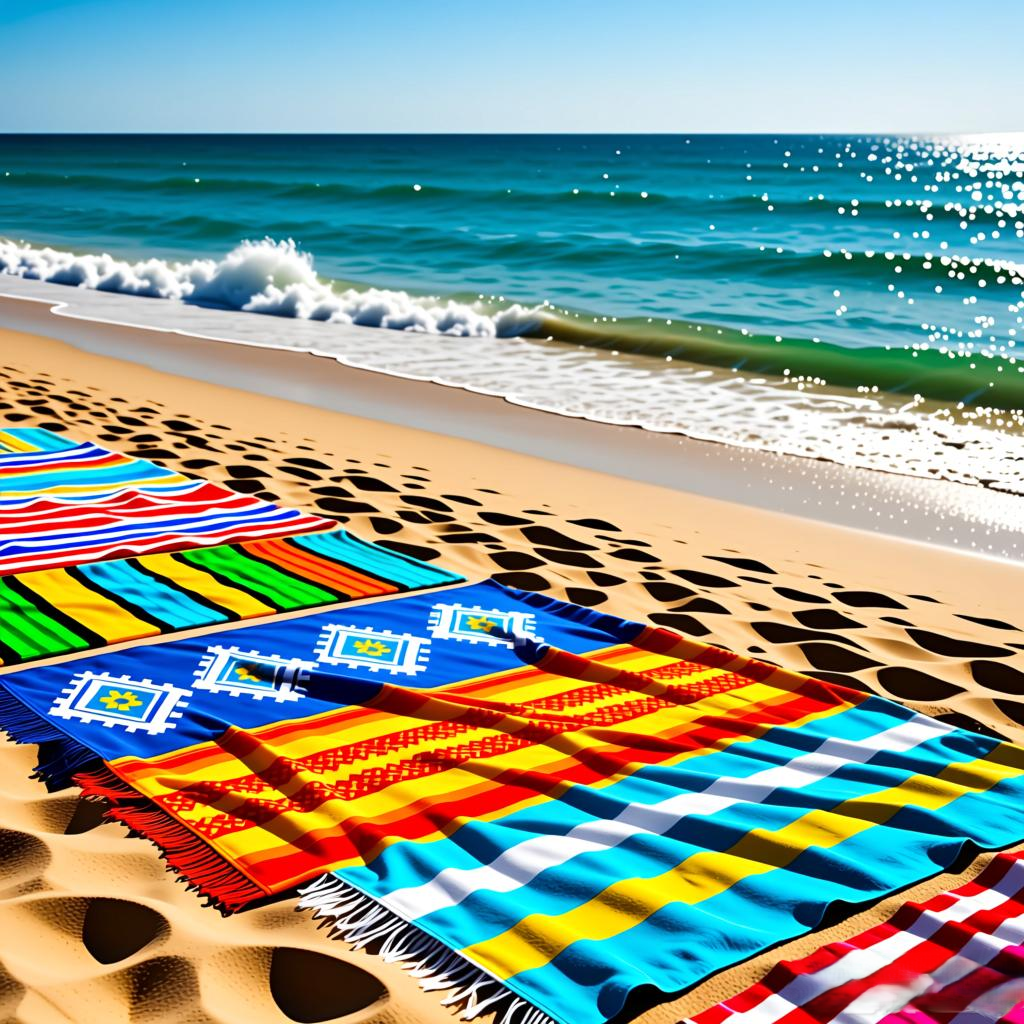
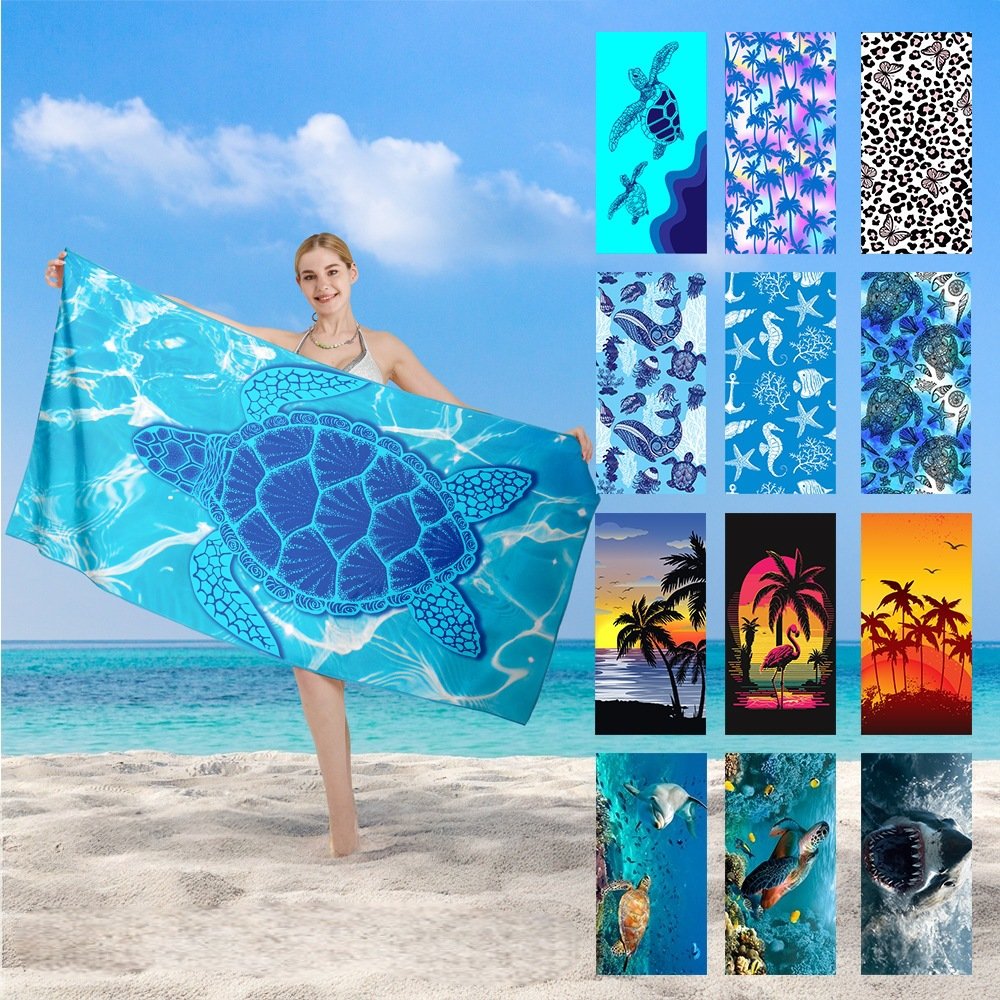
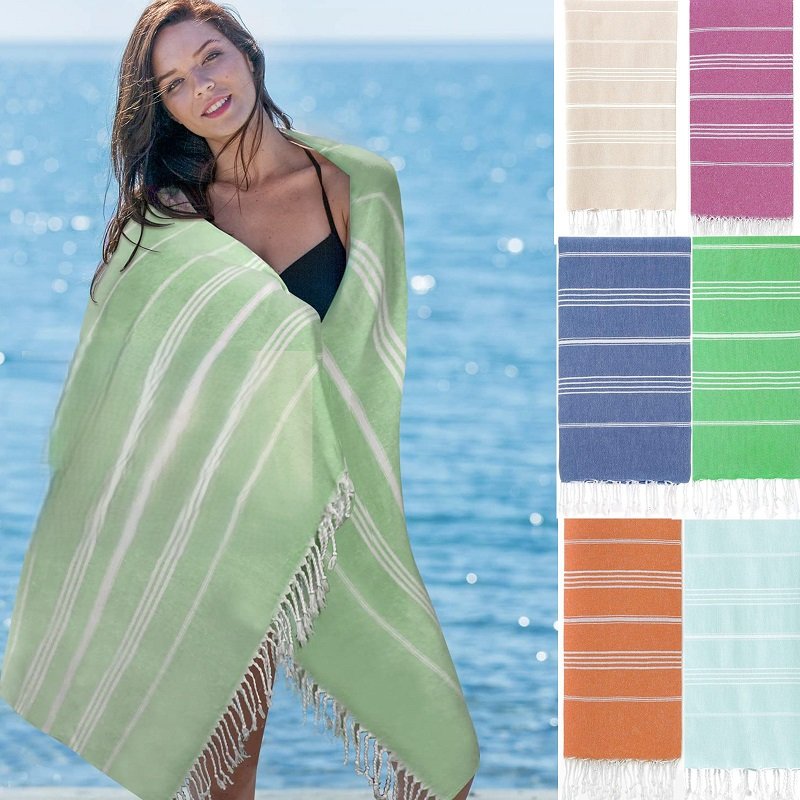
In short, a microfiber beach towel gives you all the function of a traditional cotton towel — and then some — in a much lighter, faster-drying, and more travel-friendly package. It is a smart upgrade for anyone who spends time at the beach, pool, or outdoors.
Microfiber vs Cotton Beach Towels (Drying Speed, Absorbency, Weight)
When comparing a microfiber beach towel vs a cotton beach towel, the differences are clear and significant. Both towels dry you off well. However, they perform very differently once the towel itself gets wet.
“Cotton holds more water overall — but microfiber releases that water back into the air much faster. For repeated daily use, that speed matters enormously.”
Performance Comparison Table: Microfiber vs Cotton Beach Towel
| Metric | Microfiber Beach Towel | Cotton Beach Towel |
|---|---|---|
| Drying time (outdoors, sunny) | ~1–3 hours to feel dry | ~6–12+ hours under same conditions |
| Drying time (indoors, air dry) | ~2–6 hours; ~90% dry in half cotton time | 12–24 hours for thick cotton |
| Absorbency (ml water per gram) | ~5–7 ml/g (fast pickup, faster release) | ~8–10 ml/g (holds more, slower to dry) |
| Typical beach towel weight | ~120–200 g | ~400–700 g |
| Sand behavior | Smooth weave — sand shakes off easily | Loopy terry traps sand in fibers |
| Packability | Very compact, rolls to pocket size | Bulky in bags and luggage |
| Feel / texture | Smooth, lightweight | Thick, fluffy, plush |
| Odor resistance | Better — polyamide is antimicrobial | Cotton stays damp longer, more odor risk |
| Durability (wash cycles) | 500+ wash cycles | Prone to fraying and shrinkage |
Global Beach Towel Market by Material (2024–2033)
| Material | Market Share 2024 (%) | CAGR 2025–2033 (%) | Key Notes |
|---|---|---|---|
| Cotton | ~65% | ~4–4.5% | Traditional terry; strong in hotel & family segments |
| Microfiber | ~23% | ~5.5–6% (fastest synthetic growth) | Quick dry, lightweight, sand-resistant, popular for travel |
| Bamboo | ~12% | ~6–6.5% | Eco-positioned; smaller base but rapid growth |
To summarize: cotton wins on total water capacity, but microfiber wins on everything else — drying speed, weight, packability, and sand resistance. For beach and travel use specifically, microfiber is simply the more practical choice for most people.
Key Advantages of Microfiber Beach Towels for Beach and Travel
There are many good reasons why microfiber beach towels are growing so fast in popularity. Here, therefore, are the most important advantages — explained simply.
1. Quick Drying — The #1 Reason People Switch
A quick dry beach towel dries 4–8× faster than a regular cotton towel. This matters a lot when you use it multiple times during a beach day. Additionally, it is a huge advantage for travelers who pack towels in a suitcase overnight.
2. Lightweight & Easy to Pack
A full-size microfiber beach towel typically weighs only 120–200 grams. A cotton towel of the same size weighs 400–700 grams. Furthermore, microfiber folds down to the size of a paperback book. So it fits easily in any bag, backpack, or carry-on.
3. Sand-Free Performance
Traditional cotton towels have looped fibers. Those loops trap sand. Microfiber, however, has a flat, smooth weave. Therefore, sand grains can’t grip the surface and simply fall off when you give the towel a shake. This makes microfiber the ideal sand free beach towel material.
4. High Absorbency with Fast Release
Microfiber absorbs water quickly. The split fibers pull moisture away from your skin fast. Then, because the fibers hold water near the surface rather than deep inside, the moisture evaporates much more quickly. As a result, your towel is ready to use again sooner.
5. Odor Resistance & Hygiene
Polyamide — the nylon component in microfiber — has natural antimicrobial properties. This means bacteria grows more slowly on a microfiber towel than on a damp cotton one. Consequently, microfiber towels stay fresher between washes, which is very helpful during multi-day beach trips.
6. Long-Lasting Durability
A quality microfiber towel can survive 500 or more wash cycles without significant degradation. Cotton towels, by comparison, tend to fray, shrink, or thin out after repeated washing. Therefore, you get more value from a microfiber towel over time.
✅ Microfiber Pros
- Dries 4–8× faster than cotton
- Weighs only 120–200 g
- Sand falls off easily
- Folds to pocket size
- Odor-resistant polyamide
- 500+ wash cycle durability
- Vibrant custom print options
⚠️ Things to Consider
- Less plush than thick cotton
- Avoid fabric softener (clogs fibers)
- Synthetic — sheds microplastics
- Lower quality versions pill quickly
- Some prefer a “natural” material feel
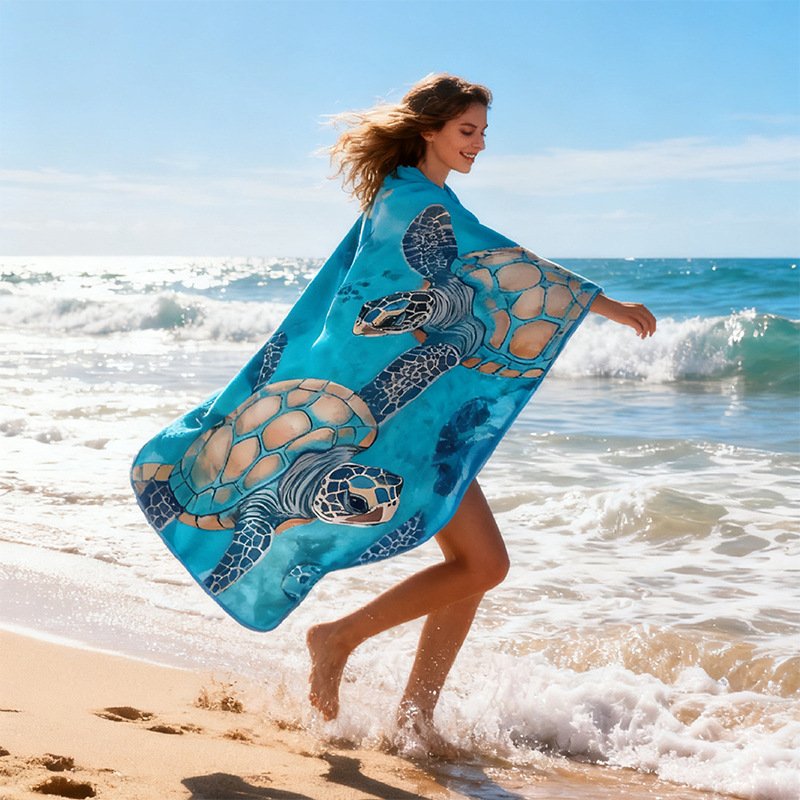
Are Microfiber Beach Towels Really “Quick Dry”?
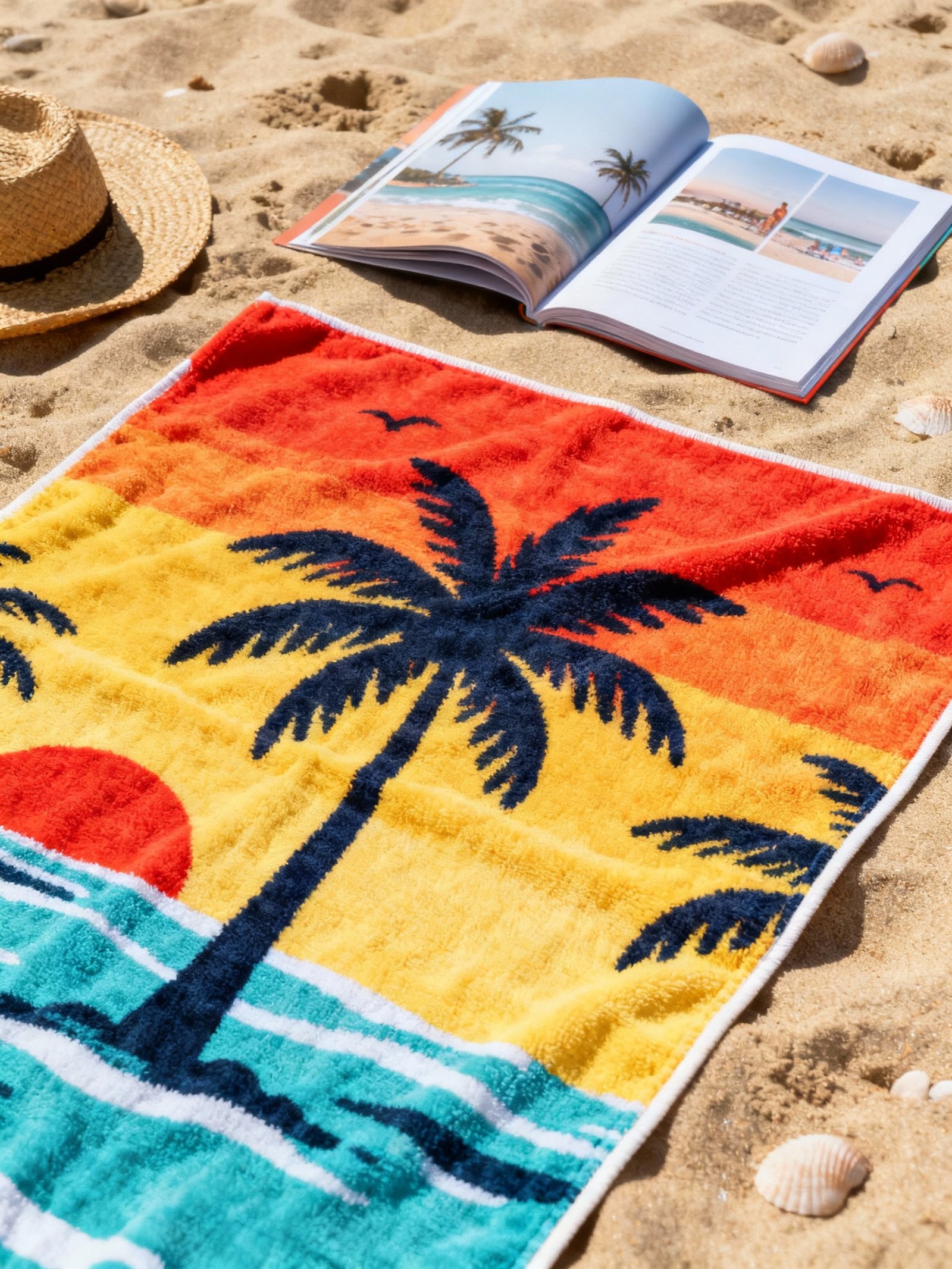
Yes. Microfiber beach towels are genuinely quick dry. Tests consistently show they reach a touch-dry state in about 1–3 hours outdoors — compared to 6–12+ hours for cotton beach towels in the same conditions. Indoors, microfiber reaches ~90% dryness in roughly half the time of cotton.
So, why does microfiber dry so fast? The answer comes down to simple physics. Cotton fibers are thick and round. Water gets trapped deep inside each fiber. As a result, it takes a long time to evaporate out.
Microfiber fibers, on the other hand, are very thin and flat — especially after the split-fiber process. Because of this, water sits near the surface of each fiber. Therefore, it evaporates into the air much more quickly. Think of it like this: a thin wet shirt dries faster than a thick wet sweater. The same principle applies here.
Quick Dry Performance: Microfiber vs Cotton (Time to Feel Dry)
| Condition | Microfiber Beach Towel | Cotton Beach Towel |
|---|---|---|
| Outdoors — sunny & breezy | ~1–2 hours | ~6–8 hours |
| Outdoors — sunny, no wind | ~2–3 hours | ~8–12 hours |
| Indoors — air dry | ~3–6 hours (90% dry in ~3 hrs) | ~12–24 hours |
| In luggage / beach bag | Manageable — dries before next use | Stays damp, risks mildew smell |
This quick drying is especially valuable when you travel. For example, if you use your towel at the pool in the morning, a microfiber towel will be ready again by the afternoon. A cotton towel, however, would still be damp and heavy. For this reason, many surfers, swimmers, and travelers now prefer a quick dry microfiber beach towel over any other type.
“A towel that dries faster between uses means less odor, less weight in your bag, and a better beach day — full stop.”
How Do Sand Free Microfiber Beach Towels Work?
Sand free microfiber beach towels work because of their smooth, tightly woven flat surface. Unlike cotton terry towels — which have raised loops that trap sand — microfiber towels have a tight, flat weave that gives sand nothing to grab onto. As a result, you can simply shake or brush the towel and most sand falls right off.
To understand this better, picture the surface of a cotton towel under a microscope. You would see hundreds of small loops, like tiny curls of thread. Sand particles easily get caught inside those loops. Once sand is in there, it is very difficult to shake out completely.
Now picture a microfiber towel under the same microscope. Instead of loops, you see a flat, dense grid of extremely fine fibers. There are no gaps big enough for a grain of sand to get stuck in. Therefore, when you shake the towel, the sand slides right off the smooth surface.
Tips to Get the Most Sand-Free Performance
- Shake while dry, not wet — wet sand clings temporarily; wait until the towel is dry, then shake.
- Lay the towel flat on the sand rather than bunching it — this reduces contact area.
- Rinse with fresh water after beach use to remove salt and fine sand particles.
- Store in the carry pouch when not in use — this keeps the surface clean in your bag.
It is also worth noting that not every microfiber towel is equally sand-resistant. Therefore, look for towels made from a flat-weave or waffle-weave construction rather than a terry-loop style, even in microfiber. The flat weave is what truly makes a sand free beach towel work as advertised.
Microfiber Beach Towel Sizes, GSM and Typical Specifications
When you shop for or source a microfiber beach towel, you will come across terms like GSM, size dimensions, and fiber blend ratios. Here is a simple breakdown of what they all mean — and which options to look for.
What Is GSM?
GSM stands for grams per square meter. It measures how dense and thick the fabric is. A higher GSM means a heavier, softer, more plush towel. A lower GSM means a lighter, thinner, faster-drying towel. For beach use, you want a balance between the two.
Microfiber Beach Towel GSM Guide
| GSM Range | Feel & Weight | Best Use Case | Drying Speed |
|---|---|---|---|
| 180–220 GSM | Very thin, very light | Backpacking, ultralight travel, gym | Fastest |
| 230–280 GSM | Light, smooth, soft | Beach, pool, everyday travel (most popular) | Very fast |
| 290–320 GSM | Medium weight, plush feel | Beach + hotel use, premium retail | Fast |
| 350–400 GSM | Heavier, closest to cotton feel | Luxury gifting, spa, home use | Moderate |
Standard Microfiber Beach Towel Sizes
| Size (cm) | Size (inches) | Best For |
|---|---|---|
| 60 × 120 cm | 24″ × 47″ | Children, gym, sport towel |
| 70 × 140 cm | 28″ × 55″ | Standard adult beach & pool use |
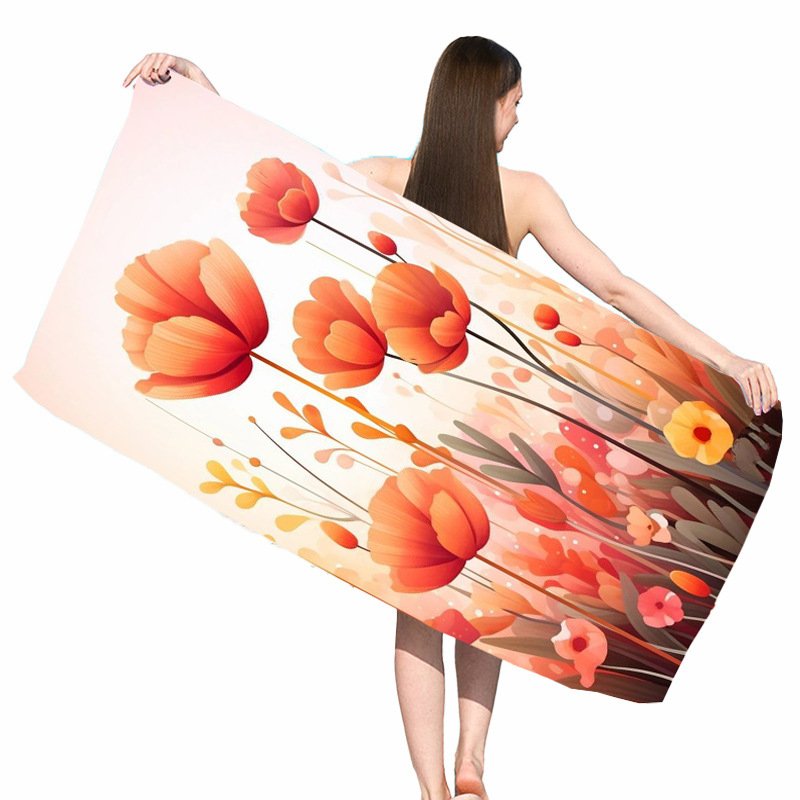
| 80 × 160 cm | 31″ × 63″ | Most popular beach towel size |
| 90 × 180 cm | 35″ × 71″ | XL / oversized beach lounging |
| 100 × 200 cm | 39″ × 79″ | Extra-large, couples, blanket use |
According to real-world camping and travel gear guides, the 80 × 160 cm size at 230–280 GSM is the most popular choice for beach use. It gives a comfortable drying area while staying compact enough to pack easily.
If you are a brand or retailer looking for custom sizing and GSM options, Favor Houseware offers full OEM/ODM customization starting from just 100 pieces.
When to Choose Microfiber vs Traditional Cotton Beach Towels
Both towel types have their place. The right choice, therefore, depends on what matters most to you. Here is a simple side-by-side decision guide.
🏖️ Who Is a Microfiber Beach Towel Perfect For?
- Travelers & backpackers — who need light, fast-drying kit that fits in a carry-on
- Surfers & swimmers — who dry off multiple times a day and need constant re-use
- Families with kids — sand shakes off easily and towels dry before the drive home
- Gym & yoga lovers — compact, quick-dry, and hygienic between sessions
- Campers & hikers — every gram counts, and it dries overnight on the tent
- B2B buyers & brands — looking for custom OEM beach towels with vibrant printing
🔵 Choose Microfiber When…
- You travel or move around often
- You swim or get wet multiple times a day
- You hate finding sand in your bag
- You want to pack light
- You need the towel ready again by afternoon
- You want vibrant custom print designs
- You’re ordering wholesale or for a brand
🟡 Choose Cotton When…
- You prefer a thick, fluffy, plush feel
- You use the towel at home or a resort
- Drying time is not a concern
- You prefer natural fibers on your skin
- Weight in your bag doesn’t matter
- You want a classic beach towel look
Additionally, if you like the look of a classic beach towel but still want quick-dry performance, consider a Turkish hammam towel. Turkish cotton dries faster than regular cotton and is thinner, making it a good middle ground between the two options.
Similarly, if you want something with an eco-friendly angle, Favor Houseware also offers a recycled beach towel range made from recycled polyester — combining quick-dry performance with a lower environmental footprint.
How to Care for a Microfiber Beach Towel (Washing and Drying Tips)
Taking good care of your microfiber beach towel is straightforward. However, a few simple rules make a big difference in how long your towel lasts and how well it performs.
- Wash in cold or warm water (max 40°C / 104°F). Hot water can damage the fine fibers and reduce absorbency over time.
- Use a mild liquid detergent. Powder detergents can leave residue in the fibers. Less detergent is better — use about half the normal amount.
- Never use fabric softener. This is the most important rule. Fabric softener coats the microfibers and blocks their ability to absorb water. Avoid it completely.
- Do not use bleach. Bleach breaks down the synthetic fibers and causes them to deteriorate quickly.
- Tumble dry on low, or air dry. Microfiber dries so fast that line drying is usually the easiest option. High heat in the dryer can damage fibers.
- Do not iron. The synthetic fibers will melt or distort under an iron.
- Wash separately from cotton. Cotton towels shed lint, which sticks to microfiber and clogs the fibers.
- Restore lost absorbency easily. If your towel feels less absorbent over time, run a hot wash cycle with no detergent at all. This removes detergent buildup and often restores full performance.
“The single biggest mistake people make with microfiber towels is using fabric softener. One wash with softener can noticeably reduce a towel’s absorbency — and repeated use makes it hard to recover.” — Favor Houseware manufacturing team
For information on our full range of towel and home textile care products, also see our kitchen towel and microfiber cleaning cloths range — cared for using the same principles.
Sustainability Considerations: Microfiber, Shedding and Recycled Fibers
Microfiber beach towels offer real environmental benefits in some areas. However, they also raise a genuine concern that is worth discussing honestly.
The Environmental Benefits
- Less energy to dry — because microfiber dries so fast, you use the tumble dryer less often (or not at all). Over thousands of washes, this adds up to meaningful energy savings.
- Longer lifespan — a well-made microfiber towel lasts 500+ wash cycles. Consequently, you replace it less often and reduce overall textile waste.
- Lighter shipping weight — lighter products mean lower fuel consumption during transport and logistics.
The Microfiber Shedding Concern
When synthetic microfiber towels are washed, they can shed tiny plastic fiber particles called microplastics. These particles are small enough to pass through washing machine filters. Ultimately, they can end up in waterways and oceans.
This is a real issue that the textile industry is actively working to address. According to research cited by Patagonia, using a microfiber laundry bag or filter can capture the majority of shed fibers before they enter the water system.
Recycled Microfiber — The Better Choice
The best solution is to choose a towel made from recycled polyester (rPET). These towels use plastic bottles and other recycled materials as the raw fiber source. As a result, they reduce new plastic production and often shed fewer fibers than virgin polyester.
At Favor Houseware, we offer a full range of recycled beach towels made from rPET fibers. These towels meet our OEKO-TEX 100 standard — meaning they are tested for harmful substances and certified safe for skin contact.
🌿 Sustainability Quick Tips
- Use a microfiber laundry filter or wash bag to capture shed fibers
- Choose recycled polyester (rPET) microfiber towels where possible
- Wash less frequently — microfiber’s quick-dry properties mean you can reuse before washing
- Look for OEKO-TEX or BSCI certified products for quality and safety assurance
OEM/ODM Microfiber Beach Towels From a China Manufacturer (Favor Houseware)
If you are a brand, retailer, distributor, or promotional goods buyer looking to source microfiber beach towels in bulk, working with a trusted China-based manufacturer gives you significant advantages in price, customization, and lead time.
Why Source From China?
China’s Zhejiang Province — where Favor Houseware is located — is one of the world’s leading textile manufacturing regions. According to TXM manufacturing case studies, factories in this region benefit from highly developed supply chains, advanced weaving equipment, and strong export infrastructure. As a result, buyers around the world consistently source high-quality, competitively priced towels from this area.
About Favor Houseware Co., Ltd.
Favor Houseware Co., Ltd. is a professional beach towel manufacturer based in Yiwu, Jinhua, Zhejiang Province, China. With 15 years of experience and a track record of satisfied international clients, we specialize in custom and wholesale beach towels for brands worldwide.
Our Microfiber Beach Towel Capabilities
| Capability | Details |
|---|---|
| Custom Sizes | 60×120 cm up to 100×200 cm and beyond — any size on request |
| Custom GSM | 180 GSM to 400 GSM — light travel to luxury plush |
| Fiber Blend | 80/20 polyester/polyamide standard; rPET recycled fiber available |
| Printing Methods | Digital printing (no MOQ), reactive dye, heat transfer, sublimation |
| MOQ | Starting from 100 pieces — supports small and large businesses |
| Lead Time | Fast turnaround available; stock items ready for quick shipment |
| Samples | Free samples available — customer pays freight only |
| Certifications | BSCI, OEKO-TEX 100, SGS, FDA certified |
Our Full Product Range
Beyond microfiber beach towels, Favor Houseware also manufactures:
- Turkish hammam towels — thin, fast-drying, elegant peshtemal style
- Recycled rPET beach towels — eco-friendly, OEKO-TEX certified
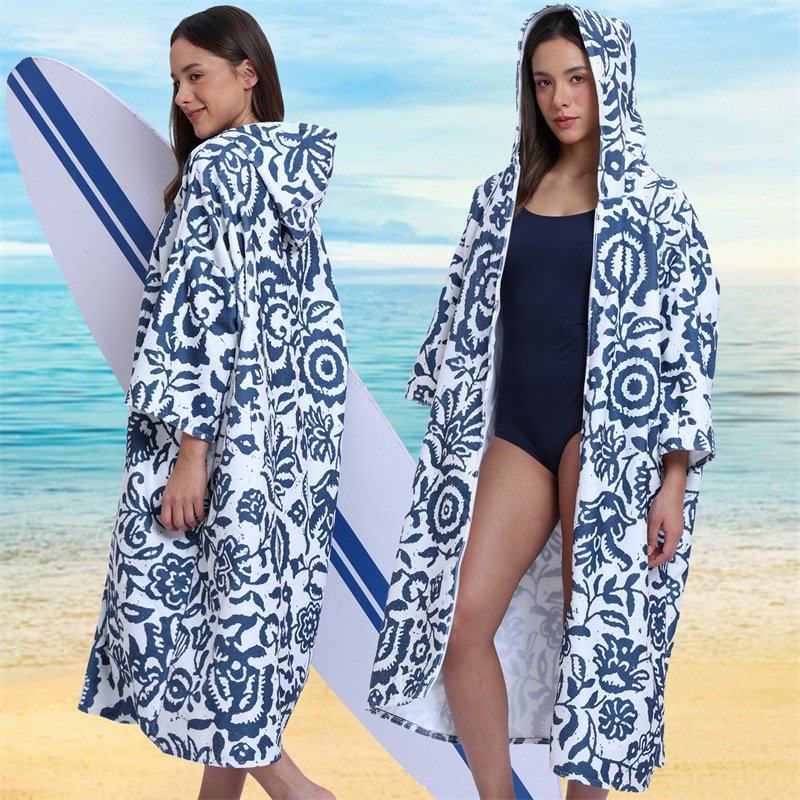
- Surf poncho towels — hooded changing poncho for surfers and beach goers
- Surf change robes — full-length waterproof changing robes for outdoor sports
- Kitchen towels — microfiber and cotton kitchen textiles
- Microfiber cleaning cloths — professional-grade cleaning rolls
Frequently Asked Questions About Microfiber Beach Towels
Here are the most common questions people ask about microfiber beach towels — with clear, simple answers.
Yes, microfiber beach towels are very good — especially if you want something that dries quickly, packs small, and sheds sand easily. They are now the top choice for travelers, swimmers, surfers, and outdoor enthusiasts worldwide.
The main disadvantages are: a less plush and “fluffy” feel compared to thick cotton, the fact that they are synthetic (which can mean microplastic shedding during washing), and that low-quality versions can pill or degrade quickly. Using a wash bag and choosing quality brands mitigates most of these issues.
Yes — sand free microfiber towels genuinely work. Their smooth, tightly woven surface gives sand very little to grip, so a simple shake removes most sand. Very wet or sticky sand may cling temporarily, but once the towel dries it shakes clean easily.
Cotton holds slightly more water per gram overall (~8–10 ml/g vs microfiber’s ~5–7 ml/g). However, microfiber absorbs water faster and releases it into the air much more quickly. So microfiber often feels drier and more ready to use sooner than an equally wet cotton towel.
For travel, microfiber is clearly better. It is lighter (120–200g vs 400–700g for cotton), folds to a fraction of the size, and dries overnight so it is ready for the next day. For these reasons, most travel and outdoor gear experts recommend microfiber over cotton for any trip.
For regular beach use, washing after every 1–2 uses is a good habit. However, because microfiber dries so quickly and resists odor better than cotton, many people reuse it 2–3 times before it needs washing — especially on multi-day trips.
Yes, most microfiber towels are safe for normal skin. The smooth surface is actually gentle and non-abrasive. However, people with very sensitive skin may still prefer natural fibers like cotton or bamboo for daily bath towel use.
Yes — most microfiber beach towels can go in the dryer on low or medium heat. However, line drying is often better because microfiber dries very fast anyway, and air drying helps preserve the fibers and extend the towel’s lifespan.
A GSM of 230–280 is generally best for microfiber beach towels. This range provides enough softness and absorbency for comfortable use, while staying light and thin enough to dry fast and pack small.
Absolutely. For anyone who visits the beach regularly, a sand free microfiber towel saves a lot of cleanup time and frustration. Sand no longer ends up in your bag, car, or home. Combined with fast drying, it is one of the most practical beach accessories you can own.
Conclusion: Is a Microfiber Beach Towel Worth It?
The answer is a clear yes — for almost everyone. A microfiber beach towel dries faster, weighs less, packs smaller, and sheds sand better than any traditional cotton alternative. Furthermore, modern microfiber towels are durable, hygienic, and available in vibrant custom designs that make them perfect for personal use and branded merchandise alike.
Moreover, as the market data confirms, consumer demand for quick dry beach towels and sand free beach towels is growing every year. Switching to microfiber is therefore not just a smart personal choice — it is where the market is heading.
Whether you are shopping for one towel for your next vacation, or sourcing thousands of custom microfiber beach towels for your brand, Favor Houseware is ready to help. We combine 15 years of manufacturing expertise with low MOQs, full customization, and certified quality — all from our factory in Yiwu, China.
Ready to Source Premium Microfiber Beach Towels?
Get factory-direct pricing, free samples, and full OEM/ODM customization from China’s trusted beach towel manufacturer. MOQ from just 100 pieces. BSCI · OEKO-TEX 100 · SGS · FDA certified.
Views: 13