Published by Favor Houseware Co., Ltd. | Reading time: 8 min
⚡ Key Takeaways — Microfiber Roll vs Paper Towels at a Glance
| Metric | Paper Towels | Reusable Microfiber Roll |
|---|---|---|
| Reuse cycles | 1 use only | Up to 500 uses |
| Cost per use | ~$0.01–$0.02 | ~$0.002–$0.003 |
| Recyclable after use? | No — contaminated fibers | Yes — machine washable |
| Water used in production | ~2.5 gallons per roll | Much less over lifetime |
| U.S. waste generated | 3.8 million tons (2017 EPA data) | Near zero when reused |
| Market size | USD 8.95B forecast by 2030 | USD 883.8M microfiber market (2025) |
Bottom line: One reusable microfiber roll replaces hundreds of single-use paper towels, saves money, and cuts household waste significantly.
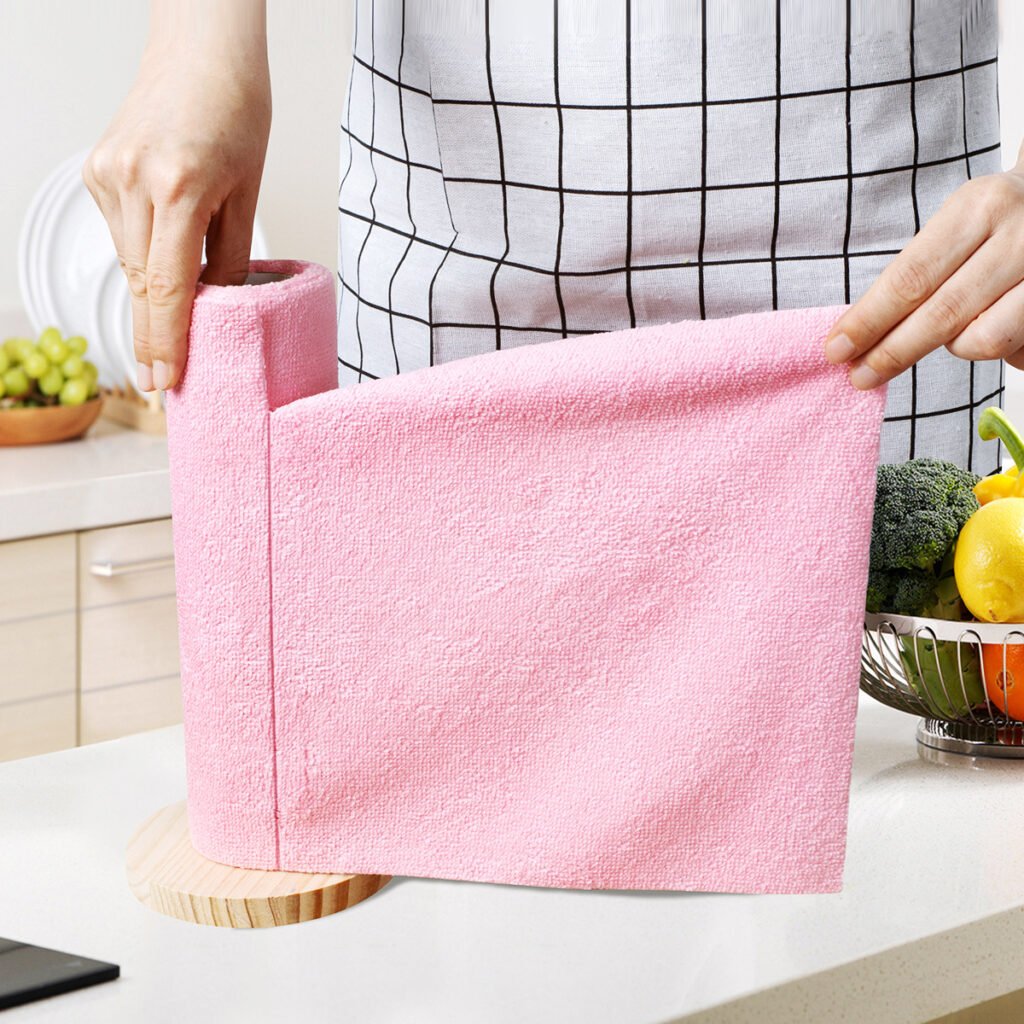
Are you still spending money every week on paper towels? Therefore, you should know that there is a smarter option available right now. Reusable microfiber rolls are quickly becoming one of the most popular swaps in eco-friendly homes and businesses worldwide. In fact, they look just like regular paper towels on a roll — but you can wash and reuse them hundreds of times instead of throwing them away after one use.
In this guide, you will learn exactly what microfiber rolls are, how they work, and all the different ways you can use them every single day. Additionally, you will see how much money you can save and why so many people are making the switch right now. Let’s get started.
1. What Is a Reusable Microfiber Roll?
Quick Answer: A reusable microfiber roll is a set of tear-off cleaning sheets made from ultra-fine microfiber fabric, wound onto a roll just like paper towels. Unlike paper towels, however, each sheet can be washed and reused up to 500 times — making it a sustainable, long-lasting cleaning tool for both home and business use.
So, what exactly makes microfiber so special? First of all, microfiber fabric is made from extremely thin threads — usually a blend of polyester and polyamide. These threads are split during manufacturing, which creates tiny hooks that physically grab and trap dirt, dust, grease, and bacteria. As a result, microfiber cleans surfaces more effectively than regular cotton cloths.
Furthermore, a good-quality microfiber roll typically has a GSM (grams per square meter) rating between 280 and 400. A higher GSM means the cloth is thicker and more absorbent. For kitchen use especially, you will want at least 300 GSM for the best performance.
To sum it up, a reusable microfiber roll gives you the same easy tear-off convenience of paper towels — but with the long-lasting value of a washable cloth. You can see an example of a quality product at the Favor Houseware microfiber cleaning cloth roll page.
2. Can Microfiber Rolls Really Replace Paper Towels?
Short answer: Yes. For most everyday cleaning tasks — countertops, spills, sinks, tables, glass, and dusting — reusable microfiber rolls replace paper towels very effectively. One high-quality microfiber cloth can be washed and reused up to 500 times, making it far more efficient than any single-use paper towel.
Many people wonder if microfiber rolls are truly good enough to take the place of paper towels completely. The answer is yes, for the vast majority of daily tasks. Additionally, microfiber works better than paper towels in many situations because it traps dirt rather than just pushing it around.
However, it is also fair to point out that some people still prefer paper towels for very greasy or heavily contaminated messes — such as draining bacon fat or handling raw meat. In those specific cases, a disposable option may still feel more convenient. Nevertheless, for everything else, microfiber rolls are a clear winner.
“A high-quality microfiber cloth can be washed and reused up to 500 times — meaning one roll can replace hundreds of rolls of single-use paper towels over its lifetime.”
Moreover, microfiber rolls are not just good for homes. Businesses like restaurants, hotels, gyms, and cleaning companies are also switching to reusable microfiber rolls because they save money over time and meet growing customer demand for eco-friendly practices. For example, you can explore Favor Houseware’s full microfiber towel range to see how many options are available for both personal and professional use.
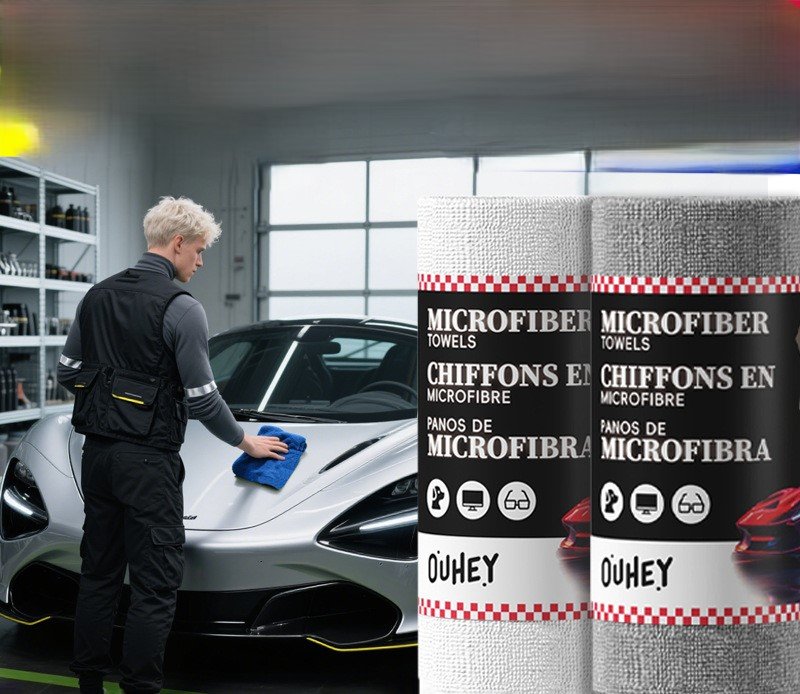
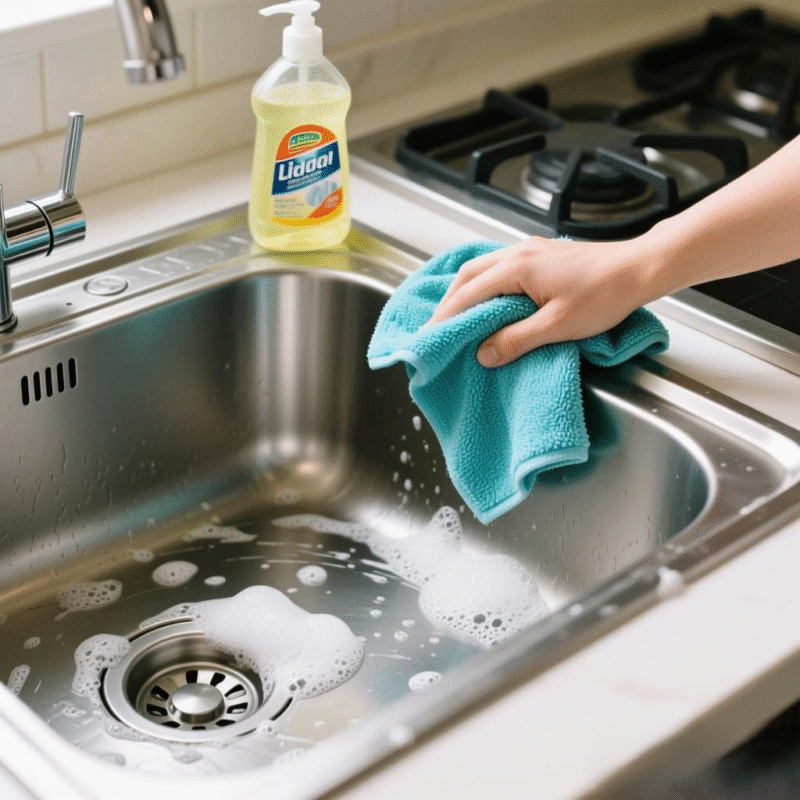
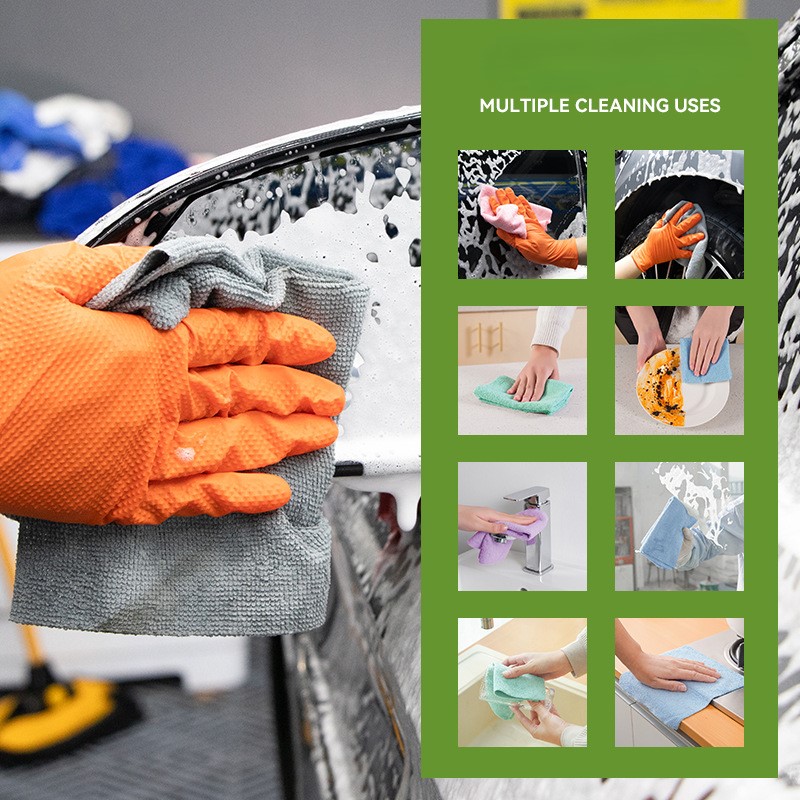
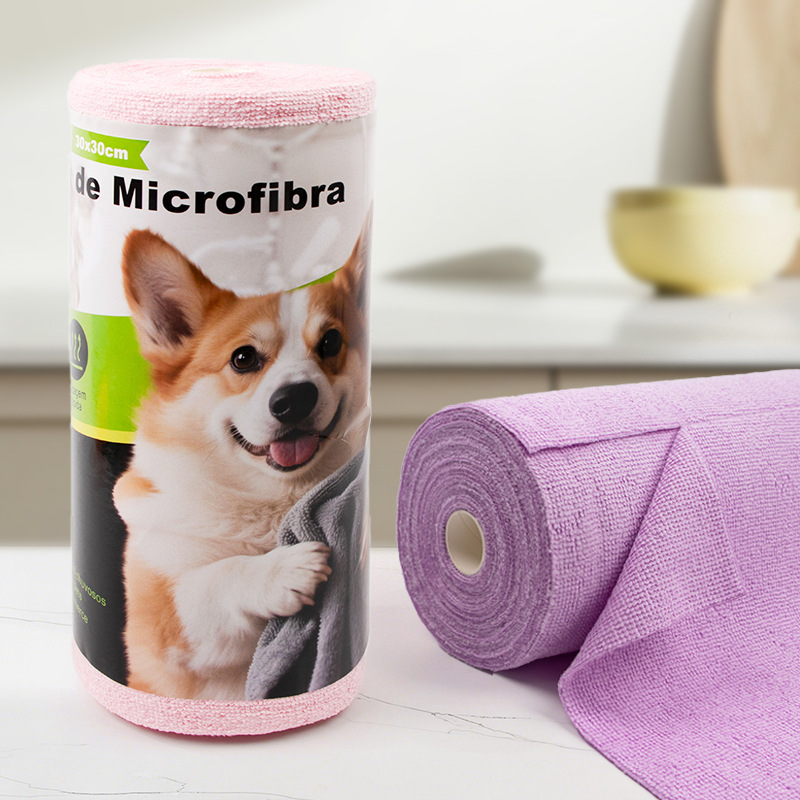
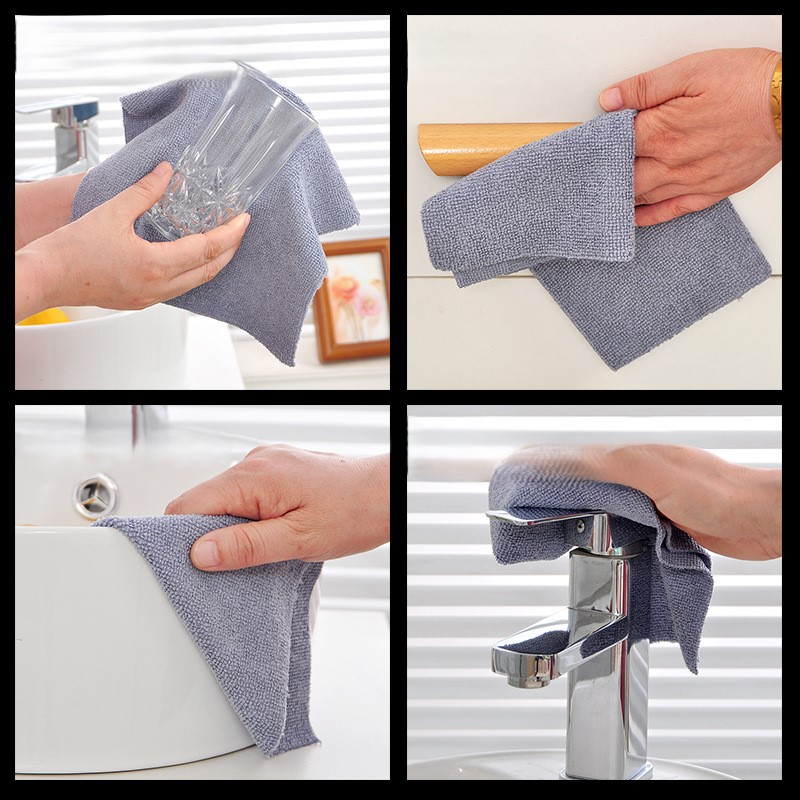
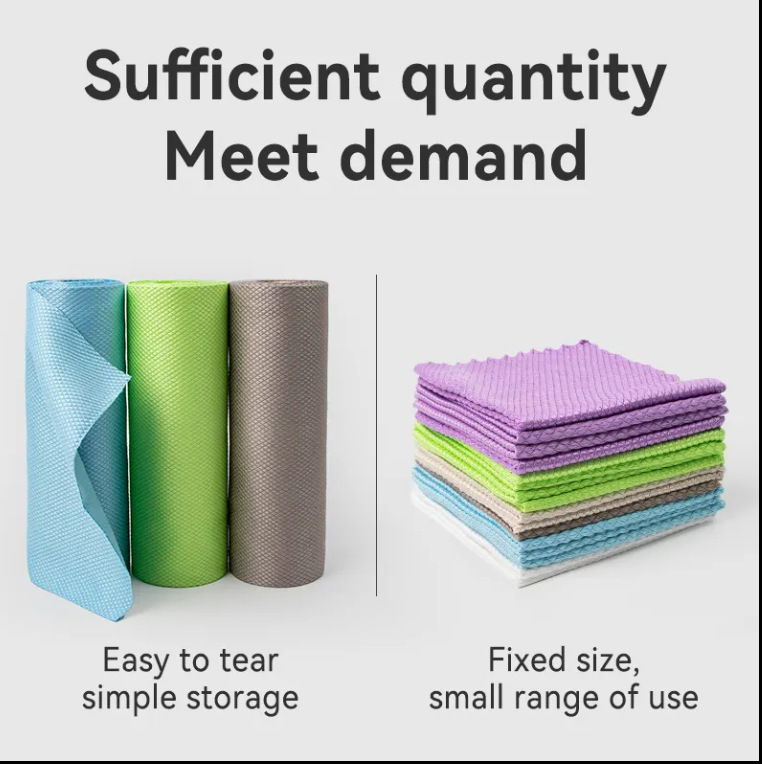
← Scroll to see more product images →
3. Best Uses for Reusable Microfiber Rolls
Best uses for reusable microfiber rolls include: kitchen countertop wiping, spill cleanup, glass and mirror cleaning, bathroom sink and faucet polishing, dusting furniture and electronics, car interior cleaning, drying hands, gym and workout towel replacement, baby and pet mess cleanup, and quick office desk wipe-downs.
One of the biggest advantages of reusable microfiber rolls is how many different tasks they handle. In fact, once you start using them, you will quickly realize how many situations they are perfect for. Here is a complete breakdown of the best uses:
🍳 Kitchen Uses
- Wiping countertops — Microfiber grabs crumbs and grease far better than paper towels.
- Cleaning up spills — The high absorbency soaks up liquids quickly and completely.
- Drying dishes — Lint-free microfiber leaves dishes spotless with no fiber residue.
- Cleaning the stovetop — Cuts through grease with just water, so you need fewer chemicals.
- Drying hands — Soft, quick-drying sheets are gentle on skin after washing.
You can also pair your microfiber roll with a dedicated kitchen towel or even a handy cooking apron for a fully sustainable kitchen setup.
🪟 Glass & Windows
- Streak-free window cleaning — Microfiber picks up moisture without leaving streaks behind.
- Mirror polishing — Works better than most paper-based products for a crystal-clear finish.
- TV and screen cleaning — Gentle and safe for delicate surfaces.
🛁 Bathroom Uses
- Faucet and sink cleaning — Removes water spots and soap scum easily.
- Tile and grout wiping — The fiber weave gets into small surface grooves.
- Quick hand-drying station — A reusable alternative to paper hand towels at the sink.
🚗 Car & Auto Care
- Dashboard and console wiping — Picks up dust without scratching surfaces.
- Windshield interior cleaning — Leaves glass clear and smear-free.
- Seat and upholstery wipe-down — Gentle enough for leather and fabric seats.
🐾 Baby, Pet & Family Uses
- Baby mess cleanup — Soft and hypoallergenic for delicate skin.
- Pet mess absorption — Quickly soaks up pet water bowl spills or accidents.
- High chair and table tray wiping — Easy to wash between uses for hygiene.
💪 Gym, Sports & Outdoor
- Sweat towel — Light and quick-drying for workouts.
- Yoga mat wipe-down — Removes sweat and bacteria after every session.
- Camping cleanup — Compact and dries fast — ideal for outdoor adventures.
🖥️ Office & Workspace
- Keyboard and desk dusting — Microfiber picks up fine dust particles electrostatically.
- Monitor cleaning — No harsh chemicals needed; just a slightly damp sheet.
- Coffee spill response — Keep a roll in every office break room.
4. Microfiber Roll vs Paper Towels: Which Is Better?
Now that you know all the uses, let’s compare them side by side. This table shows the key differences so you can decide for yourself which option makes more sense for your home or business.
| Category | Paper Towels | Reusable Microfiber Roll | Winner |
|---|---|---|---|
| Reuse cycles | 1 use | 300–500 uses | ✅ Microfiber |
| Cleaning performance | Pushes dirt around | Traps & removes dirt | ✅ Microfiber |
| Absorbency | Good | Excellent (7x body weight) | ✅ Microfiber |
| Streak-free cleaning | No — leaves lint | Yes — lint-free | ✅ Microfiber |
| Chemical needed? | Usually yes | Often just water | ✅ Microfiber |
| Long-term cost | High — constant repurchase | Low — buy once, reuse | ✅ Microfiber |
| Eco-friendliness | Not recyclable after use | Washable, low waste | ✅ Microfiber |
| Convenience | Tear & toss | Tear, wash, reuse | 🤝 Tie (habit change needed) |
| Best for heavy grease/raw meat | Yes | Less preferred | ⚠️ Paper towels |
As you can clearly see from the table above, microfiber rolls win in nearly every important category. Therefore, for most households and businesses, switching to a reusable microfiber roll is simply the smarter choice. For a broader perspective on textile quality standards, resources like Textile World provide excellent industry-level context.
5. How Many Times Can a Microfiber Roll Be Reused?
Quick Answer: A high-quality reusable microfiber roll can be washed and reused between 300 and 500 times. The exact number depends on the fabric quality (GSM), how it is washed, and how it is stored. With proper care, one roll easily replaces hundreds of traditional paper towel rolls.
The wide range of 300–500 washes exists because not all microfiber rolls are the same quality. Furthermore, how you wash them makes a big difference. For example, using hot water above 60°C or fabric softener can damage the fibers and shorten the lifespan. On the other hand, washing at 30–40°C without softener keeps fibers working at their best for hundreds of cycles.
As a result, if your household goes through just one paper towel roll per week, switching to a quality reusable microfiber roll means you could go nearly 10 years before needing a replacement. That is an extraordinary value, especially when you consider the environmental savings too.
6. How Much Money Can You Save?
Let’s talk numbers. First of all, paper towels seem cheap — but that small cost adds up very quickly when you buy them week after week. In contrast, reusable microfiber rolls have a higher upfront cost but an extremely low cost per use over time.
| Scenario | Paper Towels (annual) | Microfiber Roll (annual) | Annual Saving |
|---|---|---|---|
| Average U.S. household | ~$180/year | ~$10–$20/year (washing cost) | ~$160+ saved |
| Small café (50 uses/day) | ~$730/year | ~$30–$60/year | ~$670+ saved |
| Hotel housekeeping (100 uses/day) | ~$1,460/year | ~$60–$120/year | ~$1,340+ saved |
“Microfiber cloths cost approximately $0.002 to $0.003 per use, compared to $0.01 to $0.02 per use for paper towels. Over a year, that difference adds up to hundreds of dollars — especially for businesses.”
Moreover, switching to microfiber reduces your need for cleaning chemicals too. Because microfiber traps dirt and bacteria with just water, you naturally spend less on cleaning sprays and detergents. Consequently, the total savings are even higher when you add those costs together.
7. Environmental Benefits of Switching
Beyond saving money, switching to reusable microfiber rolls is one of the easiest ways to reduce your environmental footprint. In fact, the numbers around paper towel waste are quite startling when you see them together.
Additionally, most used paper towels cannot be recycled. This is because the fibers become contaminated with food, grease, or cleaning chemicals after use. As a result, they end up directly in landfills. In comparison, a reusable microfiber roll generates almost zero waste over its long lifetime of hundreds of washes.
Environmental wins of switching to microfiber rolls:
- ✅ Less landfill waste — Hundreds of paper towels replaced by one washable roll
- ✅ Lower water footprint — Reusing means far fewer production cycles
- ✅ Fewer chemicals — Microfiber cleans with just water in many cases
- ✅ Reduced packaging waste — No constant plastic-wrapped paper towel rolls to dispose of
- ✅ Support for sustainable manufacturing — Brands like Favor Houseware hold OEKO-TEX 100 and BSCI certifications, ensuring responsible production
It is also worth noting that concerns about microplastic shedding during washing are valid. However, you can reduce this significantly by using a Guppyfriend washing bag or a microplastic-catching laundry ball, which catches shed fibers before they reach waterways.
8. Where Reusable Microfiber Rolls Work Best
Reusable microfiber rolls are versatile enough for many different settings. However, they truly shine in certain environments. Here is a quick overview of where they perform at their very best:
| Setting | Best Use Case | Why Microfiber Wins Here |
|---|---|---|
| Home kitchen | Counter & stovetop cleaning | Cuts grease with minimal chemicals |
| Bathroom | Mirror, faucet, tile polishing | Streak-free, lint-free finish |
| Car | Dashboard, glass, upholstery | Scratch-free on delicate surfaces |
| Restaurant / café | Table wipe-down, bar counter | Hygienic, fast-drying, washable |
| Hotel housekeeping | Room cleaning, bathroom polish | Reduces chemical and linen costs |
| Gym / fitness center | Equipment wipe-down | Absorbs sweat, dries quickly |
| Office | Desk, screen, keyboard cleaning | Safe for electronics, no lint |
| Healthcare / clinic | Surface sanitizing | Traps bacteria; works with disinfectant |
For outdoor enthusiasts, microfiber rolls also work brilliantly for camping cleanups, picnic table wiping, and even beach days. Interestingly, Favor Houseware’s expertise in absorbent textiles — including their popular microfiber beach towels and surf change robes — comes from the same textile quality standards that make their microfiber rolls so effective.
9. How to Wash and Care for Your Microfiber Roll
How to wash microfiber rolls: Machine wash at 30–40°C (86–104°F), use a gentle detergent without fabric softener, wash separately from cotton items, and either air dry or tumble dry on a low heat setting. Avoid bleach, fabric softener, and high heat — these damage the microfiber weave and shorten the cloth’s useful life.
Proper care is the key to getting all 300–500 uses out of your microfiber roll. Fortunately, looking after microfiber is simple once you learn these key steps. Follow the steps below for best results:
- Tear off a sheet and use it for your cleaning task as normal.
- Rinse lightly under the tap after use to remove loose dirt and food particles.
- Collect used sheets in a small mesh laundry bag until you have enough for a wash cycle.
- Machine wash at 30–40°C using a mild, fragrance-free detergent. This temperature is hot enough to sanitize but cool enough to protect the fibers.
- Do NOT add fabric softener. Fabric softener coats the microfiber strands and clogs the tiny fiber hooks that make the cloth so effective. This is the number-one mistake people make.
- Wash separately from cotton. Cotton releases lint, which sticks to microfiber and reduces performance.
- Air dry or tumble dry on low heat. High heat shrinks and melts the synthetic fibers.
- Roll back onto the holder once dry and ready for next use.
Quick Care Reference
- Wash at 30–40°C only
- Use gentle, non-softener detergent
- Wash separately from cotton and lint-producing fabrics
- Air dry or low-heat tumble dry
- Never use bleach or fabric softener
- Never iron at high heat
- Use a microplastic-catching laundry bag for eco-friendly washing
10. What to Look For When Buying a Quality Microfiber Roll
Not all microfiber rolls are equal. Therefore, knowing what to look for before you buy will help you avoid disappointment and get the most value for your money. Here is what genuinely matters:
- GSM rating of 280–400+ — Higher GSM means more fabric density, better absorbency, and longer lifespan. For kitchen use, aim for at least 300 GSM.
- Split microfiber construction — True split microfiber (polyester + polyamide blend) cleans far better than non-split alternatives. Look for this detail in the product description.
- Perforated tear-off design — Sheets should tear cleanly and consistently, just like paper towels, without fraying at the edges.
- Machine-washable certification — Confirm the product is rated for at least 300 wash cycles at 40°C or above.
- Roll size and sheet count — Consider how many sheets you need per day and choose a roll size that fits your dispenser or holder.
- Certifications — Look for safety certifications like OEKO-TEX 100 (no harmful substances), BSCI (ethical manufacturing), or SGS/FDA for commercial buyers.
- Manufacturer reputation — Buying direct from a verified manufacturer, rather than through unknown resellers, gives you better quality control and pricing.
- Color options — Color-coded microfiber rolls help workplaces avoid cross-contamination (e.g., blue for bathrooms, green for kitchens).
“The biggest mistake buyers make is choosing microfiber rolls based on price alone. A roll with a lower GSM and no quality certification will lose its effectiveness after just 50–80 washes — far fewer than the 300–500 you should expect from a quality product.”
For reference, Favor Houseware Co., Ltd. holds BSCI, OEKO-TEX 100, SGS, and FDA certifications, ensuring every microfiber roll meets both safety and performance standards for global markets. You can learn more on the About page or browse their full catalog at favor-houseware.com.
11. OEM & Wholesale Options for Businesses
Are you a retailer, hotel chain, cleaning company, or product brand looking to source reusable microfiber rolls in bulk? In that case, working directly with a qualified manufacturer is absolutely the smartest approach. Furthermore, OEM (Original Equipment Manufacturer) and ODM (Original Design Manufacturer) options allow you to create fully custom-branded products without the high costs of building your own production line.
Why Choose Favor Houseware Co., Ltd. for Wholesale Microfiber Rolls?
Favor Houseware Co., Ltd. is a trusted China textile manufacturer with 15 years of experience producing high-quality absorbent fabrics. Based in Yiwu, Jinhua, Zhejiang Province, they combine advanced manufacturing equipment with strict quality control to deliver consistent, certified microfiber products to global buyers.
- Low MOQ starting from 100 pieces — Ideal for small businesses and startups
- No MOQ for digital printing — Add your own logo or brand colors with no minimum order
- Custom sizes, GSM, and colors — Full specification flexibility for private label
- Certifications: BSCI, OEKO-TEX 100, SGS, FDA — Ready for international markets
- Fast delivery from Yiwu factory — In-stock options available for urgent orders
- Free samples (pay freight only) — Test quality before committing to a bulk order
- Secure payment & multiple payment methods — Professional trade process support
Additionally, Favor Houseware’s expertise extends well beyond microfiber rolls. Their full range of premium absorbent textile products includes microfiber towels, Turkish hammam towels, surf poncho towels, surf change robes, kitchen towels, oven mitts, and eco-friendly recycled beach towels. This broad product range makes them an ideal single-source supplier for retailers who want to build out a complete sustainable home or lifestyle product line.
Ready to Source Microfiber Rolls at Wholesale Prices?
Contact Favor Houseware Co., Ltd. today for a free sample, custom quote, or OEM inquiry. Fast response guaranteed.
Get a Free Sample View Products12. Why More Households and Businesses Are Switching
The shift away from single-use paper towels is growing fast. In fact, the global reusable cleaning cloth market is expanding steadily as both consumers and businesses become more aware of cost and sustainability. So, what is driving this change?
For Households:
- Rising grocery costs — Families are looking for practical ways to cut recurring expenses, and replacing paper towels is one of the easiest swaps.
- Growing eco-awareness — More consumers than ever are actively seeking products that reduce landfill waste and carbon footprint.
- Better cleaning results — Once people try microfiber, they notice it cleans better. Consequently, they rarely go back to paper towels.
- Social media influence — Zero-waste and sustainable living communities on platforms like Pinterest and Instagram have made reusable cleaning products trendy and appealing.
For Businesses:
- Significant supply cost reduction — As shown in the savings table above, businesses that clean frequently can save hundreds or thousands of dollars per year.
- ESG and sustainability reporting — More companies need to demonstrate environmental responsibility to investors and customers. Switching from paper towels to microfiber is a small but measurable step.
- Hygiene standards — Hospitality, healthcare, and food service industries need reliable, high-performance cleaning tools. Microfiber meets and often exceeds those standards, as noted by cleaning industry resources such as EPA’s Safer Choice program.
- Brand image — Hotels and restaurants that visibly use eco-friendly products — including branded microfiber cleaning rolls — signal environmental responsibility to guests and customers.
“The global microfiber cleaning cloth market reached USD 883.8 million in 2025 — and it is growing. More businesses and households are recognizing that reusable microfiber is not just an eco choice, but a smart financial decision too.”
Frequently Asked Questions About Reusable Microfiber Rolls
What are reusable microfiber rolls used for?
Reusable microfiber rolls are used for wiping kitchen counters, cleaning up spills, drying dishes, polishing glass and mirrors, dusting furniture and electronics, cleaning car interiors, wiping down gym equipment, and general household or facility maintenance. They are especially useful for anyone who wants the convenience of a tear-off roll but needs a product that can be laundered and reused many times.
Can microfiber rolls really replace paper towels?
Yes, reusable microfiber rolls can replace paper towels for the vast majority of daily cleaning tasks — including countertop wiping, spill cleanup, glass cleaning, bathroom polishing, and hand drying. For heavily greasy or contaminated tasks like handling raw meat, some users may still prefer a disposable option. However, for 90%+ of everyday uses, microfiber is a highly effective and longer-lasting alternative.
How many times can a microfiber roll be reused?
A high-quality microfiber roll can be washed and reused between 300 and 500 times. The exact lifespan depends on the GSM rating of the fabric, how the roll is washed (temperature, detergent type), and how it is stored. Washing at 30–40°C without fabric softener and avoiding high-heat drying will keep your microfiber roll performing well for hundreds of cycles.
Are paper towels recyclable?
No. Used paper towels are generally not recyclable because they are contaminated after use with food, grease, or cleaning products. Additionally, their paper fibers are too short and degraded to be useful in the recycling process. As a result, most used paper towels end up directly in landfills — contributing to the estimated 3.8 million tons of tissue and paper towel waste generated in the U.S. in 2017 alone.
Do microfiber rolls save money compared with paper towels?
Yes, significantly. Paper towels cost approximately $0.01 to $0.02 per use, while reusable microfiber cloths cost only about $0.002 to $0.003 per use when you factor in washing costs. For an average household, this translates to savings of over $160 per year. For businesses with higher cleaning volumes, the annual savings can reach several hundred to thousands of dollars.
Are microfiber rolls good for kitchen cleaning?
Yes, reusable microfiber rolls are excellent for kitchen cleaning. They are particularly effective for wiping countertops, cleaning stovetops, drying dishes, and soaking up spills quickly. The split microfiber construction traps grease and food particles rather than simply pushing them around — meaning you get a genuinely cleaner surface, often with just water and no chemical cleaning sprays needed.
What should I look for when buying reusable cleaning rolls?
When buying reusable microfiber rolls, look for a GSM rating of at least 280–400 for good absorbency, a split microfiber construction (polyester + polyamide blend), a clean tear-off perforated design, machine-washable certification for 300+ cycles, and safety certifications such as OEKO-TEX 100 or BSCI. Buying directly from a verified manufacturer like Favor Houseware ensures consistent quality and proper certification for commercial use.
How do you wash reusable microfiber rolls?
Wash reusable microfiber rolls in a washing machine at 30–40°C using a mild detergent without fabric softener. Fabric softener clogs the microfiber’s tiny cleaning hooks and should always be avoided. Wash separately from cotton fabrics to prevent lint transfer. Either air dry or tumble dry on a low heat setting. Never use bleach or high-heat drying, as these damage the fibers and shorten the product’s useful lifespan.
Conclusion: Time to Make the Switch
By now, it is easy to see why reusable microfiber rolls are replacing paper towels in homes, restaurants, hotels, gyms, and offices all around the world. To summarize the key points:
- ✅ One microfiber roll replaces up to 500 paper towel uses — a dramatic reduction in single-use waste
- ✅ Saves the average household over $160 per year in cleaning supply costs
- ✅ Cleans better — trapping dirt and bacteria instead of pushing them around
- ✅ Works on nearly every surface — kitchen, bathroom, car, gym, office, and more
- ✅ Eco-friendly — cuts landfill waste and reduces demand for single-use paper products
- ✅ Easy to care for — just wash, dry, and reuse hundreds of times
Whether you are a homeowner looking to go greener, a business owner reducing supply costs, or a retailer searching for the next great private-label product — reusable microfiber rolls are a smart, practical, and proven solution. Furthermore, choosing a certified manufacturer means you get consistent quality every single time.
Favor Houseware Co., Ltd. has spent 15 years perfecting absorbent textile manufacturing. From custom beach towels to premium microfiber cleaning rolls, every product combines sustainable materials, advanced production, and rigorous quality inspection — all backed by BSCI, OEKO-TEX 100, SGS, and FDA certifications.
🌿 Ready to Replace Paper Towels for Good?
Explore Favor Houseware’s certified microfiber rolls — available for wholesale, OEM/ODM, and private label. Low MOQ from 100 pieces. Free samples available (pay freight only).
Shop Microfiber Rolls Request a Free SampleViews: 10