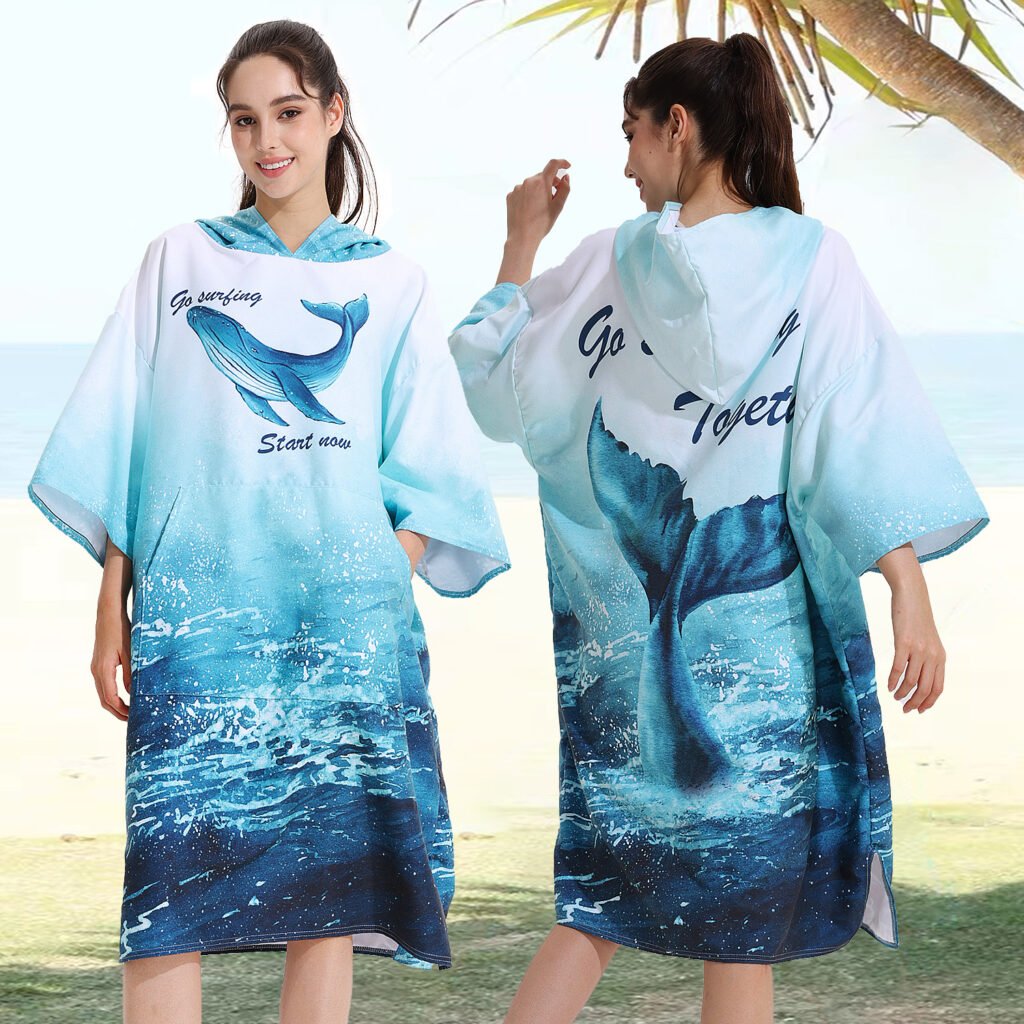
A surf poncho is a hooded, wearable cover-up that helps surfers, swimmers, and beach lovers dry off, stay warm, and change clothes privately after water activities. It combines the comfort of a beach towel with the convenience of a garment — so you never have to wrestle with a slipping towel again.
But here is the big question every buyer asks: Should you choose a cotton surf poncho or a microfiber surf poncho? The right answer depends on your needs. Therefore, this complete guide breaks down everything — from surf poncho material and drying speed to sizing, care, and buying tips for all budgets.
⚡ Quick Answer: Cotton vs Microfiber Surf Poncho — At a Glance
| Feature | 🌿 Cotton Surf Poncho | ⚡ Microfiber Surf Poncho |
|---|---|---|
| Drying Speed | Moderate — 4–8 hours | Fast — 1–2 hours |
| Absorbency | Very high — up to 27× its weight | High — up to 7× its weight |
| Feel | Soft, plush, towel-like | Lightweight, smooth |
| Packed Weight | Heavier (500–900 g typical) | Light (200–400 g typical) |
| GSM Range | 400–600+ GSM | 200–380 GSM |
| Best For | Cold weather, comfort, premium gifting | Travel, daily use, warm climates |
📊 Source: Grand View Research — Surfing Apparel & Accessories Market Report. The self-drying surf poncho segment alone was valued at $412.5 million in 2024.
← Scroll to explore →
What Is a Surf Poncho — And How Is It Different from a Beach Towel?
Many people confuse a surf poncho with a flat beach towel. However, they are quite different in both design and purpose. Understanding the difference helps you make a smarter decision for yourself or your customers.
What Does a Surf Poncho Actually Do?
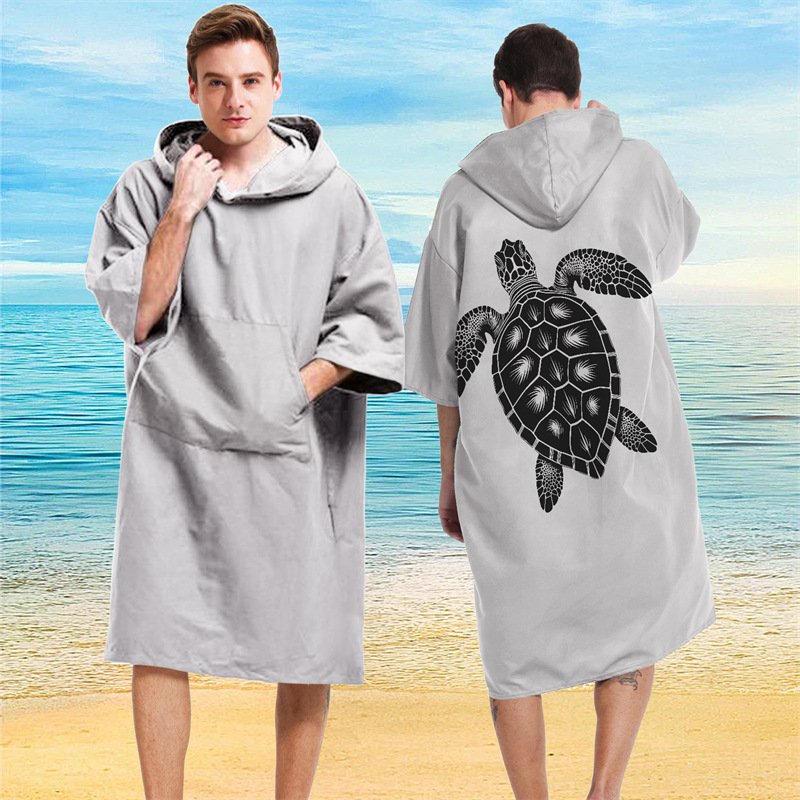
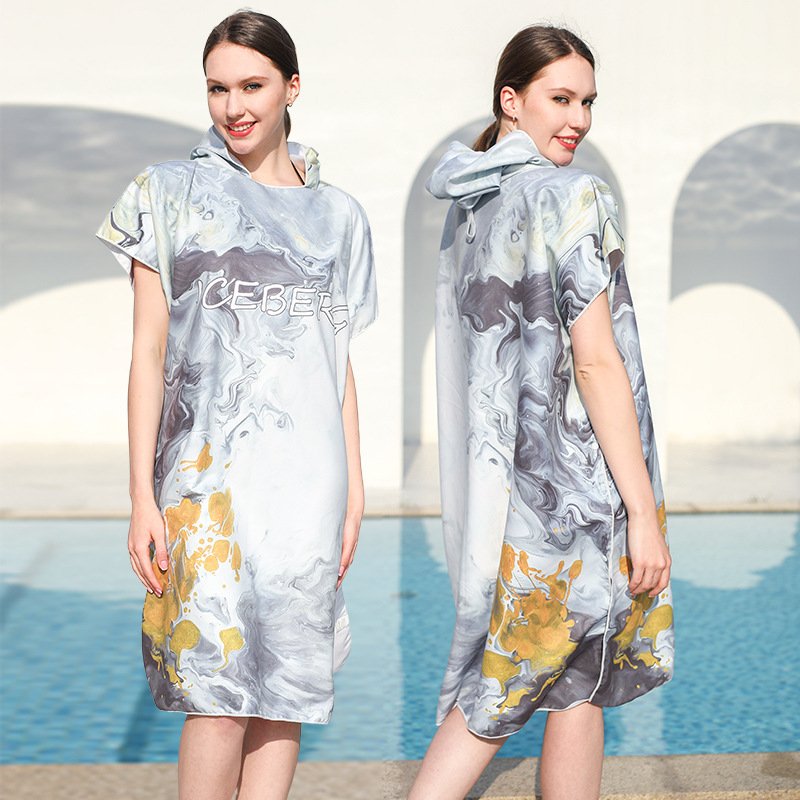
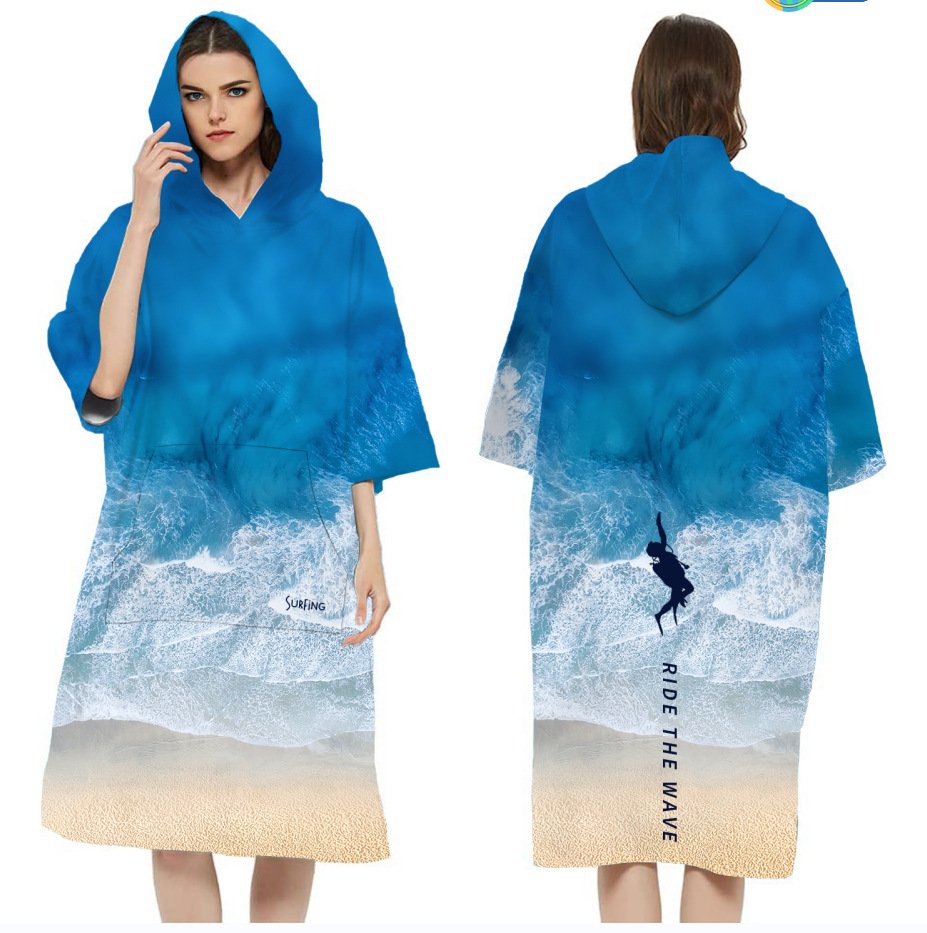
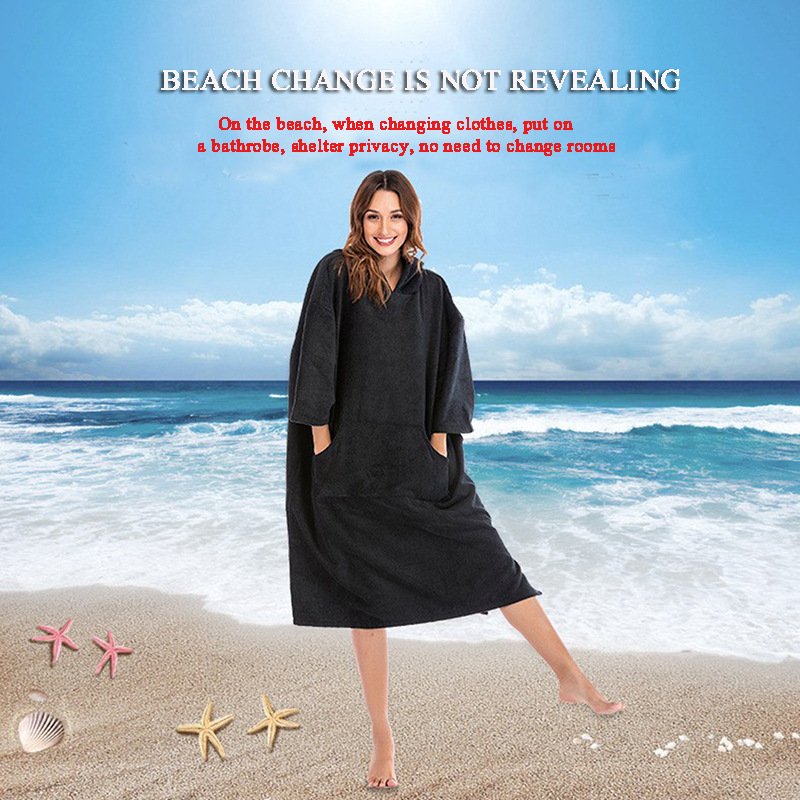
A surf poncho serves three core jobs at the beach, pool, or lake. First, it dries your body after water activities. Second, it keeps you warm when the wind picks up. Third — and most importantly — it gives you full privacy to change clothes right on the beach, in a parking lot, or anywhere outdoors.
Most surf ponchos feature a hood, a wide boxy body, and either open sides or stitched sleeves. You simply pull it over your head. Then you can change completely underneath without anyone seeing. This makes it far more practical than a flat beach towel when you need to get changed quickly.
“A surf poncho is like a changing room you can take anywhere. It is your towel, your jacket, and your privacy screen — all in one wearable piece.”
When Can a Surf Poncho Replace a Beach Towel?
For most surfers and swimmers, a surf poncho can absolutely replace a separate beach towel. A poncho covers your whole body, dries you from head to toe, and stays in place while you change. A flat beach towel, on the other hand, keeps slipping off and offers very little privacy.
That said, if you also want something to lie on while sunbathing, a dedicated beach towel is still a great addition. Many beachgoers bring both — a poncho for changing and a flat towel for lounging on the sand.
5 Key Differences Between a Surf Poncho and a Beach Towel
- 🏄 Shape: A surf poncho is wearable with a hood. A beach towel is a flat rectangle with no shape.
- 🔒 Privacy: A poncho lets you change completely underneath. A beach towel requires awkward wrapping.
- 🌬️ Wind resistance: A surf poncho stays on in the wind. A flat towel blows off in seconds.
- 🎒 Portability: Many surf ponchos fold into a compact pouch. Most beach towels stay bulky in your bag.
- 🌊 Primary use: A surf poncho is designed for post-surf changing. A beach towel is better for sun lounging.
Why Surf Poncho Material Matters More Than You Think
The material of your surf poncho controls nearly every important quality. It determines how fast it dries, how warm it feels, how heavy it is to carry, and how long it lasts through repeated use. Therefore, choosing the right surf poncho material is one of the most important decisions in the whole buying process.
There are two main materials used in surf ponchos today: cotton and microfiber. Each has clear strengths and real weaknesses. Let us look at both in detail — starting with the classic choice.
Cotton Surf Poncho: Pros, Cons, and Best Use Cases
A cotton surf poncho feels like wrapping yourself in a big, warm hug straight out of the dryer. Cotton has been used in towels and textiles for centuries. Moreover, there is a very clear reason for that — it simply feels incredible against your skin, especially when you are wet and cold.
What Makes Cotton So Absorbent?
Cotton fibers are made of cellulose, which naturally absorbs water. Most cotton surf ponchos use a terry loop construction. This means the fabric surface is covered in tiny raised loops. These loops massively increase the total surface area touching your wet skin. Additionally, capillary action pulls moisture deep into the fiber — which is why quality cotton can absorb up to 25–27 times its own weight in water.
Want to explore premium cotton options? Browse Favor Houseware’s full beach towel and surf poncho range for cotton styles in multiple weights and sizes.
✅ Cotton Surf Poncho Pros
- Extremely soft — feels luxurious on skin
- Very high absorbency — dries you fast on contact
- Naturally warm — great for cold weather
- Premium look and feel — ideal for gifting
- Hypoallergenic and skin-friendly
- Available in organic eco-friendly versions
- Durable with proper care over many washes
❌ Cotton Surf Poncho Cons
- Heavier than microfiber — harder to carry
- Slower to dry after washing
- Takes up more space in a bag or locker
- Can feel heavy when fully soaked with water
- May shrink slightly if washed at high heat
Best Use Cases for a Cotton Surf Poncho
- Cold-water surfing in autumn, winter, or cool climates
- Windy beach days where warmth is the top priority
- Families with children who need extra softness and comfort
- Premium gifting, branded merchandise, and corporate orders
- Pool sessions and spa use where quick drying is less urgent
- Buyers who want a plush, towel-like feel after every session
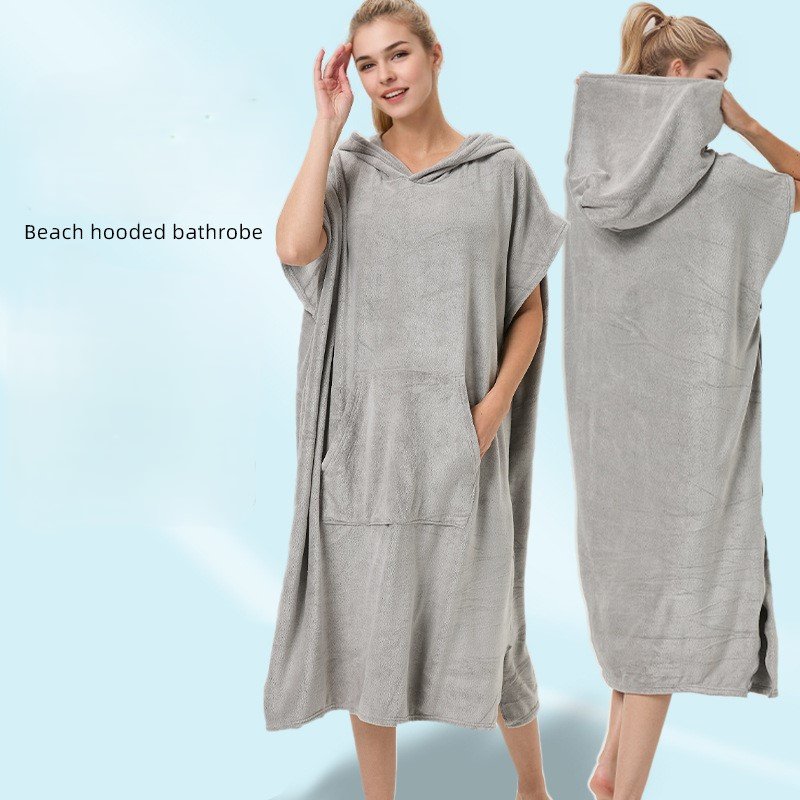
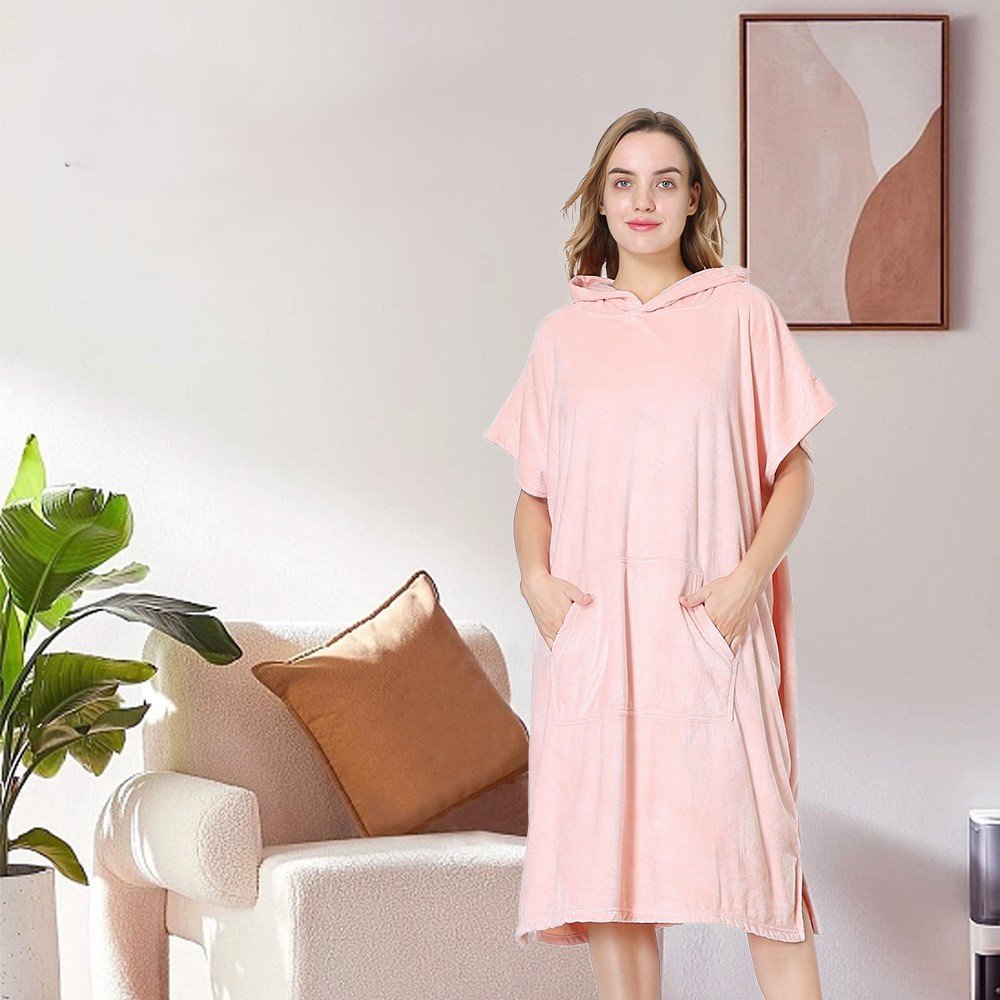
Microfiber Surf Poncho: Pros, Cons, and Best Use Cases
A microfiber surf poncho is built for speed and convenience above all else. If you want something that dries fast, packs small, and feels light to carry — microfiber is your answer. It has become extremely popular among surfers, travelers, competitive swimmers, and fitness enthusiasts in recent years.
What Exactly Is Microfiber?
Microfiber refers to ultrafine synthetic fibers that measure less than 1 dtex in thickness. To put that in perspective, they are finer than a single strand of silk. Most microfiber products use a blend of polyester and polyamide (nylon). These ultrafine fibers create a fabric that is incredibly lightweight but surprisingly effective at soaking up water.
According to Textile World, microfiber fabrics are among the most technically advanced textile constructions used in consumer products today. Their performance continues to improve with new manufacturing techniques every year.
How Does Microfiber Absorb Water?
Microfiber absorbs water differently from cotton. Instead of relying on loops and capillary action, microfiber works through its enormous number of ultrafine fibers. These fibers create millions of tiny spaces that trap water through surface tension and static charge. As a result, microfiber can absorb up to 7 times its own weight in water. Furthermore, it releases that moisture far faster than cotton — which is the key reason it dries so much quicker.
✅ Microfiber Surf Poncho Pros
- Quick dry — dries several times faster than cotton
- Very lightweight — easy to pack into any surf bag
- Compact — folds down into a small carry pouch
- Highly durable and resistant to wear over time
- Does not shrink in the washing machine
- Great for warm climates and summer surfing
- Cost-effective for bulk and wholesale buyers
❌ Microfiber Surf Poncho Cons
- Less warm than cotton in cold or windy weather
- Smooth, synthetic feel — not as plush as cotton
- Needs careful washing (never use fabric softener)
- Can feel slightly cool against skin in low temperatures
- May attract lint from cotton items in the wash
Best Use Cases for a Microfiber Surf Poncho
- Warm-weather beach trips and summer surfing sessions
- Travel and backpacking where every gram counts
- Daily surfers who need their poncho ready again the next morning
- Swimmers who need to dry off quickly between training sessions
- Yoga practitioners and outdoor fitness enthusiasts
- Businesses sourcing custom quick dry surf ponchos in bulk for retail or branding
Surf Poncho Material Comparison: Cotton vs Microfiber Side by Side
Now that we have covered each material separately, let us put them directly head to head. This detailed comparison is designed to help you make the final decision quickly and with confidence.
| Category | 🌿 Cotton Surf Poncho | ⚡ Microfiber Surf Poncho | Winner |
|---|---|---|---|
| Absorbency | Up to 25–27× its weight | Up to 7× its weight | Cotton |
| Drying Speed | Moderate — 4–8 hours | Fast — 1–2 hours | Microfiber |
| Softness & Feel | Plush, warm, luxurious | Smooth, light, slightly synthetic | Cotton |
| Packed Weight | Heavy — 500–900 g typical | Light — 200–400 g typical | Microfiber |
| Travel Convenience | Bulky — harder to pack small | Compact — fits in any bag | Microfiber |
| Warmth | Excellent — great for cold days | Moderate — better for warm days | Cotton |
| Durability | High with proper care | Very high — resists wear well | Draw |
| Eco Options | Organic cotton available | Recycled polyester available | Draw |
| Price Range | Mid to premium | Budget to mid-range | Microfiber |
| Best Overall For | Cold water, comfort, gifting | Travel, daily use, warm climates | Depends on use |
“There is no single winner between cotton and microfiber. Cotton wins on feel and warmth. Microfiber wins on speed and portability. The best surf poncho material is simply the one that matches your lifestyle and your climate.”
For sustainable options on both sides, also explore our range of recycled beach towels — available in both cotton and microfiber variants using eco-conscious materials.
What Makes a Surf Poncho Quick Dry?
Not all surf ponchos are equally fast at drying. So what actually makes a quick dry surf poncho perform the way it does? The answer comes down to three main factors working together.
1. Fiber Type
Synthetic fibers like polyester and polyamide release moisture far faster than natural fibers like cotton. Therefore, a microfiber surf poncho dries much more quickly. Cotton holds water deeper in its loops, and that moisture takes longer to fully evaporate. However, cotton still delivers fast surface drying — it just takes longer for the whole garment to air dry.
2. Fabric Thickness and GSM
GSM stands for grams per square meter. It is the standard industry measurement for how heavy and thick a fabric is. A lower GSM means a thinner, lighter, and faster-drying fabric. A higher GSM means a thicker, more absorbent, and warmer fabric — but it takes longer to dry completely. This is why a lightweight microfiber poncho at 220–300 GSM dries far faster than a heavyweight cotton terry poncho at 500+ GSM.
3. Fabric Construction
The way the fabric is woven or knitted also strongly affects drying speed. Here is a simple comparison of the most common constructions used in surf ponchos today:
| Construction Type | Typical Material | Drying Speed | Feel |
|---|---|---|---|
| Terry Loop | Cotton | Moderate | Very soft and plush |
| Waffle Weave | Cotton or blend | Faster than terry | Textured, lightweight |
| Flat Weave | Cotton, linen, or blend | Fast | Smooth and non-bulky |
| Microfiber Knit | Polyester/Polyamide | ⚡ Very fast | Smooth and lightweight |
Best GSM, Weight, and Thickness for Surf Ponchos
Choosing the right GSM is one of the most practical decisions you can make when buying or sourcing a surf poncho. Too light and it feels flimsy. Too heavy and it takes all day to dry. Here is a clear, straightforward guide:
| GSM Range | Weight Category | Drying Speed | Warmth Level | Best For |
|---|---|---|---|---|
| 200–300 GSM | Lightweight | ⚡ Very Fast | Low–Medium | Travel, warm climates, microfiber ponchos |
| 300–400 GSM | Mid-weight | Fast | Medium | Everyday use, blended material ponchos |
| 400–500 GSM | Standard Cotton | Moderate | Medium–High | Cotton ponchos for 3-season use |
| 500–600+ GSM | Heavyweight | Slow | ⭐ Very High | Cold-water surfing, premium gifting, winter use |
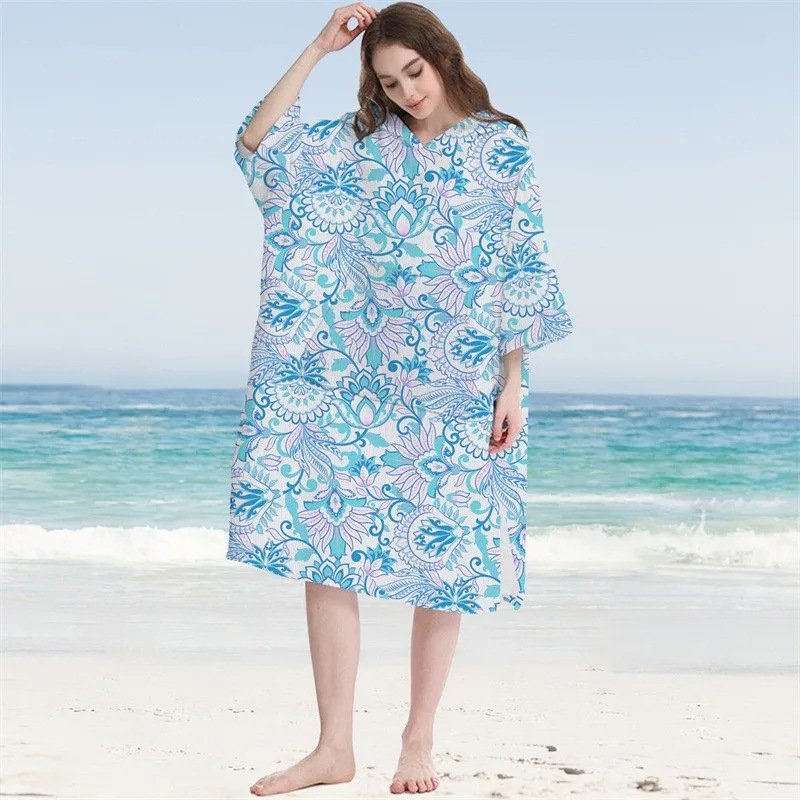
How to Choose the Right Surf Poncho Size for Men, Women, and Kids
Size matters a great deal with surf ponchos. A poncho that is too small will not give enough coverage to change comfortably underneath. One that is too large may drag on the ground and feel cumbersome. Use this simple size guide to get it right every time.
| Size | Best For | Typical Body Length | Hood Size |
|---|---|---|---|
| Kids (S) | Children ages 4–10 | 70–85 cm | Small, snug fit |
| Youth (M) | Teens and smaller adults | 85–95 cm | Medium |
| Adult (L/XL) | Most men and women | 95–110 cm | Large, comfortable |
| Oversized (XXL) | Tall adults or extra coverage | 110–125 cm | Large, extra roomy |
Additional Sizing Tips to Remember
- Hood depth matters: A deeper hood protects your head and ears from cold wind. Look for hoods that fully cover your ears.
- Sleeve style: Some ponchos have open sides for ventilation. Others have stitched sleeves for more warmth. Choose based on your climate.
- Women’s fit: Many women prefer a longer body length (100–112 cm) for better coverage and modesty when changing on a busy beach.
- Kids’ sizing: For young children, a slightly oversized fit is often intentional — it means the poncho will last longer as they grow.
- Custom sizing: If you are placing a wholesale or OEM order, custom sizing is always an option at Favor Houseware.
Which Surf Poncho Is Better for Cold Weather and Wind?
If you surf or swim in colder conditions, warmth is your absolute top priority. In this case, a cotton surf poncho wins almost every time — and here is the clear reason why.
Cotton traps warm air between its thick terry loops. This creates a natural insulating layer all around your body. Furthermore, cotton’s high absorbency means it pulls moisture away from your skin immediately — helping your body maintain heat far more effectively. A thick cotton poncho at 450–600 GSM can genuinely feel like wrapping yourself in a warm blanket fresh from the dryer.
Microfiber, on the other hand, is much thinner and does not trap warm air nearly as well. Therefore, it is simply not the best choice when outdoor temperatures drop below 15°C (59°F).
- Choose a cotton terry poncho at 450 GSM or above for autumn and winter surfing.
- Look for a deep hood with a drawstring for maximum wind protection on exposed beaches.
- For extreme cold, consider a full-coverage surf change robe — these offer even greater warmth and coverage than a standard poncho.
- Wear a thin thermal layer underneath for extra insulation in very cold climates.
According to Surfer Today, staying warm after a cold-water session is one of the most overlooked aspects of surfer safety and performance. The right changing poncho is a key part of that routine.
How to Wash and Care for Your Surf Poncho
Taking care of your surf poncho properly will keep it performing well for many years. However, cotton and microfiber ponchos need slightly different care routines. Follow these tips to protect your investment and maintain top performance.
Cotton Surf Poncho Care Tips
- Machine wash on a gentle or normal cycle with cool to warm water — maximum 40°C
- Use a mild, gentle detergent — avoid bleach to protect the cotton fibers and colors
- Tumble dry on low heat, or air dry flat to prevent any shrinking
- Avoid ironing at high temperatures, as this can damage the soft terry loops over time
- Wash separately from items with zippers or Velcro that could snag and pull the loops
- Shake out while still slightly damp to restore the fluffy softness of the terry pile
Microfiber Surf Poncho Care Tips
- Machine wash on a gentle cycle with cold water for best results and longevity
- Never use fabric softener — it coats the ultrafine fibers and destroys absorbency permanently
- Avoid washing together with cotton items that produce lint — microfiber traps lint very easily
- Tumble dry on low or no heat — high heat will permanently damage the synthetic fibers
- Skip dryer sheets for the exact same reason as fabric softener
- Air dry whenever possible for maximum fiber lifespan and best long-term performance
Surf Poncho Buying Guide for Surfers, Swimmers, and Travelers
Ready to choose your surf poncho? Before you place an order, use this practical checklist to make sure you are selecting exactly the right one. This checklist applies equally whether you are buying for personal use, retail stocking, or wholesale sourcing.
The Complete Surf Poncho Buying Checklist
- Choose your material: Cotton for warmth and comfort; microfiber for quick dry and portability; blend for balance
- Check the GSM: 300–400 GSM for everyday use; 450–600 GSM for cold weather; 200–300 GSM for travel
- Confirm your size: Use the size guide above to choose the right body length and hood depth for your body type
- Look for a kangaroo pocket: A front pocket adds real convenience for keys, phones, and wax while changing
- Check for thumb loops: These keep the sleeves in place and give you full hand coverage while you change
- Evaluate the hood style: Deep hoods with drawstrings offer far better wind and cold protection at the beach
- Review the care instructions: Make sure the poncho fits your washing habits and care routine
- For wholesale buyers: Ask about minimum order quantity, custom GSM options, logo printing, and lead times
- Verify certifications: OEKO-TEX, BSCI, and SGS certifications confirm safety and ethical production standards
Also, consider exploring our collection of recycled beach towels if eco-friendly materials are important to your brand or your customers. Sustainability is now a key purchasing factor for a growing segment of beach and surf consumers worldwide.
Why Buy a Surf Poncho from a Trusted Manufacturer?
When you source a surf poncho — especially for retail, wholesale, or custom private-label branding — the manufacturer you choose makes all the difference. Working directly with a verified factory gives you better quality control, more material and size options, and significantly lower per-unit costs compared to buying through agents or resellers.
Favor Houseware Co., Ltd. is a certified beach towel and surf poncho manufacturer based in Yiwu, Zhejiang Province, China. With over 15 years of manufacturing experience, we specialize in custom and wholesale surf ponchos, beach towels, and changing robes for global markets across North America, Europe, and Australia.
Custom GSM and Material Options
At Favor Houseware, we offer full flexibility on surf poncho material and GSM. Whether you need a lightweight microfiber surf poncho at 280 GSM or a thick, premium cotton surf poncho at 550 GSM, we can produce it exactly to your specifications. We also offer blended constructions that intelligently combine cotton warmth with microfiber drying speed — a great option for brands targeting a broad market range.
Cotton, Microfiber, and Blended Constructions Available
Our surf poncho range currently includes the following material options for OEM and wholesale buyers:
- 100% Cotton Terry surf ponchos — standard and certified organic options available
- 100% Microfiber surf ponchos — polyester/polyamide blend for quick dry performance
- Cotton-polyester blended ponchos — balanced performance and drying speed
- Waffle weave cotton constructions — faster drying while maintaining a premium feel
- Digital-printed and embroidered designs — full custom branding for any market
Explore our full range of surf poncho towels and surf change robes. For premium Turkish-style options, our Turkish hammam towels are also a popular complementary product for beach and spa brands.
Bulk and Private Label Orders
We proudly support businesses of all sizes at every stage of growth. Our MOQ starts from just 100 pieces, making us accessible for small brands, startup retailers, and boutique surf shops. Furthermore, we offer no MOQ for digital printing — so you can add your logo and custom artwork without committing to large volumes upfront. For larger wholesale orders, we offer competitive factory pricing with fast, reliable turnaround times and direct shipping worldwide from our Yiwu factory.
15+ Years Experience
Trusted surf poncho and beach towel manufacturer since 2010
Custom Design
Digital printing with no MOQ — your brand, your colors, your design
Low MOQ
Orders starting from just 100 pieces across all product types
Eco-Friendly
Organic cotton and recycled fiber options for sustainability-focused brands
Certified Quality
BSCI, OEKO-TEX 100, SGS, and FDA certified production facility
Fast Global Shipping
Stock available for quick worldwide delivery from Yiwu, Zhejiang, China
Frequently Asked Questions About Surf Ponchos
Still have questions? Below are the most common questions people ask about surf ponchos, surf poncho materials, and how to choose the right one. These answers are designed to be clear, honest, and useful for both first-time buyers and wholesale sourcing professionals.
Conclusion: Find the Perfect Surf Poncho for Your Needs
By now, you have everything you need to make a smart, confident decision about surf ponchos. Let us quickly recap the most important points from this complete guide.
- A surf poncho is far more versatile than a flat beach towel — it dries you, keeps you warm, and protects your privacy all in one wearable garment.
- A cotton surf poncho is the best choice for softness, warmth, and a premium plush feel — especially in cold or windy conditions.
- A microfiber surf poncho is the top pick for quick drying, lightweight packing, and daily or travel convenience.
- The right surf poncho material depends on your climate, your surfing frequency, and your personal comfort preferences.
- For the fastest drying performance, choose a quick dry surf poncho made from microfiber or a lightweight cotton blend at 200–380 GSM.
- Always check size, GSM, hood style, construction, and certifications before you buy — or before you place a wholesale order.
Whether you are a daily surfer, a parent buying for your kids, a competitive swimmer, or a business looking to source custom ponchos in bulk — there is a surf poncho that is perfectly matched to your needs. The key is simply knowing what to look for, and choosing a manufacturer who can deliver on every specification.
At Favor Houseware Co., Ltd., we have spent over 15 years manufacturing premium beach towels and surf ponchos for global brands and businesses. We offer complete flexibility on material, GSM, size, construction, and custom branding — all from a certified, experienced manufacturing facility in Yiwu, China.
For more helpful guides and product inspiration, visit our blog. To get in touch directly, head to our contact page — our team responds quickly and free samples are always available.
Ready to Order Your Custom Surf Poncho?
Get high-quality cotton and microfiber surf ponchos with custom sizes, colors, GSM, and branding. MOQ from just 100 pieces. Free samples available — you only pay the freight.
🏄 Shop Surf Ponchos 📩 Request a Free SampleViews: 25