Cotton vs Microfiber Surf Poncho: Best Material, GSM & Quick-Dry Guide (2026)
Picking the right surf poncho can feel confusing. There are so many materials, sizes, and GSM numbers out there. But don’t worry — this guide breaks it all down simply. Whether you surf in cold water or travel to warm beaches, you’ll know exactly which poncho is best for you after reading this.
First, here is a quick comparison table so you can get the most important answer right away.
⚡ Quick Answer: Cotton vs Microfiber Surf Poncho
| Feature | Cotton Surf Poncho | Microfiber Surf Poncho |
|---|---|---|
| Absorbency | Very high — holds more water overall | High — absorbs fast but holds less total water |
| Drying Speed | Slow — stays damp longer | Several times faster than cotton |
| Skin Feel | Soft, plush, cozy, warm | Smooth, lightweight, less fluffy |
| Typical GSM | ~330 GSM | ~280 GSM |
| Travel-Friendly | Moderate — heavier when wet | Excellent — light and compact |
| Sand Behavior | Loops trap sand easily | Tighter weave releases sand more easily |
| Eco-Friendliness | Natural fiber; organic cotton available | Synthetic, but recycled options are growing |
| Best For | Cold water, comfort, post-surf warmth | Travel, warm climates, quick sessions |
📊 Surf Poncho Market Snapshot (2024–2033)
The surf poncho industry is growing fast. Here is a quick look at the numbers so you understand just how big this market really is.
| Metric | Value |
|---|---|
| Global surf poncho market size (2024) | $0.85 billion USD |
| Forecast market size (2033) | $1.52 billion USD |
| Annual growth rate (CAGR) | 6.4% |
| Online sales share (2024) | >45% |
| North America market share (2024) | ~38% |
| Fastest-growing region | Asia-Pacific — 8.1% CAGR |
As you can see, the market is growing steadily. Therefore, whether you are a buyer or a business, now is a great time to understand surf poncho materials better.
1. What Is a Surf Poncho and Why Do Surfers Use It?
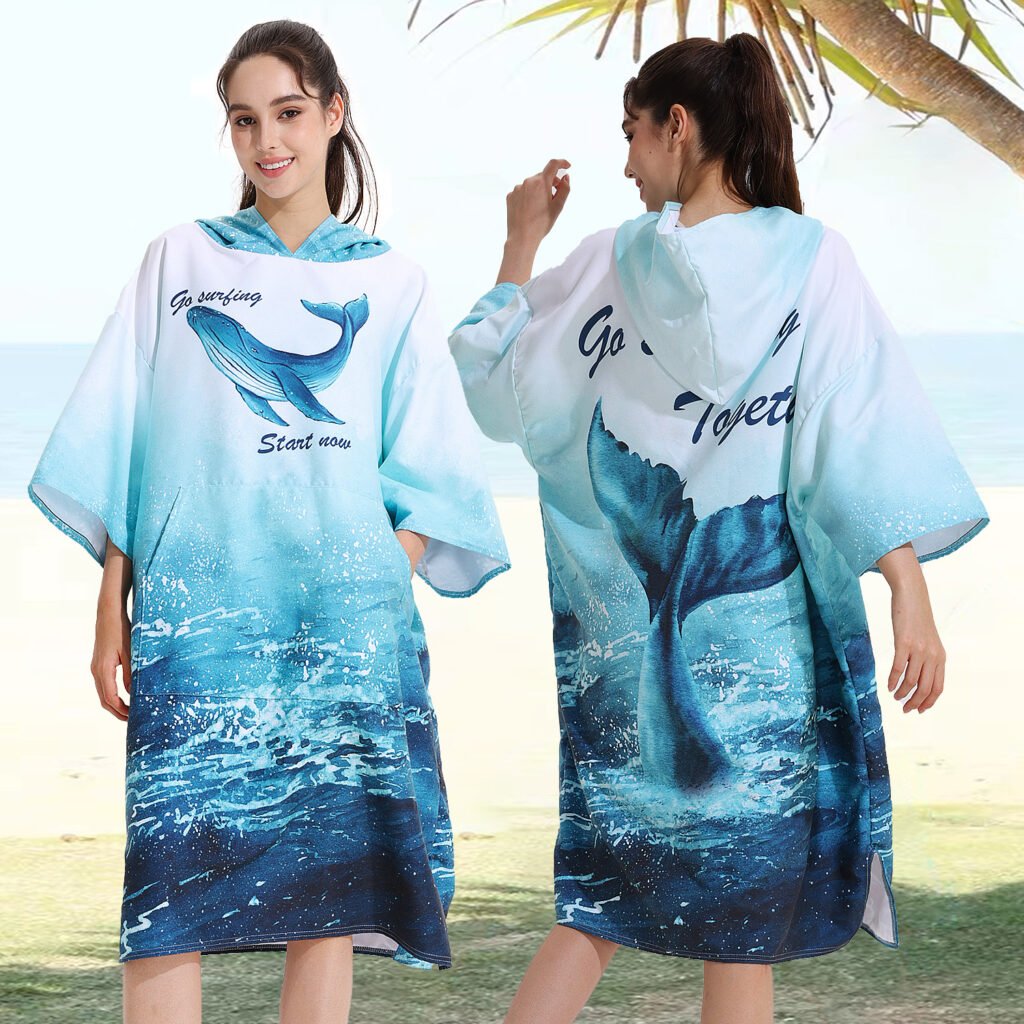
A surf poncho is a large, hooded towel-robe that surfers wear after coming out of the water. It looks like a poncho but works like a towel. Most importantly, it does three jobs at once:
- 🏄 Dries your body quickly after a surf session
- 👕 Gives you privacy while you change clothes on the beach or in a car park
- 🧥 Keeps you warm after cold water sessions
In addition to surfing, people also use surf ponchos for swimming, camping, music festivals, beach trips, and even hiking. Furthermore, they are much more convenient than carrying a regular towel and trying to change in public.
“A surf poncho combines three functions in one: changing robe, towel, and light jacket — making it the ultimate post-surf essential.”
Are Surf Ponchos Worth It Compared to a Normal Towel?
Yes, absolutely. A normal towel only dries you. A surf poncho, however, also covers your body for private changing and keeps you warm. Most surfers and swimmers find it a huge upgrade over carrying a regular towel, especially for frequent beach-goers.
👉 Browse our full range of surf poncho towels and surf change robes at Favor Houseware.
2. Main Surf Poncho Materials: Cotton vs Microfiber vs Blends
When you shop for a surf poncho, you will mostly see three types of surf poncho material. Each one feels different and performs differently. Let’s quickly introduce all three.
- Cotton: A natural fiber. Soft, warm, and very absorbent. Great for comfort and cold conditions.
- Microfiber: A synthetic material made from very fine polyester threads. It dries much faster and is lighter and more compact.
- Blends (Cotton + Microfiber): A mix of both. These try to combine the best of cotton’s softness with microfiber’s quick-dry ability. For example, some ponchos have a recycled polyester outside and a soft cotton inside, totaling around 400 GSM.
So, why does the surf poncho material choice matter so much? Simply put, the material controls how fast you dry, how warm you feel, how easy the poncho is to travel with, and how long it lasts. Therefore, choosing the right material is the most important decision you will make when buying a surf poncho.
For a deeper look at microfiber options, check out our microfiber towel collection.
3. Cotton Surf Poncho: Key Features, Pros and Cons
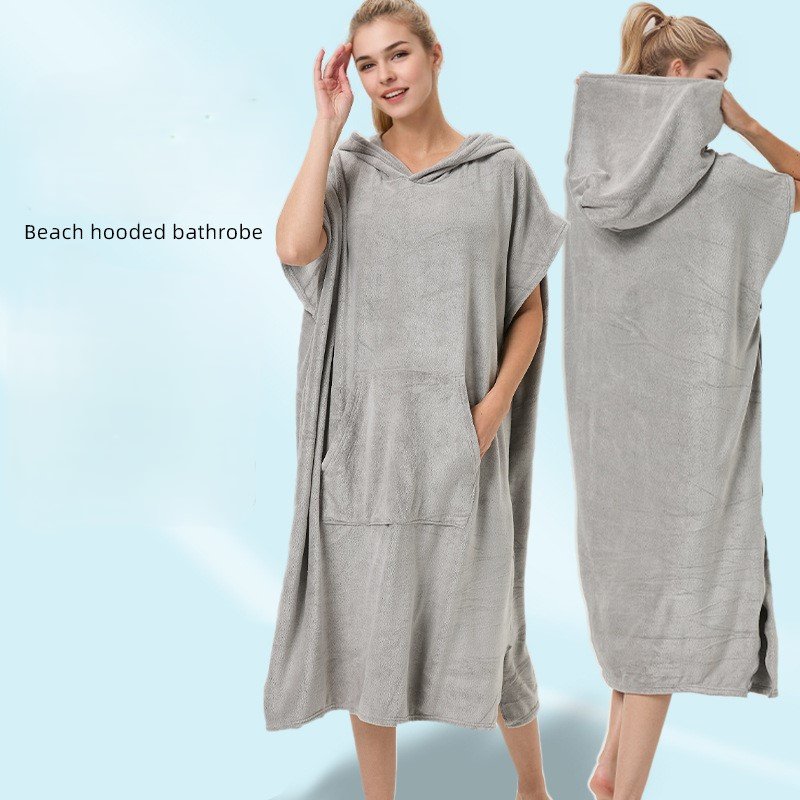
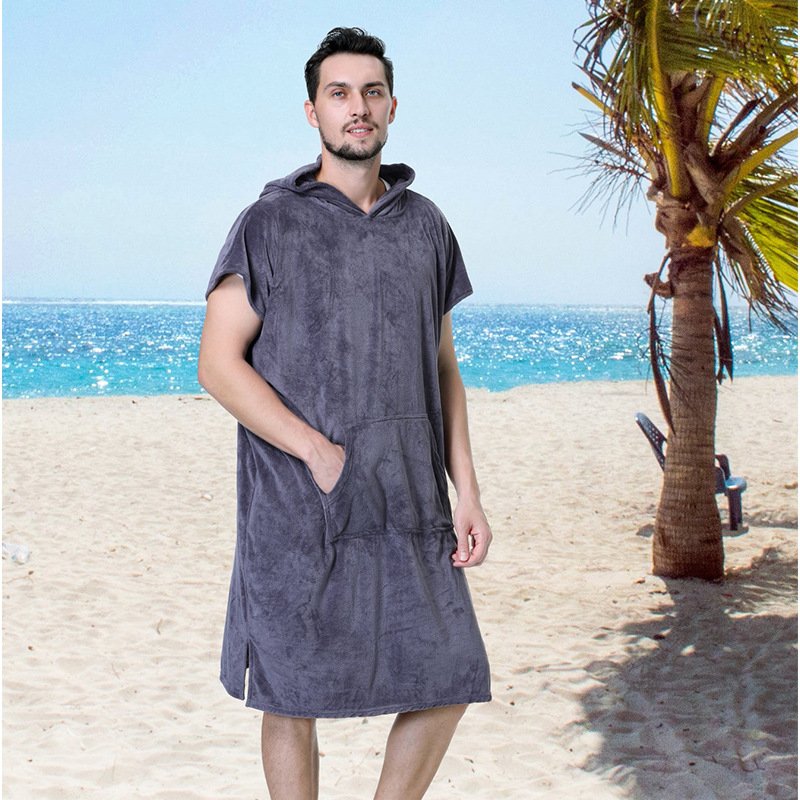
A cotton surf poncho is the classic choice for surfers. It is made from natural cotton fibers, which are naturally soft and very good at soaking up water. Many surfers say wearing a cotton poncho after a cold surf session feels like being wrapped in a warm hug.
Key Features of a Cotton Surf Poncho
- Usually made from 100% cotton terrycloth or looped cotton fabric
- Typical GSM is around 330 GSM — giving a warm, premium feel
- Very high total water absorbency — holds more moisture than microfiber
- Heavier and bulkier, especially when wet
- Natural fiber — often available in organic cotton versions
✅ Pros of a Cotton Surf Poncho
- Extremely soft and cozy on skin
- High absorbency — leaves you feeling very dry
- Warm after cold water sessions
- Eco-friendly when made with organic cotton
- Feels luxurious, like a high-quality bathrobe
❌ Cons of a Cotton Surf Poncho
- Dries slowly — can stay damp for a long time
- Heavier and bulkier to carry, especially when wet
- Cotton loops can trap sand easily
- Takes up more space in a bag or backpack
Are Cotton Surf Ponchos More Absorbent?
Yes. Cotton surf ponchos generally hold more total water than microfiber ones. This means you feel drier and cozier after use. Many surfers in cooler climates specifically prefer a cotton surf poncho for this reason. However, the trade-off is that the poncho itself takes longer to dry out afterward.
Looking for premium cotton options? Explore our cotton beach towel manufacturing capabilities, or check out our Turkish hammam towels for similar premium cotton feel.
4. Microfiber Surf Poncho: Key Features, Pros and Cons
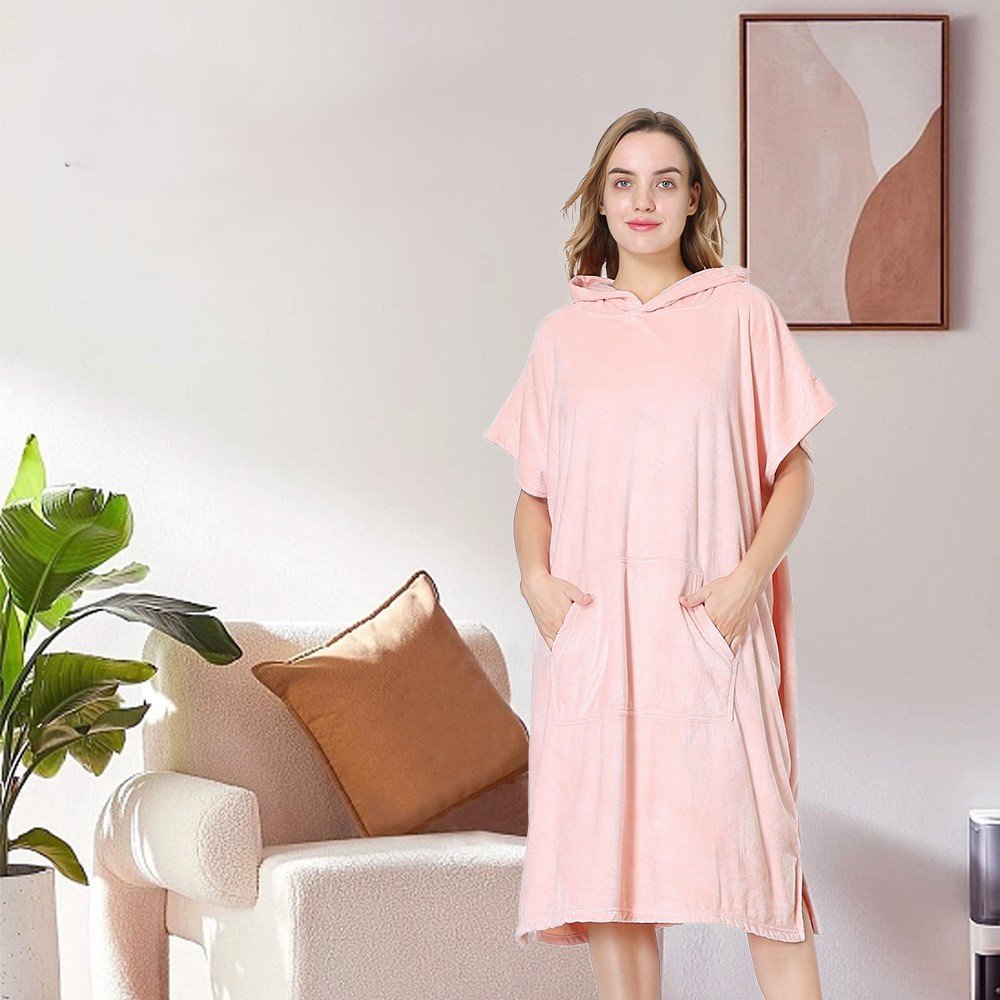
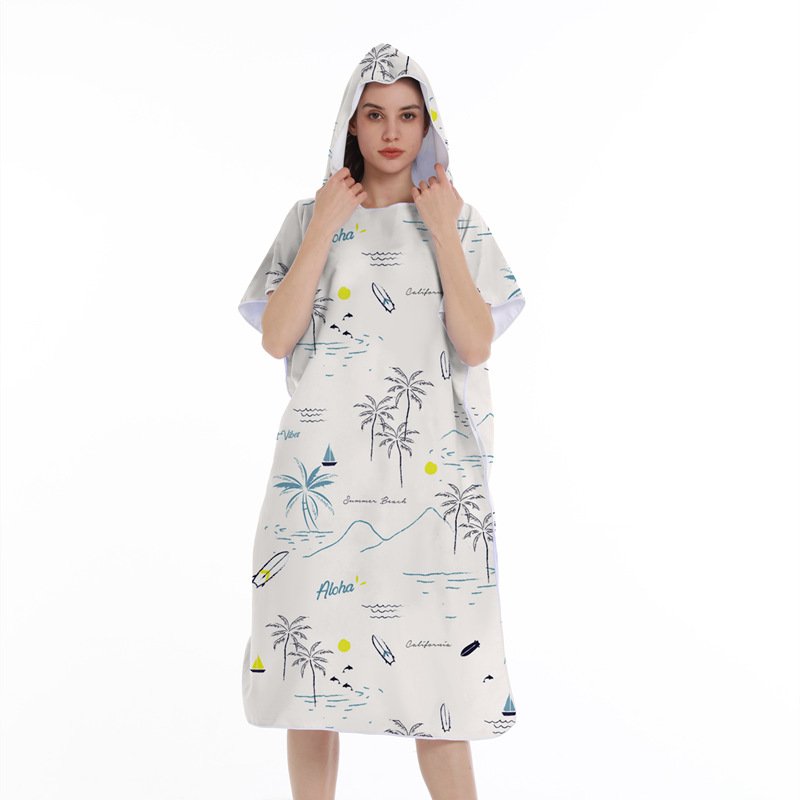
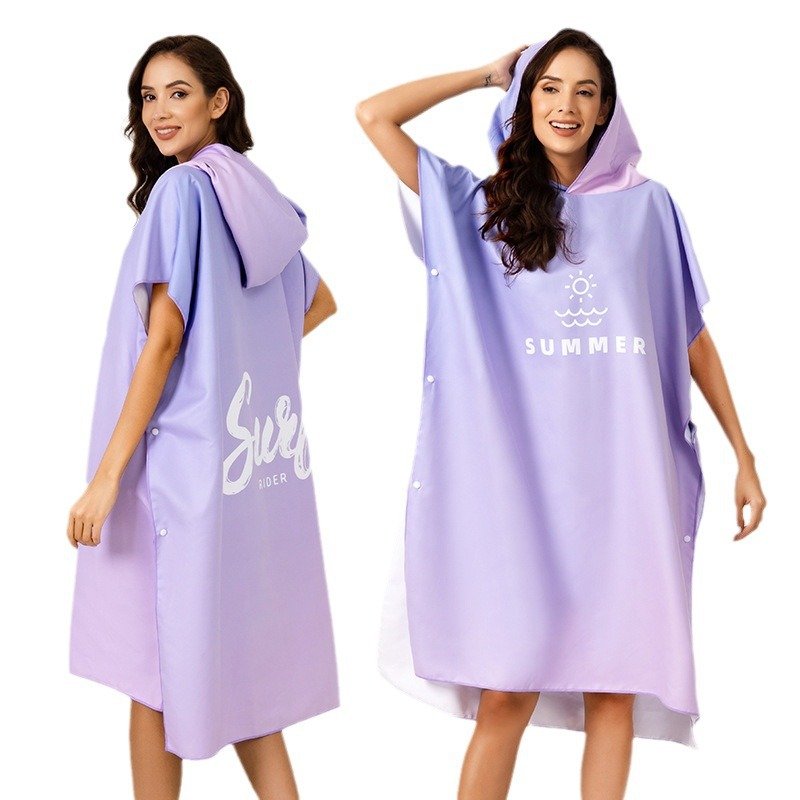
A microfiber surf poncho is the modern, performance-focused choice. It is made from extremely fine synthetic fibers, usually polyester. These tiny fibers are designed to absorb water quickly and then release it fast — which is why microfiber is the top pick for quick-dry performance.
Interestingly, the global microfiber towel market was valued at around $1.62 billion USD in 2024 and is growing at a 6.7% CAGR. This shows just how popular microfiber products have become worldwide.
Key Features of a Microfiber Surf Poncho
- Made from ultra-fine polyester or polyester-blend fibers
- Typical GSM around 280 GSM — lighter and faster-drying
- Dries several times faster than cotton ponchos
- Lightweight and compact — perfect for travel bags
- Tighter weave releases sand more easily than cotton loops
✅ Pros of a Microfiber Surf Poncho
- Dries very quickly — ideal for back-to-back surf sessions
- Lightweight and packable — takes up very little bag space
- Less sand gets stuck in the tighter weave
- Great for warm climates, van life, and travel
- Often available in recycled polyester — better for the environment
❌ Cons of a Microfiber Surf Poncho
- Feels less soft and cozy compared to cotton
- Lower total water capacity than cotton
- Some people find the smooth texture less comfortable on skin
- Made from synthetic plastic-based fibers (unless recycled)
Do Microfiber Surf Ponchos Dry Faster Than Cotton?
Yes — significantly faster. Microfiber fibers release moisture quickly instead of holding water in loops like cotton does. This is exactly why quick-dry surf ponchos marketed for travel and surfing are almost always made from microfiber or microfiber-rich blends. For frequent surfers or travelers, this speed is a huge practical advantage.
See our full microfiber towel catalog for available styles, colors, and custom options.
5. Quick-Dry Surf Poncho: How Material and GSM Affect Drying Speed
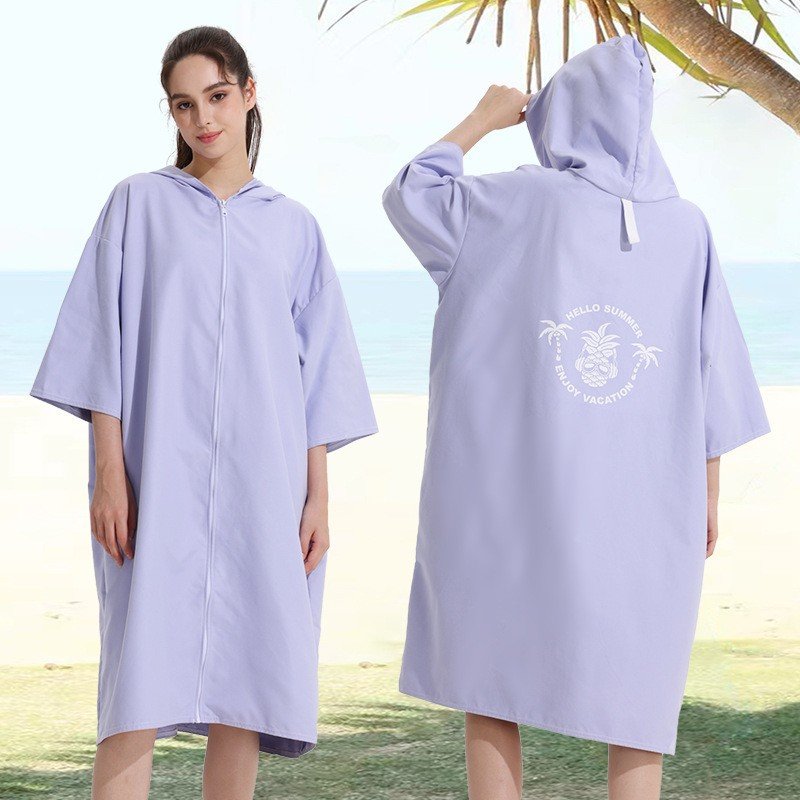
When people search for a quick-dry surf poncho, they usually want two things: a poncho that dries their body fast AND a poncho that dries itself fast afterward. Both of these things are controlled by material type and GSM.
What Is GSM?
GSM stands for Grams per Square Meter. It measures how thick and heavy the fabric is. Think of it like this: a higher GSM means thicker and more absorbent fabric, while a lower GSM means lighter and faster-drying fabric.
Recommended GSM for Surf Ponchos
| GSM Range | Material | Performance | Best For |
|---|---|---|---|
| ~280 GSM | Microfiber | Fastest drying, lightest weight | Travel, warm climates, daily use |
| ~330 GSM | Cotton | High absorbency, warmer feel | Cold water surfing, premium comfort |
| 400 GSM | Dual-face blend | Balanced — absorbent + moderate dry speed | All-round use, custom branded ponchos |
| 400–600 GSM | Cotton or blends | Most plush and absorbent | Premium hotel, spa, luxury gifting |
What About Dual-Face Ponchos?
A popular modern design is the dual-face surf poncho. This type has two different layers working together. For example:
- Outside layer: 100% recycled microfiber polyester — fast-drying, printable for custom branding
- Inside layer: 100% cotton — soft, warm, and absorbent against your skin
- Total GSM: Around 400 GSM
This combination, therefore, gives you the best of both worlds — quick drying on the outside and cozy cotton comfort on the inside.
What GSM Is Best for a Surf Poncho?
For most surfers, a GSM between 280–400 is the sweet spot. Microfiber ponchos at ~280 GSM are the lightest and quickest-drying. Cotton ponchos at ~330 GSM offer more warmth and absorbency. Blended ponchos at 400 GSM give a great all-round balance. Anything above 400 GSM starts to feel very luxurious but takes longer to dry.
6. Which Surf Poncho Material Is Best for Different Use Scenarios?
Not all surfers are the same. Therefore, the best surf poncho material really depends on how and where you use it. Here is a simple guide to help you decide.
| Use Scenario | Best Material | Recommended GSM | Why? |
|---|---|---|---|
| 🌊 Cold water surfing | Cotton | 330–400 GSM | Warmth and absorbency are the top priority |
| ✈️ Travel / van life | Microfiber | ~280 GSM | Lightweight, packable, dries fast |
| ☀️ Warm beach / summer use | Microfiber or blend | 280–330 GSM | Fast drying, no heavy wet poncho to carry |
| 🌿 Eco-conscious buyers | Organic cotton or recycled microfiber | 300–400 GSM | Sustainable materials without sacrificing performance |
| 👶 Kids ponchos | Cotton or cotton blend | 300–350 GSM | Soft against sensitive skin; warm and safe |
| 🏪 Custom branded / wholesale | Dual-face blend | ~400 GSM | Great printability on microfiber outer + cotton comfort inside |
Pro tip for brands and retailers: More than 45% of all surf poncho sales globally happen online. This means a product that photographs well and has strong material specs in the description will outperform competitors on e-commerce platforms.
At Favor Houseware Co., Ltd., we produce all three material types — 100% cotton, 100% microfiber, and dual-face cotton/microfiber blends — at GSM ranges from 280 to 400+. Whether you are building a surf brand, stocking a retail store, or sourcing wholesale ponchos, we can match the right material to your customer’s exact use case.
👉 Browse our surf poncho towel range or contact us for a custom quote.
7. Ideal GSM and Size for Comfortable Changing
Beyond material, size matters a lot when you need to change privately. After all, a poncho that is too short won’t cover you properly when you try to pull off a wetsuit or change into dry clothes.
Recommended Surf Poncho Size (Adults)
- Width: Around 80 cm is standard for most adults
- Length: Around 110–115 cm works well for most adult heights
- Rule of thumb: Always choose a poncho that is slightly too long rather than too short — extra length gives you more coverage and privacy when changing
- Taller or plus-size users: Look for XL or extended-length versions (120 cm+)
Size by User Type
| User | Recommended Length | Recommended Width |
|---|---|---|
| Small child (2–5 yrs) | 55–65 cm | 55–60 cm |
| Older child (6–12 yrs) | 70–90 cm | 65–75 cm |
| Standard adult | 110–115 cm | 75–80 cm |
| Tall / plus-size adult | 120 cm+ | 85–90 cm |
Additionally, a good surf poncho should have a deep hood to help you stay warm and a kangaroo pocket at the front for keeping your phone, keys, or wax dry while you change.
8. Sustainability: Organic Cotton, Recycled Microfiber & Eco Trends
More and more surfers and brands care deeply about the environment. Fortunately, the surf poncho industry is responding with better, more sustainable material options. Here is what you need to know.
Organic Cotton Surf Ponchos
Regular cotton is a natural fiber, which already makes it a more eco-friendly choice than synthetic materials. However, organic cotton goes one step further. It is grown without harmful pesticides, uses less water, and is gentler on farming communities. If sustainability is important to you or your customers, look for GOTS-certified organic cotton surf ponchos.
Recycled Microfiber (rPET) Surf Ponchos
Standard microfiber is made from virgin polyester — a plastic-based synthetic material. However, the industry is shifting fast. Recycled polyester microfiber (also called rPET) is made from recycled plastic bottles and old fabrics. This material performs just as well as virgin microfiber but has a much lower environmental impact. At Favor Houseware, we already offer recycled microfiber options for brands that want to go green.
Trending Sustainable Materials
- 🌿 Organic cotton — pesticide-free, GOTS certified
- ♻️ Recycled polyester (rPET) — made from plastic bottles
- 🎋 Bamboo-cotton blends — naturally antibacterial, soft, and sustainable
- 🌊 Ocean plastic microfiber — made from recovered ocean waste
Is Microfiber Environmentally Friendly Compared to Cotton?
Standard microfiber is synthetic and made from petrochemicals, which makes it less eco-friendly than natural cotton. However, recycled microfiber is changing this. When made from rPET, microfiber has a much smaller carbon footprint. Furthermore, demand for recycled polyester surf ponchos is rising quickly, especially among European and North American eco-conscious brands. On the other hand, organic cotton remains the gold standard for natural, biodegradable surf poncho material.
For further reading on sustainable textile manufacturing trends, visit Textile World — a leading industry resource for fabric and fiber news.
9. Global Market Trends for Surf Ponchos and Microfiber Towels
Understanding the market helps both buyers and businesses make smarter decisions. So, here is a deeper look at the numbers behind surf poncho and microfiber towel growth.
Surf Poncho Market Growth
As shown earlier, the global surf poncho market was worth around $0.85 billion USD in 2024 and is projected to reach $1.52 billion USD by 2033. This represents a steady 6.4% annual growth rate (CAGR). Key growth drivers include:
- Rising interest in watersports and outdoor activities globally
- Growth of e-commerce — over 45% of surf poncho sales now happen online
- Increasing demand for multi-functional products that combine towel, robe, and changing cover
- Sustainability trends pushing demand for organic and recycled options
Microfiber Towel Market Growth
| Market | 2024 Value | Forecast | CAGR |
|---|---|---|---|
| Global microfiber towel market | $1.62 billion USD | Growing strongly | 6.7% |
| Global polyester microfiber market | $16.51 billion USD | $29.23 billion by 2031 | 8.5% |
| Surf poncho towel market | $0.85 billion USD | $1.52 billion by 2033 | 6.4% |
Regional Highlights
- 🌎 North America holds around 38% of global market value in 2024 — the largest single region
- 🌏 Asia-Pacific is the fastest-growing region at 8.1% CAGR to 2033 — driven by growing beach tourism and outdoor culture
- 🌍 Europe remains a strong market, especially for premium cotton and eco-friendly surf ponchos
For brands and retailers, these trends point clearly in one direction: invest in both cotton and microfiber options, ensure strong online presence, and include eco-friendly variants to capture the fastest-growing customer segments.
10. How to Choose the Right Surf Poncho for Your Customers
If you are a retailer, surf school, brand, or wholesale buyer, choosing the right surf poncho for your customers means thinking about their lifestyle and needs first. Here is a simple decision framework to help.
Step-by-Step Decision Guide
- Where do your customers surf or swim?
- Cold water (UK, Ireland, Pacific Northwest, New Zealand) → Choose cotton, 330+ GSM
- Warm water (Australia, California, Southeast Asia) → Choose microfiber, ~280 GSM
- How often do they use it?
- Daily surfers or van lifers → Quick-dry microfiber is essential
- Occasional beachgoers → Cotton comfort is a great treat
- Do they travel frequently?
- Yes → Microfiber or blend at 280–330 GSM — lightweight and packable
- No → Either material works fine
- Is sustainability a brand value?
- Yes → Organic cotton or recycled microfiber (rPET)
- Do you need custom branding or printing?
- Yes → Dual-face blend ponchos with microfiber outer are the best canvas for digital printing
Buying for a surf school or retail brand? Favor Houseware Co., Ltd. supports orders starting from just 100 pieces MOQ with full custom branding, a wide material choice, and OEKO-TEX 100, BSCI, and SGS certifications. Request a free sample today — you only pay freight.
With 15 years of experience as a qualified beach towel and poncho manufacturer based in Yiwu, China, Favor Houseware has served wholesale buyers, surf brands, and corporate clients across North America, Europe, and Asia-Pacific. Our factory handles everything in-house: weaving, printing, cutting, sewing, inspecting, packing, and fast global shipping.
👉 Visit our beach towel manufacturer page to learn more about our production capabilities.
11. Care and Washing Tips for Cotton and Microfiber Surf Ponchos
Taking good care of your surf poncho means it will last much longer. Luckily, caring for both cotton and microfiber is simple — as long as you follow a few important rules.
Cotton Surf Poncho Care Tips
- ✅ Machine wash in warm water (30–40°C)
- ✅ Use a gentle, mild detergent — avoid harsh bleach
- ✅ Tumble dry on low heat or hang to air dry
- ✅ Shake well before drying to keep the cotton loops fluffy
- ❌ Avoid high heat — it can shrink cotton and damage fibers
- ❌ Do not use fabric softener too often — it can reduce absorbency over time
Microfiber Surf Poncho Care Tips
- ✅ Machine wash in cool or warm water (30°C)
- ✅ Use a liquid detergent — powder detergent can clog microfiber pores
- ✅ Air dry whenever possible — microfiber dries very quickly on its own
- ✅ Hang up to dry immediately after use for best quick-dry results
- ❌ Avoid fabric softener completely — it coats microfiber and destroys its quick-dry ability
- ❌ Do not wash with cotton towels — cotton lint will clog microfiber fibers
- ❌ Avoid high heat in the dryer — it can melt or damage synthetic fibers
Common Mistakes to Avoid
| Mistake | Cotton Poncho | Microfiber Poncho |
|---|---|---|
| Using fabric softener | Reduces absorbency | Destroys quick-dry performance |
| Washing on high heat | Causes shrinkage | Damages synthetic fibers |
| Leaving wet and balled up | Mildew smell builds up | Mildew smell builds up |
| Drying with lint-producing fabrics | No major issue | Lint clogs microfiber pores |
For additional care guidance on microfiber products, Good Housekeeping’s microfiber washing guide is a helpful external resource.
12. Custom Logo & OEM Options from a China Surf Poncho Manufacturer
If you are building a surf brand, launching a retail line, or sourcing wholesale ponchos for a business, working with a trusted China surf poncho manufacturer is the most cost-effective way to get high-quality, custom products at scale.
Why Choose a China Manufacturer for Surf Ponchos?
Favor Houseware Co., Ltd. is a BSCI, OEKO-TEX 100, SGS, and FDA certified manufacturer based in Yiwu, Zhejiang Province, China, with 15 years of experience. Here is what makes us different from other suppliers:
- 🎨 Full custom design — your logo, colors, patterns, and labels
- 🖨️ Digital printing with no MOQ — even small orders can have full-color custom prints
- 🔢 Low MOQ starting from 100 pieces — supports small brands and growing businesses
- 🌿 Sustainable material options — organic cotton, recycled microfiber (rPET), bamboo blends
- 📏 Full GSM range — from lightweight 280 GSM microfiber to plush 400+ GSM cotton blends
- 🏭 In-house production — weaving, printing, cutting, sewing, inspecting, packing, and shipping all done in our own factory
- ✅ Strict quality control — every batch inspected before packing
- 🚢 Fast global shipping — stock available for quick delivery worldwide
- 🆓 Free samples — pay freight only, no sample cost
Our OEM Surf Poncho Material Options
| Material | GSM Range | Best For | Eco Option |
|---|---|---|---|
| 100% Cotton | 300–400 GSM | Premium comfort, cold-water surf brands | Organic cotton available |
| 100% Microfiber | 250–320 GSM | Travel brands, e-commerce, quick-dry focus | Recycled rPET available |
| Dual-Face Blend | 380–420 GSM | Custom branded ponchos, premium wholesale | Recycled outer + organic cotton inner |
We also produce a wide range of related products, including surf change robes, recycled beach towels, Turkish hammam towels, and microfiber towels — making us your one-stop partner for all beach textile needs.
For more insight into how Chinese manufacturers operate and what to look for in a supplier, TXM’s China manufacturing case studies offer useful real-world examples.
Frequently Asked Questions About Surf Ponchos
Q: What is the best material for a surf poncho?
For warmth and comfort, cotton (300–400 GSM) is the top choice, especially for cold-water surfing. For fast-drying performance and travel, microfiber is widely recommended because it dries several times faster and packs much smaller. A dual-face blend gives the best of both worlds.
Q: What size surf poncho should I choose?
For most adults, a poncho that is around 80 cm wide and 110–115 cm long works well. Always choose a poncho that is slightly too long rather than too short — extra length gives you more coverage and privacy when changing. Taller users should look for XL or 120 cm+ options.
Q: Can I use a surf poncho as a towel or robe at home?
Yes, absolutely. Surf ponchos work great as towels, simple robes, or warm capes at home, at the pool, or while camping. Quick-dry microfiber ponchos are especially convenient for travel and gym use, while cotton ponchos feel more like a comfortable bathrobe at home.
Q: What surf poncho materials are trending right now?
Currently, the biggest trends are organic cotton, recycled polyester microfiber (rPET), and bamboo blends. These align with growing consumer demand for sustainable beach products. At the same time, microfiber remains dominant for performance and quick-dry markets.
Q: What are typical use cases for quick-dry surf ponchos?
Common uses include surfing, swimming, beach trips, camping, hiking, music festivals, and gym use. Quick-dry microfiber surf ponchos are particularly popular for surfers, swimmers, and frequent travelers because they pack small but still dry you off quickly after use.
Conclusion: Find Your Perfect Surf Poncho Material
To sum everything up: both cotton surf ponchos and microfiber surf ponchos have real strengths. Cotton wins on softness, absorbency, and warmth — making it perfect for cold-water surfers and comfort seekers. Microfiber wins on drying speed, weight, and packability — making it ideal for travelers, warm climates, and frequent surfers. And blended ponchos give you a great mix of both.
When choosing the right surf poncho, always consider:
- ✅ Where and how often you surf (climate, session frequency)
- ✅ How important quick-drying is to you
- ✅ Whether sustainability matters for your brand or purchase
- ✅ What GSM range suits your performance and comfort needs
Most importantly, the best surf poncho is the one that matches your lifestyle perfectly.
🏄 Ready to Source Custom Surf Ponchos?
At Favor Houseware Co., Ltd., we have been manufacturing premium cotton, microfiber, and blended surf ponchos for global brands for over 15 years. With low MOQ from 100 pieces, full custom branding, sustainable material options, and OEKO-TEX 100 and BSCI certifications, we are ready to help you build your perfect product line.
- 🆓 Free samples available — pay freight only
- 🎨 Custom logo and design printing with no MOQ
- 🌿 Organic cotton & recycled microfiber options
- 🚢 Fast global shipping from our factory in Yiwu, China
Views: 0