⚡ Quick Answer: Eco Friendly Beach Towels at a Glance
Not sure which eco friendly beach towel is right for your business? Use this fast comparison table to decide in seconds.
| Material | Eco Score | Dry Speed | Softness | Best For | Top Certification |
|---|---|---|---|---|---|
| RPET Microfiber | ⭐⭐⭐⭐⭐ | Very Fast | Moderate | Travel, Sports, Promo | GRS, OEKO-TEX |
| Organic Cotton | ⭐⭐⭐⭐⭐ | Moderate | Very Soft | Premium Retail, Hotels | GOTS, OEKO-TEX |
| Recycled Cotton | ⭐⭐⭐⭐ | Moderate | Soft | Sustainable Collections | GRS |
| RPET + Cotton Blend | ⭐⭐⭐⭐ | Fast | Soft | Lifestyle Brands | GRS, OEKO-TEX |
| Virgin Polyester | ⭐⭐ | Fast | Moderate | Budget / Non-eco | OEKO-TEX only |
Bottom line: For performance + sustainability, choose RPET microfiber. For a natural premium feel, choose organic cotton. Need samples? Request yours here →
Eco friendly beach towels are more popular than ever. In addition, demand is rising fast among retail buyers, importers, and brands worldwide. However, not all “sustainable” towels are the same. Therefore, it is important to understand the real differences before placing an order.
This guide covers everything you need to know. First, we explain what truly makes a towel eco friendly. Then, we compare materials, certifications, and performance. Finally, we show you how to source and customize them from a trusted beach towel manufacturer in China.
1. Why Eco Friendly Beach Towels Are Growing Fast
The sustainable beach towel market is growing at a remarkable pace. According to industry data, the global beach towel market is expected to grow from USD 33.4 million in 2024 to USD 50.9 million by 2034. That is significant growth. Furthermore, eco friendly options are driving a large part of this rise.
Consumer behavior is also shifting fast. In fact, over 40% of consumers now say they actively prioritize environmentally sustainable products when they shop. As a result, retailers and importers must stock sustainable options to stay competitive.
In addition, government regulations are getting stricter. For example, the EU’s Digital Product Passport and the FTC’s updated Green Guides both require brands to prove their eco claims. Therefore, sourcing certified sustainable beach towels is no longer optional — it is a real business requirement.
“Over 40% of consumers now prioritize sustainable products — and that number keeps rising every single year.”
2. What Makes a Beach Towel Eco Friendly?
📌 Direct Answer: What Is an Eco Friendly Beach Towel?
An eco friendly beach towel is made from low-impact materials such as RPET microfiber, organic cotton, or recycled cotton. It also uses safer dyes and responsible manufacturing processes. Most importantly, it carries recognized certifications like GOTS, GRS, or OEKO-TEX to verify its environmental claims.
There are three main things that make a beach towel eco friendly. First, the material must come from a sustainable source. Second, the manufacturing process must use fewer harmful chemicals. Third, the brand or supplier must hold valid third-party certifications to back up its claims.
However, not every “green” claim is real. Some brands use vague words like “natural” or “eco” without any proof. As a result, buyers must always ask for documentation. Furthermore, certified products are the only reliable way to protect your business from greenwashing accusations.
In short, a truly eco friendly beach towel checks all three boxes: sustainable materials + responsible production + verified certifications.
3. Eco Friendly Beach Towel Materials Compared
Choosing the right material is the single most important decision. Therefore, here is a clear side-by-side comparison. Use this table to find the best fit for your target buyers.
| Material | Main Benefits | Possible Trade-offs | Best Use Case |
|---|---|---|---|
| RPET Microfiber Beach Towel | Quick-drying, lightweight, compact, sand-resistant, made from recycled bottles | Synthetic fiber; some microplastic concerns during washing | Travel, sports, promotional use, sand-free beach products |
| Organic Cotton Beach Towel | Soft natural feel, strong eco story, lower environmental impact in LCA studies | Heavier and slower drying than microfiber | Premium retail, hospitality, skin-sensitive users |
| Recycled Beach Towel (Recycled Cotton) | Supports circular economy, reduces virgin material use | Performance depends on fiber blend and construction quality | Sustainable brand collections, private label lines |
| RPET + Cotton Blend | Balance of softness and sustainability performance | Less “pure” than single-material products for marketing | Fashion-forward lifestyle beach towel lines |
In addition to the above, recycled beach towels can also combine two or more recycled fibers together. As a result, brands get more flexibility when building their sustainability story.
4. RPET Microfiber Beach Towel: Benefits, Specs & Limitations
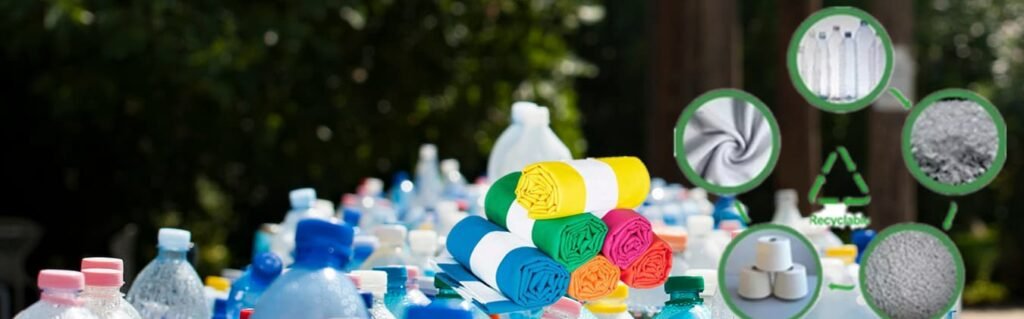
The RPET microfiber beach towel is one of the most in-demand sustainable products today. RPET stands for Recycled Polyethylene Terephthalate. In simple words, it is polyester fiber made entirely from recycled plastic bottles. As a result, every towel you produce helps keep plastic out of landfills and oceans.
How Many Plastic Bottles Are in One RPET Beach Towel?
This number is a powerful marketing tool. First, the exact amount depends on towel size and fabric weight. However, most RPET towel makers report that one 80 × 160 cm towel uses around 20 recycled plastic bottles. Furthermore, heavier styles can use between 25 and 60 bottles per towel. That is a compelling sustainability story for any retail brand.
Key Performance Benefits of RPET Microfiber
- ✅ Quick-drying: Dries 2–3× faster than regular cotton towels
- ✅ Lightweight & compact: Easy to pack for travel, camping, and outdoor sports
- ✅ Sand-resistant: Sand does not stick the same way it does on cotton
- ✅ Highly absorbent: Absorbs up to 3–5× its own weight in water
- ✅ Printable: Perfect for full-color sublimation printing and custom branding
RPET Microfiber Towel Technical Specifications
| Spec | Standard Range |
|---|---|
| Fabric Weight | 250–400 GSM |
| Fiber Composition | 80% RPET Polyester / 20% Recycled Nylon |
| Standard Sizes | 70×140 cm, 80×160 cm, 90×180 cm |
| MOQ | From 100 pcs (no MOQ for digital printing) |
| Key Certifications | GRS, OEKO-TEX Standard 100 |
Is RPET Microfiber Safe for Skin?
Yes — RPET microfiber is generally safe for most skin types. In addition, towels with OEKO-TEX Standard 100 certification are tested against over 100 harmful substances. As a result, they are considered safe for adults and children. However, people with very sensitive skin may still prefer organic cotton.
One important concern worth addressing: microfiber towels can shed tiny fibers during washing. However, washing at cold temperatures and using a microplastic filter bag can greatly reduce this. Furthermore, choosing a quality RPET fabric with tight construction helps minimize shedding. You can explore our full microfiber towel collection here.
5. Organic Cotton Beach Towel: Is It Really Better?
The organic cotton beach towel is the gold standard for natural fiber lovers. First and foremost, organic cotton is grown without synthetic pesticides or GMO seeds. Therefore, it is much gentler on the environment compared to regular cotton.
But how much better is it? According to a Textile Exchange life cycle assessment (LCA), organic cotton farming can reduce blue water consumption by up to 91% compared to conventional cotton within the same study. It is important to note this is a study-based result. As a result, outcomes can vary depending on the farming region and irrigation methods used.
Furthermore, the same LCA found that organic cotton can reduce primary energy demand by 62% and global warming potential by 46% compared to conventional cotton. Those are significant, well-documented numbers.
Organic Cotton vs. Conventional Cotton
| Property | Organic Cotton | Conventional Cotton |
|---|---|---|
| Pesticide Use | None (GOTS certified) | High — up to 16% of global insecticide use |
| Water Impact (LCA) | Up to 91% less blue water (Textile Exchange LCA) | High irrigation needs |
| Softness Over Time | Gets softer with each wash | May decline over time |
| Best Retail Segment | Premium retail, wellness, baby & family | Mass market, hotels, hospitality |
| Key Certification | GOTS, OEKO-TEX | OEKO-TEX, BCI |
Furthermore, organic cotton is naturally hypoallergenic. As a result, it is a top pick for baby products and sensitive-skin retail lines. It pairs beautifully with our bestselling Turkish hammam towel styles for a complete premium offering.
Is Organic Cotton Worth the Premium?
For the right market, absolutely yes. Organic cotton beach towels typically cost 20–35% more than conventional cotton at the same GSM. However, buyers in premium retail, eco-lifestyle, and hospitality segments are glad to pay more for certified natural products. Therefore, the higher upfront cost is usually justified by stronger retail margins and brand positioning.
6. Recycled Beach Towel vs Virgin Polyester: What’s the Difference?
Many buyers ask this question. So let us break it down simply. Virgin polyester is made from brand-new petroleum-based plastic. In contrast, a recycled beach towel is made from reclaimed materials such as plastic bottles or old garments. As a result, it avoids using new fossil fuels and lowers the overall carbon footprint significantly.
| Factor | Recycled Beach Towel (RPET) | Virgin Polyester Towel |
|---|---|---|
| Raw Material Source | Recycled PET bottles or reclaimed textiles | New petroleum-based plastic |
| Carbon Footprint | Significantly lower | Higher due to fossil fuel use |
| Performance | Same or comparable | Same or comparable |
| Eco Credibility | High — especially with GRS certification | Low — no recycled content story |
| Price Point | Slightly higher — worth it for branded products | Lower upfront cost |
| Greenwashing Risk | Low — if GRS certified | High — if marketed as eco-friendly |
In short, if your brand makes any sustainability claim, you should always choose a certified recycled beach towel over virgin polyester. Furthermore, regulations in the EU and US are actively cracking down on unverified eco claims. Therefore, having documented recycled content is now a smart business protection — not just a nice-to-have.
“A recycled beach towel and a virgin polyester towel can feel exactly the same. However, only one of them helps keep plastic out of the ocean.”
7. What Certifications Should a Sustainable Beach Towel Have?
📌 Quick Answer: Must-Have Certifications for Sustainable Beach Towels
- GRS (Global Recycled Standard) — proves recycled content % and supply chain traceability
- GOTS (Global Organic Textile Standard) — the gold standard for organic cotton products
- OEKO-TEX Standard 100 — confirms no harmful chemicals in the finished towel
- BSCI / SEDEX — verifies fair labor and ethical factory conditions
- SGS / Bureau Veritas Reports — independent lab tests for safety, colorfastness, and quality
Certifications are the most important thing any buyer should check. First, they protect your brand from greenwashing accusations. In addition, they are often required for entry into major retail chains, e-commerce platforms, and hotel chains worldwide.
| Certification | Applies To | What It Proves |
|---|---|---|
| GRS | RPET, recycled cotton | Recycled content % + full supply chain traceability |
| GOTS | Organic cotton | Organic fiber + safe chemical processing standards |
| OEKO-TEX Standard 100 | All textiles | No harmful substances found in the finished product |
| BSCI / SEDEX | Factory level | Fair labor practices and ethical social compliance |
| SGS / BV Test Reports | Product level | Independent lab testing: colorfastness, shrinkage, pH, safety |
Importantly, OEKO-TEX certifications are growing at a strong pace. Currently, there are over 57,000 active OEKO-TEX certificates worldwide, with an 8% year-over-year increase. Therefore, certified products are quickly becoming the baseline expectation — not a bonus.
At Favor Houseware, we hold BSCI, OEKO-TEX Standard 100, SGS, and FDA certifications. Furthermore, we can support GRS documentation for all RPET orders. As a result, your products are market-ready and fully compliant from day one.
8. Best Beach Towel for Quick Drying, Softness & Sand Resistance
Different buyers need different performance features. Therefore, here is a clear breakdown of how each material performs across the three most important categories.
| Performance Factor | RPET Microfiber | Organic Cotton | Recycled Cotton |
|---|---|---|---|
| Quick Drying | ⭐⭐⭐⭐⭐ Best | ⭐⭐⭐ | ⭐⭐⭐ |
| Softness | ⭐⭐⭐ | ⭐⭐⭐⭐⭐ Best | ⭐⭐⭐⭐ |
| Sand Resistance | ⭐⭐⭐⭐⭐ Best | ⭐⭐⭐ | ⭐⭐⭐ |
| Portability / Weight | ⭐⭐⭐⭐⭐ Best | ⭐⭐⭐ | ⭐⭐⭐ |
| Absorbency | ⭐⭐⭐⭐⭐ | ⭐⭐⭐⭐⭐ | ⭐⭐⭐⭐ |
| Eco Credentials | ⭐⭐⭐⭐⭐ | ⭐⭐⭐⭐⭐ | ⭐⭐⭐⭐ |
🏆 Winner for quick drying and travel: RPET microfiber — no contest. It dries 2–3× faster than cotton and packs into a small, compact roll.
🏆 Winner for softness and feel: Organic cotton — especially after several washes, when it becomes even softer over time.
🏆 Winner for sandy beaches: RPET microfiber — sand simply does not cling to its tight-woven surface. In addition, it shakes clean in seconds. That is why it is the top choice for beach and outdoor brands worldwide.
9. How to Choose a Sustainable Beach Towel for Travel, Resort, or Promotion
Choosing the right towel depends entirely on your end market. Therefore, use this quick decision guide to match the material to the buyer type.
| If Your Buyers Need… | Best Choice | Recommended Product |
|---|---|---|
| Lightweight travel gear | RPET Microfiber | Microfiber beach towel |
| Premium hotel amenities | Organic Cotton | Turkish hammam towel |
| Surf and watersports brands | RPET Microfiber | Surf poncho towel / Surf change robe |
| Branded corporate promotions | RPET Microfiber (custom print) | Custom beach towels |
| Eco-lifestyle retail collections | Recycled Cotton or RPET Blend | Recycled beach towel |
| Baby and sensitive-skin market | GOTS Organic Cotton | Custom organic cotton towel |
Furthermore, think about your end-user’s lifestyle and daily needs. For example, a travel brand needs compact and quick-drying. However, a luxury resort needs ultra-soft and plush. Therefore, always match the material to the experience you want your customers to feel.
10. How to Care for Eco Friendly Beach Towels
Taking care of your eco friendly beach towel the right way makes it last much longer. In addition, good care also reduces environmental impact over the towel’s entire lifetime. Here are the most important tips.
For RPET Microfiber Beach Towels:
- 🌊 Wash in cold water (30°C or below) to reduce microfiber shedding
- 🛡️ Use a microplastic filter bag (such as a Guppyfriend bag) during washing
- ❌ Avoid fabric softener — it clogs the microfibers and reduces absorbency
- ☀️ Air dry when possible instead of using a dryer
- 🌀 Use a low spin speed to protect the fine fiber structure
For Organic Cotton Beach Towels:
- 🌡️ Wash at 40°C or below to preserve color and natural fiber softness
- ❌ Do not use bleach — it damages organic cotton fibers quickly
- ☀️ Line dry in the shade to prevent fading and unwanted shrinkage
- 🌿 Use eco-friendly detergent to keep your sustainability story consistent
- 👍 The more you wash it, the softer it gets — that is a wonderful natural quality of organic cotton!
In addition, proper storage also makes a difference. Therefore, always make sure the towel is completely dry before folding and storing. As a result, you will avoid mold, odors, and fiber damage over time.
11. Common Myths About Recycled and Organic Towels
There is a lot of confusion around sustainable towels in the market. Therefore, let us clear up the four most common myths right now.
❌ Myth 1: “Recycled Towels Are Lower Quality”
Not true. RPET microfiber performs just as well as — and often better than — virgin polyester in key areas. These include drying speed, absorbency, and sand resistance. In addition, recycled content does not affect the feel or durability of the finished towel. However, quality always depends on the manufacturer. Therefore, always source from a certified factory with documented quality control.
❌ Myth 2: “Organic Cotton Always Saves Water”
Partially true — but it depends on the farming system. The Textile Exchange LCA study found a 91% reduction in blue water consumption in a specific set of farms. However, water savings can vary greatly depending on the region and irrigation systems used. Therefore, always present this as a study-based result rather than a universal guarantee.
❌ Myth 3: “Microfiber Towels Are Bad for the Environment”
Nuanced — not a simple yes or no. Microfiber does shed tiny plastic particles during washing. However, using cold water, low spin speed, and a microplastic filter bag significantly reduces this. Furthermore, RPET microfiber still has a much lower carbon footprint than virgin polyester. As a result, it remains one of the most practical and responsible choices available today.
❌ Myth 4: “All ‘Eco’ Labels Mean the Same Thing”
Definitely not true. Terms like “natural,” “green,” or “eco” are marketing words with no legal meaning behind them. In contrast, certifications like GRS, GOTS, and OEKO-TEX are verified by independent third-party organizations. Therefore, always look for the official certification mark and request the documentation. That way, your claims are solid and your business is protected.
12. Why Source Sustainable Beach Towels from a China Manufacturer?
China is the world’s largest textile manufacturer. In addition, it has a very deep supply chain for both natural and synthetic eco-friendly materials. Therefore, sourcing your sustainable beach towels from a qualified China factory gives you major advantages over other options.
Top Reasons to Source from a China Beach Towel Manufacturer
- 🏭 Lower production costs without sacrificing quality or certification standards
- 🌿 Access to certified sustainable materials — GRS, GOTS, OEKO-TEX all readily available
- 🎨 Advanced customization — full OEM/ODM printing, sizing, construction, and packaging
- 📦 Low MOQ — starting from just 100 pcs at Favor Houseware
- ⚡ Fast turnaround — 30–45 days for new orders, 20 days for repeat orders
- 🔍 Strict quality control — SGS and Bureau Veritas inspections fully supported
Favor Houseware Co., Ltd. has been manufacturing high-quality beach towels for over 15 years. Furthermore, our vertically integrated factory in Yiwu, Zhejiang Province covers every step — from weaving and dyeing to printing, sewing, quality inspection, and packaging. As a result, you get consistent quality and full control over the entire process.
Our Eco Friendly Beach Towel Collection
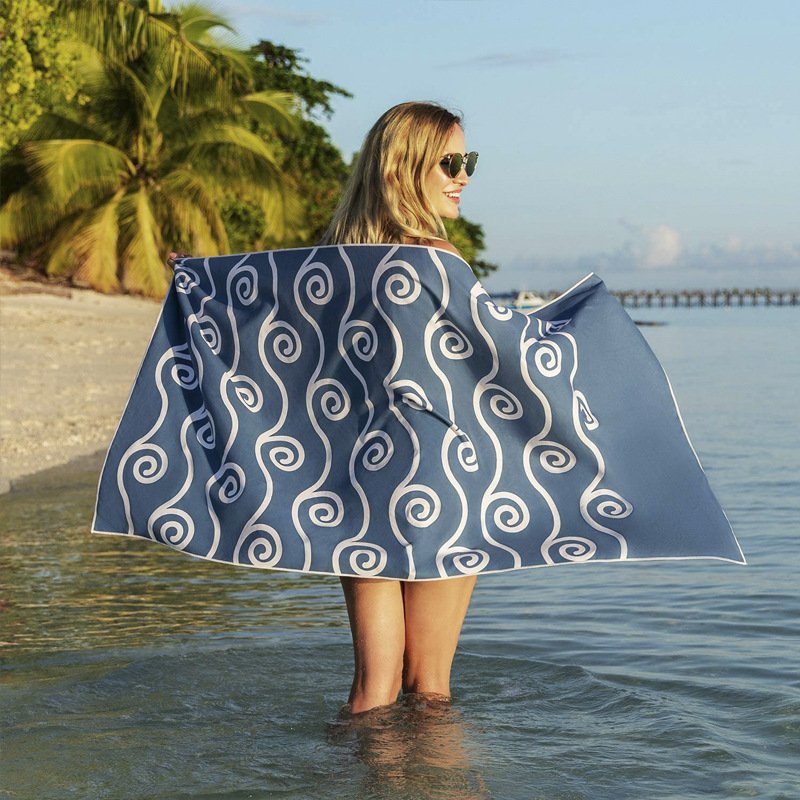
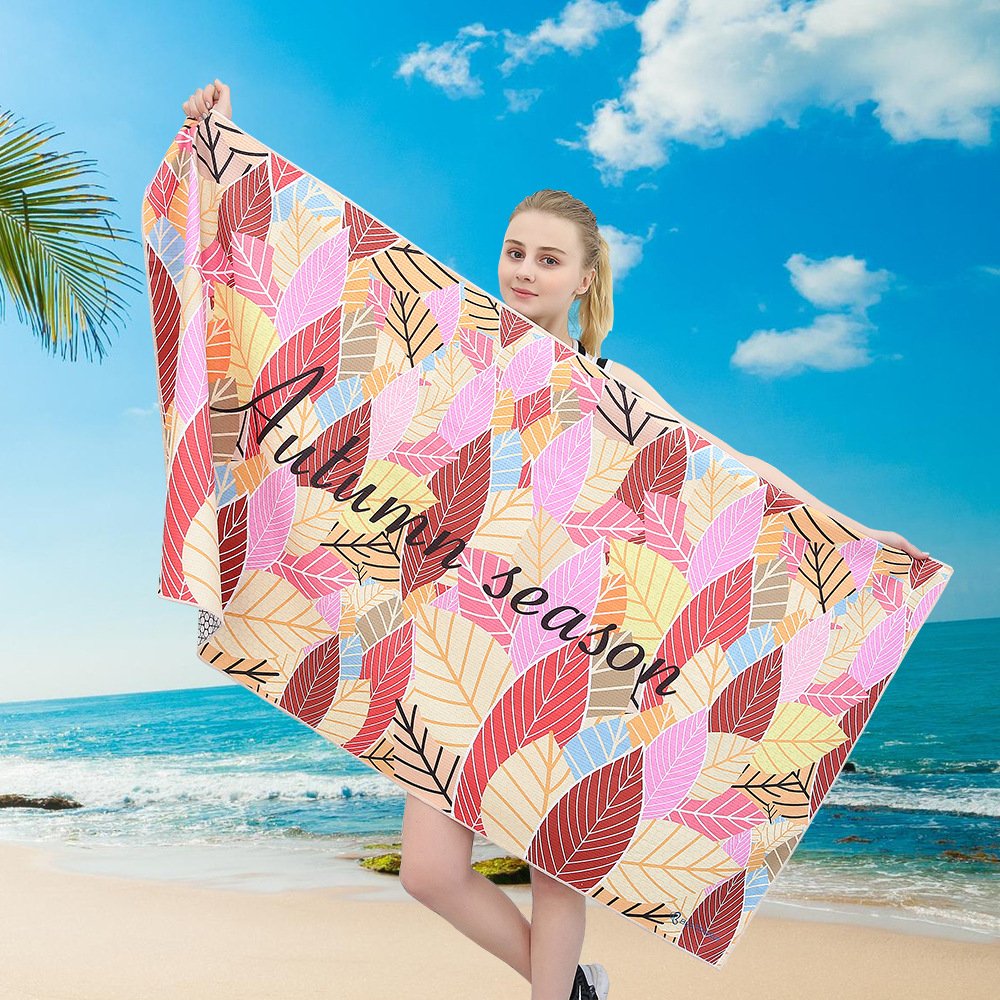
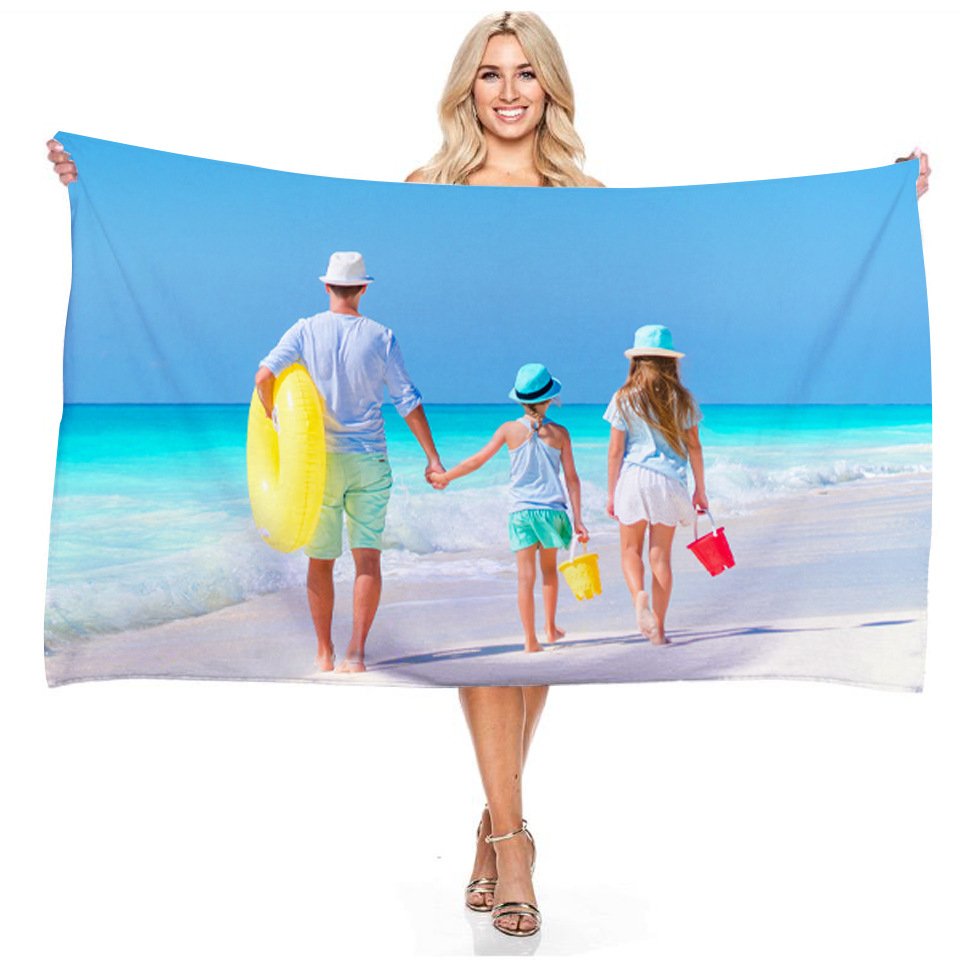
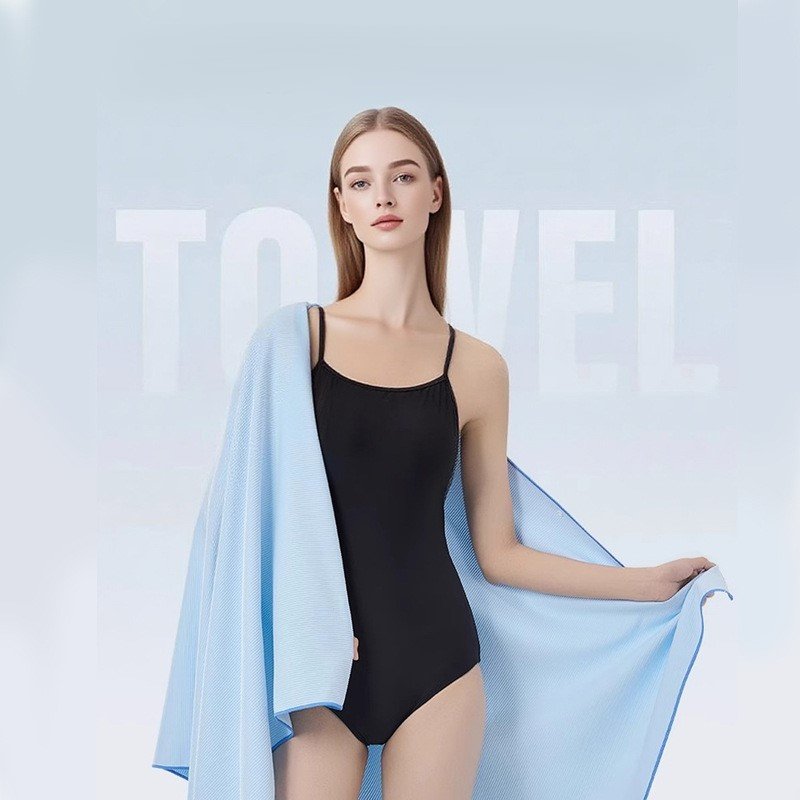
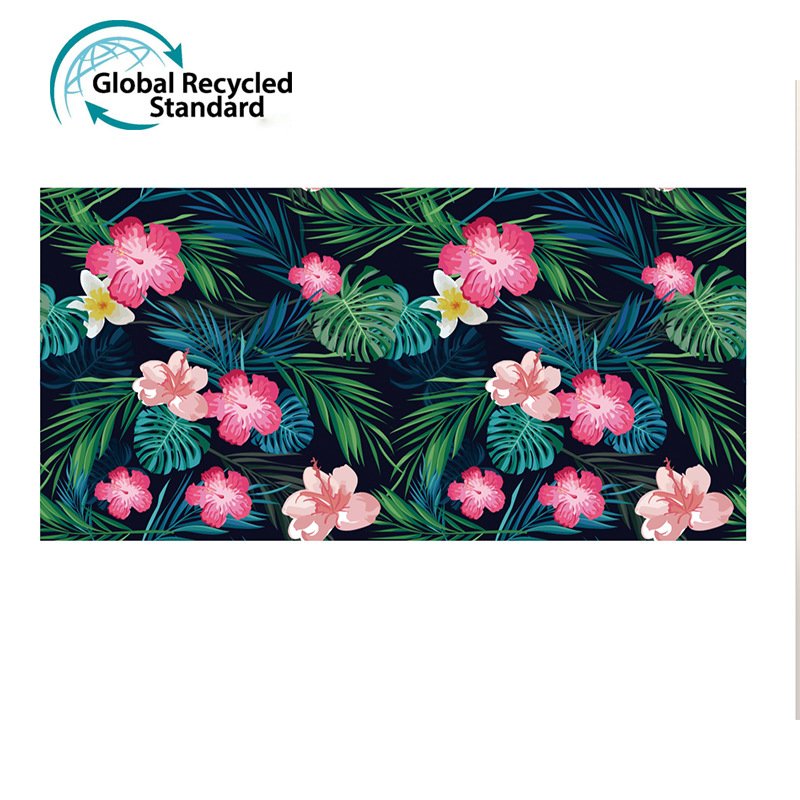
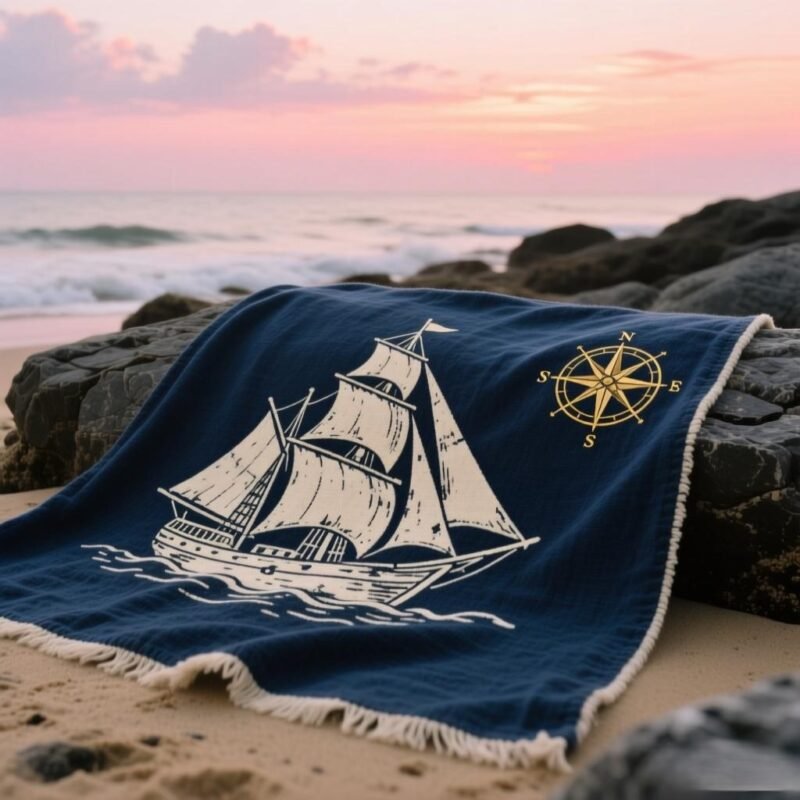
In addition, we hold BSCI, OEKO-TEX Standard 100, SGS, and FDA certifications. As a result, our products are ready for import into the EU, USA, Australia, and beyond. Furthermore, we offer free samples — you only pay freight. Contact us today to request yours.
13. Custom Eco Friendly Beach Towels for Brands, Hotels & Promotions
One of the biggest strengths of working with Favor Houseware is our deep customization capability. Whether you need a signature design for a luxury hotel chain or a custom branded promo towel for a corporate event, we can build exactly what you need.
What Can Be Customized?
- 🎨 Design & Print: Full sublimation printing — no MOQ for digital printing
- 📐 Size: Any custom size from compact sport towels to oversized beach blankets
- ⚖️ GSM / Weight: 200 GSM (ultralight travel) to 600 GSM (luxury plush resort)
- 🏷️ Branding: Woven labels, heat transfer tags, and custom hang tags
- 📦 Packaging: Polybag printing, gift box sets, roll packs, retail-ready displays
- ✅ Certification Support: GRS transaction certificates and OEKO-TEX documentation on request
MOQ & Lead Time Overview
| Order Type | MOQ | Lead Time |
|---|---|---|
| In-stock items (fast ship) | 100 pcs | 3–7 days |
| Custom design (new order) | 100 pcs | 30–45 days |
| Reorder (repeat order) | 100 pcs | 20–25 days |
| Digital printing only | No MOQ | 30–40 days |
Furthermore, we serve a wide range of buyers worldwide. These include Amazon FBA sellers, retail chain buyers, hotel groups, outdoor brands, and promotional product distributors. In addition, we support multiple payment methods and secure international trade processes.
You can also explore related products from our full range — including our surf poncho towels, surf change robes, and Turkish hammam towels. All are available in sustainable materials and custom designs. Additionally, visit our blog for more sourcing guides and industry ideas.
14. Frequently Asked Questions About Eco Friendly Beach Towels
What is the most eco friendly beach towel?
It depends on your priorities. Organic cotton is best for a natural fiber story and premium feel. However, RPET microfiber is best for recycled content, performance, and portability. Both are strong sustainable choices — especially when backed by recognized certifications like GOTS or GRS.
Are recycled beach towels actually sustainable?
Yes, they can be — especially when they replace virgin materials and are manufactured in a responsible, certified factory. However, full sustainability also depends on the fiber blend, washing behavior, and end-of-life handling. Always look for GRS certification to verify the recycled content claim properly.
How many plastic bottles are in one RPET beach towel?
It varies by size and GSM. One common example cites about 20 bottles for an 80 × 160 cm towel. Furthermore, other RPET towel manufacturers report between 25 and 60 bottles per towel depending on weight and fabric construction.
Does organic cotton really save water?
According to a Textile Exchange life cycle assessment, organic cotton can reduce blue water consumption by up to 91% compared to conventional cotton in the same study. However, this is a study-based result. As a result, water savings can vary depending on the specific farming region and methods used.
Which beach towel dries the fastest?
RPET microfiber beach towels dry the fastest. They typically dry 2–3× faster than organic or conventional cotton towels. Therefore, they are the top choice for travel, outdoor sports, and beach use.
What is the difference between recycled polyester and RPET?
RPET (Recycled PET) is a specific type of recycled polyester. It is made from post-consumer PET plastic bottles. In contrast, “recycled polyester” is the broader term and may include other forms of reclaimed polyester. For beach towels, RPET is the most common, traceable, and certification-friendly form available.
Are microfiber beach towels bad for the environment?
Not necessarily. Microfiber does shed small plastic particles during washing. However, washing in cold water with a low spin speed and a microplastic filter bag greatly reduces this. Furthermore, RPET microfiber still has a much lower carbon footprint than virgin polyester. As a result, it remains one of the most practical sustainable options available today.
What certifications should a sustainable beach towel have?
Look for GRS (for recycled content), GOTS (for organic cotton), and OEKO-TEX Standard 100 (for chemical safety). Additionally, factory certifications like BSCI or SEDEX confirm ethical labor practices. Always ask your supplier for official certification documents before placing any order.
How do you wash an eco friendly beach towel?
For RPET microfiber, wash in cold water at low spin speed. Avoid fabric softener. Use a microplastic filter bag if possible. For organic cotton, wash at 40°C or below with eco-friendly detergent and line dry. Both types benefit from air drying instead of machine drying to extend their lifespan.
What is the best towel material for sandy beaches?
RPET microfiber is the best choice for sandy beaches. Its tight weave prevents sand from sticking. In addition, it dries quickly and is very lightweight to carry. As a result, it is the most popular choice for beach and outdoor brands looking for a high-performance, eco-friendly option.
Conclusion: Choose the Right Eco Friendly Beach Towel for Your Business
The eco friendly beach towel market is growing fast — and for very good reason. Consumers want products that perform well and do less harm to the planet. Furthermore, regulations in key markets are making certified sustainable sourcing more critical than ever before.
To sum it all up, here is what you need to remember:
- ✅ RPET microfiber is best for performance, travel, and a strong recycled content story
- ✅ Organic cotton is best for premium retail, hospitality, and natural fiber lovers
- ✅ Certifications like GRS, GOTS, and OEKO-TEX are non-negotiable for serious buyers
- ✅ Always ask for documentation — not just marketing language
- ✅ Low MOQ and full customization make it easier than ever to launch your own sustainable line
In addition, working with an experienced certified manufacturer makes all the difference. Therefore, if you are ready to source high-quality eco friendly beach towels with full documentation and deep customization support, Favor Houseware is here to help.
🌊 Ready to Source Eco Friendly Beach Towels?
Get a free sample and competitive FOB quote from Favor Houseware — China’s trusted sustainable beach towel manufacturer with 15+ years of experience and full certification support.
✅ MOQ from 100 pcs
✅ No MOQ for digital printing
✅ GRS · OEKO-TEX · BSCI · SGS · FDA
✅ OEM / ODM / Private Label
✅ Free samples (pay freight only)
✅ 30–45 day production lead time
Or explore our full beach towel range | About Favor Houseware | More sourcing guides
Favor Houseware Co., Ltd. — Sustainable Beach Towel Manufacturer, Yiwu, Zhejiang, China
Views: 6