Updated: March 2026 | Reading time: ~12 min | By: Favor Houseware Co., Ltd.
⚡ Key Takeaways: Eco Friendly Beach Towels at a Glance
- A recycled microfiber beach towel has up to 76% lower carbon footprint than a comparable cotton towel.
- Switching from virgin polyester to recycled PET cuts CO₂ emissions by ~60% per kg of material.
- The global beach towel market is growing from ~$609M in 2026 to ~$897M by 2034 — driven largely by eco-friendly demand.
- True eco friendly towels carry certifications like GRS, OEKO-TEX 100, or GOTS — not just marketing claims.
- Microfiber production uses roughly 97% less water per kg than paper towel production.
- Brands and resorts are now using custom sustainable towels as a visible proof of ESG commitment.
Have you ever wondered whether your beach towel is actually hurting the planet? The good news is that eco friendly beach towels are now easier to find than ever. Moreover, they are often just as soft, durable, and affordable as regular ones.
In this guide, we will break down everything you need to know. We will cover the materials, the carbon footprint data, the certifications, and even how to care for your towel to make it last longer. Therefore, whether you are a hotel buyer, a brand manager, or simply a curious shopper, this article is for you.
1. What Makes a Beach Towel Truly Eco-Friendly?
An eco friendly beach towel is one made from low-impact fibers — such as recycled polyester (rPET), organic cotton, or bamboo — produced without harmful dyes, using water- and energy-efficient manufacturing, and designed to last a long time. Additionally, it typically carries a third-party certification like OEKO-TEX 100, GRS, or GOTS to back up its environmental claims.
So, what truly separates an eco friendly beach towel from a regular one? Firstly, it starts with the raw materials. However, it does not stop there. A genuinely sustainable towel must be evaluated across its entire lifecycle — from fiber to factory to your beach bag.
Core Eco-Friendly Materials
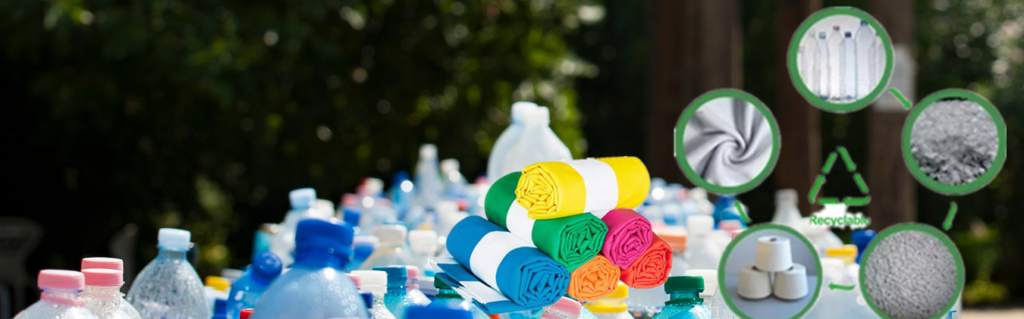
- Recycled Microfiber (rPET): Made from post-consumer plastic bottles. Each towel can repurpose 10–20 bottles. Furthermore, it dries up to 3–5× faster than cotton, saving energy in laundry cycles.
- Organic Cotton: Grown without synthetic pesticides. As a result, it supports healthier soil and uses fewer chemicals than conventional cotton.
- Bamboo Fiber: Bamboo grows extremely fast without irrigation. Therefore, it is naturally renewable and requires very little land.
- Ocean Recycled Plastic: Some brands now produce towels from plastic recovered directly from ocean cleanup operations.
Sustainable Production Processes Also Matter
- ✔ Low-impact reactive or sublimation dyeing (uses far less water)
- ✔ Renewable energy in manufacturing
- ✔ Recyclable or biodegradable packaging
- ✔ Ethical labor standards (BSCI, SEDEX audits)
- ✔ Long product lifespan design (fewer replacements = lower total impact)
2. Market Demand: How Fast Are Eco Beach Towels Growing?
The demand for sustainable beach towels is not just a trend — it is a fast-moving market shift. Consequently, brands, resorts, and retailers who act now will have a clear competitive advantage.
| Metric | Value | Note |
|---|---|---|
| Global market size (2026) | ~$609 million USD | Base year projection |
| Global market size (2034) | ~$897 million USD | CAGR ~4.4% (2026–2034) |
| Alternative 2035 forecast | ~$7.9 billion USD | Broader textile market, CAGR ~6.2% |
| North America share | 37.8% | Driven by eco-friendly product demand |
| Key growth drivers | Organic cotton, bamboo, recycled fabrics, rising ESG standards | |
According to industry analysts at Textile World, sustainable fiber demand is reshaping the entire textile sector. Furthermore, over 40% of global consumers now actively prioritize eco-friendly products when making a purchase decision. As a result, the beach towel category is seeing a clear shift toward recycled and organic options.
“Eco-friendly materials — including organic cotton, bamboo, and recycled fabrics — are identified as a key driver of growth in the global beach towel market through 2035.” — Industry market forecast, 2026
So what does this mean for your business? Simply put, if you are still sourcing conventional cotton towels, you are behind the curve. Brands that switch to eco friendly beach towels now will be better positioned to win contracts from hotels, retailers, and corporate buyers with sustainability mandates.
3. Recycled Microfiber vs Cotton: Which Has Lower Carbon Footprint?
This is probably the most important question for any buyer with sustainability targets. Fortunately, real lifecycle analysis (LCA) data exists. Let us look at the numbers clearly.
🌍 Headline Stat: A recycled microfiber beach towel has approximately 76% lower climate impact than a comparable cotton towel — due to lower energy, water, and detergent use across its full lifecycle. — Published Life Cycle Analysis (LCA), microfiber towel 50×95 cm
| Towel Type | Approx. CO₂ Impact | Key Point |
|---|---|---|
| Conventional cotton beach towel (50×95 cm) | Baseline — 100% | Reference product for comparison |
| Standard microfiber towel (same size) | ~24% of cotton impact | Overall 76% lower than cotton |
| Recycled microfiber + renewable energy | 2.70 kg CO₂e (−21%) | Further reduction with recycled input & renewables |
| Recycled PET vs virgin polyester (material) | ~60% CO₂ reduction per kg | Significant benefit at raw material stage |
| Recycled vs virgin polyester (fabric stage) | ~10% further reduction | Even processed recycled fabric is greener |
So why is the difference so large? Firstly, cotton farming requires enormous amounts of water, land, and pesticide inputs. Additionally, cotton towels take much longer to dry, which means more energy is used in every wash cycle over the towel’s life. Microfiber, on the other hand, dries far faster. Therefore, the energy savings accumulate dramatically over time.
For more on lifecycle thinking in textiles, the Textile World industry journal offers in-depth coverage of sustainable fiber research and LCA methodologies.
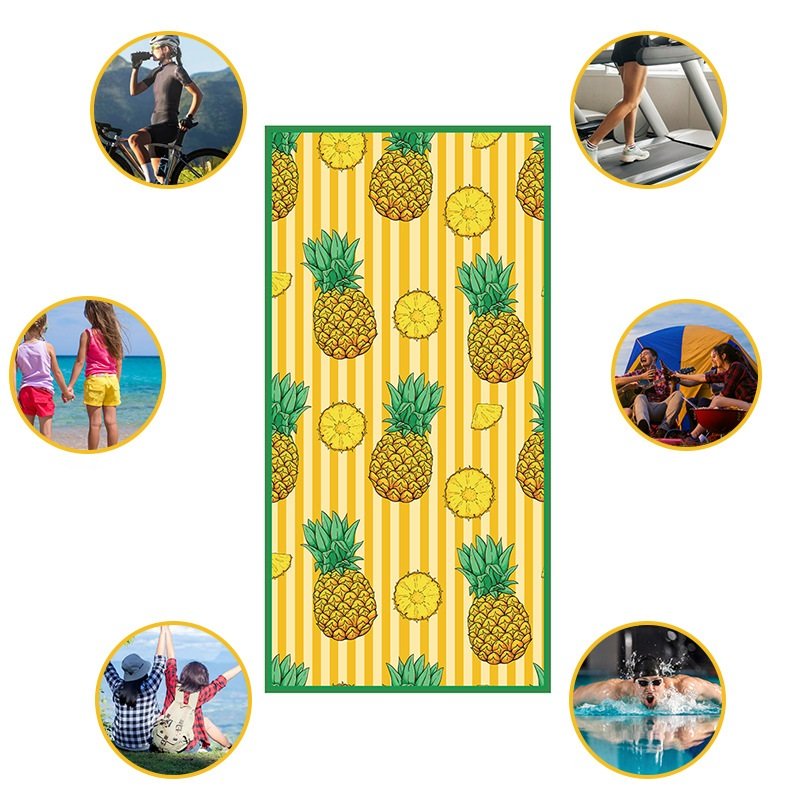
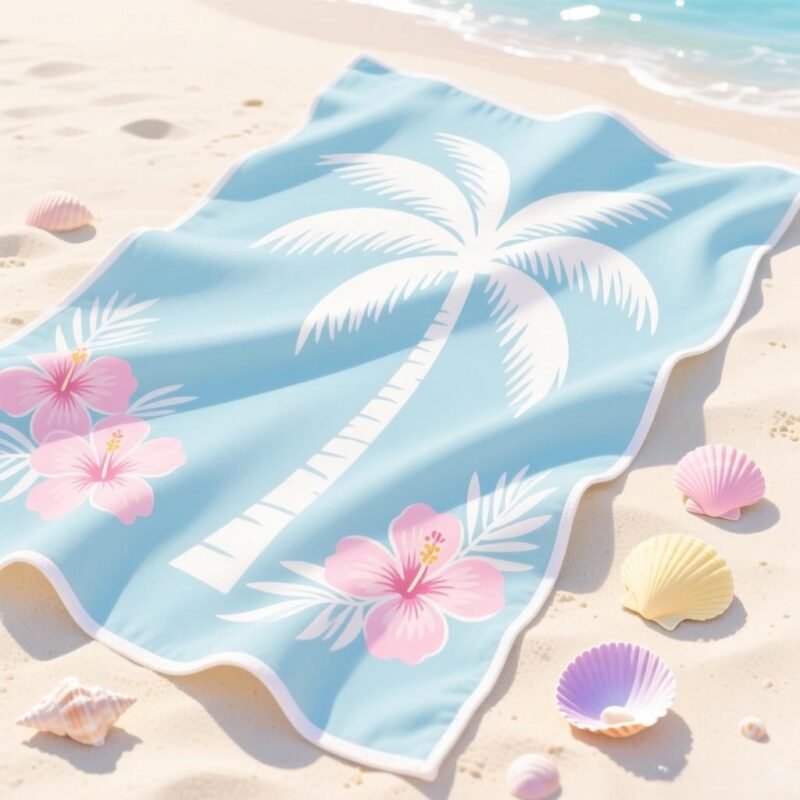
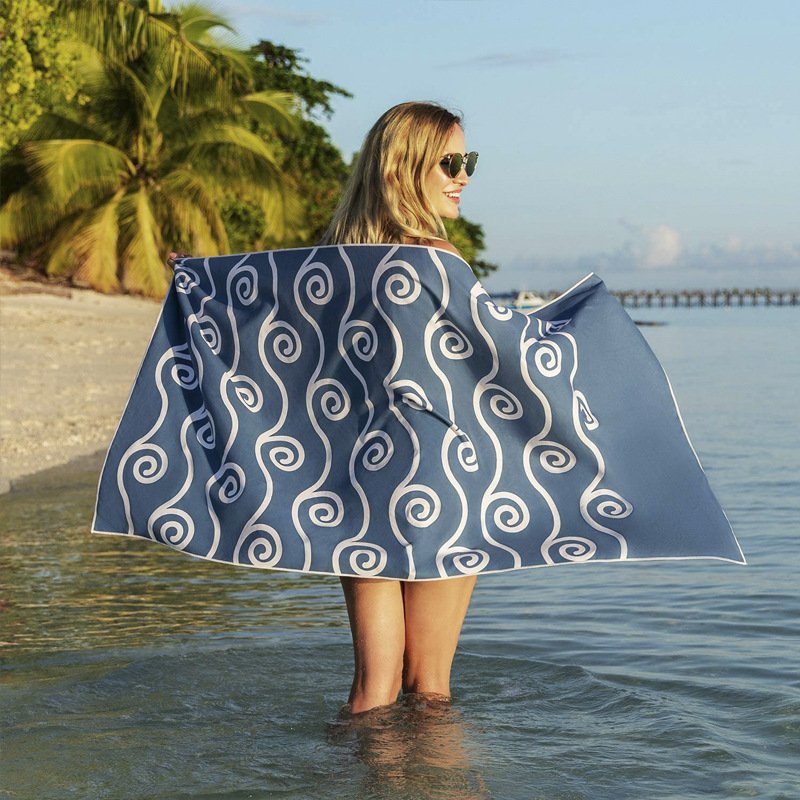
4. How Much CO₂ Can a Recycled Beach Towel Save?
Let us put the carbon numbers into real-world context. Numbers on a page can be hard to picture. Therefore, here is a simple breakdown that makes the savings concrete.
| Order Volume | Cotton CO₂ (estimated) | Recycled Microfiber CO₂ | CO₂ Saved |
|---|---|---|---|
| 1 towel | ~11.25 kg CO₂e | ~2.70 kg CO₂e | ~8.55 kg saved |
| 500 towels | ~5,625 kg CO₂e | ~1,350 kg CO₂e | ~4,275 kg saved |
| 5,000 towels | ~56,250 kg CO₂e | ~13,500 kg CO₂e | ~42,750 kg saved |
| 50,000 towels | ~562,500 kg CO₂e | ~135,000 kg CO₂e | ~427,500 kg saved |
To put that in perspective: saving 427,500 kg of CO₂ is roughly equivalent to taking 93 cars off the road for a full year. Furthermore, for corporate buyers reporting under Scope 3 emissions frameworks (such as Science Based Targets initiative — SBTi), these savings are measurable and reportable. As a result, switching your branded merchandise to recycled microfiber becomes a credible sustainability action — not just a marketing claim.
Additionally, each recycled beach towel from Favor Houseware is made with certified rPET yarns. Therefore, your procurement team can document these carbon reductions with supporting certification data.
5. Water and Energy Savings: Microfiber Towels vs Traditional Options
Carbon footprint is not the only number that matters. Water use is also a critical sustainability metric — especially for brands in water-stressed regions or those reporting against GRI sustainability standards.
The comparison is striking. In fact, microfiber textile production uses roughly 97% less water per kilogram than paper towel production. Furthermore, a single high-quality microfiber towel can replace up to 1,500 single-use alternatives over its lifecycle. As a result, the waste reduction benefit is enormous.
Quick-Dry = Lower Energy in Every Wash
Here is something that is often overlooked. Microfiber towels dry 3–5× faster than cotton ones. Therefore, every time a hotel, resort, or gym launders its towels, it uses significantly less dryer energy. Over thousands of wash cycles, this adds up to substantial energy savings. Consequently, the environmental benefit grows the more the towel is used.
| Resource Factor | Conventional Cotton | Recycled Microfiber | Winner |
|---|---|---|---|
| Drying time | Slow (60–90 min) | Fast (15–25 min) | ✅ Microfiber |
| Water use (production) | High | Very low (rPET) | ✅ Microfiber |
| Laundry detergent needed | Standard amount | Less needed | ✅ Microfiber |
| Natural fiber feel | Excellent | Good (improving) | ✅ Cotton |
| Lifespan (with care) | 3–5 years | 5–7 years | ✅ Microfiber |
| Carbon footprint (lifecycle) | Baseline 100% | ~24% of cotton | ✅ Microfiber |
Want to explore the full range of microfiber towels available from Favor Houseware? Their product range covers beach, sport, gym, and hospitality applications — all available with custom branding.
6. Recycled Microfiber vs Cotton: Which Is Better for Your Brand?
The honest answer is: it depends on your brand’s priorities. However, for most B2B buyers focused on carbon reduction, recycled microfiber wins clearly. Here is a simple comparison to help you decide.
✅ Choose Recycled Microfiber When…
- Carbon footprint reduction is a stated goal
- Fast drying matters (hotels, gyms, events)
- You need vibrant custom logo printing (sublimation)
- Compact, lightweight towels are needed (travel, promo kits)
- Budget efficiency is important at wholesale
- You want GRS-certified recycled content documentation
✅ Choose Organic Cotton When…
- Your audience prioritizes natural fibers
- Luxury, spa, or wellness branding is your focus
- You need GOTS certification for retail buyers
- A premium, heavy towel feel is essential
- You serve markets with strong natural-fiber preferences
Interestingly, many buyers are now choosing hybrid constructions — blending recycled microfiber with organic cotton or bamboo. As a result, they capture the quick-dry performance of microfiber alongside the natural-fiber softness of cotton. This is an increasingly popular option for resort amenity programs.
Favor Houseware offers both options. Their range includes premium custom beach towels and Turkish hammam towels in cotton, as well as fully certified recycled microfiber options.
7. Key Eco Certifications to Look for in Beach Towels
Here is a rule that will protect you from greenwashing: never trust an eco claim without a certification to back it up. Fortunately, several well-established standards exist. Therefore, knowing what each one means gives you real purchasing power.
| Certification | What It Covers | Why It Matters |
|---|---|---|
| GRS — Global Recycled Standard | Verifies recycled content % in the product | Confirms that rPET claims are independently audited |
| OEKO-TEX Standard 100 | Tests for harmful chemicals in finished textiles | Ensures the towel is safe for skin contact (important for hotels & children) |
| GOTS — Global Organic Textile Standard | Organic fiber content + social/ecological criteria | Required by many retail buyers for organic cotton products |
| BSCI — Business Social Compliance | Factory labor standards and working conditions | Covers social sustainability — often required by EU/US importers |
| SGS / FDA | Product safety and quality testing | Gives importers confidence in product compliance |
| bluesign® | Chemical safety + resource efficiency in textile production | Strong signal of responsible dyeing and finishing processes |
For reference, the OEKO-TEX Association maintains a public database where you can verify any certificate number. Similarly, the Textile Exchange GRS database allows buyers to confirm recycled content claims independently.
Favor Houseware holds BSCI, OEKO-TEX 100, SGS, and FDA certifications — all verifiable and available on request. You can learn more on their About page.
8. Sustainable Branding: Custom Eco Towels for Resorts and Brands
Today, sustainable branded towels are one of the most powerful tools a business can use to show — not just tell — customers about their values. Furthermore, they are practical, long-lasting, and used repeatedly. As a result, every use becomes a brand impression.
Who Is Using Custom Eco Towels?
- Hotels & Eco-Resorts: Replacing standard terry cloth with certified recycled towels for in-room amenities and pool areas
- Corporate Gifting Programs: A branded recycled microfiber towel makes a premium yet purposeful gift that recipients actually keep
- Event Merchandise: Triathlons, surf competitions, outdoor festivals — sustainable branded towels are increasingly the default choice
- Employee Welcome Kits: Companies building remote work culture are including sustainable branded towels in onboarding packs
- Retail Private Label: Retailers building eco own-brand ranges require certified sustainable towels at consistent quality
“Brands and resorts increasingly use custom eco-friendly beach towels with logos as visible proof of their sustainability initiatives — aligning promotional textiles with ESG targets.” — Industry insight, sustainable branded merchandise sector
Why Favor Houseware for Sustainable Branded Towels?
Favor Houseware Co., Ltd. is a China-based microfiber towel manufacturer with 15 years of experience supplying global brands, resorts, and importers. Located in Yiwu, Zhejiang Province, they specialize in custom and wholesale eco friendly beach towels with the following advantages:
- GRS-certified rPET recycled microfiber — documentation available on request
- OEKO-TEX 100, BSCI, SGS, FDA certifications held and verifiable
- Full sublimation & digital printing — no MOQ for printing; any design, any color
- Low MOQ from just 100 pieces — perfect for small brands and large programs alike
- Free samples — pay freight only; test before you commit
- Fast delivery with available stock; 30–45 day production for custom orders
- OEM & ODM capability — bring your design or develop one with their team
- Strict quality control — inspection at every stage from yarn to shipment
Their product range for branded eco programs includes recycled beach towels, microfiber towels, surf poncho towels, and surf changing robes — all available with custom sustainable branding.
🌿 Ready to Brand Your Eco Towels?
Request a free sample or get a custom quote from Favor Houseware today. No commitment — just pay freight for your sample.
Get a Free Sample View Recycled Towels9. Microplastic & Shedding: How to Design Lower-Impact Microfiber Towels
Let us be transparent about something. Microfiber towels do shed tiny plastic fibers — called microplastics — when washed. This is a real environmental concern, and any honest supplier should address it directly.
However, the good news is that smart design and good practices can significantly reduce shedding. Here is what to look for:
Design Solutions That Reduce Microplastic Shedding
- Tight weave construction: A denser weave means fewer fibers can break loose during washing. Therefore, always ask about the GSM (grams per square meter) and weave tightness of any microfiber towel you source.
- High-twist yarn: Twisted yarns shed significantly fewer fibers than loosely constructed ones. As a result, towel construction quality matters as much as material choice.
- Longer lifespan = fewer wash cycles total: A well-made towel that lasts 5+ years sheds less over its lifetime than two cheaper towels that wear out quickly. Furthermore, fewer total towels produced means less total microplastic potential.
- Laundry filter bags: Recommend washing in a Guppyfriend wash bag or similar microplastic filter product. This is currently the most practical consumer-level solution.
- Cold wash, gentle cycle: Lower temperatures and gentle agitation reduce fiber shedding in every wash.
10. How to Care for Eco-Friendly Beach Towels to Maximize Lifespan
Here is something simple but powerful: the longer your towel lasts, the lower its carbon footprint per use. In fact, proper care is one of the easiest sustainability actions you can take. Therefore, share these tips with your customers or guests.
- Wash in cold water (30°C or below). Cold water saves energy and also reduces microfiber shedding. Furthermore, it keeps colors brighter for longer.
- Use a gentle, liquid detergent. Avoid fabric softener — it clogs microfiber and reduces absorbency over time.
- Skip the tumble dryer when possible. Air drying is always the most energy-efficient option. Microfiber dries quickly, so this is easy.
- If you must use a dryer, use low heat. High heat can damage microfiber structure. Therefore, always choose the lowest heat setting.
- Wash separately from cotton items. Cotton lint can clog microfiber weave and reduce performance over time.
- Use a Guppyfriend wash bag. This captures microplastic fibers and prevents them from entering the water system.
- Store clean and dry. Never pack a damp microfiber towel away for extended periods — mold can damage the fibers permanently.
- Avoid bleach or harsh chemicals. These break down fiber structure rapidly and significantly shorten towel life.
By following these steps, a high-quality recycled microfiber beach towel can easily last 5–7 years with regular use. As a result, its per-use carbon footprint becomes exceptionally low — far lower than any disposable or cheap fast-fashion alternative.
11. What to Include in a Sustainable Towel Supplier Checklist (For Importers/Buyers)
If you are sourcing eco friendly beach towels at wholesale, use this checklist before placing any order. Consequently, it will protect you from greenwashing risk and ensure your supply chain meets the standards your customers expect.
| Checklist Item | What to Ask Your Supplier | Favor Houseware |
|---|---|---|
| ♻️ Recycled content % | “What % of the towel is recycled fiber? Do you have GRS certification?” | ✅ rPET certified, GRS available |
| 🧪 Chemical safety | “Is the product OEKO-TEX 100 certified? Can I see the certificate?” | ✅ OEKO-TEX 100 certified |
| 👷 Labor standards | “Do you have BSCI, SEDEX, or equivalent factory audit?” | ✅ BSCI certified |
| 🖨️ Printing method | “What printing process do you use? Is it sublimation or reactive dye?” | ✅ Sublimation + digital printing, low-impact dyes |
| 📦 Packaging | “Is the packaging recyclable or biodegradable?” | ✅ Eco packaging options available |
| 🔍 LCA / Carbon data | “Can you provide lifecycle assessment data or carbon footprint estimates?” | ✅ Data available on request |
| 📏 MOQ flexibility | “What is your minimum order quantity for custom branded towels?” | ✅ MOQ from 100 pcs; no MOQ for printing |
| 🧵 Material traceability | “Where is your rPET yarn spun and your fabric woven?” | ✅ Full supply chain transparency provided |
| 🎁 Free sample policy | “Can I test a sample before committing to bulk order?” | ✅ Free samples (pay freight only) |
| ⚡ Lead time | “What is your standard production and delivery time?” | ✅ 30–45 days; stock available for fast shipping |
As you can see, Favor Houseware checks every single box on this list. Additionally, with 15 years of experience supplying global markets from their beach towel manufacturing facility in Yiwu, China, they combine sustainability credentials with genuine production capability.
Browse their full product catalog at favor-houseware.com/blog or go directly to their recycled beach towel range.
12. Frequently Asked Questions About Eco Friendly Beach Towels
Below are the most commonly searched questions about eco friendly beach towels, sustainable branded towels, and recycled beach towel carbon footprint. Each answer is designed to be clear, concise, and useful.
Yes, eco-friendly beach towels are absolutely worth it. They reduce environmental impact through organic or recycled materials and lower-impact production. Moreover, lifecycle data shows they often outlast conventional towels. As a result, their cost-per-use is frequently lower. Market forecasts also confirm strong consumer willingness to pay more for sustainable options.
A beach towel is eco friendly when it uses low-impact fibers — such as organic cotton, bamboo, or recycled polyester — avoids harsh dyes and chemicals, and is produced with water- and energy-efficient processes. Additionally, it should carry independent certifications like OEKO-TEX 100, GRS, or GOTS and use recyclable packaging.
Yes — especially when made from recycled PET (rPET). Lifecycle studies show that a microfiber towel can have approximately 76% lower climate impact than a comparable cotton towel. This is due to lower water, energy, and detergent use over time. Furthermore, rPET microfiber diverts plastic bottles from landfill. The main concern is microplastic shedding, which can be reduced with tight weave construction and wash bags.
A lifecycle analysis of a 50×95 cm microfiber towel estimates a footprint of around 2.70 kg CO₂ equivalent under typical conditions. When recycled materials and renewable energy are used in production, that footprint drops by approximately 21%. It also ends up around 76% lower than a similar cotton towel over its full lifecycle.
Yes, significantly so. At the material level, switching from virgin polyester to recycled PET reduces CO₂ emissions by approximately 60% per kilogram. Even at the fabric processing stage, recycled polyester still shows roughly a 10% lower CO₂ impact than virgin polyester fabrics. Therefore, rPET is clearly the better environmental choice for synthetic towel production.
Yes — high-quality eco-friendly towels are built to last. In fact, a well-made recycled microfiber towel can last 5–7 years with proper care. Furthermore, because they last longer and use lower-impact materials, their environmental footprint per use is often significantly lower than cheap conventional alternatives.
Hotels, resorts, and consumer brands increasingly use custom eco-friendly beach towels with logos as visible proof of their sustainability commitments. By specifying recycled or organic materials with certified production, brands can align their promotional textiles with ESG targets. Furthermore, this story resonates strongly with today’s values-driven consumers. As a result, sustainable branded towels deliver both environmental and marketing value.
Both are great eco choices, but they serve different priorities. Organic cotton offers a natural, chemical-reduced feel and is ideal for luxury or wellness brands. Recycled microfiber usually delivers a lower carbon footprint and uses less water and energy over its lifecycle. Therefore, the best choice depends on whether your brand prioritizes natural fibers or maximum CO₂ reduction.
Conclusion: Make Your Next Towel Order Count
The shift toward eco friendly beach towels is no longer optional for forward-thinking brands and buyers. In fact, it is rapidly becoming a baseline expectation — from hotel guests and retail consumers to corporate procurement teams with Scope 3 reporting requirements.
The data is clear. Recycled microfiber beach towels offer up to 76% lower carbon footprint than cotton. Additionally, they use dramatically less water in production and significantly less energy in every wash cycle. Furthermore, with certifications like GRS and OEKO-TEX 100, the claims are verifiable — not just marketing spin.
Choosing the right supplier is equally important. Because certifications, material traceability, and production quality determine whether your “eco” towels actually deliver on their promise.
That is exactly why leading brands, resorts, and importers around the world choose Favor Houseware Co., Ltd. — a certified beach towel manufacturer in China with 15 years of experience, full custom branding capability, and genuine sustainability credentials.
🌊 Start Your Sustainable Towel Program Today
Get a free sample, a custom quote, or talk to the Favor Houseware team about your next eco branded towel program. No commitment. Low MOQ. Fast delivery.
📩 Contact Favor Houseware ♻️ Shop Recycled TowelsExplore More from Favor Houseware
Views: 0