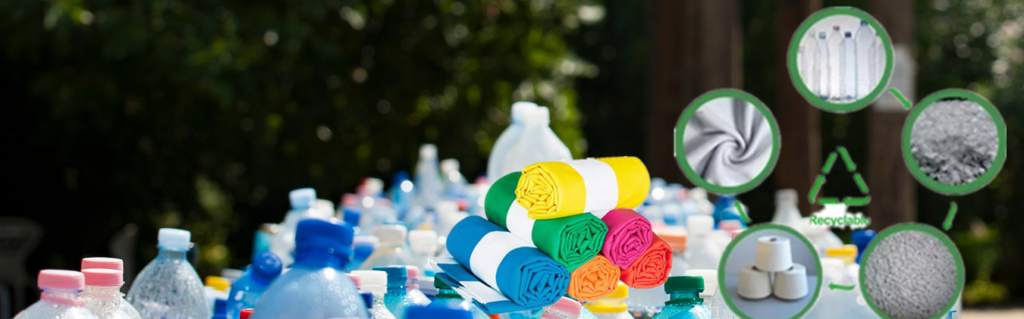
So, you want a beach towel that is good for the planet — and still looks great. Therefore, this guide will walk you through everything you need to know. Whether you are a resort buyer, a retailer, or a brand owner, you will find the answers here. We will cover materials, certifications, customization, and more. First, however, let us start with the most important question.
What is an eco-friendly beach towel? An eco-friendly beach towel is made with lower-impact materials — such as organic cotton, recycled fibers, hemp, or bamboo — and produced with responsible dyes, cleaner manufacturing, and sustainable packaging. According to Textile Exchange, organic cotton uses 91% less blue water and produces 46% lower greenhouse gas emissions than conventional cotton.
📊 Key Takeaways at a Glance
| Topic | Key Fact |
|---|---|
| Best eco material | Organic cotton — 91% less blue water vs. conventional cotton |
| Top certifications | GOTS, OEKO-TEX 100, BSCI, SGS, FDA |
| Market size (2026) | USD $4.48 billion — projected to reach $6.22B by 2033 |
| Consumer demand | 30%+ of buyers now actively choose sustainable fabrics |
| Custom MOQ | As low as 100 pieces with Favor Houseware |
| Climate impact | Organic cotton: 46% lower global warming potential |
| Energy savings | 62% less primary energy demand vs. conventional cotton |
1. What Makes a Beach Towel Eco-Friendly?
A beach towel is eco-friendly when it does less harm at every stage of its life. That means from the farm, to the factory, to your hands — and finally to the end of its useful life. In fact, an eco-friendly beach towel is not just about the fabric alone. Instead, it depends on four key pillars.
- Sustainable Materials: The fiber itself must come from a responsible source. Organic cotton, recycled fibers, bamboo, and hemp are the top choices. These materials either avoid harmful pesticides or give new life to existing waste.
- Responsible Dyeing: Traditional dyes can pollute waterways with toxic chemicals. Therefore, eco-friendly towels use water-based, low-impact, or AZO-free dyes. This step protects both the environment and your skin.
- Cleaner Manufacturing: A sustainable factory uses less energy, less water, and generates less waste during weaving, cutting, and sewing. Additionally, it treats wastewater before releasing it.
- Sustainable Packaging: Finally, eco-friendly brands choose recycled, biodegradable, or minimal packaging to cut down on plastic waste. This step is often overlooked — but it matters a lot.
“A truly eco-friendly beach towel passes the green test at every step — not just on the label.”
Furthermore, certified towels — like those carrying GOTS or OEKO-TEX 100 marks — give buyers proof that these standards were actually met. We will cover those certifications in detail further below.
2. Organic Cotton vs Recycled Polyester vs Bamboo: Which Is Best?
Not all eco-friendly fibers are the same. Therefore, it helps to compare them side by side. Each material has strengths and trade-offs. Let us break it down clearly.
| Feature | Organic Cotton | Recycled Polyester | Bamboo |
|---|---|---|---|
| Eco Impact | ⭐⭐⭐⭐⭐ — 91% less water, 46% lower GWP | ⭐⭐⭐ — Reuses plastic, but releases microplastics | ⭐⭐⭐⭐ — Fast-growing, low pesticide |
| Softness | Very soft & premium feel | Moderate — synthetic feel | Very soft, silky texture |
| Absorbency | Excellent | Low — water-resistant by nature | Good |
| Dry Time | Moderate (depends on weave & GSM) | Fast | Moderate to fast |
| Skin Safety | Best — no synthetic chemicals | Lower — synthetic fiber | Good — often hypoallergenic |
| Certifications | GOTS, OEKO-TEX, SGS | GRS (Global Recycled Standard) | OEKO-TEX (varies) |
| Brand Appeal | Premium, natural, luxury | Eco-tech, performance-focused | Soft, wellness-focused |
| Best For | Resorts, retail, premium gifting | Sports, outdoor, activewear | Wellness brands, spas |
For most buyers — including hotels, resorts, and retail brands — organic cotton is the strongest overall choice. It wins on softness, absorbency, skin safety, and environmental credentials. Moreover, it carries the most trusted certifications and sends the clearest eco-friendly message to customers. Explore recycled beach towels if your brand has a strong sustainability-tech angle.
According to Textile Exchange, the organic cotton market is projected to grow from USD $3.25 billion in 2026 to over $50.78 billion by 2034. As a result, now is the right time to align your brand with this growing trend.
3. Why Organic Cotton Beach Towels Are the Top Choice for Eco-Conscious Buyers
Organic cotton beach towels stand out — and for good reason. First, they are grown without harmful pesticides or synthetic fertilizers. This means the cotton is safer for farmers, for the planet, and for your skin.
Why Buyers Love Organic Cotton Beach Towels
- Skin-Friendly: Organic cotton has no residual chemicals on the fiber. Therefore, it is ideal for sensitive skin, babies, and allergy-prone users.
- Premium Feel: The natural softness of organic cotton improves over time, especially after repeated washing.
- Strong Eco Credentials: As noted, organic cotton uses 91% less water, produces 46% fewer emissions, and demands 62% less energy than regular cotton.
- High Demand: More than 30% of consumers actively seek sustainable fabrics, while over 40% of buyers say eco-friendliness influences their purchase decision.
- Brand Trust: Organic cotton with GOTS certification is one of the most trusted eco labels in the world. It signals transparency and accountability.
“Organic cotton is not just a trend. It is a long-term shift in how buyers think about the products they put on their bodies — and their brand.”
Furthermore, as the global beach towel market grows from $4.48 billion in 2026 to a projected $6.22 billion by 2033, sustainable materials will increasingly become the standard — not the exception. Learn more about organic fiber trends at Textile World.
4. Key Certifications: GOTS, OEKO-TEX & What They Mean for You
Certifications are your best protection against greenwashing. They are third-party proof that a towel truly meets eco and safety standards. Here are the most important ones to look for.
Global Organic Textile Standard. Covers the entire supply chain — from farming to finished product. Requires at least 70% organic fibers. Over 5,760 certified facilities in 64 countries.
Tests for harmful chemicals in finished textiles. Every component — fabric, thread, buttons — must pass. Favor Houseware holds OEKO-TEX 100 certification.
Business Social Compliance Initiative. Ensures fair labor conditions and ethical factory practices throughout the supply chain.
SGS provides third-party quality testing. FDA compliance matters especially for products sold in the USA.
Always ask your manufacturer for certificate numbers — not just logos. A genuine certificate can be verified online through the certifying body’s official website. Favor Houseware holds BSCI, OEKO-TEX 100, SGS, and FDA certifications — all verifiable upon request.
GOTS vs OEKO-TEX — What Is the Difference?
| Standard | What It Covers | Who Needs It |
|---|---|---|
| GOTS | Organic fiber sourcing + responsible processing throughout supply chain | Buyers who want certified organic fiber, not just safe chemicals |
| OEKO-TEX 100 | Safety of the finished product — no harmful substances in the final towel | Buyers who want assurance the finished item is safe for skin contact |
In short, GOTS certifies the journey; OEKO-TEX certifies the destination. For the most complete eco-friendly story, look for both. Additionally, you can explore global certification standards at global-standard.org.
5. How Sustainable Custom Beach Towels Work for Brands
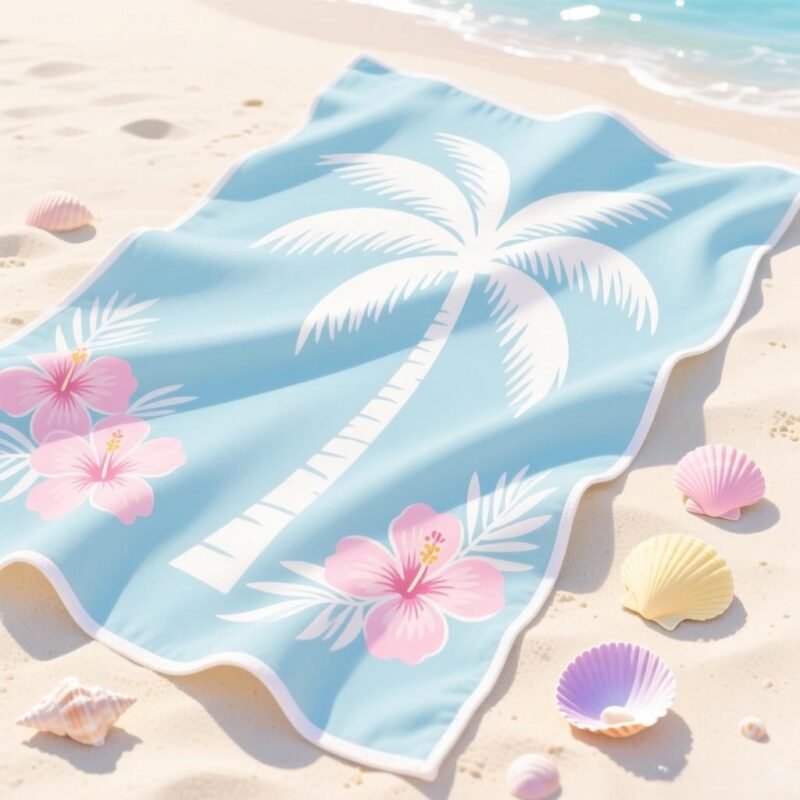
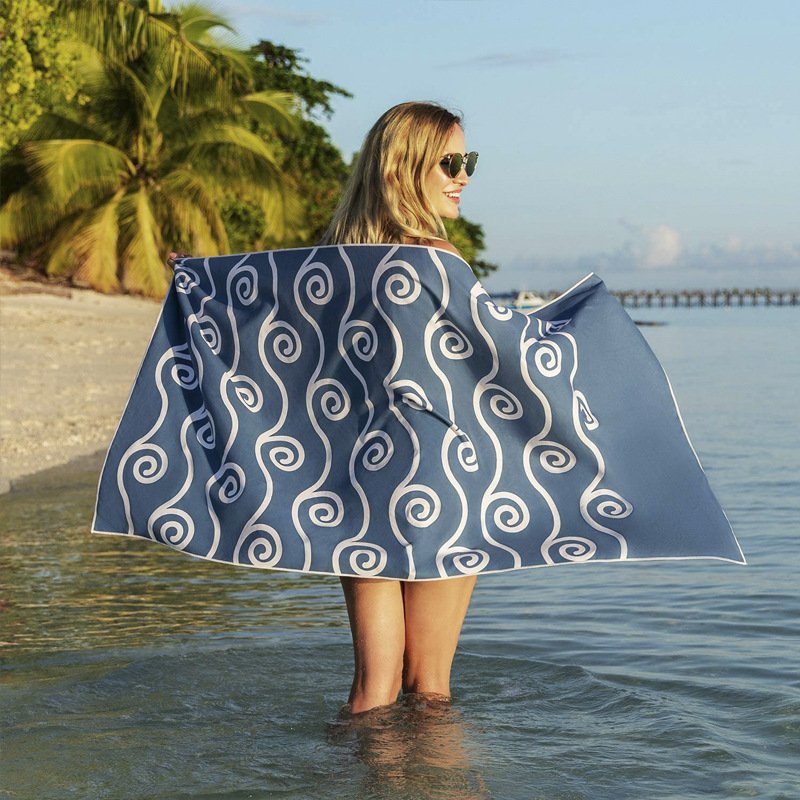
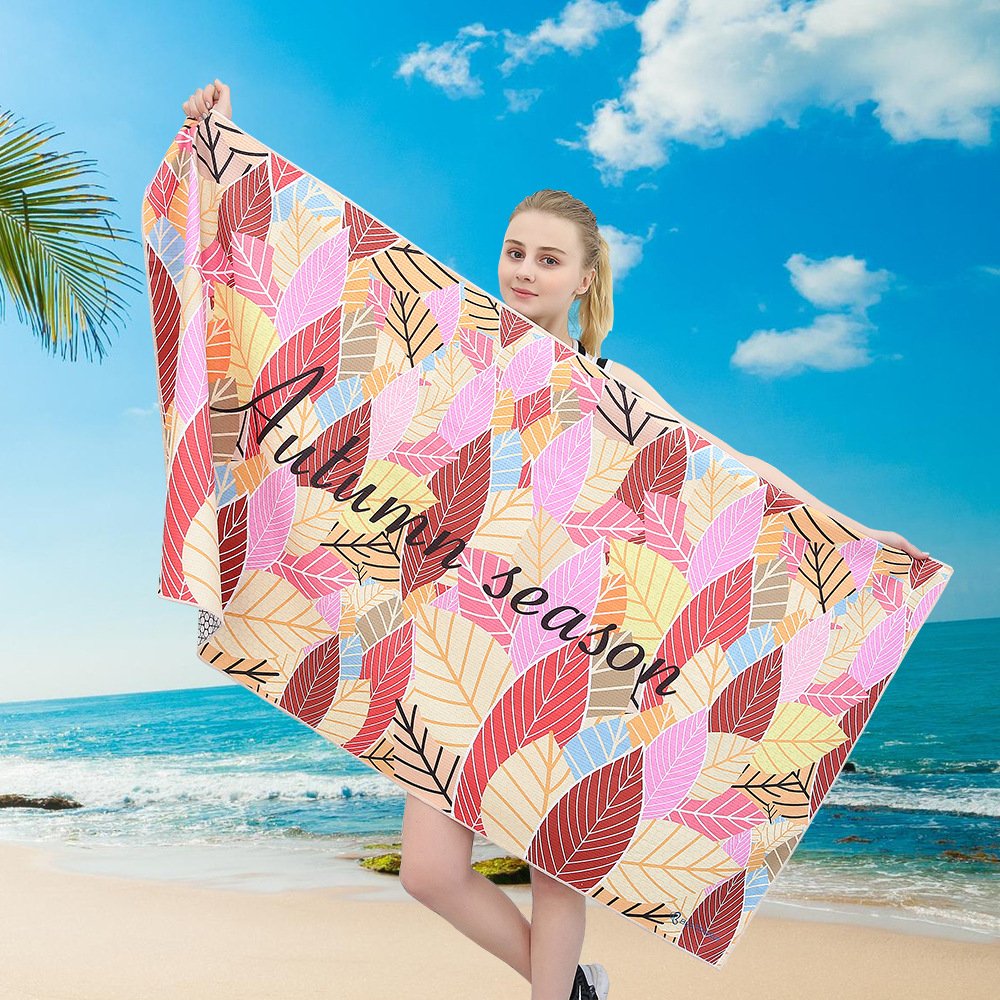
Many brands worry that going eco-friendly means giving up on great design or branding. Fortunately, that is simply not true. In fact, custom beach towels can be both beautifully branded and fully sustainable — when you choose the right manufacturer.
How Customization Can Stay Green
- Organic cotton base fabric — starts the towel on the right foot
- Water-based or reactive printing — low-impact inks that bond to fiber without harsh chemicals
- Digital printing — uses less ink, produces less waste, and allows small runs without waste
- Durable construction — longer-lasting towels mean lower lifetime environmental cost
- Recycled or minimal packaging — finishes the eco-story at the point of delivery
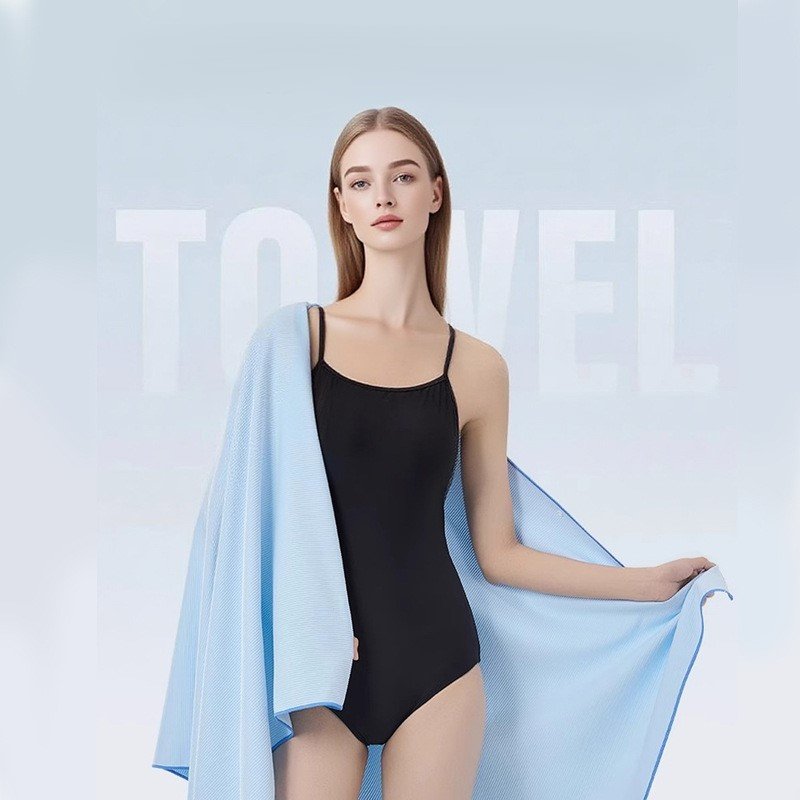
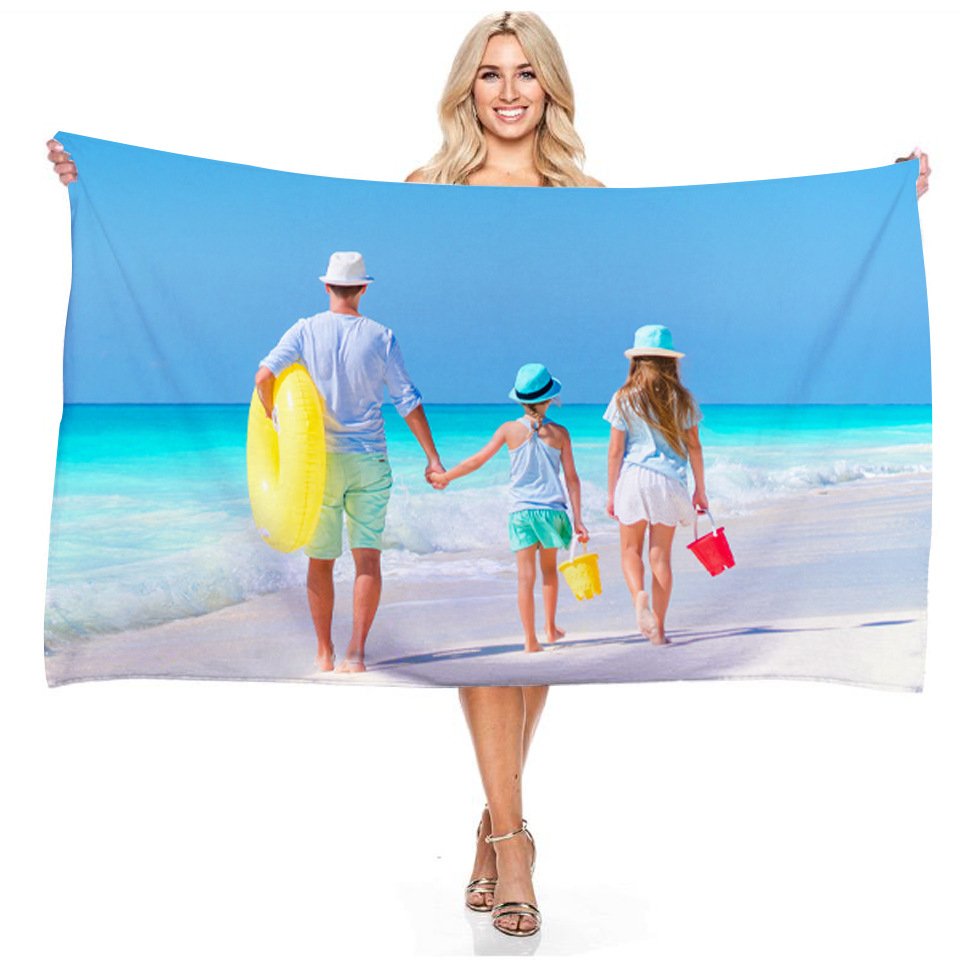
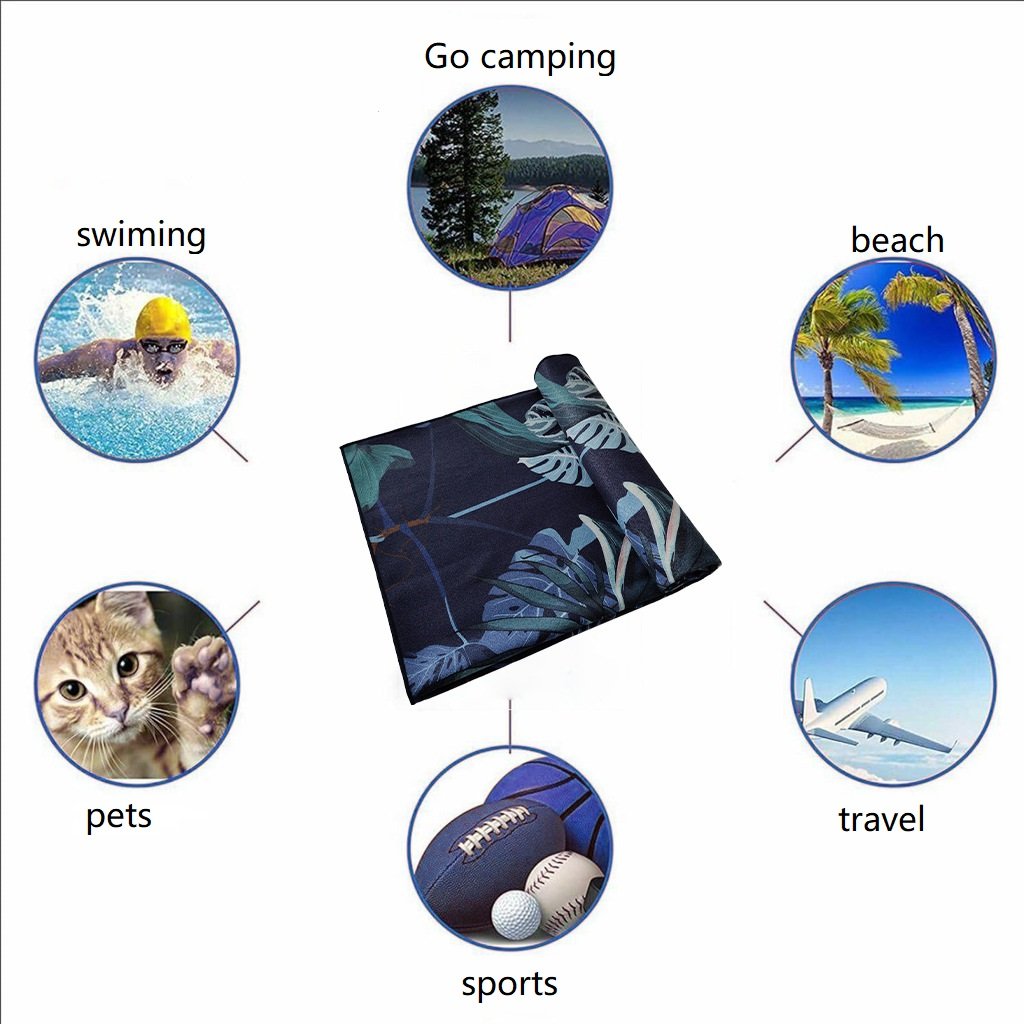
Use Cases for Sustainable Custom Beach Towels
| Buyer Type | Primary Need | Best Custom Option |
|---|---|---|
| Resorts & Hotels | Premium guest experience + brand identity | Embroidered logo on organic cotton, high GSM |
| Retail Brands | Eye-catching design + eco story to sell | Full digital print, custom colors, GOTS-certified |
| Corporate & Promotions | Budget-friendly with brand visibility | Printed logo, eco packaging, low MOQ from 100pcs |
| Wellness & Spa | Natural, skin-friendly, calming aesthetic | Organic cotton, neutral tones, OEKO-TEX certified |
Favor Houseware offers no MOQ for digital printing — meaning you can order custom-branded eco-friendly beach towels starting from just 100 pieces. This makes sustainable customization accessible to small and large brands alike.
6. Best Fabric Features for Beach Towels: GSM, Weave, Absorbency & Dry Time
Choosing the right beach towel goes beyond just picking organic cotton. Additionally, the GSM, weave type, and construction all affect how the towel performs in real life. Here is what each term means — in plain language.
What Is GSM?
GSM stands for grams per square meter. It measures how heavy and thick a towel is. A higher GSM means a thicker, more plush towel. A lower GSM means lighter and faster-drying.
| GSM Range | Feel | Best For |
|---|---|---|
| 300–400 GSM | Lightweight, fast-drying | Travel, sports, surf |
| 400–550 GSM | Medium weight, balanced | Everyday beach use, retail |
| 550–700+ GSM | Plush, ultra-soft, luxurious | Resorts, hotels, spa, gifting |
Weave Types That Matter
- Terry Weave: Looped pile — most absorbent. Great for pool & beach use.
- Waffle Weave: Lightweight and fast-drying. Ideal for travel.
- Flat Weave (Peshtemal/Turkish): Thin, packable, quick-dry. Perfect for surfers and travelers. See our Turkish hammam towels.
- Jacquard Weave: Decorative patterns woven in — no printing needed. Premium look.
“Do organic cotton towels dry fast?” — Yes, but dry time depends more on weave and GSM than the ‘organic’ label. A flat-weave organic cotton towel can dry faster than a thick terry polyester one.
Quick Decision Guide by Use Case
| Use Case | Recommended GSM | Best Weave | Material |
|---|---|---|---|
| Luxury Resort | 550–700 GSM | Terry or Jacquard | Organic Cotton |
| Travel / Surf | 300–400 GSM | Flat / Turkish | Organic Cotton or Bamboo |
| Retail Gift Set | 400–550 GSM | Terry or Waffle | Organic Cotton |
| Corporate Promo | 350–450 GSM | Flat Weave | Organic Cotton Blend |
Browse Favor Houseware’s full range including surf poncho towels and surf change robes — all available with sustainable material options.
7. Sustainable Manufacturing & Packaging Practices to Look For
A great eco-friendly beach towel starts long before the fabric arrives in your hands. Consequently, it is important to understand what happens inside the factory. Here is what to look for — and what to ask your supplier.
Sustainable Manufacturing Checklist
- ✅ Organic or responsibly sourced raw materials — certified at the fiber stage
- ✅ Imported precision weaving machines — reduce fabric waste during production
- ✅ Water-based / reactive dyes — less chemical runoff into the environment
- ✅ Automatic sewing machines — more consistent, less material waste
- ✅ Strict quality inspection before packing — fewer returns and product waste
- ✅ Wastewater treatment on-site — prevents toxic discharge into local waterways
- ✅ Recycled or minimal packaging — reduces plastic at point of delivery
Favor Houseware Co., Ltd. is based in Yiwu, Jinhua, Zhejiang Province, China — with 15 years of experience in beach towel manufacturing. Their process covers every step: weaving → printing → cutting → sewing → inspecting → packing → shipping. All steps meet BSCI, OEKO-TEX 100, SGS, and FDA standards.
Furthermore, durable construction matters for sustainability. A towel that lasts 3–5 years instead of one season effectively cuts the lifetime environmental footprint in half. As a result, well-made towels are not just better quality — they are a greener choice overall.
8. Who Buys Sustainable Beach Towels? (And What They Need)
The market for eco-friendly beach towels is growing fast. In addition, the buyers are more diverse than you might expect. Here is a breakdown of the key buyer groups — and what each one typically needs.
| Buyer Segment | Key Priority | Volume | Key Products |
|---|---|---|---|
| Hotels & Resorts | Premium quality, durable, logo branding | 500–5,000+ pcs | High-GSM organic terry, embroidered logo |
| Retail Brands | Unique design, eco story, sellable margins | 200–2,000+ pcs | Printed organic cotton, GOTS-certified |
| Promotional Buyers | Budget, brand visibility, fast delivery | 100–1,000+ pcs | Flat-weave printed, eco packaging |
| E-Commerce Sellers | Low MOQ, differentiated design, certifications | 100–500 pcs | Digital printed, custom label, retail-ready |
| Spas & Wellness | Natural feel, chemical-free, soft luxury | 200–1,500 pcs | OEKO-TEX organic cotton, neutral colors |
As the global beach towel market grows toward $6.22 billion by 2033, sustainable products will capture an increasingly large share of that revenue. Brands that move early will have a competitive advantage.
Favor Houseware serves all of the above segments — with low MOQ starting at 100 pieces, full customization, and fast delivery from their Yiwu, China factory. Visit their beach towel manufacturer page to see the full range. They also carry related items such as microfiber towels and recycled beach towels.
9. Common Mistakes to Avoid When Ordering Custom Eco-Friendly Towels
Even experienced buyers can make costly mistakes when sourcing eco-friendly beach towels. Therefore, here are the most common pitfalls — and how to avoid them.
Many suppliers label towels as “eco-friendly” without any third-party proof. Always ask for GOTS, OEKO-TEX, or SGS certificate numbers — and verify them directly.
A 700 GSM luxury towel is not right for a promotional giveaway. Similarly, a 300 GSM travel towel will disappoint resort guests. Match the GSM and weave to the actual use case — always.
A beautifully organic towel wrapped in single-use plastic packaging undermines the entire sustainability message. Ask your supplier about recycled or biodegradable packaging options.
Always request a free sample first before committing to a large order. Favor Houseware offers free samples — you only pay for freight. This protects you from costly quality surprises.
Custom printing with non-certified dyes can contaminate an otherwise eco-friendly towel. Insist on water-based, reactive, or AZO-free dyes for your custom designs.
Beach towel demand spikes before summer. Plan at least 60–90 days ahead for custom orders, especially if certifications or special packaging are required. Favor Houseware offers stock options for fast shipping when time is short.
10. FAQs About Eco Friendly Beach Towels & Custom Organic Cotton Towels
Organic cotton is widely considered the best choice. According to Textile Exchange, it uses 91% less blue water, generates 46% less greenhouse gas emissions, and demands 62% less energy than conventional cotton. It is also natural, biodegradable, and free from synthetic chemicals.
Yes — especially for eco-conscious buyers. Organic cotton is grown without synthetic pesticides or fertilizers, which is better for the soil, water, and farmers. It also tends to be softer and safer for sensitive skin. The trade-off is that quality and price can vary by weave, yarn quality, and GSM.
Absolutely. Custom beach towels can be fully sustainable when the base fabric, dyes, printing method, and packaging are all carefully selected. Starting with organic cotton, using water-based inks, and choosing recycled packaging are the three most important steps. Favor Houseware offers sustainable customization with no MOQ for digital printing.
Look for GOTS (organic fiber + responsible processing), OEKO-TEX 100 (no harmful chemicals in the finished product), BSCI (fair labor), and SGS (quality testing). Favor Houseware holds all four, plus FDA compliance for US-market exports.
They can — but dry time depends more on weave and GSM than the organic label. A flat-weave or waffle-weave organic cotton towel can dry just as fast as a synthetic one. If quick-dry performance is a top priority, choose a lighter GSM (300–400) or a flat weave design.
They can be more sustainable than virgin polyester — because they reuse plastic waste. However, recycled polyester is still a synthetic fiber and may release microplastics when washed. For brands that prefer a 100% natural eco story, organic cotton is the cleaner option. Browse our recycled beach towels if your brand leans toward the eco-tech angle.
Organic cotton refers to how the fiber is grown — without synthetic pesticides or GMOs. GOTS-certified cotton goes further — it ensures the fiber stays organic through the entire supply chain, including spinning, dyeing, and finishing. GOTS is the gold standard for verified organic textiles.
Yes — when done right. The key is to use water-based or reactive inks and digital printing technology, which minimizes ink waste and avoids harsh chemicals. Favor Houseware uses digital printing with eco-friendly inks — available with no MOQ for printing, making it ideal for small eco-conscious brands.
For resorts and hotels, the best option is a high-GSM (550–700) organic cotton terry towel with embroidered or jacquard branding. This delivers the premium, plush experience guests expect — while meeting sustainability goals your property can market confidently.
Manufacturers can improve sustainability by sourcing certified organic fibers, switching to water-based dyes, treating wastewater on-site, reducing packaging plastic, improving cutting efficiency to minimize fabric waste, and building durability into every towel so it lasts longer. Favor Houseware’s 15-year manufacturing record reflects all of these practices. Contact them to learn more.
Conclusion: The Future of Beach Towels Is Sustainable — And Custom
Eco-friendly beach towels are no longer a niche product. In fact, they are quickly becoming the new standard for resorts, retailers, and brands that want to stay ahead of the curve. Furthermore, choosing organic cotton beach towels is one of the clearest, most credible sustainability steps any buyer can take — backed by science, certifications, and real consumer demand.
As we have covered throughout this guide, a truly sustainable beach towel is built on four pillars: responsible materials, clean dyes, ethical manufacturing, and sustainable packaging. Additionally, customization does not have to compromise any of those pillars — especially when you work with the right manufacturing partner.
Whether you are a hotel buyer, a retail brand, or a promotional buyer, the path forward is clear: source smarter, certify confidently, and partner with a manufacturer you can trust.
Favor Houseware Co., Ltd. — with 15 years of experience, OEKO-TEX 100 certification, BSCI compliance, and MOQ starting at just 100 pieces — is ready to help you build your sustainable beach towel range, exactly the way you envision it.
Ready to Order Eco Friendly Beach Towels?
Get a free sample (pay freight only), request a custom quote, or browse our full range of sustainable beach towels. Our team responds within 24 hours — from our factory in Yiwu, China, to your door worldwide.
📩 Get a Free Quote Now 🏭 View Our Beach Towels 📖 Read More on Our BlogViews: 0