1. Add White Vinegar to Every Wash: The simplest solution is to add ½ cup of white vinegar to your rinse cycle or fabric softener dispenser with every towel wash. The vinegar’s acidity dissolves mineral deposits before they can build up on fibers. Despite its strong smell while washing, vinegar leaves no odor on dried towels.
2. Use Less Detergent: Because hard water prevents detergent from working efficiently, many people add more soap – which actually makes the problem worse. Instead, use half the recommended amount and let the vinegar do the softening work.
3. Try Detergents Made for Hard Water: Several brands now make detergents specifically formulated for hard water. These contain extra chelating agents that bind to minerals and prevent them from depositing on fabric. Look for products labeled “hard water formula” or “mineral defense.”
4. Install a Water Softener: For a permanent solution, consider installing a whole-house water softening system. While this requires upfront investment, it protects not just your towels but also your plumbing, appliances, and skin. Moreover, water softeners pay for themselves over time through reduced soap usage and longer-lasting textiles.
5. Borax Boost: Add ½ cup of borax to your wash along with detergent. Borax naturally softens water by raising its pH and binding to mineral ions. This household staple has been used for generations to improve washing results in hard water areas.
By addressing hard water issues directly, you’ll notice a dramatic improvement in how soft and absorbent your recycled beach towels and regular cotton towels feel after washing. The difference is truly remarkable.
Best Drying Methods for Maximum Fluff
Washing your beach towels correctly is only half the battle. How you dry them matters just as much for maintaining that soft, fluffy texture. In fact, improper drying is one of the fastest ways to ruin perfectly washed towels.
The key principle is simple: gentle heat and good air circulation preserve cotton fibers, while high heat and over-drying damage them. Let’s explore the best drying techniques that will keep your towels feeling like clouds.
Dryer Settings That Protect Softness
When using a tumble dryer, always choose low or medium heat settings – never high heat. Although high heat dries towels faster, it makes cotton fibers brittle and causes them to break down quickly. Over time, this creates that rough, scratchy texture that no amount of fabric softener can fix.
Additionally, don’t over-dry your towels. Remove them from the dryer when they’re completely dry but not “baked.” Leaving towels tumbling for an extra 20-30 minutes might seem harmless, but it actually cooks the fibers and removes their natural moisture content. Set a timer and check your towels regularly.
Here’s a pro tip: Add 3-4 wool dryer balls to every drying cycle. These natural alternatives to dryer sheets work by bouncing between towels and physically separating the fibers. As a result, air circulates better, drying happens faster, and your towels come out noticeably fluffier. Unlike dryer sheets, wool balls contain no chemicals and can be reused hundreds of times.
🌟 Perfect Dryer Settings for Beach Towels
- Heat Level: Low to medium (never high)
- Cycle Length: Just until dry (avoid over-drying)
- Load Size: Don’t overstuff – towels need space to tumble
- Add-ins: 3-4 wool dryer balls (skip dryer sheets entirely)
- Timing: Check halfway through and shake towels
Before placing towels in the dryer, give them a vigorous shake to loosen and separate the fibers. This simple action takes only 5 seconds per towel but makes a noticeable difference in final fluffiness. Then, about halfway through the drying cycle, pause the machine and shake them again. This ensures even drying and prevents certain areas from staying damp while others over-dry.
Air Drying Without the Stiffness
Air drying is excellent for extending towel life and saving energy. However, many people avoid line-drying because it can make towels feel stiff and crunchy. Fortunately, you can get soft air-dried towels by following a few smart techniques.
Shake vigorously before hanging: Just like with dryer preparation, give your wet towels several good shakes before hanging them up. This fluffs the loops and prevents them from clumping together as they dry.
Provide good air circulation: Hang towels spread out completely, not bunched or folded. Space them apart so air can flow around all sides. Moreover, outdoor drying in fresh air and sunshine works best because UV rays naturally disinfect and the breeze keeps fibers moving.
Shake again halfway through: When towels are about 50% dry, take them down and shake them vigorously again. This step is crucial – it prevents the fibers from drying in a compressed, flat position. Then rehang them to finish drying.
Finish with a dryer fluff: Here’s the secret to perfectly soft air-dried towels: when they’re about 90% dry, bring them inside and toss them in the dryer on low heat for just 5-10 minutes. This brief tumbling fluffs up the loops and gives you softness without the energy cost of a full drying cycle. Consequently, you get the best of both worlds – energy savings plus cloud-like softness.
Drying Dos and Don’ts
✅ DO These Things
- Shake towels before and during drying
- Use low to medium heat only
- Add wool dryer balls for fluffiness
- Remove promptly when dry
- Dry cotton and microfiber separately
- Clean lint trap before each load
❌ DON’T Do These
- Use high heat (damages fibers)
- Over-dry towels (makes them brittle)
- Add dryer sheets (coats fibers)
- Overstuff the dryer (prevents fluffing)
- Leave damp towels sitting around
- Dry without shaking first
By mastering these drying techniques, your surf poncho towels and regular beach towels will maintain their softness wash after wash. Remember, proper drying is just as important as proper washing.
How Hotels Keep Towels So Soft and Absorbent (Industry Secrets)
Have you ever wondered why hotel towels feel incredibly soft and dry you off in seconds? It’s not magic – hotels follow specific procedures that anyone can replicate at home. Let’s uncover the professional laundry techniques that keep hotel towels in pristine condition even after hundreds of washes.
First and foremost, quality hotels invest in premium 100% cotton towels made from long-staple fibers like Egyptian, Pima, or Turkish cotton. These superior materials naturally maintain softness and absorbency better than short-staple cotton or cotton blends. When you start with excellent raw materials, keeping them nice becomes much easier.
Professional Hotel Washing Secrets
Commercial hotel laundries use carefully controlled washing programs that most people don’t follow at home. Here’s what they do differently:
- Precise detergent dosing: Hotels measure detergent carefully based on water hardness, load size, and soil level. They never eyeball it or follow package directions blindly. Instead, they use exactly what’s needed – no more, no less.
- Warm water washing: Most hotels wash towels in warm water (not hot) to balance cleaning power with fiber protection. Hot water is reserved only for heavily soiled items or sanitizing cycles.
- Multiple rinse cycles: Commercial machines often run 2-3 rinse cycles to completely remove all detergent and minerals. This thorough rinsing prevents the buildup that causes stiffness in home-washed towels.
- Minimal fabric softener: Surprisingly, many hotels use no traditional fabric softener at all. When they do use softeners, it’s specialized commercial formulations designed to maintain absorbency, not consumer products that coat fibers.
- Vinegar as rinse aid: Many professional laundries add small doses of white vinegar to the rinse cycle. This natural softening agent dissolves minerals and detergent residue without creating the water-repelling coating that fabric softeners leave behind.
“The secret to hotel-quality towels isn’t expensive chemicals – it’s using high-quality cotton, precisely measured detergent, extra rinse cycles, and avoiding anything that coats the fibers. We wash in warm water and add vinegar to keep them soft without sacrificing absorbency.”
— Professional Hotel Laundry Manager
Additionally, hotels replace their towels on a regular schedule. Even with perfect care, commercial-grade towels typically get replaced every 1-2 years in high-volume hotels. This ensures guests always experience optimal softness and absorbency.
How You Can Copy Hotel Methods at Home
The good news is you can achieve hotel-quality results without commercial equipment. Here’s how to adapt professional techniques for home use:
- Invest in quality towels: Start by purchasing well-made cotton towels with a GSM between 400-600. At Favor Houseware, we manufacture premium beach towels using long-staple cotton that maintains softness through hundreds of washes.
- Measure your detergent: Use a measuring spoon or cup – never pour directly from the bottle. Start with half the recommended amount and adjust based on results.
- Add an extra rinse: Most modern washing machines have an “extra rinse” option. Use it every time you wash towels to ensure complete detergent removal.
- Skip the softener, add vinegar: Pour ¼-½ cup of white vinegar into your fabric softener dispenser. The acidity naturally softens towels without coating fibers.
- Don’t overload the machine: Towels need space to agitate and rinse properly. Fill your washer only ⅔ full for best results.
- Dry properly: Use medium heat with wool dryer balls, and remove towels the moment they’re dry – not 30 minutes later.
By following these hotel-inspired techniques, you can transform your regular home laundry into a professional operation. The difference in towel quality will be immediately noticeable, and your guests will think you’ve upgraded to luxury hotel-grade towels.
As a China-based textile manufacturer, we understand that proper care instructions are just as important as manufacturing quality. That’s why we recommend these professional methods to all our customers who purchase our microfiber towels and cotton beach towels.
Choosing the Right Beach Towel Material for Softness
Before you even wash your first load, the material you choose makes a huge difference in how soft and absorbent your beach towels will be. Not all towels are created equal, and understanding fabric options helps you make smart purchasing decisions that pay off with years of comfortable use.
Let’s explore the most popular beach towel materials and what makes each one special. Whether you prefer traditional cotton or modern microfiber, there’s a perfect option for your needs.
Understanding GSM Numbers
Before we dive into materials, you need to understand GSM (grams per square meter). This number tells you how dense and heavy a towel is, which directly impacts both softness and absorbency.
For beach towels specifically, the sweet spot is 350-500 GSM. This range provides excellent absorbency and a plush feel while still drying quickly for travel and outdoor use. Lower GSM towels (200-350) are lightweight and fast-drying but less luxurious. Higher GSM towels (600+) feel incredibly plush but take forever to dry and attract more sand at the beach.
| GSM Range | Weight Category | Best For | Drying Speed |
|---|---|---|---|
| 200-350 GSM | Lightweight | Travel, gym, quick-dry needs | Very Fast (1-2 hours) |
| 350-500 GSM | Medium (Ideal) | Beach, pool, everyday use | Fast (2-3 hours) |
| 500-600 GSM | Premium | Luxury beach experience | Moderate (3-4 hours) |
| 600+ GSM | Heavy Bath | Home bath use only | Slow (4+ hours) |
At Favor Houseware, we typically manufacture beach towels in the 400-500 GSM range because this offers the perfect balance for outdoor use. Our customers report excellent satisfaction with this weight category across various climates and activities.
Cotton Types Compared
Not all cotton is the same. The length of cotton fibers (called “staple length”) dramatically affects how soft, strong, and absorbent the final towel will be. Longer fibers create smoother, more durable towels that resist pilling and maintain softness through many wash cycles.
Our Premium Beach Towel Collection

Premium 450 GSM Cotton Beach Towel
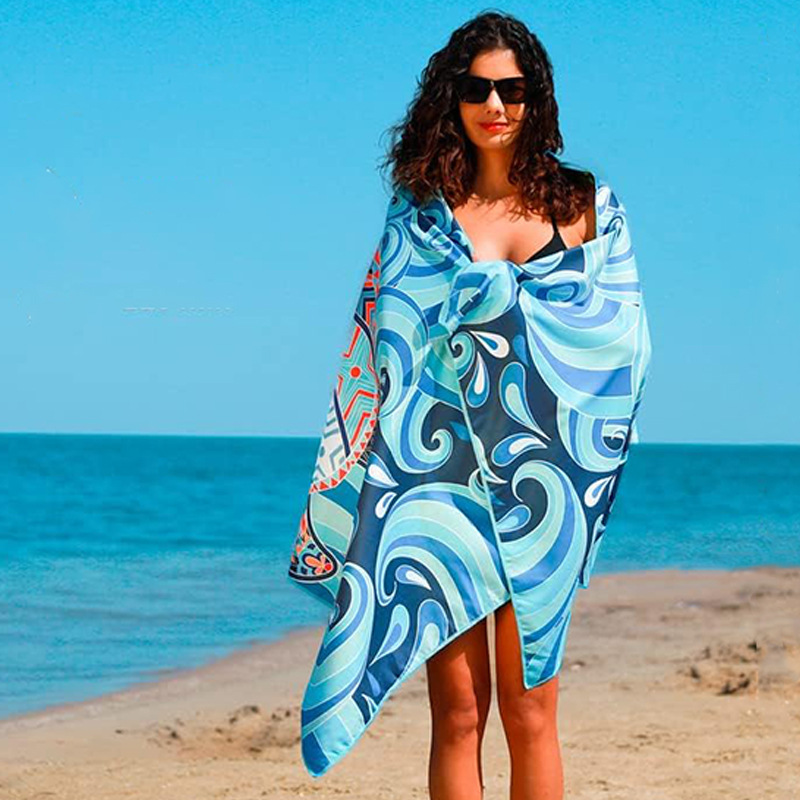
Turkish Hammam Towel – Quick Drying
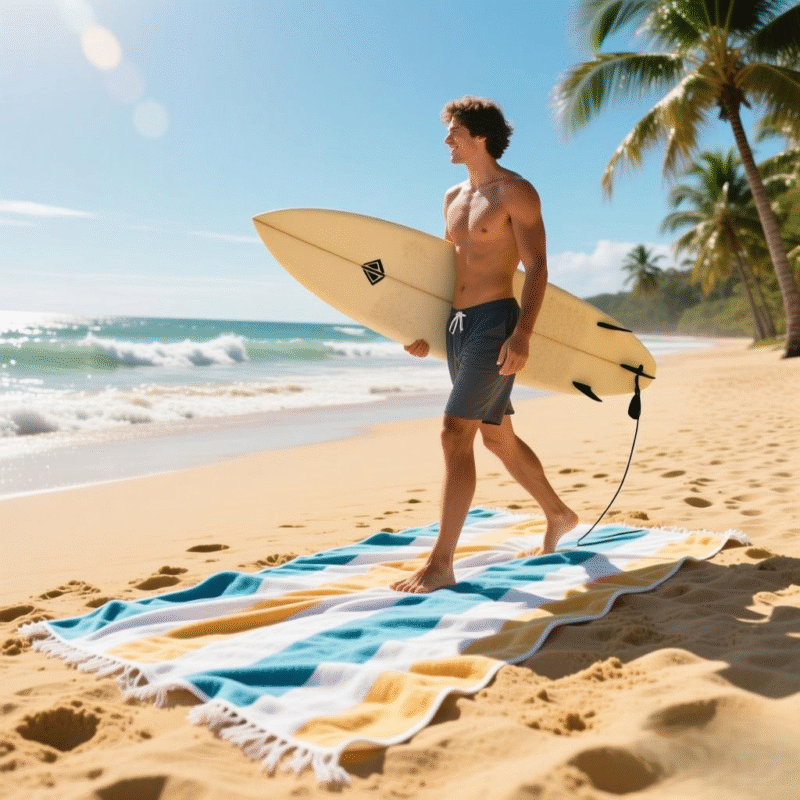
Microfiber Beach Towel – Ultra Absorbent
| Cotton Type | Fiber Length | Softness | Absorbency | Durability | Price |
|---|---|---|---|---|---|
| Egyptian Cotton | Extra-long staple | ⭐⭐⭐⭐⭐ | ⭐⭐⭐⭐⭐ | Excellent | $$$ |
| Turkish Cotton | Long staple | ⭐⭐⭐⭐⭐ | ⭐⭐⭐⭐ | Excellent | $$-$$$ |
| Pima Cotton | Extra-long staple | ⭐⭐⭐⭐ | ⭐⭐⭐⭐ | Very Good | $$ |
| Regular Cotton | Standard | ⭐⭐⭐ | ⭐⭐⭐ | Good | $ |
| Bamboo | Variable | ⭐⭐⭐⭐ | ⭐⭐⭐⭐ | Good | $$ |
| Microfiber | Synthetic | ⭐⭐⭐ | ⭐⭐⭐⭐⭐ | Excellent | $-$$ |
Egyptian Cotton: Considered the gold standard, Egyptian cotton features extra-long fibers that create incredibly soft, absorbent towels. These towels improve with age, becoming softer after multiple washes. However, they’re also the most expensive option.
Turkish Cotton: Known for its exceptional absorbency and quick-drying properties, Turkish cotton offers luxury feel at a slightly lower price point. Our Turkish hammam towels are particularly popular for beach use because they’re lightweight yet highly absorbent.
Pima Cotton: Grown primarily in the Americas, Pima cotton rivals Egyptian cotton in softness and durability. It’s an excellent mid-range option that delivers premium quality without the premium price tag.
Regular Cotton: Standard short-staple cotton makes perfectly functional beach towels at budget-friendly prices. While not as luxurious as long-staple varieties, quality regular cotton towels can still provide years of reliable service with proper care.
Bamboo: Eco-conscious consumers love bamboo towels for their sustainability. These naturally antibacterial towels feel silky soft and absorb water well. Additionally, bamboo grows quickly without pesticides, making it an environmentally friendly choice.
Microfiber: A synthetic alternative to cotton, microfiber towels can absorb up to 7 times their weight in water and dry incredibly fast. They’re perfect for travelers, athletes, and anyone who needs ultra-lightweight, quick-drying towels. Our microfiber collection offers various sizes and colors for different needs.
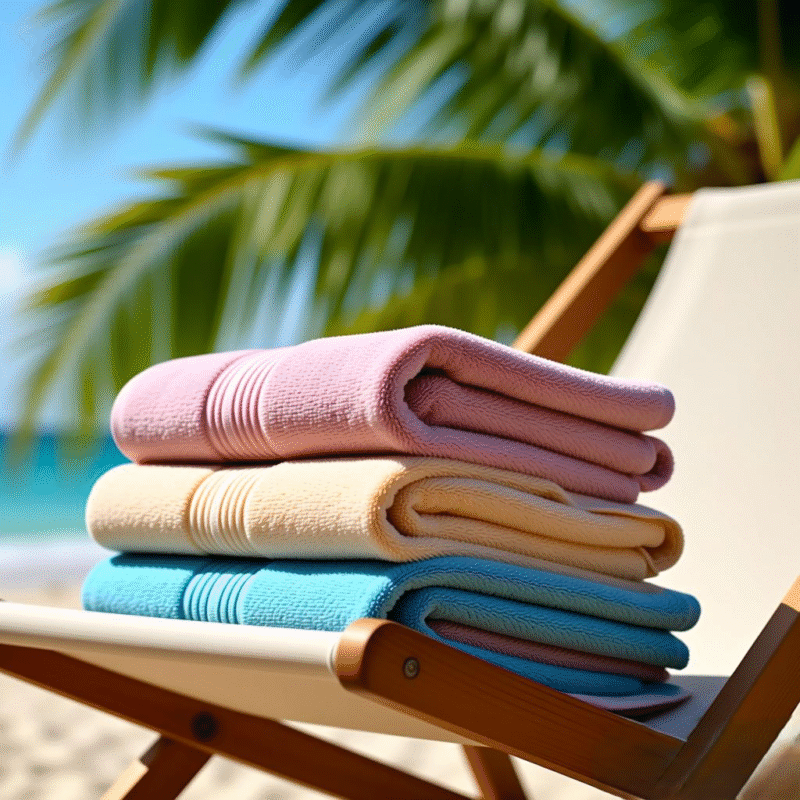
Eco-Friendly Recycled Beach Towel
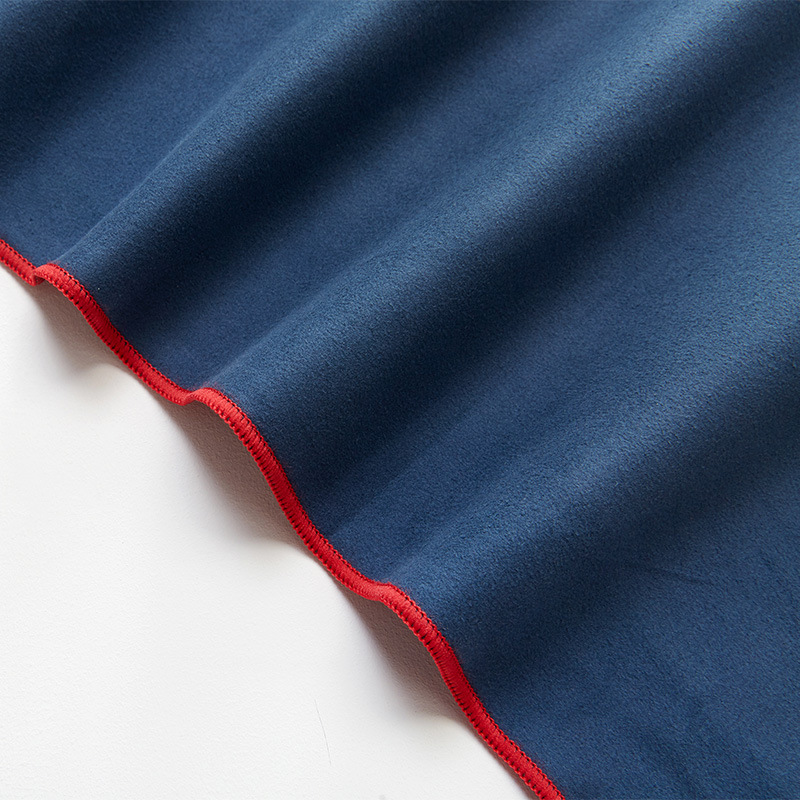
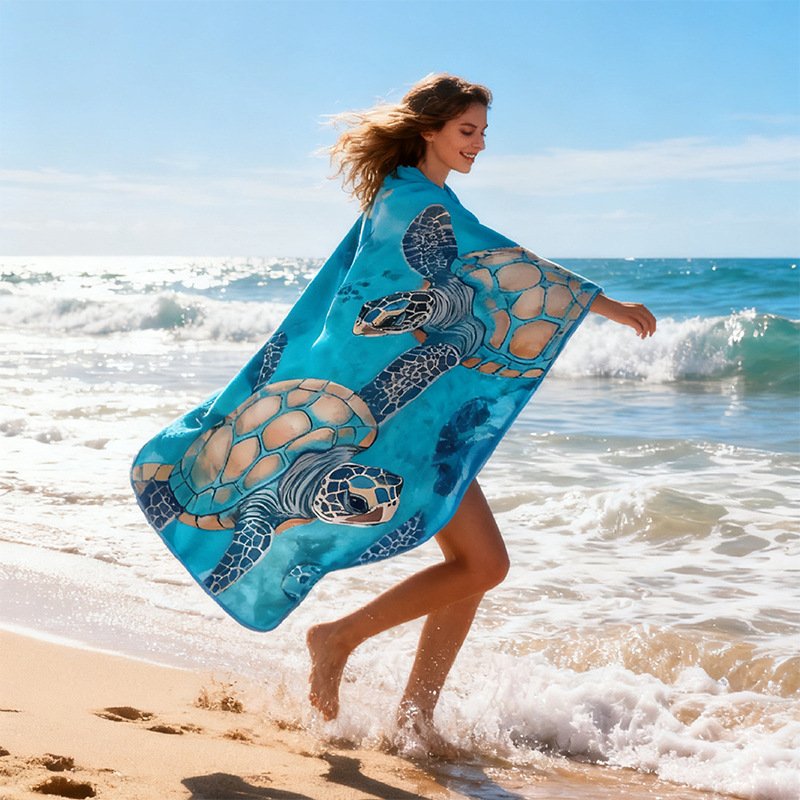
Multi-Functional Surf Poncho Towel
Classic Striped Beach Towel Design
When selecting beach towel material, consider how and where you’ll use it. Beach enthusiasts who prioritize quick drying might prefer microfiber or lightweight Turkish cotton. Meanwhile, those who value plush luxury should invest in Egyptian or Pima cotton towels with higher GSM ratings.
At Favor Houseware, we manufacture all these towel types using quality-controlled processes that ensure consistent softness and absorbency. Whether you choose our recycled beach towels for sustainability or our premium cotton options for luxury, proper care will keep them soft for years.
How Often to Wash and Replace Beach Towels
Finding the right washing frequency for beach towels requires balancing hygiene with fabric preservation. Wash too often and you’ll wear out the fibers prematurely. Wash too rarely and you’re creating a breeding ground for bacteria, mold, and unpleasant odors.
Consumer hygiene experts typically suggest washing beach towels after every 3-4 uses at most. However, this guideline comes with important exceptions that depend on how you use your towels.
When to Wash Beach Towels Immediately
Some situations require washing your beach towel after just one use, regardless of general guidelines:
- After swimming in the ocean: Saltwater and sand need immediate removal to prevent fabric damage and bacterial growth
- After pool use: Chlorine degrades cotton fibers and causes discoloration if left sitting
- If you applied sunscreen: Oily sunscreen products attract bacteria and can stain towels permanently
- After sweating heavily: Body oils and sweat create perfect conditions for bacteria multiplication
- If it stayed damp for hours: Towels left in beach bags or car trunks become microbial breeding grounds
- If anyone is sick: Wash immediately to prevent spreading illness
- If it smells musty: Any odor indicates bacterial overgrowth requiring immediate cleaning
According to research on textile hygiene, bacteria can multiply exponentially on damp towels within just a few hours. Therefore, the safest approach is washing beach towels after each beach or pool trip, especially during hot summer months.
🦠 Bacteria Growth Timeline
- 0-2 hours damp: Minimal bacterial growth
- 2-8 hours damp: Bacteria begin multiplying rapidly
- 8-24 hours damp: Significant bacterial colonies form
- 24+ hours damp: Mold and mildew development begins
Pro Tip: Always hang towels to dry immediately after use, even if you won’t wash them right away. This stops bacterial growth and prevents that characteristic “sour” smell.
Washing for Light Use vs. Heavy Use
If you’re simply laying on a dry beach towel for sunbathing (no swimming, minimal sweating), you can extend to 3-4 uses before washing. However, once the towel gets wet from swimming or sweating, the clock starts ticking on bacterial growth.
For surf change robes and poncho towels that contact your body directly after swimming, washing after every use is strongly recommended. These items absorb lots of moisture and body contact, making them prime environments for bacteria.
When to Replace Beach Towels
Even with perfect care, beach towels don’t last forever. Care experts and textile manufacturers recommend replacing heavily used towels every 2-3 years. However, high-quality hotel-grade cotton can maintain good performance much longer with professional laundering techniques.
Signs it’s time to replace your beach towels:
- Persistent odors that don’t wash out even after reset cycles
- Visible wear like thinning fabric, holes, or fraying edges
- Loss of absorbency that doesn’t improve with vinegar treatment
- Rough texture that remains scratchy despite proper washing
- Faded colors that make the towel look dingy and old
- Pilling or matted loops that won’t fluff up anymore
Interestingly, quality matters significantly here. Our customers report that premium beach towels from Favor Houseware often last 4-5 years with proper care, while budget towels from discount stores might only survive 1-2 seasons.
As manufacturers of quality textiles in China with decades of industry experience, we design our towels for longevity. By using long-staple cotton, reinforced stitching, and proper GSM weights, we ensure customers get maximum value from their investment.
Manufacturer Pro Tips: Make Your Beach Towels Last Longer
As a professional beach towel manufacturer serving clients worldwide, we’ve learned exactly what extends towel life and what destroys it prematurely. These insider tips come directly from our quality control team and textile engineers.
Manufacturing Quality Indicators
Before we discuss care tips, let’s talk about what makes a quality beach towel in the first place. When shopping for towels, look for these manufacturing quality markers:
- 100% cotton or quality cotton blends (avoid towels with high synthetic content unless buying microfiber)
- Double-needle stitching on all edges to prevent unraveling
- Reinforced corners that won’t separate after washing
- Consistent loop height across the entire towel surface
- Colorfastness certification ensuring dyes won’t bleed or fade quickly
- Pre-shrunk fabric that won’t shrink dramatically after first wash
- GSM rating clearly stated (shows manufacturer confidence in product)
At Favor Houseware, we implement strict quality control measures at every production stage. From sourcing premium cotton to final inspection, our process ensures that every towel meets international standards for softness, absorbency, and durability.
🏭 Inside Manufacturing: Quality That Lasts
Our manufacturing process prioritizes longevity over quick production. We use ring-spun cotton yarns instead of cheaper open-end yarns because they create 30-40% stronger towels. Additionally, our dyeing process uses reactive dyes that bond chemically with cotton fibers, ensuring colors stay vibrant through hundreds of washes.
These quality investments cost more initially, but our customers save money long-term because they replace towels less frequently.
Care Instructions That Actually Matter
The care label on your beach towel isn’t just decoration – it contains critical information for maintaining quality. Here are the most important care instructions and why they matter:
Avoid Bleach (Especially Chlorine Bleach): While bleach effectively whitens and sanitizes, it also breaks down cotton fibers at the molecular level. Each bleach treatment weakens your towel, shortening its lifespan significantly. If you must sanitize, use oxygen bleach (like OxiClean) instead, which is much gentler on fibers.
Never Iron Beach Towels: Heat and pressure flatten the cotton loops that give towels their absorbency. Ironed towels might look neat, but they won’t dry you effectively. The loops need to stay fluffy and three-dimensional to trap water.
Wash Colors Separately: Especially during the first 3-5 washes, darker and brighter colored towels may release excess dye. Washing them separately prevents color transfer to lighter items. After initial washes, most quality towels become colorfast and can be mixed.
Skip the Fabric Softener (Yes, Again): We can’t emphasize this enough. Advising customers to avoid fabric softener use can significantly prolong the softness and absorbency of branded cotton towels. It’s the single most important care instruction we give.
Don’t Over-Dry: Excessive heat and tumbling literally cook the moisture out of cotton fibers, making them brittle. Remove towels when dry – not 30 minutes later when you finally remember they’re in the dryer.
Product Information and Customer Education
As manufacturers, we’ve learned that explaining recommended GSM, fiber type, and care instructions on product pages can reduce returns and increase perceived quality of China-made beach towels. When customers understand why they should follow certain care practices, they’re much more likely to do so.
On our product specification pages, we provide detailed information about:
- Exact GSM weight and what it means for use scenarios
- Cotton source and fiber quality certifications
- Detailed washing and drying instructions with explanations
- Expected lifespan with proper vs. improper care
- Environmental impact and sustainability credentials
This transparency builds trust with customers and positions us as experts who genuinely care about product longevity. According to industry research on consumer goods, brands that educate customers see lower return rates and higher satisfaction scores.
Whether you’re purchasing our kitchen towels, beach towels, or other textile products, following manufacturer care guidelines ensures you get maximum value from your investment. Quality materials combined with proper care create products that serve you faithfully for years.
Frequently Asked Questions
Here are answers to the most common questions people ask about keeping beach towels soft and absorbent:
❓ Why are my beach towels not absorbent anymore?
Beach towels lose absorbency because of detergent residue, fabric softeners, hard-water minerals, body oils, and over-drying. These substances coat or damage the cotton fibers, making water bead on the surface instead of soaking in. A vinegar reset wash usually fixes this problem by dissolving the buildup.
❓ How do you make stiff towels soft and fluffy again?
Run one wash with hot water and white vinegar (no detergent), then a second wash with warm water and baking soda. Dry on medium heat without softeners. This routine dissolves residue and minerals, allowing the cotton loops to open up and feel fluffy again. Most towels respond dramatically to this treatment.
❓ Should you use fabric softener on beach towels?
No, most experts advise against using regular fabric softener or dryer sheets on towels. The oily or waxy coating these products leave behind reduces water absorbency significantly. If you want softer towels, use white vinegar or specialized non-coating softeners designed to maintain absorbency.
❓ What is the best way to wash beach towels?
Wash beach towels separately in warm water with minimal detergent (half the recommended amount). Avoid overloading the machine, skip softeners completely, and add vinegar occasionally as a rinse aid. This combination removes oils and sand while protecting fibers, keeping towels soft and absorbent for years.
❓ How do hotels keep towels so soft and absorbent?
Hotels use high-quality 100% cotton towels and follow controlled washing programs with warm water, correctly dosed detergent, minimal specialized softeners, and careful drying. They often use extra rinses and sometimes vinegar or similar agents to prevent film buildup that would reduce absorbency. Starting with quality materials makes a huge difference.
❓ How often should you wash beach towels?
General hygiene advice recommends washing beach towels after each heavy use, especially after swimming, to remove salt, chlorine, sunscreen, and sand. For light use like sunbathing, you can extend to 3-4 uses. However, always wash immediately if the towel stays damp for hours, as bacteria multiply rapidly in moist conditions.
❓ Do microfiber beach towels stay soft and absorbent longer?
Microfiber beach towels are engineered to be lightweight, quick-drying, and highly absorbent (up to 7x their weight in water). They resist stiffness when washed with minimal detergent and no softeners. However, some users prefer the traditional plush feel of cotton, so brands often offer both options to match different preferences.
❓ How do you dry towels so they don’t go hard?
Dry towels on medium or low heat with wool dryer balls, shake them before and halfway through drying, remove promptly when dry, and avoid overdrying. For line drying, shake towels vigorously before hanging and once during drying to loosen loops. Finish with 5-10 minutes in the dryer for extra fluffiness.
❓ Does vinegar really help towels stay absorbent?
Yes, white vinegar in the rinse cycle effectively dissolves detergent residue and mineral deposits, improving both softness and water absorption without leaving a coating. Many home and hotel routines use vinegar periodically as a natural alternative to softener. The vinegar smell completely disappears during drying.
❓ What GSM is best for a soft and absorbent beach towel?
Beach towels in the mid-range of 350-500 GSM balance softness, absorbency, and quick drying for travel and outdoor use. Higher GSM (600+) feels more luxurious but dries slowly and attracts more sand. Lower GSM (200-350) dries fast but feels less plush. Your choice depends on use scenario and personal preference.
Conclusion: Keep Your Beach Towels Soft, Absorbent, and Long-Lasting
Keeping your beach towels soft and absorbent isn’t complicated – it just requires following the right practices consistently. By avoiding fabric softeners, using less detergent, washing in warm water, adding white vinegar monthly, and drying on low heat, you can maintain that fresh-from-the-store softness for years.
Remember the key principles we’ve covered:
- Start with quality materials – long-staple cotton or quality microfiber makes a huge difference
- Skip the softeners – they feel good initially but destroy absorbency over time
- Use less detergent – half the recommended amount prevents buildup
- Add vinegar monthly – natural softening without fiber coating
- Dry gently – low heat with wool dryer balls maintains fluffiness
- Address hard water – if your area has hard water, vinegar becomes even more important
- Reset when needed – the vinegar and baking soda method revives stiff towels
Whether you’re caring for luxury Egyptian cotton towels or practical microfiber options, these principles apply universally. The science behind towel care doesn’t change – what damages fibers is consistent across all quality levels.
Ready to Experience Hotel-Quality Beach Towels?
At Favor Houseware, we manufacture premium beach towels designed to stay soft and absorbent for years. Our towels feature long-staple cotton, optimal GSM ratings, reinforced stitching, and colorfast dyes – all the quality markers that ensure longevity.
As a trusted China beach towel manufacturer with decades of experience, we combine traditional craftsmanship with modern quality control to deliver products that exceed expectations.
Or visit our blog for more textile care tips and industry insights.
Related Products You Might Like:
- Ultra-Absorbent Microfiber Towels – Lightweight and quick-drying
- Traditional Turkish Hammam Towels – Authentic and elegant
- Eco-Friendly Recycled Beach Towels – Sustainable luxury
- Multi-Functional Surf Poncho Towels – Perfect for changing
- Premium Surf Change Robes – Comfortable and practical
- Absorbent Kitchen Towels – Same quality for your home
- Microfiber Cleaning Cloth Rolls – For all cleaning needs
Taking care of your beach towels properly ensures they’ll serve you faithfully through countless beach trips, pool days, and vacation adventures. With the right materials and proper maintenance, your towels can remain as soft and absorbent as the day you bought them – even years later.
Have questions about towel care or want to learn more about our manufacturing process? Visit our about page or contact our team. We’re always happy to share our textile expertise and help you make informed purchasing decisions.
Start caring for your beach towels the right way today,
and enjoy soft, absorbent luxury for years to come!
Views: 0