Tea towels are one of the hardest-working items in your kitchen. You use them to dry dishes, wipe counters, and clean up spills — all in the same hour. However, most people wash them far too rarely. In fact, research shows that nearly half of all used kitchen towels carry harmful bacteria. That is a serious food safety concern. So, how often should you wash tea towels? And what is the right way to keep them genuinely clean? This complete guide answers everything. You will also learn how to remove tough stains, stop musty smells, and pick the best towel material for long-lasting hygiene.
Tea towels should be washed at least once a week for general household use. In busy kitchens, wash them every single day. Always replace a towel immediately after it touches raw meat, fish, or poultry. Wash at 60°C or above to kill bacteria effectively.
Tea Towel Hygiene: The Key Facts at a Glance
First of all, let’s look at the data. These numbers explain exactly why clean tea towels matter so much — and why the topic deserves more attention than it gets.
| Data Point | Value | Why It Matters |
|---|---|---|
| FSA household guidance | Wash or change at least once a week | Good baseline for general home use |
| Busy kitchen recommendation | Every day | Supports stronger hygiene in high-use kitchens |
| U.S. USDA / FDA guidance | Change frequently — commonly daily | Useful international food-safety perspective |
| Kitchen towels studied | 100 towels | Gives solid credibility to contamination findings |
| Towels with bacterial growth | 49% | Almost 1 in 2 towels carried harmful bacteria |
| Coliform bacteria found | 36.7% of positive samples | Linked to fecal contamination and food poisoning |
| Enterococcus found | 36.7% of positive samples | Can cause serious illness in vulnerable people |
| Staphylococcus aureus found | 14.3% of positive samples | Common cause of food-borne illness outbreaks |
| Biofilm study (12 towels) | All 12 showed biofilm growth | Biofilm makes bacteria much harder to remove |
| Bacterial load (biofilm study) | 4 to 7 log CFU/g | Significant level of bacterial colonization found |
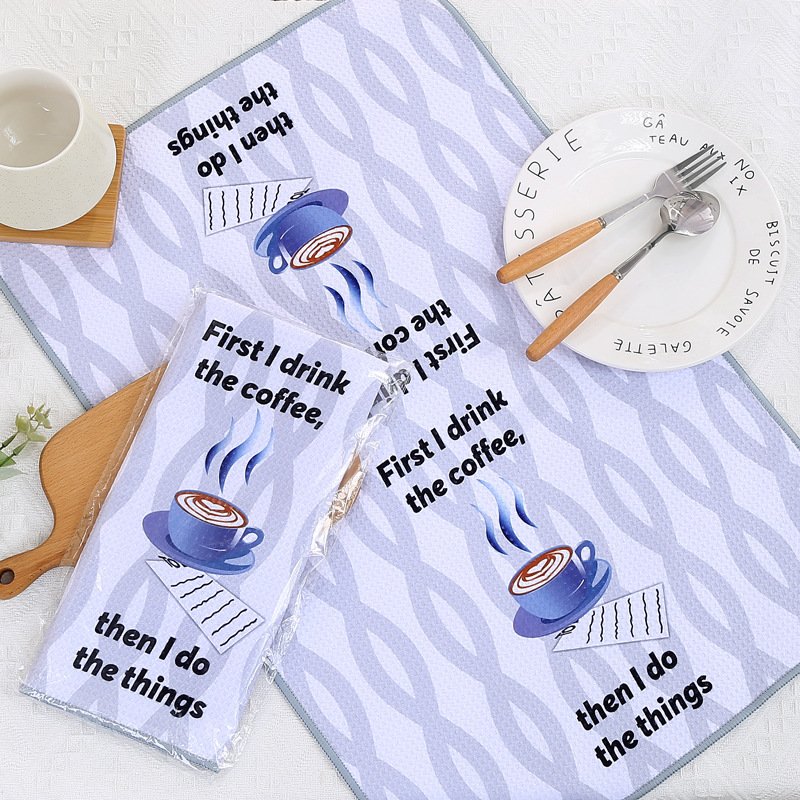
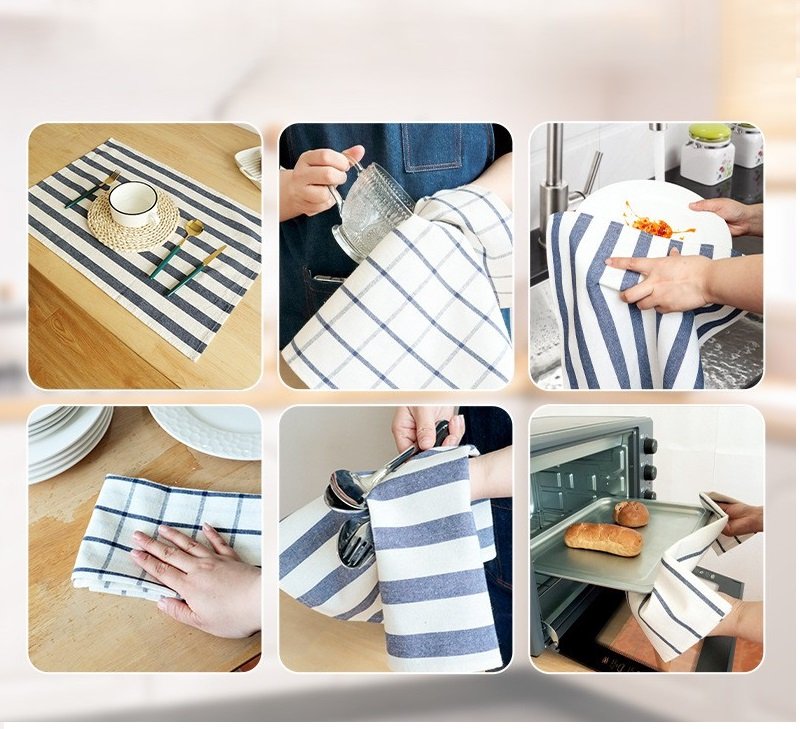
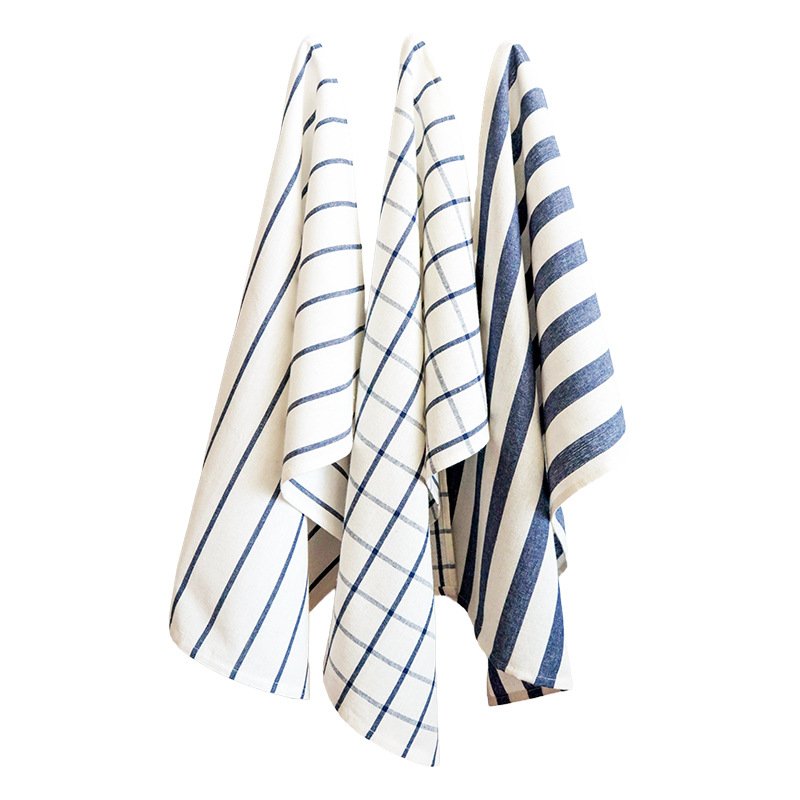
How Often Should You Wash Tea Towels?
Wash tea towels at least once a week for regular household use. In a busy kitchen, wash them every day. Replace immediately after contact with raw meat, fish, eggs, or poultry.
The UK Food Standards Agency (FSA) recommends changing or washing kitchen towels at least once a week. Similarly, the U.S. FDA food safety guidance advises changing kitchen towels frequently — commonly every day.
However, the right frequency also depends on how you use your towels. For instance, a towel used only for drying clean dishes needs washing less often. But a towel that dries hands, wipes counters, and mops spills needs much more frequent changing.
Here is a simple, easy-to-follow frequency guide:
| How You Use the Towel | Wash Frequency | Minimum Temperature |
|---|---|---|
| Multi-use (hands + surfaces + dishes) | Every 1–2 days | 60°C |
| Drying clean dishes only | Every 2–3 days | 60°C |
| After touching raw meat or fish | Immediately | 60°C+ |
| Busy household or family kitchen | Daily | 60°C+ |
| Commercial or restaurant kitchen | Every shift | 60°C+ |
| Smells musty or feels slimy | Immediately | 60°C+ |
💡 Pro tip: Keep a rotation of at least 3–4 tea towels. That way, you always have a fresh one ready. As a result, you will never feel tempted to reuse a dirty towel just because a clean one is not available.
What Happens If You Don’t Wash Kitchen Towels Often Enough?
First, let’s tackle a very common misconception. A tea towel can look perfectly clean — and still be heavily contaminated. Bacteria are invisible to the naked eye. So, visual checks alone are never enough.
“In a study of 100 kitchen towels used for one month without washing, 49% showed significant bacterial growth. Furthermore, in a separate biofilm study, all 12 tested towels developed bacterial biofilm — a protective layer that makes bacteria even harder to remove.”
— Based on peer-reviewed kitchen hygiene researchMoreover, a damp kitchen towel is the perfect environment for bacteria to thrive. It is warm, moist, and covered in food residue. Therefore, harmful bacteria multiply rapidly between uses. Here is what researchers actually found in those 100 real kitchen towels:
- 🦠 49% of towels had measurable bacterial growth after one month
- 🦠 36.7% of contaminated towels contained Coliform bacteria — linked to fecal contamination and food poisoning
- 🦠 36.7% carried Enterococcus — which can cause serious infections in vulnerable people
- 🦠 14.3% had Staphylococcus aureus — a leading cause of food-borne illness outbreaks
- 🦠 In a separate biofilm study, all 12 towels tested developed biofilm within weeks of regular use
⚠️ What is biofilm? Biofilm is a sticky protective layer that bacteria build on surfaces. Once biofilm forms on a towel, even thorough washing may not fully remove all bacteria. This is exactly why regular washing frequency matters more than washing technique alone.
In short, an unwashed tea towel is not just dirty — it is genuinely a health risk. It spreads bacteria to your hands, dishes, and food surfaces. Consequently, washing kitchen towels regularly is one of the easiest ways to improve food safety at home.
For kitchen towels that are built to withstand frequent hot washing, explore our certified kitchen towels at Favor Houseware — designed to stay hygienic wash after wash.
How to Wash Tea Towels Properly (+ Best Water Temperature and Detergent)
Now that you understand the risks, let’s cover how to clean tea towels the right way. Fortunately, it is not complicated. However, a few key steps make a real difference to hygiene outcomes.
Machine Washing — The Recommended Method
- Sort tea towels separately. Keep them away from clothing — especially underwear or gym clothes. Mixing them risks transferring bacteria between fabrics in the wash.
- Wash at 60°C or higher. According to food hygiene guidance, 60°C is the minimum temperature needed to kill most common household bacteria effectively. For heavily soiled towels, use 90°C if the care label permits.
- Use a quality enzymatic detergent. Enzymatic detergents break down grease, food residue, and protein stains far more effectively than basic detergents. Choose one that lists enzymes (protease, lipase) in the ingredients.
- Add a laundry sanitiser or white vinegar. Pour half a cup of white vinegar into the rinse cycle. It removes odours and kills residual bacteria naturally. Alternatively, use a dedicated laundry sanitiser product.
- Skip fabric softener entirely. Fabric softener coats the towel fibres. As a result, it slowly destroys absorbency over time. A tea towel that cannot absorb properly cannot clean effectively — or hygienically.
- Tumble dry on high heat. Heat during drying kills any bacteria that survived the wash. Alternatively, hang in direct sunlight — UV rays are a natural, powerful antibacterial agent.
Hand Washing Tea Towels — A Quick Refresh Method
Sometimes you need a quick clean between machine washes. In that case, here is how to do it properly:
- Fill a clean sink with hot water and add a small squirt of dish soap or laundry detergent.
- Submerge the towel fully. Agitate and scrub firmly for at least 2–3 minutes.
- Pay extra attention to any visibly stained or greasy areas.
- Rinse thoroughly under running hot water until the water runs completely clear.
- Wring out well. Then hang immediately in a well-ventilated spot to dry fully. Never leave it folded and damp.
🌡️ Best wash temperature for tea towels: Use 60°C for regular washes. Use 90°C after heavy contamination. For lightly used towels washed very frequently (daily), 40°C is acceptable — but only if you wash them every single day without fail.
Additionally, if you want towels that handle frequent high-temperature washing without shrinking or losing colour, our microfiber kitchen towels and cotton kitchen towels are engineered precisely for that level of performance.
How to Remove Stains from Tea Towels
Even with regular washing, tough stains happen. The most important rule is simple: act fast. The sooner you treat a stain, the easier it comes out. Here is a full stain removal guide for the most common kitchen stains:
| Stain Type | First Step | Best Treatment | Wash Temp |
|---|---|---|---|
| Grease / Oil | Blot immediately. Do not rub. | Apply dish soap directly to the stain. Wait 15 minutes. Then wash. | 60°C |
| Tea / Coffee | Rinse with cold water fast. | Soak in 1-part white vinegar + 2-parts water for 30 minutes. | 60°C |
| Tomato / Curry / Turmeric | Rinse with cold water first. | Apply a baking soda paste. Leave 20 minutes. Then wash. | 60°C |
| Blood | Use cold water only. Hot water sets blood permanently. | Soak in cold salted water. Then treat with oxygen bleach. | 40°C |
| Berries / Fruit juice | Rinse immediately with cold water. | Soak in diluted oxygen bleach solution for 30 minutes. | 60°C |
| General yellowing | Do not use chlorine bleach on coloured towels. | Overnight soak in hot water with a generous scoop of oxygen bleach powder. | 60°C |
💡 Always use oxygen bleach (colour-safe bleach) on coloured or printed tea towels. Chlorine bleach will fade colours and weaken the fabric fibres. Save chlorine bleach for white towels only — and even then, use it sparingly.
Furthermore, here are the five most useful natural stain-fighting ingredients you probably already have at home:
- 🍋 White vinegar — breaks down mineral deposits, odours, and light everyday stains
- 🧪 Baking soda — gently lifts food stains and neutralises sour odours naturally
- 💧 Hydrogen peroxide — powerful against coffee, wine, and blood stains on white fabric
- 🧴 Oxygen bleach — colour-safe and highly effective on general discolouration and yellowing
- ☀️ Sunlight — a free, natural bleaching agent that works especially well on white cotton towels
How to Disinfect Tea Towels After Raw Meat or Spills
If your tea towel has touched raw meat, raw eggs, or raw fish — stop using it right away. This is not a situation for a quick rinse. It requires full disinfection before the towel is used again.
⚠️ Critical food safety rule: Any towel that contacts raw animal products must go directly into the laundry. Replace it immediately with a clean towel. Do not use it for any other task first — not even wiping a counter.
According to World Health Organization (WHO) food safety guidelines, cross-contamination from kitchen cloths is one of the leading causes of food-borne illness in the home. Additionally, the CDC highlights kitchen surfaces and cloths as key sources of bacterial spread. So, here is exactly what you should do step by step:
- Remove the towel immediately the moment it contacts raw meat, fish, eggs, or poultry.
- Do not reuse it for any other task — even a quick wipe of the counter is off-limits.
- Pre-soak in hot water mixed with a laundry disinfectant for at least 15 minutes before washing.
- Wash at 60°C or above using a strong detergent plus a laundry sanitiser in the same cycle.
- Tumble dry on high heat or hang in direct sunlight. Do not fold and store until completely, fully dry.
- Use colour-coded towels in commercial kitchens to keep raw food towels permanently separated from others.
“Reusable towels used on food-contact surfaces should always be stored hygienically and kept entirely separate from any towels used for raw animal foods.”
— Based on FSA food hygiene guidance for households and food businessesFurthermore, for commercial kitchens, investing in dedicated sets of colour-coded towels for raw food prep is not just good practice — it is essential for compliance with food hygiene regulations. We supply certified kitchen textiles, including wholesale kitchen towels, custom aprons, and oven mitts — all made to meet international hygiene standards at Favor Houseware Co., Ltd.
How to Stop Tea Towels Smelling Musty (+ How to Dry and Store Tea Towels to Prevent Bacteria)
That sour, musty smell from your tea towels? It is not just unpleasant. It is also a clear sign that bacteria and mildew have taken hold in the fabric. Fortunately, the root cause is almost always the same — and so is the fix.
Why Do Tea Towels Smell After Washing?
Musty smells in tea towels usually come from one of these four causes:
- The towel was left damp and crumpled after use — trapping moisture inside the folds
- The towel was stored before it was fully dry — even slightly damp is enough to start mildew growth
- Too much detergent built up in the fibres — residue holds moisture, and moisture feeds bacteria
- The washing machine drum is dirty or mouldy — transferring mildew back onto clean towels
How to Fix Musty-Smelling Tea Towels
- Rewash immediately if a clean towel still smells after drying. This usually signals a machine hygiene problem.
- Add half a cup of white vinegar to the rinse cycle. It removes detergent build-up and kills odour-causing bacteria naturally.
- Run a hot drum clean cycle on your washing machine once a month. Use a machine cleaner or a cup of white vinegar with baking soda.
- Use the right amount of detergent. More is not better. Too much detergent leaves sticky residue in fibres — and that residue holds moisture that breeds bacteria.
How to Dry and Store Tea Towels to Prevent Bacteria
How you dry and store tea towels is just as important as how you wash them. Therefore, follow these simple rules every time:
- 🌬️ Hang towels wide open after every single use — never folded or bunched on a hook
- ☀️ Dry in sunlight whenever possible — UV rays kill bacteria and speed up drying naturally
- 📦 Only store completely dry towels — in a clean, well-ventilated drawer or cupboard
- 🚫 Never stack damp towels together — moisture spreads and mildew grows between layers rapidly
- 🔄 Rotate your towel supply — use the oldest (most recently washed) first so none sit unused for weeks
- ✂️ Replace the towel before it smells — do not wait for an odour to develop; wash on a schedule instead
💡 Quick rule of thumb: If you can fold a tea towel in half and feel any slight coolness or dampness in the centre — it is not dry enough to store. Leave it hanging for another hour before putting it away.
Tea Towel Hygiene Tips for Busy Kitchens
If you run a restaurant, café, catering operation, or any commercial kitchen, tea towel hygiene is not optional — it is a legal requirement in most countries. Moreover, it is one of the most common failure points in food safety inspections.
Use a Colour-Coding System
Colour-coding is the simplest and most effective way to prevent cross-contamination in a busy kitchen. It removes guesswork and makes the rules visual and easy to follow:
- 🔴 Red towels — raw meat and poultry only
- 🔵 Blue towels — ready-to-eat food preparation surfaces
- 🟡 Yellow towels — raw fish and seafood only
- 🟢 Green towels — fruit and vegetable preparation
- ⚪ White towels — dish drying and general cleaning only
Set a Strict Replacement Schedule
- Replace all towels at the start of every kitchen shift — not just at the beginning of the day
- Replace immediately after any contact with raw meat, broken eggs, or visible contamination
- Never leave a used towel on the counter. Instead, put it straight into a sealed laundry bin
- Keep at least 10–15 clean towels per kitchen station available per day in a high-volume environment
Laundry Standards for Commercial Kitchens
- Wash all kitchen towels at 60°C minimum — or use a certified commercial laundry service
- Include a laundry sanitiser in every wash load — not just detergent alone
- Train all kitchen staff on towel hygiene and cross-contamination risks as part of onboarding
- Audit towel hygiene as part of regular food safety inspections and compliance checks
🏭 Wholesale kitchen towels for food businesses: Favor Houseware Co., Ltd. manufactures certified kitchen textiles to OEKO-TEX 100, BSCI, SGS, and FDA standards. Low MOQ from 100 pieces, custom colour-coding available, fast delivery from our Yiwu, China factory. Browse our kitchen towel range →
Common Tea Towel Washing Mistakes to Avoid
Even people who wash their tea towels fairly often still make mistakes. In fact, some of the most common habits actually make hygiene worse — not better. So, here are the eight biggest tea towel washing mistakes and how to fix each one:
- Mistake 1: Waiting until the towel “looks dirty” Bacteria are completely invisible. A towel can be fully contaminated while looking spotless. Therefore, always wash on a time-and-use schedule — never based on appearance alone.
- Mistake 2: Using one towel for everything Using the same towel for drying hands, wiping counters, and drying dishes transfers bacteria between all three surfaces. Use separate, dedicated towels for each task.
- Mistake 3: Leaving towels damp and crumpled A damp, balled-up towel is a bacteria factory. Always spread the towel fully open to dry immediately after every use — no exceptions.
- Mistake 4: Washing at too low a temperature A 30°C or 40°C cycle will not kill most kitchen bacteria reliably. Always use at least 60°C for kitchen towels — regardless of how convenient a cold wash might seem.
- Mistake 5: Using fabric softener Fabric softener coats the fibres and reduces absorbency. As a result, the towel spreads moisture around instead of absorbing it — which spreads bacteria instead of removing them.
- Mistake 6: Washing towels with clothing Mixing kitchen towels with underwear or gym clothes transfers bacteria between fabrics during the wash. Always wash kitchen textiles separately.
- Mistake 7: Storing a slightly damp towel Even a faintly damp towel will develop mildew within hours. Always make absolutely certain towels are bone dry before folding or storing them away.
- Mistake 8: Keeping old, worn-out towels too long Thin, fraying towels harbour bacteria far more easily. Additionally, they absorb less and dry less effectively. Replace them every 1–2 years as a standard rule.
Best Tea Towel Materials for Hygiene and Durability — and When to Replace Them
Not all tea towels perform the same. The material you choose affects absorbency, drying speed, and how many hot washes it can handle before breaking down. So, choosing the right material is a key part of long-term tea towel hygiene.
🌿 Cotton
The gold standard for kitchen towels. Highly absorbent, very soft, and gets better with every wash. Withstands repeated 60°C+ washes without breaking down or shrinking significantly.
🌾 Linen
Dries faster than cotton. Naturally smooth — perfect for polishing glassware without leaving lint. Gets noticeably more absorbent the more it is washed. Long-lasting fibre.
⚡ Microfibre
Exceptional at picking up bacteria, grease, and particles. Dries very fast. However, it needs washing at lower temperatures and must be kept away from lint-producing fabrics.
🔀 Cotton-Linen Blend
Combines the softness of cotton with linen’s quick-dry properties. More wrinkle-resistant than pure linen. An excellent all-round choice for both home and commercial kitchens.
According to Textile World, the key properties to look for in any kitchen textile are: fast dry time, high absorbency, colour-fastness after repeated hot washing, and durability under frequent laundry cycles. These four factors directly determine how hygienic a tea towel remains over its lifespan.
You can explore our full range of certified kitchen textile options — including our popular kitchen towels, microfiber towels, and eco-conscious recycled textile range — all manufactured with premium yarn and OEKO-TEX 100 certified materials at our factory in Yiwu, China.
When Should You Replace Your Tea Towels?
Even the best tea towels wear out eventually. Here are the clear warning signs that it is time for a replacement:
- 🚩 The towel still smells after a hot 60°C wash — bacteria have embedded deeply into damaged fibres
- 🚩 It has permanent staining that will not come out after multiple treatment attempts
- 🚩 The fabric has become noticeably thinner, frayed, or heavily pilled
- 🚩 It absorbs significantly less than it used to — a clear sign the fibres have broken down
- 🚩 It has been in regular use for more than 1–2 years with heavy washing
🛒 Time to restock? At Favor Houseware Co., Ltd., we manufacture premium kitchen towels and custom tea towels starting from just 100 pieces MOQ. Custom sizing, printing, embroidery, and branding available. Certified to OEKO-TEX 100, BSCI, SGS, and FDA standards. Free samples available — you only pay freight. Get in touch today →
Tea Towels vs Paper Towels: Which Is More Hygienic?
This is one of the most popular kitchen hygiene questions — and the honest answer is: it depends on how you use them. Both options have genuine strengths and real weaknesses. Here is a balanced, fact-based comparison:
| Factor | Tea Towels (Reusable) | Paper Towels (Single-Use) |
|---|---|---|
| Hygiene — single use | ✗ Higher risk if not washed often | ✓ No cross-contamination risk |
| Hygiene — with good habits | ✓ Just as hygienic as paper | ✓ Consistently hygienic |
| Environmental impact | ✓ Far more eco-friendly | ✗ High waste, not recyclable |
| Long-term cost | ✓ Much more cost-effective | ✗ Cost adds up quickly over time |
| After raw meat or heavy spills | ✗ Use paper towel instead | ✓ Best choice for contaminated mess |
| Drying dishes and clean hands | ✓ Better feel and absorbency | ✗ Wasteful for routine drying tasks |
| Custom branding (hospitality) | ✓ Excellent branding opportunity | ✗ Very limited branding potential |
In summary, paper towels win for single-use contamination control — especially for cleaning up raw meat spills or wiping visibly dirty surfaces. However, reusable tea towels are the smarter, greener, and more cost-effective solution for everyday kitchen tasks — as long as you follow a consistent washing routine.
“The key question is not which material is inherently better — it is about using each one correctly and in the right situation. A well-maintained, regularly washed tea towel is just as hygienic as paper for routine kitchen use.”
— Based on kitchen hygiene research and international FSA guidanceFurthermore, for hotels, restaurants, and hospitality brands, custom-branded tea towels offer a brilliant opportunity to reinforce brand identity while maintaining excellent hygiene standards. Learn more about our custom kitchen textile capabilities at Favor Houseware Co., Ltd. — with 15 years of experience and satisfied clients across global markets.
Tea Towel Cleaning Checklist for Households and Food Businesses
Use this as your go-to reference. Print it. Stick it in your kitchen or laundry room. These are the essential steps to maintaining genuinely clean, safe, and hygienic tea towels — whether at home or in a commercial kitchen.
✅ Household Tea Towel Hygiene Checklist
- Wash tea towels at least once a week — or every 1–2 days in a busy household
- Always wash at 60°C or higher to kill bacteria reliably
- Replace immediately after any contact with raw meat, fish, or eggs
- Use separate towels for drying hands, drying dishes, and wiping surfaces
- Pre-treat stains before the wash cycle for the best removal results
- Hang towels fully open and flat to dry completely after every single use
- Store only completely dry towels in a clean, well-ventilated space
- Add white vinegar or laundry sanitiser to the rinse cycle once a month
- Keep a rotation of 3–4 towels minimum so a fresh one is always available
- Replace worn, stained, or smelly towels every 1–2 years as standard practice
✅ Commercial Kitchen Tea Towel Checklist
- Implement a colour-coded towel system across all kitchen zones and stations
- Replace towels at the start of every kitchen shift — not just once per day
- Wash all towels at 60°C minimum using certified laundry sanitiser
- Keep a sealed laundry collection bin on every station for immediate disposal
- Stock at least 10–15 clean towels per station per full service day
- Never reuse any towel after contact with raw animal products
- Train every kitchen staff member on cross-contamination prevention
- Include towel hygiene in all regular food safety audits and inspections
- Source towels only from certified, compliant textile manufacturers
- Consider investing in a dedicated commercial washing machine for kitchen textiles only
Conclusion: Clean Tea Towels, Cleaner Kitchen, Healthier Home
Tea towel hygiene is one of the most overlooked parts of keeping a safe, clean kitchen. However, the research is very clear. Nearly half of all used kitchen towels carry harmful bacteria. Furthermore, all towels develop biofilm if not washed regularly enough. The good news? The solution is completely straightforward.
Here are your five golden rules for genuinely clean tea towels:
- 🧺 Wash at least once a week — and daily in any busy or commercial kitchen
- 🌡️ Always wash at 60°C or above to kill bacteria reliably every time
- 🍋 Act fast on stains — pre-treat before every wash for the best results
- 🌬️ Dry completely before storing — damp towels breed bacteria rapidly
- 🔄 Replace when worn — a good quality towel should last 1–2 years of regular, frequent use
Moreover, the quality of the towel itself matters enormously. A well-made towel from a certified, experienced manufacturer will last longer, wash better, and stay hygienic far longer than a cheap alternative. Choosing the right supplier from the start saves money, time, and hygiene headaches in the long run.
Ready to Upgrade Your Kitchen Towels?
Favor Houseware Co., Ltd. is a certified kitchen textile manufacturer with 15 years of experience and a global client base across hospitality, retail, and food service. We produce premium kitchen towels, custom tea towels, microfiber towels, and more — certified to OEKO-TEX 100, BSCI, SGS, and FDA standards. Custom printing and embroidery available with no minimum order for designs. MOQ starts from just 100 pieces. Free samples available — you only pay freight.
Frequently Asked Questions About Washing Tea Towels
Views: 7