How to Choose the Beach Towel: Complete 2025 Buying Guide
⚡ Quick Decision Guide: Choose Your Perfect Beach Towel in 60 Seconds
| User Type | Recommended Size | Best Material | Ideal GSM | Key Feature |
|---|---|---|---|---|
| Adults (Lounging) | 75-80 inches long | Turkish Cotton | 500-600 GSM | Maximum comfort & absorbency |
| Kids | 30-40 inches | Cotton Blend | 400-500 GSM | Durable, easy to wash |
| Travelers | Compact (60×30″) | Microfiber | 300-400 GSM | Quick-dry, lightweight |
| Families | Oversized (40×70″) | Cotton-Poly Blend | 450-550 GSM | Sand-resistant, durable |
| Corporate Gifts | Standard (30×60″) | 100% Cotton | 500-600 GSM | Customizable, premium feel |
| Water Sports | Poncho-style | Microfiber | 350-450 GSM | Quick-change, fast-dry |
🎯 6 Critical Points Before You Buy:
- Size matters more than you think – Oversized towels prevent sand contact and offer better lounging space
- GSM determines feel and dry time – Higher GSM = plushier but slower drying
- Material affects durability and maintenance – Cotton for comfort, microfiber for convenience
- Quick-dry equals less mildew – Essential for humid climates and frequent use
- Certifications ensure safety – Look for OEKO-TEX, BSCI, and SGS standards
- Customization adds value for businesses – Low MOQ options make branding accessible
Choosing the right beach towel can feel overwhelming. After all, with so many options available, how do you know which one is best? Whether you’re planning a tropical vacation, stocking up for your hotel, or looking for custom beach towels for your business, this guide will help you make the perfect choice. Furthermore, we’ll break down everything from materials to maintenance in simple terms that anyone can understand.
Why Choosing the Right Beach Towel Matters
Many people think all beach towels are basically the same. However, that couldn’t be further from the truth. In fact, the right beach towel can dramatically improve your beach experience. On the other hand, a poor-quality towel can lead to several frustrating problems.
First and foremost, a quality beach towel protects your skin from hot sand and rough surfaces. Additionally, it provides proper absorbency after swimming, which helps prevent chills and discomfort. Moreover, a durable towel saves you money in the long run because you won’t need frequent replacements.
“According to textile industry research, the average household replaces beach towels every 2-3 years, but premium towels can last 5-7 years with proper care.”
Consider these impacts of choosing the wrong beach towel:
- Health concerns: Poor-quality towels that stay damp can develop mildew and bacteria, consequently affecting hygiene
- Wasted money: Cheap towels fade quickly, lose absorbency, and need replacing frequently
- Environmental impact: Constantly replacing low-quality towels creates unnecessary waste
- Comfort issues: Rough textures, inadequate size, or poor absorbency ruin beach days
For businesses, furthermore, choosing the right beach towel becomes even more critical. Hotels, resorts, and promotional companies need towels that withstand commercial washing while maintaining their appearance. Therefore, understanding how to choose the beach towel properly is essential for both personal and professional purposes.
Beach Towel Size Guide: What Fits Your Routine
Size is one of the most important factors when learning how to choose the beach towel that works for you. Indeed, the right size depends entirely on how you plan to use it. Let’s explore the options available.
Size Chart by User Type
| Towel Size | Dimensions | Best For | Pros | Cons |
|---|---|---|---|---|
| Small/Kids | 30″ x 40″ | Children, gym bags | Easy to pack, quick-dry, lightweight | Limited coverage for adults |
| Standard | 30″ x 60″ | Most adults, general use | Versatile, fits most beach bags | May feel small for tall people |
| Large | 35″ x 70″ | Tall individuals, lounging | Extra length, better coverage | Takes more storage space |
| Oversized | 40″ x 70″ or larger | Couples, families, luxury use | Maximum comfort, sand-free zone | Bulkier, longer dry time |
| Round | 60″ diameter | Beach blanket, groups, photos | Stylish, accommodates multiple people | Less practical for wrapping |
When deciding how to choose the beach towel size, think about these practical considerations. First, will you mainly lie on it or wrap yourself in it? Second, how much space do you have in your beach bag? Third, do you prefer maximum comfort or easy portability?
Shape Considerations
Beyond size, shape also plays an important role. Consequently, let’s examine the different shapes available:
Rectangular Towels: These traditional towels remain the most popular choice. Moreover, they work well for both lying down and wrapping around your body. Additionally, rectangular towels are easier to fold and store neatly.
Round Towels: Meanwhile, round beach towels have become increasingly trendy. They look fantastic in photos and can accommodate several people sitting in a circle. However, they’re less practical for wrapping around yourself. Many beach-goers use round microfiber towels because they’re lightweight yet spacious.

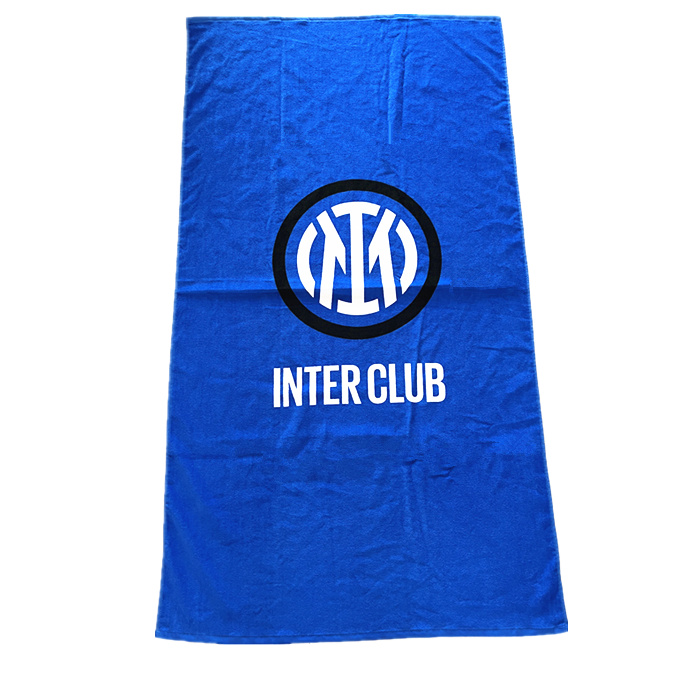
Hooded and Poncho Towels: Finally, hooded towels and surf poncho towels serve a special purpose. Specifically, they’re excellent for kids who need to change clothes at the beach. Similarly, surfers and swimmers appreciate the convenience and warmth these designs provide.
Materials Matter: Cotton, Microfiber, and Blends
Understanding materials is crucial when learning how to choose the beach towel that lasts. Indeed, the material determines everything from how soft the towel feels to how quickly it dries. Let’s break down each option in simple terms.
Material Comparison Table
| Material | Absorbency | Dry Time | Durability | Best For | Price Range |
|---|---|---|---|---|---|
| 100% Cotton | Excellent (9/10) | Slow (4-6 hours) | Good (8/10) | Home use, comfort seekers | $$ |
| Turkish Cotton | Excellent (9/10) | Medium (3-4 hours) | Excellent (9/10) | Luxury use, gift items | $$$ |
| Egyptian Cotton | Outstanding (10/10) | Slow (5-7 hours) | Excellent (9/10) | Premium hotels, spas | $$$$ |
| Microfiber | Very Good (8/10) | Fast (1-2 hours) | Excellent (9/10) | Travel, sports, camping | $-$$ |
| Cotton-Poly Blend | Good (7/10) | Medium-Fast (2-3 hours) | Excellent (10/10) | Families, heavy use | $-$$ |
Cotton Options Explained
Cotton remains the most popular choice for beach towels, and for good reason. First of all, cotton feels naturally soft against your skin. Additionally, it absorbs water exceptionally well, which means you dry off quickly after swimming.
However, not all cotton is the same. Turkish cotton, for instance, uses long fibers that create a lighter, flatter weave. Consequently, Turkish hammam towels dry faster than regular cotton while still feeling luxurious. Moreover, they become softer with each wash, unlike some materials that get rougher over time.
Egyptian cotton, on the other hand, features extra-long fibers that produce the softest, most absorbent towels available. Nevertheless, these towels are heavier and take longer to dry. Therefore, they work better for poolside lounging than for beach trips where you need quick-drying capabilities.
“According to the International Textile Manufacturers Federation, long-staple cotton (like Turkish and Egyptian varieties) shows 40% less wear after 100 washes compared to standard cotton towels.”
Microfiber Advantages
In contrast to cotton, microfiber offers completely different benefits. Specifically, microfiber towels weigh much less than cotton towels of the same size. Furthermore, they pack down smaller, making them perfect for travelers with limited luggage space.
Here’s why many people choose microfiber when learning how to choose the beach towel for travel:
- Lightning-fast drying: Microfiber dries 3 times faster than cotton, typically within 1-2 hours
- Sand resistance: The tight weave prevents sand from sticking, so shaking it off is easy
- Compact size: Folds down to a fraction of cotton towel size
- Lightweight: Weighs 50-60% less than cotton towels of equal dimensions
- Durability: Resists fading, stretching, and shrinking better than many natural fibers
Nevertheless, some people find microfiber less comfortable than cotton because it has a different texture. Therefore, it’s smart to try both materials before deciding which you prefer.
Blended Materials
Finally, cotton-polyester blends combine the best features of both materials. On one hand, the cotton provides softness and absorbency. On the other hand, the polyester adds durability and faster drying time. As a result, blended towels work wonderfully for families with children who use towels roughly and need frequent washing.
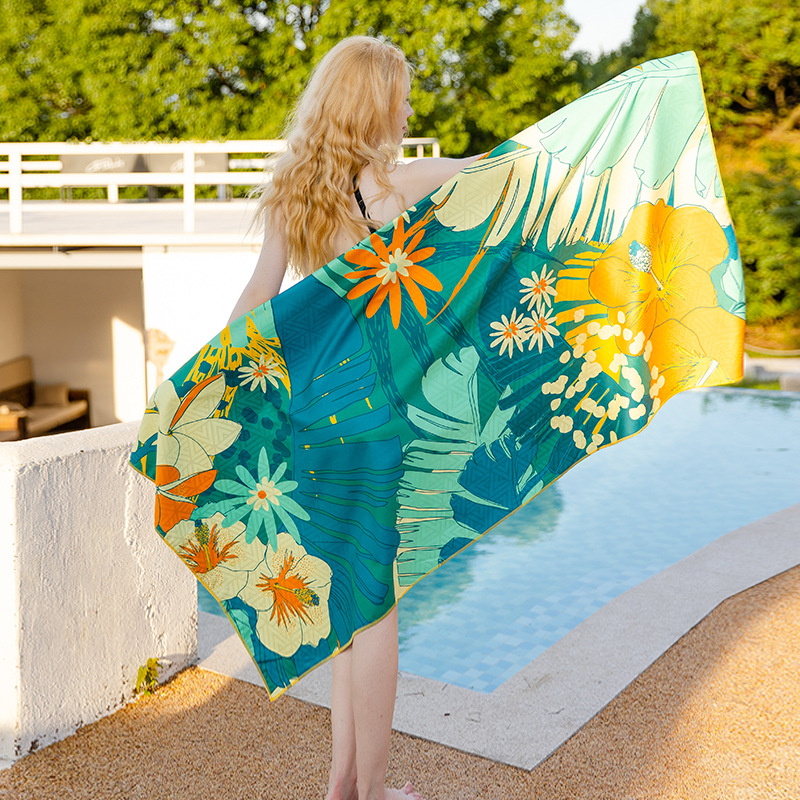

GSM and Absorbency: How Weight Translates to Performance
When figuring out how to choose the beach towel, you’ll often see “GSM” mentioned. But what does this term actually mean? Let’s simplify it.
What is GSM?
GSM stands for “Grams per Square Meter.” Essentially, it measures how much the towel weighs for each square meter of fabric. In other words, GSM tells you how thick and heavy the towel is. Higher GSM means a thicker, heavier towel. Lower GSM means a thinner, lighter towel.
GSM Range Guide
| GSM Range | Weight Category | Thickness | Absorbency | Dry Time | Best Use Case |
|---|---|---|---|---|---|
| 300-400 GSM | Lightweight | Thin | Moderate | 1-2 hours | Travel, gym, camping, hot climates |
| 450-550 GSM | Standard | Medium | Good | 3-4 hours | Regular beach use, families, everyday |
| 600-700 GSM | Premium | Thick | Excellent | 4-6 hours | Luxury resorts, poolside lounging |
| 700+ GSM | Ultra-luxury | Very thick | Outstanding | 6-8 hours | Home use, spas, premium gifts |
How to Choose Your Ideal GSM
So how do you pick the right GSM when deciding how to choose the beach towel? Consider these key factors:
Climate matters significantly. If you live in a humid area, lower GSM towels dry faster and prevent mildew. Conversely, in dry, sunny climates, higher GSM towels work perfectly fine because they’ll dry quickly anyway.
Usage frequency is important too. For daily use at a beach resort, medium GSM (450-550) offers the best balance. Meanwhile, for occasional beach trips, you might prefer the luxury of higher GSM towels.
Storage space plays a role. Lower GSM towels take up less room in your beach bag, closet, or suitcase. Therefore, travelers and people with limited storage should lean toward 300-450 GSM options.
“Industry data shows that 450-550 GSM towels represent 65% of beach towel sales globally, as they offer the optimal balance of comfort, absorbency, and practicality for most users.”
According to Textile Today, proper GSM selection can extend towel lifespan by up to 40% because the towel better matches its intended use environment.
Drying Time and Maintenance: Keeping Towels Fresher Longer
Drying time might not seem important at first, but it actually matters a lot. In fact, towels that stay damp for too long can develop problems. Let’s explore why quick-drying matters when learning how to choose the beach towel.
Quick-Dry vs. High-Absorbency Trade-off
Here’s the truth: you can’t have both maximum absorbency and lightning-fast drying in the same towel. Instead, you need to choose which quality matters more for your situation.
High-absorbency towels soak up lots of water, which makes them comfortable and effective. However, all that absorbed water takes time to evaporate. Therefore, thick cotton towels might take 6-8 hours to dry completely outdoors.
Quick-dry towels absorb less water initially but release moisture rapidly. Consequently, microfiber and low-GSM towels might dry in just 1-2 hours. This speed prevents musty smells and bacteria growth, especially in humid environments.
How to Tell if a Towel is Quick-Drying
When shopping, look for these indicators of quick-dry capability:
- Material composition: Microfiber and synthetic blends dry fastest, followed by Turkish cotton, then standard cotton
- Low GSM rating: Towels under 450 GSM generally dry much faster than heavier options
- Flat or waffle weave: These weave styles have less fabric density, allowing faster evaporation
- Product descriptions: Manufacturers usually highlight quick-dry features if present
Mildew Prevention Tips
Nobody wants a smelly, moldy beach towel. Fortunately, prevention is simple if you follow these practices:
- Hang immediately after use: Don’t leave wet towels bunched in your beach bag
- Spread fully for drying: Ensure good air circulation on both sides
- Choose sunny spots: UV rays naturally kill bacteria and speed drying
- Wash regularly: Even if towels smell fine, wash after 3-4 beach uses
- Dry completely before storing: Even slightly damp towels can develop mildew in storage
- Use vinegar occasionally: Add 1 cup of white vinegar to the wash cycle monthly to eliminate bacteria
Additionally, if you’re using towels in a commercial setting like a resort, consider professional-grade beach towels designed for frequent washing and quick turnaround times.
Durability and Colorfastness: How Towels Hold Up
When investing in quality beach towels, durability should be a top priority. After all, nobody wants to replace towels every season. Let’s examine what makes some towels last years while others fall apart quickly.
What Makes a Durable Beach Towel
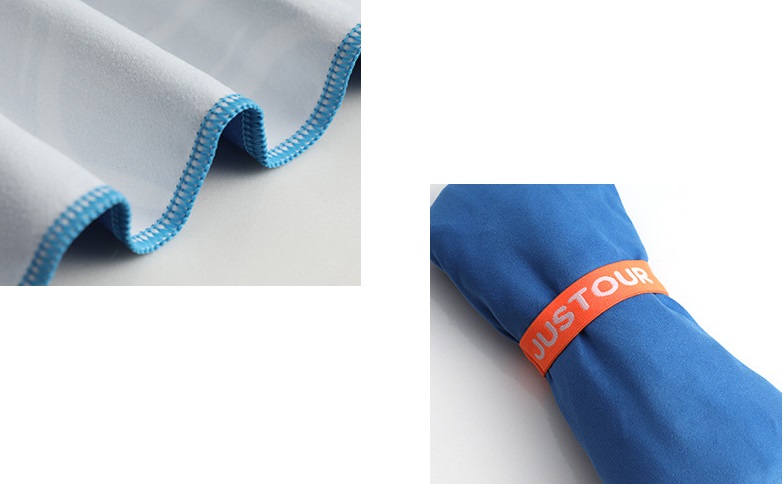
Double-stitched hems are absolutely essential for longevity. Specifically, these reinforced edges prevent fraying even after hundreds of washes. Moreover, they hold up better when towels are pulled, stretched, or used roughly by children.
Reinforced edges matter especially for larger towels. Without proper edge construction, corners curl up and threads start coming loose. Therefore, always check the edge quality before purchasing.
Quality weaving makes a huge difference in durability. Towels made with high-quality weaving equipment have consistent density throughout. In contrast, cheaply made towels often have thin spots that wear out faster.

Colorfastness Ratings
Nothing disappoints more than watching your vibrant beach towel fade to dull colors after just a few uses. Fortunately, understanding colorfastness helps you choose better towels.
| Dye Type | Colorfastness Rating (After 100 Washes) | UV Resistance | Cost | Best For |
|---|---|---|---|---|
| Reactive Dye | Excellent (90-95% retention) | Very Good | $$ | Premium towels, solid colors |
| Digital Printing | Very Good (85-90% retention) | Good | $$$ | Custom designs, photo prints |
| Pigment Dye | Good (75-80% retention) | Fair | $ | Budget towels, less frequent use |
| Disperse Dye | Fair (65-75% retention) | Poor | $ | Indoor use only |
Reactive dye printing bonds chemically with fabric fibers. Consequently, colors stay vibrant much longer than with surface-applied dyes. Many manufacturers specializing in sustainable and recycled beach towels use reactive dyes because they’re also more environmentally friendly.
Digital printing technology allows for incredibly detailed custom designs without minimum order quantities. Moreover, modern digital inks have improved dramatically, offering excellent colorfastness combined with design flexibility.
Sun, Sand, and Salt Resistance
Beach environments are harsh on textiles. Therefore, when learning how to choose the beach towel for durability, consider these material rankings:
Most Durable Materials (Ranked):
- Polyester-cotton blends (60/40): Best overall durability for beach use
- Quality microfiber: Excellent salt and sun resistance
- Turkish cotton: Good balance of comfort and durability
- Standard cotton: Comfortable but requires more care
- Egyptian cotton: Luxurious but less suitable for harsh beach conditions
Views: 0