
Oven Mitts vs Pot Holders: Which Is Better?
(Plus: Wholesale Oven Mitts Buying Guide)
Find out the key differences, safety tips, best materials, and everything wholesale buyers need to know — all in one place.
⚡ Key Takeaways
- Oven mitts cover your full hand, wrist, and often forearm — they are the safer choice for reaching inside a hot oven.
- Pot holders are flat pads. They are best for grabbing pot handles, lids, and protecting countertops from hot dishes.
- Most kitchens benefit from using both together.
- For wholesale buyers, key factors include heat rating, length, grip, and customization options.
- The global kitchen linen market is worth USD 12.2 billion (2024) and growing at 8.8% per year.
| Feature | Oven Mitts | Pot Holders |
|---|---|---|
| Shape | Glove/mitt shaped; fits over hand | Flat square or round pad |
| Coverage | Full hand, wrist, partial forearm | Palm and hand only |
| Best Use | Reaching into hot ovens, lifting heavy pans | Grabbing handles, lids, and trivet use |
| Safety Level | ★★★★★ Higher | ★★★ Moderate |
| Maneuverability | Bulkier but very secure grip | Quick, nimble, easy to grab fast |
| Common Materials | Cotton/terry, silicone-coated, aramid fibers | Quilted cotton, terry, silicone |
| Extra Uses | Double mitts protect both hands at once | Doubles as a trivet/countertop protector |
| Wholesale Suitability | ✓ High demand, great for custom branding | ✓ Budget-friendly, great for bundles |
So, oven mitts vs pot holders — which one do you really need? The short answer is: both. But understanding the difference between them helps you choose the right tool at the right time — and, for wholesale buyers, it helps you stock the right products for your customers. Let’s dive in.
1. What Is the Difference Between Oven Mitts and Pot Holders?
Quick Answer
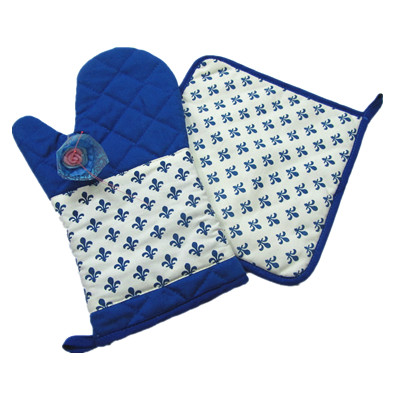
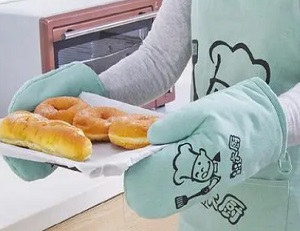
Oven mitts are shaped like gloves. They fit over your entire hand and often cover part of your wrist and forearm too. Pot holders, on the other hand, are flat pads or squares. They only cover the palm and hand. Because of this, oven mitts offer more burn protection — especially when you reach inside a hot oven. Pot holders are faster to grab and work well as trivets for hot dishes on countertops. — Summary based on expert kitchen safety guidelines
In other words, the main difference is coverage area. Oven mitts wrap around your hand completely. Pot holders just sit between your hand and the hot surface. Both are useful — but for different tasks in the kitchen.
Side-by-Side Feature Comparison
🥊 Oven Mitts
- Shaped like a glove or large mitt
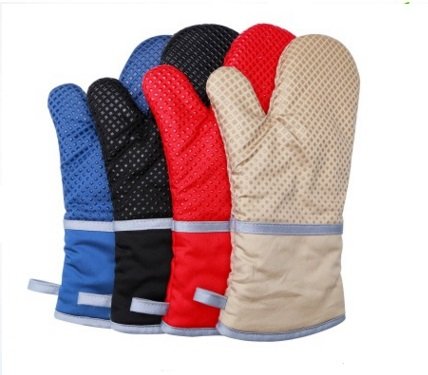
- Covers hand, wrist, and forearm
- Great for deep-oven use
- Better for heavy, awkward pans
- Can come as a double mitt (two hands, one piece)
- Available in cotton, silicone, and high-heat aramid fibers
🥣 Pot Holders
- Flat square or circular pad
- Covers palm and hand only
- Best for handles, lids, short moves
- Compact and easy to store
- Works as a countertop trivet
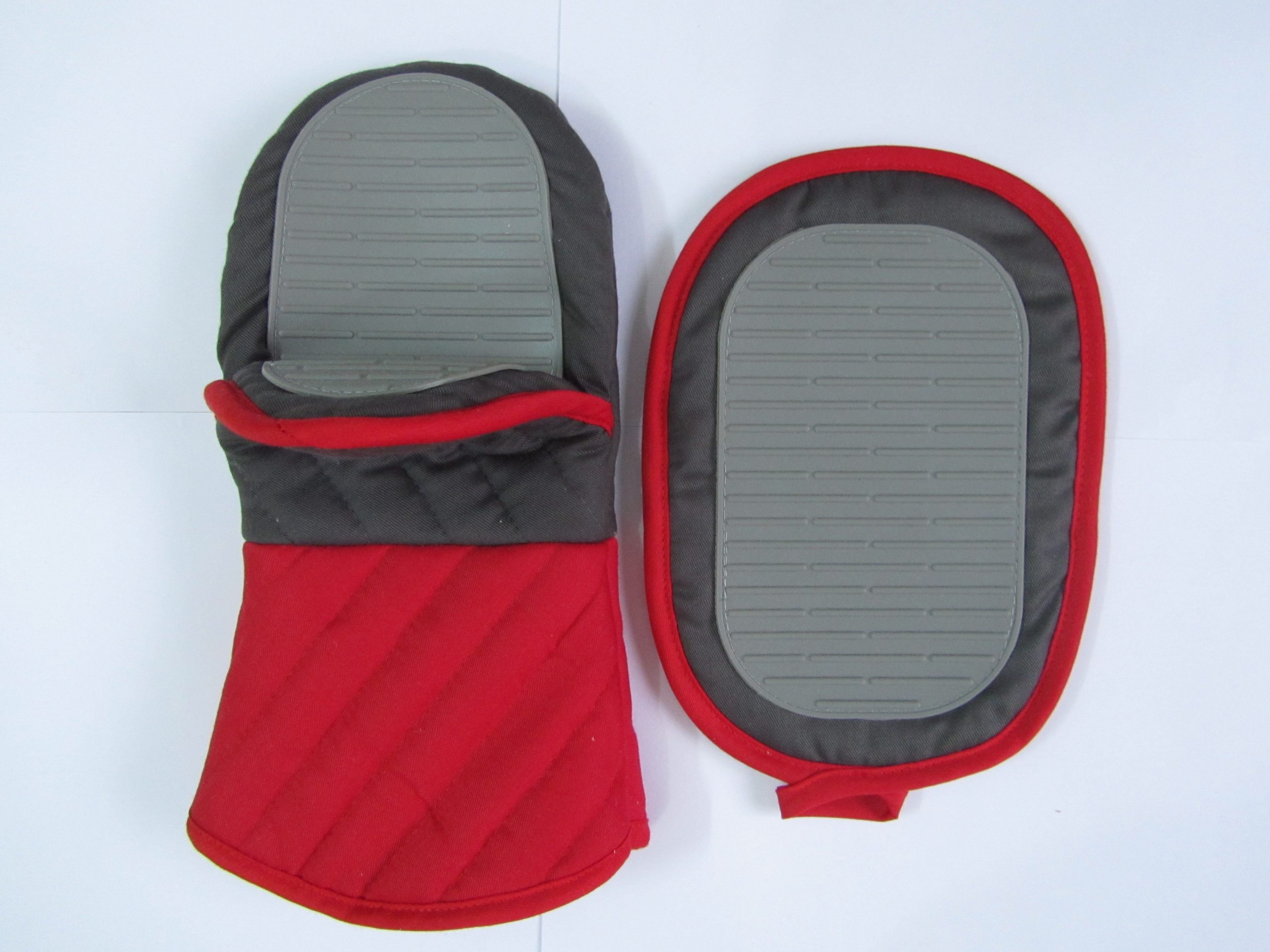
- Usually quilted cotton or silicone-coated

2. When to Use Oven Mitts vs Pot Holders in the Kitchen
Choosing between oven mitts and pot holders is actually pretty simple — once you know what each one is built for. Therefore, think about the task before you reach for either one.
Best Uses for Oven Mitts
Reach for your oven mitts whenever:
- You open the oven and pull out baking trays, roasting pans, or casserole dishes
- You handle a heavy cast-iron skillet or Dutch oven
- Your wrists or forearms might touch a hot rack, oven door, or burner
- You use a BBQ grill or outdoor smoker
- You work with deep fryers or large stockpots with boiling liquids
Best Uses for Pot Holders
Reach for your pot holders whenever:
- You grab a pot handle or lid on the stovetop
- You move cookware a short distance across the counter
- You need a quick trivet to protect your table or countertop
- You lift a microwave-safe dish from the microwave
- You want something compact and easy to tuck away in a drawer
Should You Use Both? Yes — Here’s Why
3. Safety and Burn Protection — Which One Protects You Better?
When it comes to safety, oven mitts clearly win. However, the level of protection also depends a lot on the materials used. So, let’s look at both together.
Coverage and Forearm Protection
The biggest safety advantage of oven mitts is their length. Extra-long mitts — around 14 to 15 inches — protect most of the forearm. This matters a lot when you reach deep into a hot oven. Your forearm can easily brush against a hot oven rack or door edge without you noticing.
Safety guides consistently warn that pot holders should not be used to reach deep into a hot oven. They leave your wrist and forearm completely exposed — and that is where most kitchen burns happen. — Kitchen safety guidelines, consumer product testing organizations
Heat Resistance by Material
Furthermore, the material of your oven mitt or pot holder makes a huge difference. Here is a simple breakdown:
| Material | Heat Resistance | Best For | Notes |
|---|---|---|---|
| Cotton / Terry Cloth | Moderate (up to ~250°F / 120°C) | Everyday home cooking | Comfortable, washable, affordable |
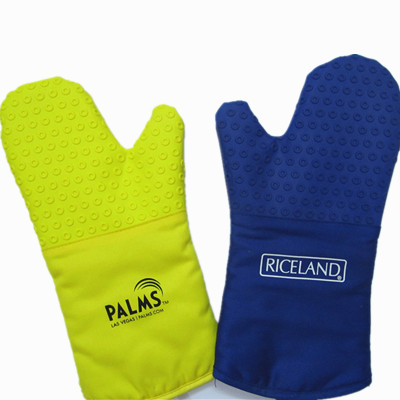
| Silicone-coated | High (up to ~450°F / 232°C) | High-heat cooking, BBQ, baking | Better grip, water/steam resistant |
| Aramid Fibers (Kevlar / Nomex) | Very high (up to ~660°F / 350°C+) | Commercial kitchens, industrial use | Premium price, extremely durable |
| Quilted Cotton (pot holders) | Low–Moderate | Handles, lids, trivets | Easy to store, budget-friendly |
| Neoprene | Moderate–High | Wet/steam environments | Flexible, steam-resistant |
Testing of popular silicone mitts has shown they can hold a very hot cast-iron skillet for many seconds. This proves that silicone-coated mitts perform much better than plain cotton in high-heat situations. For commercial kitchens, fire safety organizations also recommend checking temperature ratings before purchasing any kitchen protective gear.
4. How to Choose Between Oven Mitts and Pot Holders
The right choice depends on where you cook and how often you cook. Additionally, your budget and the types of food you make also play a role. Let’s look at both home and commercial kitchen needs.
For Home Kitchens
Home cooks generally want a balance of safety, comfort, and flexibility. As a result, most home kitchen setups work best with:
- One pair of extra-long silicone-coated oven mitts (14–15 inches) for oven use
- Two to four quilted cotton pot holders for handles, lids, and trivets
- A coordinated set in matching colors for a tidy kitchen aesthetic
Moreover, a hybrid design — cotton lining inside with silicone on the outside — gives you both comfort and high-heat protection. This is why hybrid oven mitts are one of the most popular choices in retail.
For Commercial and Professional Kitchens
Commercial kitchens have stricter needs. Therefore, professional buyers should look for:
- Higher heat ratings — ideally mitts rated for 450°F (232°C) or above
- Longer mitts (15 inches or more) for maximum forearm protection
- Aramid fiber lining (Kevlar or Nomex) for extreme-heat environments
- Clear temperature and safety rating labels for compliance purposes
- Durable, machine-washable materials to handle daily heavy use
- Non-slip grip patterns on palms and fingers to prevent accidents
Furthermore, commercial buyers often order in bulk. This is where working with a wholesale oven mitts manufacturer like Favor Houseware becomes a smart and cost-effective decision.
5. Global Market Overview — Why Oven Mitts & Pot Holders Are a Growing Business
If you are a retailer, distributor, or brand owner, here is something important to know first: the kitchen linen market is booming. And oven mitts and pot holders are a key part of that growth story.
| Metric | Data Point |
|---|---|
| Market Size (2024) | Approximately USD 12.2 billion |
| Forecast CAGR (2025–2034) | Around 8.8% annual growth |
| Product Types Included | Kitchen towels, aprons, oven mitts & gloves, potholder cloth, and others |
| Main Applications | Household kitchens, commercial foodservice |
| Fastest-Growing Region | Asia-Pacific (driven by urbanization and rising disposable incomes) |
| Key Growth Drivers | More home cooking, demand for stylish kitchen textiles, antimicrobial products |
As a result of these trends, oven mitts and pot holders are no longer just basic kitchen tools. Today, they are fashionable, functional, and an important part of the kitchen home décor market. Buyers in North America and Europe also look for eco-friendly and sustainable materials, which creates even more opportunity for innovative manufacturers.
This growth trend is exactly why companies like Favor Houseware — a China-based home textiles manufacturer since 2005 — invest heavily in product development and customization capabilities. You can also explore how Grand View Research tracks this growing category for deeper market analysis.
6. Wholesale Oven Mitts — Complete Buying Guide for Retailers & Distributors
Looking to stock or source wholesale oven mitts? Therefore, it is important to know what to look for before placing a bulk order. Here is everything you need to check.
Key Factors to Check Before Ordering Buyer Checklist
| Factor | What to Look For | Why It Matters |
|---|---|---|
| Heat Rating | Check max temperature in °F or °C. Look for FDA or LFGB certification. | Ensures safety compliance for your market |
| Length & Coverage | 14–15 inches for full forearm protection | Longer = safer; better for professional kitchens |
| Material | Cotton, silicone-coated, aramid, or hybrid | Different materials suit different customer needs |
| Grip Technology | Silicone palm patterns, textured surfaces | Reduces slip risk; important for busy kitchens |
| Certifications | BSCI, OEKO-TEX 100, SGS, FDA, EN407 | Required for many retail and commercial buyers |
| MOQ (Min. Order) | Look for suppliers with low or flexible MOQ | Good for testing new products or small brands |
| Customization | Logo, color, size, pattern, packaging | Essential for branding and private label products |
| Washability | Machine-washable preferred for retail use | Customers expect easy care products |
Also, when ordering wholesale oven mitts for the first time, always request a pre-production sample. This lets you check stitching quality, padding thickness, actual heat resistance, and overall usability before committing to a large batch. You can learn more about international textile safety standards to understand what certifications matter most for your target market.
Custom & Branded Oven Mitts for Promotions and Corporate Gifts
Here is something many buyers overlook: custom oven mitts are one of the most effective promotional products on the market. Why? Because people use them every single day in their kitchens — which means your brand gets seen again and again.
- Logo printing: Add your brand logo to the cuff or body of the mitt
- Silicone grip patterns: Turn safety features into branded design elements
- Hanging loops: Practical and great for retail display hooks
- Coordinated sets: Match mitts with kitchen towels, aprons, and pot holders for a full branded kitchen set
- Custom packaging: Gift boxes or polybag packing for retail-ready products
Furthermore, custom oven mitts work great as corporate gifts, restaurant merchandise, trade show giveaways, and loyalty program rewards. Because they are practical gifts, recipients are far more likely to keep and use them — compared to pens or notepads.
Promotional product experts agree: kitchen items like oven mitts deliver daily brand impressions because they are used so regularly. That makes them one of the highest-ROI branded gifts available. — Promotional Products Association International (PPAI) research
How to Source Wholesale Oven Mitts from a China Home Textiles Manufacturer
China remains the world’s leading source for high-quality, cost-effective wholesale oven mitts and kitchen textiles. Here is a step-by-step process that most successful importers follow:
- Define your product specifications: Material, length, heat rating, colors, and packaging
- Shortlist verified factories: Look for certifications like BSCI, OEKO-TEX 100, and ISO standards
- Request samples: Test quality, stitching, heat resistance, and finish before ordering
- Confirm MOQ and pricing: A good manufacturer offers flexible MOQ for small and large orders alike
- Check lead time and shipping: Understand production timelines and ask about in-stock availability for fast shipping
- Place your order with a secure payment method: Use trade assurance or escrow for your first order
- Request a final quality inspection: Before shipment, confirm stitching, labeling, and packing standards
Favor Houseware has been manufacturing home textiles since 2005. Their 10,000 m² factory in Yiwu City runs 10 production lines with experienced workers. They offer no MOQ for custom printing, free samples (you only pay freight), BSCI and OEKO-TEX 100 certifications, and eco-friendly manufacturing. They also offer OEM/ODM services — so you can launch your own branded kitchen textile line. Contact them for a free quote →
7. Care, Cleaning, and Replacement Guidelines
Even the best oven mitts and pot holders need proper care to stay safe and effective. Therefore, follow these simple guidelines to get the most out of your kitchen protection gear.
Washing Instructions
- Cotton and terry mitts: Most are machine-washable on a warm or cool cycle. Use mild detergent.
- Silicone-coated mitts: Wipe clean with a damp cloth or mild soap. Check the label — some are machine-washable, others are not.
- Aramid fiber mitts: Follow the manufacturer’s specific care label. Avoid bleach as it can weaken the fibers.
- Pot holders: Most quilted cotton pot holders are machine-washable. Air-dry when possible to preserve padding thickness.
When to Replace Oven Mitts and Pot Holders
There is no exact timeline for replacement. Instead, replace your mitts or pot holders when you notice any of the following signs:
- The padding feels thin or compressed — it no longer cushions heat properly
- The fabric is scorched, charred, or discolored from heat exposure
- There are holes, tears, or fraying seams anywhere on the mitt or pad
- The silicone grip has cracked or peeled away from the fabric base
- The mitt smells burnt even after washing — a sign of deep fiber damage
Remember: a worn-out oven mitt offers very little heat protection. So when in doubt, replace it. For retailers and wholesale buyers, this replacement cycle also creates a steady repeat purchase demand — which is great for business.
8. Frequently Asked Questions About Oven Mitts vs Pot Holders
Below are the most common questions people ask about oven mitts and pot holders. These answers are designed to be clear, fast, and useful.
Conclusion
So, oven mitts vs pot holders — which one wins? The truth is, they are both winners — for different jobs. Oven mitts are your best choice for safe, full-coverage protection in and around a hot oven. Pot holders are your go-to for quick grabs, stovetop handles, and handy trivets. Together, they form the complete kitchen protection toolkit.
For wholesale buyers, retailers, and brand owners, the opportunity here is clear. The global kitchen linen market is growing fast — and oven mitts and pot holders are right at the center of that growth. Furthermore, with the rise of home cooking, eco-friendly kitchen textiles, and branded promotional products, now is a great time to stock up and customize.
Additionally, if you want to pair your oven mitts with other kitchen textiles, explore Favor Houseware’s range of kitchen towels and aprons — perfect for coordinated kitchen sets. For beachwear and towel products, also check out their beach towel manufacturing and microfiber towels.
Views: 0