Quick Answer: Pool Towel vs Beach Towel at a Glance
Looking for the key differences? Here’s everything you need to know in one simple table:
| Towel Type | Typical Size (inches) | Typical Size (cm) | Common GSM Range | Primary Purpose |
|---|---|---|---|---|
| Pool Towel | 24–27 × 48–52 | ~60–70 × 120–130 | ~400–550 | Quick drying after pool use in hotels/resorts |
| Beach Towel | 30–36 × 60–68 | ~75–90 × 150–170 | ~350–500+ | Lounging on sand, beach, or poolside |
| Bath Towel | 27–30 × 52–60 | ~70–76 × 132–152 | ~450–650 | Daily drying after shower or bath at home |
| Bath Sheet | 35–40 × 70 | ~90–100 × 178 | ~500–700 | Extra-large coverage and comfort |
Whether you’re managing a hotel, running a resort, or simply choosing towels for your next vacation, understanding the difference between pool towels and beach towels can save you money and improve your guest experience. In fact, hotels that choose the right towel size and material see up to 30% longer towel lifespan and better guest satisfaction scores.
As a leading beach towel manufacturer in China, Favor Houseware has helped countless hotels, resorts, and water parks select the perfect towels for their needs. In this comprehensive guide, we’ll walk you through everything you need to know about pool towels, beach towels, and how to make the smartest buying decision.
What Is the Difference Between Pool Towels and Beach Towels?
At first glance, pool towels and beach towels might look similar. However, they’re designed with very different purposes in mind. Understanding these differences is crucial, especially if you’re purchasing towels for commercial use in hospitality settings.
The main difference between pool towels and beach towels comes down to size, design philosophy, and performance requirements. Let’s break down each factor so you can see exactly what sets them apart.
Size Differences Explained
First and foremost, beach towels are significantly larger than pool towels. While a standard pool towel typically measures around 24–27 inches by 48–52 inches, beach towels usually come in at 30–36 inches by 60–68 inches. This extra size matters a lot when you’re lying on sand or a beach lounger.
Moreover, pool towels are intentionally kept smaller for practical reasons. Hotels and resorts need to wash hundreds of towels daily, so compact sizes mean more towels per laundry load. Additionally, smaller towels dry faster, which helps reduce energy costs and speeds up the turnover rate.
Design and Color Philosophy
When it comes to appearance, pool towels and beach towels couldn’t be more different. Pool towels, especially those used in hotels, are almost always white or simple solid colors. This isn’t just about aesthetics—it’s about practicality.
White towels are easier to bleach and sanitize, which is essential in commercial laundry operations. Furthermore, white towels clearly show when they’re clean, which reassures guests about hygiene standards. According to the American Hotel & Lodging Association, maintaining visible cleanliness is one of the top factors in guest satisfaction.
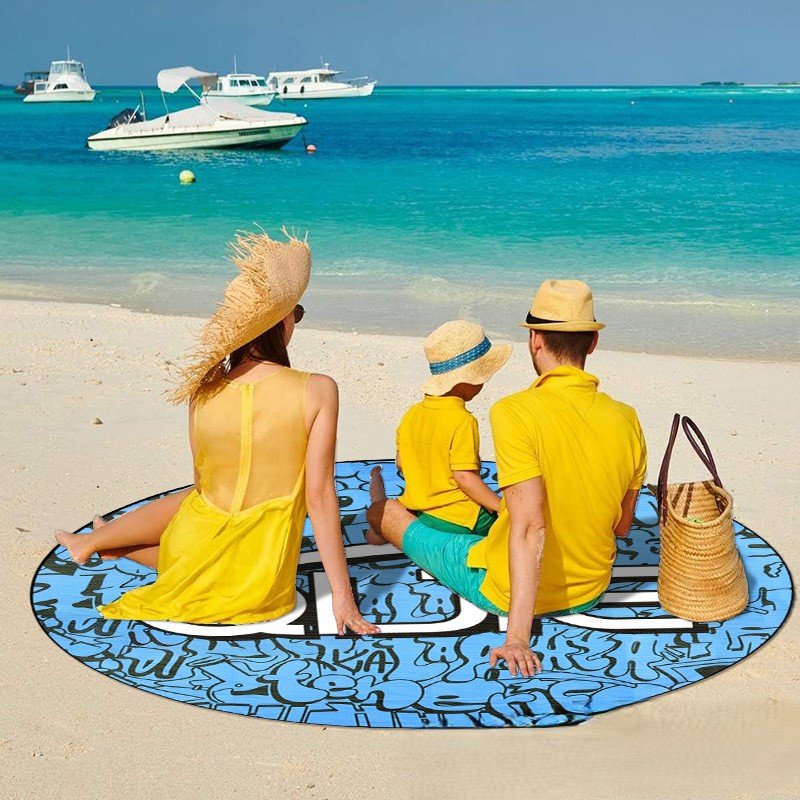
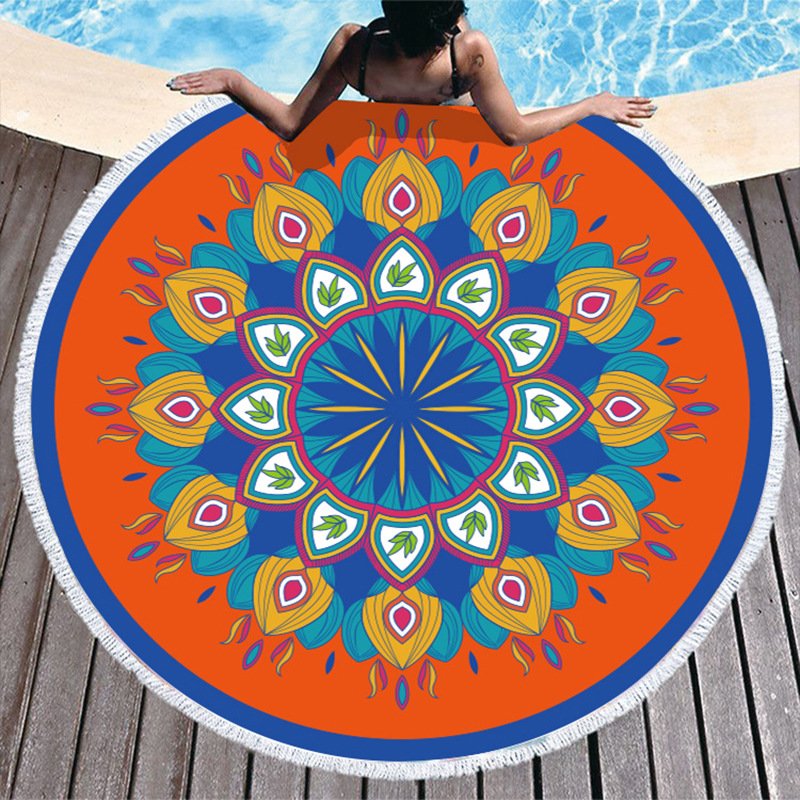
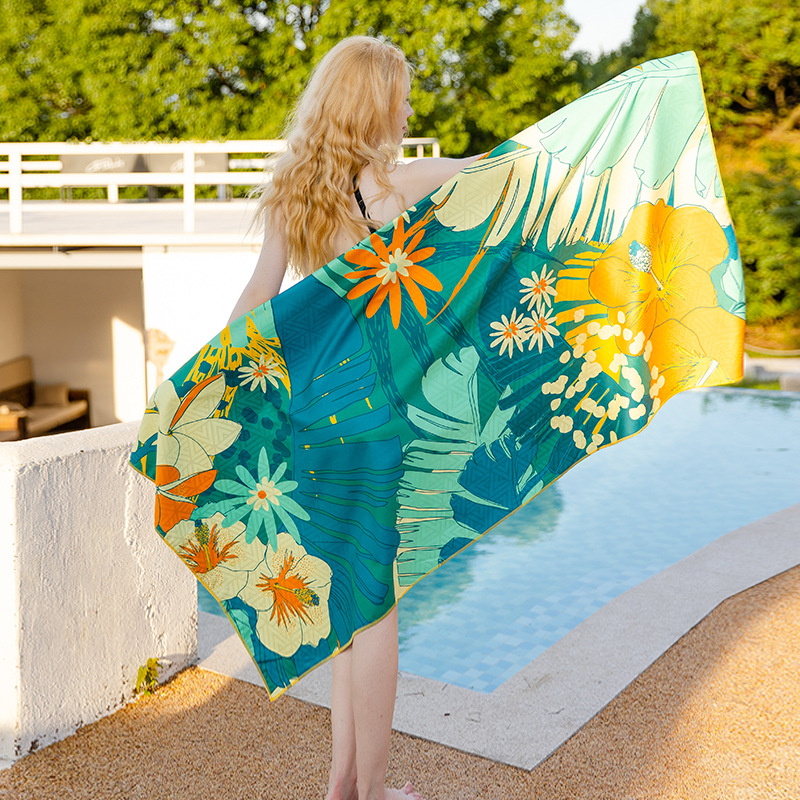
On the other hand, beach towels are all about personality and style. They often feature bright colors, bold stripes, tropical patterns, and eye-catching designs. This serves a practical purpose too—bright patterns make it easier to spot your towel on a crowded beach.
Performance Requirements (Absorbency & Drying Time)
Pool towels need to strike a careful balance between absorbency and quick drying. Since hotels reuse pool towels multiple times per day, they can’t afford towels that stay damp for hours. Therefore, most hotel pool towels are designed with a medium GSM (grams per square meter) range of 400–550.
Beach towels, however, prioritize coverage and comfort over rapid drying. They’re designed for a full day at the beach, so they’re often slightly thinner and lighter. This makes them easier to carry and shake out, which is important when dealing with sand.
“The right towel can make or break a guest’s poolside experience. We’ve seen hotels reduce their towel replacement costs by 40% simply by choosing the right GSM and size for their specific needs.” — Hospitality textile consultant, HospitalityNet
Standard Pool Towel Size vs Beach Towel Size
Understanding towel dimensions is absolutely critical when ordering for commercial use. The wrong size can lead to unhappy guests, wasted laundry capacity, and unnecessary replacement costs.
Let’s dive deeper into the specific measurements you need to know. As we mentioned earlier, pool towels typically measure 24–27 inches by 48–52 inches (roughly 60–70 cm by 120–130 cm). This size is perfect for drying off after a quick swim without being too bulky.
In contrast, beach towels range from 30–36 inches by 60–68 inches (about 75–90 cm by 150–170 cm). The extra length and width make them ideal for lying down on sand or claiming space on a beach lounger. Many luxury resorts even offer oversized beach towels up to 40 inches by 70 inches for an ultra-premium experience.
Here’s what you need to consider when choosing between these sizes:
- Storage space: Smaller pool towels take up less shelf space in your towel carts and storage rooms
- Laundry efficiency: Compact towels mean you can wash more per load, reducing water and energy costs
- Guest expectations: Beach resort guests typically expect larger towels than city hotel guests
- Weight when wet: Bigger towels become much heavier when soaked, making them harder for guests and staff to handle
For hotels with both pool and beach access, many property managers choose a hybrid approach. They stock standard-sized pool towels for the pool area and larger, more colorful towels specifically for beach use. This strategy optimizes both operational efficiency and guest satisfaction.
Beach Towel vs Bath Towel: Key Differences
Many people wonder whether they can simply use bath towels at the beach or pool. While it’s technically possible, understanding the differences will help you see why specialized towels exist for different purposes.
Size Comparison Chart
Bath towels and beach towels serve completely different functions, and their sizes reflect this. A standard bath towel measures approximately 27–30 inches by 52–60 inches, which falls right between pool towel and beach towel dimensions.
However, bath sheets—the larger version of bath towels—measure around 35–40 inches by 70 inches. These are designed for wrapping around your body after a shower, providing maximum coverage and warmth. Bath sheets are closest in size to beach towels, but they’re built quite differently.
Thickness and GSM Differences
The thickness of a towel is measured in GSM (grams per square meter). This metric tells you how dense and heavy the fabric is. Generally speaking, higher GSM means more absorbent and plush, but also slower to dry.
Here’s how different towel types compare:
- Bath towels: 450–650 GSM for a luxurious, spa-like feel at home
- Beach towels: 350–500+ GSM, balancing absorbency with portability
- Pool towels: 400–550 GSM, optimized for quick drying in commercial laundries
- Microfiber towels: Often lower GSM but highly absorbent due to special fiber technology
Interestingly, bath towels are often the thickest because they don’t need to dry quickly—you typically have just one or two at home that you wash weekly. Beach and pool towels, however, need faster drying times for practical reasons.
When to Use Each Type
Choosing the right towel for the right situation makes a huge difference in performance and satisfaction. Let’s break down when to use each type:
Use bath towels when:
- You’re drying off after a shower or bath at home
- You want maximum absorbency and a soft, plush feel
- Quick drying isn’t a priority
- You’re providing guest room amenities in a hotel
Use beach towels when:
- You need to lie down on sand or a beach lounger
- You want extra length for full-body coverage
- You need something that’s easy to shake out and clean of sand
- You’re operating a beach resort or coastal property
Use pool towels when:
- You’re running a hotel pool operation with high turnover
- Space efficiency and quick drying are priorities
- You need simple, easy-to-launder towels in bulk
- You’re managing a water park, gym, or spa facility
For those interested in versatile options, Turkish hammam towels offer a unique alternative that works well for both beach and bath use thanks to their lightweight, quick-drying nature.
Hotel Pool Towels: Guest Expectations and Industry Standards
When it comes to hotel pool towels, meeting industry standards isn’t just about following rules—it’s about creating experiences that keep guests coming back. Moreover, the right towel choices can significantly impact your operational costs and environmental footprint.
Standard Hotel Pool Towel Sizes Worldwide
Across the hospitality industry, certain towel sizes have become standard because they work efficiently in commercial laundry systems. In North America, most hotels stock pool towels measuring 24–27 inches by 48–52 inches. These dimensions fit perfectly in standard laundry equipment and provide adequate coverage for guests.
However, international standards vary slightly. European hotels often use the metric system, with common sizes around 60–70 cm by 120–130 cm (which translates to roughly the same dimensions). Asian properties sometimes opt for slightly smaller towels, around 60 cm by 120 cm, to maximize laundry efficiency.
According to research from Hotel Management Magazine, standardizing towel sizes across a hotel chain can reduce laundry costs by up to 15% through better load optimization and faster processing times.
What Luxury Hotels Choose vs Budget Properties
Not all hotels have the same towel needs. Luxury properties and budget hotels make very different choices based on their brand positioning and guest expectations.
Luxury hotels typically choose:
- Higher GSM towels (500–550 range) for a premium, spa-like feel
- 100% long-staple cotton, such as Egyptian or Pima cotton
- Slightly larger pool towel sizes (up to 30 × 60 inches)
- Custom branding with jacquard weaving or embroidered logos
- Separate beach towel inventory with bolder colors for beachfront properties
Budget properties typically choose:
- Mid-range GSM towels (400–450 range) for cost efficiency
- Cotton-poly blends that resist shrinkage and wear
- Standard 24 × 48 inch or 27 × 52 inch sizes
- Simple white or solid colors without custom branding
- One type of towel that serves both pool and general use
Interestingly, mid-range hotels are increasingly adopting premium towel features to differentiate themselves from budget competitors. This trend has driven growth in the custom towel manufacturing sector, as properties seek unique branding opportunities.
Guest Satisfaction Factors
What do guests actually care about when it comes to pool towels? Research shows that several factors influence satisfaction scores:
- Cleanliness and freshness: This is the number one factor—guests notice stains, odors, and wear immediately
- Adequate size: Towels should be large enough to dry off comfortably without being cumbersome
- Softness: Even pool towels should feel pleasant against the skin, not rough or scratchy
- Absorbency: Nothing frustrates guests more than towels that don’t actually dry them off
- Availability: Running out of pool towels during peak hours creates negative experiences
“We surveyed over 5,000 hotel guests and found that 73% said towel quality directly impacts their likelihood to return. Yet only 40% of hotels regularly assess their towel inventory quality.” — J.D. Power Hospitality Research
Material Choices for Pool and Beach Towels: Cotton vs Blends vs Microfiber
Choosing the right material for your towels is just as important as selecting the right size. Different fibers offer distinct advantages, and the best choice depends on your specific needs and priorities.
100% Cotton Terry (Most Popular for Hotels)
Cotton terry cloth remains the gold standard for hotel pool towels, and for good reason. This traditional material offers excellent absorbency, durability, and a soft feel that guests expect. Furthermore, cotton towels can withstand the harsh chemicals and high temperatures used in commercial laundries.
Within the cotton category, you’ll find several quality levels:
- Standard cotton: Affordable and functional, ideal for budget properties
- Combed cotton: Smoother and more durable, with shorter fibers removed during manufacturing
- Long-staple cotton (Pima or Egyptian): Premium quality with superior softness and longevity
- Ring-spun cotton: Tightly twisted fibers create a softer, more durable towel
Most hotels choose combed cotton or ring-spun cotton for their pool towels. These offer the best balance of quality, durability, and cost. Long-staple cotton is typically reserved for bath towels in guest rooms or for ultra-luxury resort properties.
Cotton-Poly Blends for Durability
Cotton-polyester blends have gained popularity in recent years, especially for high-volume operations like water parks and large resorts. These blends typically contain 80% cotton and 20% polyester, though ratios can vary.
The advantages of cotton-poly blends include:
- Reduced shrinkage: Polyester fibers help the towel maintain its size wash after wash
- Faster drying: Blends dry more quickly than 100% cotton, reducing energy costs
- Better color retention: Colors stay vibrant longer, important for branded or colored towels
- Enhanced durability: The synthetic fibers reinforce the cotton, extending towel lifespan
- Lower cost: Blends are often more affordable than pure cotton alternatives
However, cotton-poly blends do have some drawbacks. They’re generally less absorbent than 100% cotton, and some guests notice a less natural feel. For this reason, luxury properties typically stick with pure cotton.
Microfiber for Quick-Drying Performance
Microfiber towels represent a completely different approach to towel design. These synthetic towels are made from ultra-fine polyester or polyamide fibers that are thinner than human hair. The result is a towel with unique properties that work well in specific situations.
Microfiber towels excel in these areas:
- Ultra-fast drying: They dry 3-5 times faster than cotton towels
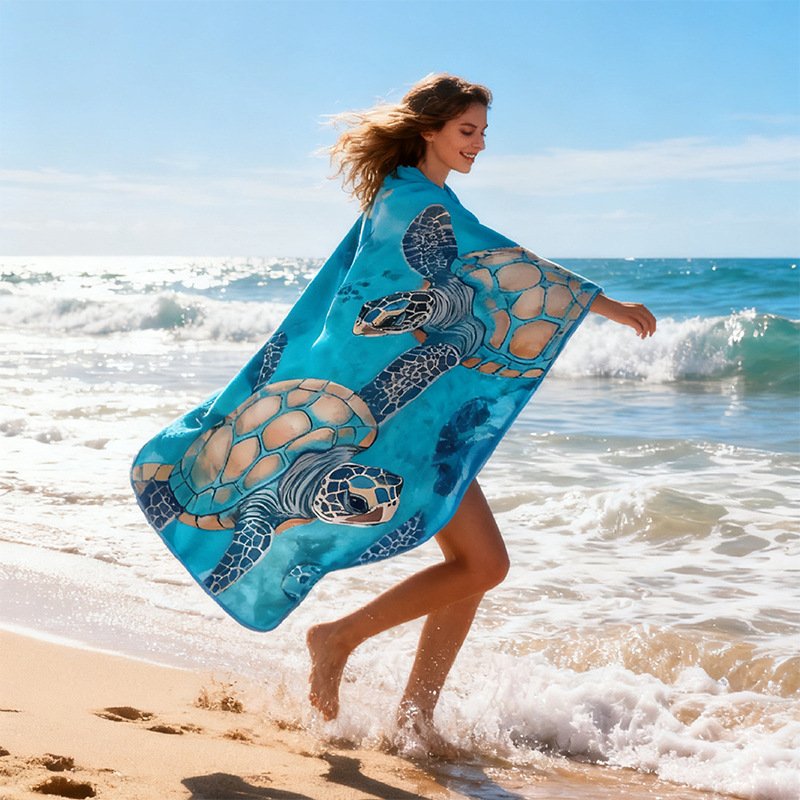
- Compact and lightweight: Perfect for surf ponchos and travel applications
- High absorbency: Can hold several times their weight in water
- Space-efficient: Great for gyms and spas with limited storage
- Sand-resistant: Sand doesn’t cling to microfiber like it does to terry cloth
Despite these advantages, microfiber hasn’t replaced cotton in most hotel settings. Many guests prefer the traditional feel of cotton, and microfiber can feel synthetic or less luxurious. However, microfiber is increasingly popular for beach clubs, surf changing robes, and water sports facilities.
Interestingly, some manufacturers now offer recycled beach towels made from recycled plastic bottles, combining microfiber’s performance benefits with environmental sustainability. This option appeals to eco-conscious resorts and helps brands meet sustainability goals.
Absorbency, GSM, and Drying Time: How Performance Really Compares
When selecting towels for commercial use, understanding the relationship between GSM, absorbency, and drying time is crucial. These three factors directly impact both guest satisfaction and operational costs.
What GSM Means and Why It Matters
GSM stands for “grams per square meter” and measures how much the towel’s fabric weighs. Essentially, it tells you how dense and thick the towel is. A higher GSM means more fabric, which generally translates to greater absorbency and a more luxurious feel.
However, higher isn’t always better. In commercial settings, you need to balance several factors:
- Absorbency needs: Pool towels don’t need to be as absorbent as bath towels since guests use them briefly
- Drying time: Higher GSM towels take much longer to dry, increasing energy costs
- Weight: Heavier towels mean fewer towels per laundry load, reducing efficiency
- Storage space: Bulkier towels take up more shelf and cart space
For perspective, a lightweight towel might be 300 GSM, while an ultra-plush spa towel could reach 900 GSM. Most commercial applications fall somewhere in the middle, depending on the specific use case.
Best GSM Range for Hotel Pool Towels (400-550)
After working with hundreds of hotels and resorts, we’ve found that the sweet spot for pool towels is 400–550 GSM. This range offers several important advantages for commercial operations.
At 400–450 GSM, towels are:
- Light enough to dry quickly, reducing laundry cycle times
- Still absorbent enough to satisfy most guests
- More economical, requiring less cotton per towel
- Easier for housekeeping staff to carry and stock
At 500–550 GSM, towels provide:
- A more premium, spa-like feel that impresses guests
- Better absorbency for guests who want to thoroughly dry off
- A perception of higher quality that justifies premium room rates
- Longer lifespan before the towel feels thin or worn
Budget hotels typically choose the lower end (400–450 GSM), while upscale properties opt for 500–550 GSM. Mid-range hotels often split the difference at around 475 GSM.
Balancing Guest Comfort with Laundry Efficiency
The real challenge in towel selection is finding the perfect balance between what guests want and what your operations can handle efficiently. Let’s look at how different factors play against each other.
Drying time comparison:
- 400 GSM towel: 45-60 minutes in commercial dryers
- 550 GSM towel: 75-90 minutes in commercial dryers
- 700 GSM bath towel: 90-120 minutes in commercial dryers
Those extra 30 minutes might not seem like much, but when you’re washing hundreds of towels daily, it adds up to significant energy costs. Additionally, longer drying times mean you need more towels in rotation to maintain adequate inventory.
According to the Textile Rental Services Association, reducing towel GSM by just 50 points can decrease energy costs by 12-15% annually for a 200-room hotel. That’s substantial savings without noticeably impacting guest satisfaction.
| GSM Range | Absorbency | Drying Time | Guest Perception | Best For |
|---|---|---|---|---|
| 300-400 | Moderate | Very Fast | Basic/Budget | Water parks, gyms, budget hotels |
| 400-500 | Good | Fast | Standard Quality | Mid-range hotels, cruise ships |
| 500-600 | Very Good | Moderate | Premium | Upscale hotels, boutique resorts |
| 600-700+ | Excellent | Slow | Luxury | Five-star hotels (bath towels only) |
Design and Color: Why Beach Towels Are Louder and Pool Towels Are Simpler
The visual differences between beach towels and pool towels aren’t just aesthetic choices—they’re strategic decisions based on practical needs and marketing considerations.
Pool towels in commercial settings are almost universally white or simple solid colors. This design philosophy serves multiple purposes. First, white towels can be bleached and sanitized at high temperatures without worrying about color fading. Second, white clearly shows when towels are clean, which reassures guests about hygiene standards.
Additionally, solid colors make inventory management easier. When all your pool towels are identical, you don’t need to worry about matching sets or sorting by pattern. This simplifies ordering, stocking, and rotation schedules.
Beach towels, however, embrace bold colors and patterns for several good reasons:
- Personal identification:
update pool_beach_towel_article - Personal identification:
- Personal identification: Bright patterns make it easy to spot your towel on crowded beaches
- Marketing opportunity: Resorts use distinctive towel designs as part of their brand identity
- Guest appeal: Colorful, attractive towels enhance the vacation experience and photo opportunities
- Theft deterrence: Bold branded patterns are less likely to be taken home than plain white towels
Many beach resorts have discovered that investing in custom-designed beach towels creates memorable guest experiences. In fact, distinctive towel designs often appear in guest photos on social media, providing free marketing for the property.
For businesses looking to create custom towels, Favor Houseware offers various customization options including jacquard weaving, reactive printing, and embroidered logos. These techniques allow you to create unique designs that reinforce your brand while maintaining the durability needed for commercial use.
Durability and Laundering: What Hotels and Resorts Care About Most
When you’re purchasing thousands of towels for a hotel or resort, durability isn’t just a nice-to-have feature—it’s a critical factor that directly impacts your bottom line. A towel that lasts twice as long effectively costs half as much over its lifetime.
Colorfastness and Chlorine Resistance
Pool towels face harsh conditions that regular towels never encounter. Chlorine, salt water, sunscreen, and body oils all take their toll on fabric. Therefore, choosing towels with proper chemical treatments and dyes is essential.
Vat-dyed vs. reactive-dyed towels:
- Vat-dyed towels have superior colorfastness and resist fading from chlorine and sun exposure. They’re more expensive initially but maintain their appearance much longer.
- Reactive-dyed towels are more affordable and offer good color vibrancy, but they may fade faster in pool environments. They work well for beach towels with less chlorine exposure.
Chlorine resistance is particularly important for pool towels. According to Textile World research, untreated cotton towels can lose up to 30% of their tensile strength after just 50 washing cycles with chlorine exposure. Properly treated towels maintain their integrity for 200+ cycles.
Expected Lifespan and Replacement Cycles
Understanding the realistic lifespan of your towels helps you budget accurately and plan inventory replenishment. Generally speaking, commercial pool towels should last:
- Budget towels (300-400 GSM): 6-12 months in high-turnover environments
- Mid-range towels (400-500 GSM): 12-18 months with proper care
- Premium towels (500-600 GSM): 18-24 months or longer
However, these timelines depend heavily on laundering frequency and care practices. A towel washed daily will wear out much faster than one washed weekly. Similarly, harsh chemicals, excessive heat, and rough handling accelerate deterioration.
Smart hotel operators track towel condition and rotate stock strategically. For example, as pool towels begin showing wear, they might be demoted to housekeeping cleaning rags rather than being discarded entirely. This maximizes value from every towel purchase.
Reducing Linting and Shrinkage
Two of the most common complaints about commercial towels are excessive linting and significant shrinkage after washing. Both problems can be minimized with proper towel selection and care.
Preventing lint problems:
- Choose combed or ring-spun cotton, which has shorter fibers removed during manufacturing
- Wash new towels separately for the first 2-3 cycles to remove excess loose fibers
- Avoid using fabric softeners, which can break down fibers and increase shedding
- Don’t overload washing machines—towels need room to move freely
Minimizing shrinkage:
- Select pre-shrunk towels or those with polyester blends that resist shrinkage
- Wash in warm water (not hot) whenever possible
- Avoid over-drying, which can cause excessive shrinkage
- Order towels slightly larger than your target size to account for 3-5% shrinkage
Quality manufacturers like Favor Houseware pre-shrink their towels during production, which significantly reduces shrinkage during commercial laundering. This ensures your 27″ × 52″ towel stays close to that size throughout its lifetime.
How Many Pool Towels Does a Hotel Need Per Room?
One of the most common questions we hear from hotel purchasers is: “How many towels do I actually need?” The answer depends on several factors including property type, guest demographics, and operational efficiency.
Hospitality industry standards suggest a par level approach to towel inventory. A “par” is one complete set of towels needed to service all guests at full occupancy. Most hotels maintain a minimum of 3-4 par levels:
- One par in use by guests at the pool, beach, or in rooms
- One par in the laundry being washed, dried, and prepared
- One par in storage ready for immediate deployment
- One reserve par for peak times, replacements, and unexpected demand
For pool towels specifically, the calculation looks like this:
Formula: (Number of rooms × Expected pool usage rate × Towels per guest) × Par level
For example, a 200-room resort might calculate:
- 200 rooms × 60% pool usage = 120 rooms using the pool daily
- 120 rooms × 2.5 people per room = 300 potential pool users
- 300 users × 1.5 towels per person (many guests use multiple) = 450 towels needed per day
- 450 × 3.5 par level = 1,575 total pool towels in inventory
This might seem like a lot, but remember that towels constantly cycle through use, laundering, and storage. Running out of clean towels during peak pool hours creates negative guest experiences that can impact online reviews.
Different property types have different needs:
| Property Type | Pool Usage Rate | Towels Per Room | Recommended Par Level |
|---|---|---|---|
| Business Hotel (City) | 20-30% | 1-2 | 3 par |
| Leisure Resort | 60-80% | 2-3 | 4 par |
| Beach Resort | 70-90% | 3-4 | 4-5 par |
| Water Park Hotel | 90-100% | 4-5 | 5+ par |
As a leading China beach towel manufacturer, we help hotels optimize their towel inventory based on their specific operational needs. Our bulk manufacturing capabilities ensure you can maintain adequate stock levels without excessive capital investment.
How to Choose the Right Towel if You Are a Hotel, Resort, or Water Park Buyer
Selecting towels for commercial hospitality use requires balancing guest expectations, operational efficiency, and budget constraints. Let’s break down the decision-making process for different property types.
City Hotels (Pool Only)
City hotels with swimming pools typically serve business travelers and families on city breaks. Pool usage is usually lower than at resort properties, and guests spend less time at the pool.
Recommended specifications for city hotels:
- Size: 24″ × 48″ to 27″ × 52″ (smaller end of the range)
- GSM: 400-450 for quick drying and efficiency
- Material: Cotton-poly blend (80/20) for durability and reduced costs
- Color: White or light solid colors for easy laundering
- Par level: 3 par minimum
City hotels benefit from compact towels that process quickly through laundry facilities. Since pool time is typically brief, guests don’t expect ultra-plush towels at the pool deck.
Beach Resorts (Dual Requirements)
Beach resorts face unique challenges because they need towels for both pool and beach use. Many properties choose to stock two different types of towels to optimize for each environment.
Pool towel specifications for beach resorts:
- Size: 27″ × 52″ to 30″ × 60″
- GSM: 450-500 for good absorbency
- Material: 100% cotton or high-cotton blend
- Color: White or branded solid colors
Beach towel specifications for beach resorts:
- Size: 32″ × 64″ to 36″ × 68″ (larger for lounging)
- GSM: 400-450 (lighter weight for easier handling)
- Material: Cotton or microfiber for sand resistance
- Color: Bright patterns with resort branding
This dual-towel approach costs more initially but improves guest satisfaction and can actually reduce costs over time. Larger beach towels at the pool would take up unnecessary laundry capacity, while small pool towels on the beach would frustrate guests.
Water Parks and Aquatic Centers
Water parks represent the most demanding towel environment. Towels circulate rapidly, face heavy chlorine exposure, and need to withstand rough handling by excited children and teenagers.
Recommended specifications for water parks:
- Size: 24″ × 48″ to 27″ × 52″ (compact for high volume)
- GSM: 400-450 (prioritize quick drying)
- Material: Cotton-poly blend with chlorine-resistant treatment
- Color: Bright, distinctive colors to reduce theft
- Par level: 5-6 par due to extremely high turnover
Water parks should expect to replace towels more frequently than traditional hotels—often every 6-12 months. Therefore, focusing on cost-effective options that still meet guest expectations makes the most sense.
Cruise Ships and Spas
Cruise ships have unique constraints including limited laundry capacity and storage space. Meanwhile, spas prioritize luxury feel above operational efficiency.
For cruise ships:
- Compact sizes (24″ × 48″ to 27″ × 50″) to save storage space
- Medium GSM (425-475) balancing quality and drying time
- Highly absorbent materials to compensate for smaller size
- Distinctive patterns to prevent guests taking them to cabins
For spas:
- Larger, premium sizes (30″ × 60″ and up)
- Higher GSM (500-600) for luxurious feel
- 100% long-staple cotton for ultimate softness
- White or spa-branded colors
Interestingly, many cruise lines and high-end spas also stock surf poncho towels and change robes for guests participating in water sports or beach excursions.

Custom Logo and Branding Options for Pool and Beach Towels
Custom branding transforms ordinary towels into marketing tools that reinforce your property’s identity. Moreover, branded towels can actually reduce theft and improve guest experiences when done thoughtfully.
Jacquard Weaving
Jacquard weaving creates patterns and logos by weaving different colored threads directly into the towel fabric. This method produces permanent designs that won’t fade, peel, or crack—even after hundreds of washings.
Advantages of jacquard branding:
- Extremely durable—the design lasts as long as the towel itself
- Subtle, sophisticated appearance perfect for luxury properties
- Works well for borders, monograms, and geometric patterns
- No additional chemicals or printing processes needed
Limitations:
- Limited color options (typically 2-3 colors maximum)
- Higher minimum order quantities (usually 500+ towels)
- Best suited for simple logos and patterns rather than complex images
- Slightly higher per-unit cost than other methods
Jacquard weaving is ideal for hotels and resorts that want permanent, elegant branding. Many luxury properties use jacquard borders with their monogram or logo woven into the band.
Embroidery Options
Embroidered logos offer a premium look and feel, with raised stitching that creates a tactile, high-quality impression. This method works particularly well for smaller logos placed on towel corners or centers.
Benefits of embroidery:
- Professional, upscale appearance that guests associate with quality
- Excellent durability through commercial laundering
- Works with complex logos including fine details and multiple colors
- Lower minimum order quantities than jacquard (often 100-250 towels)
Considerations:
- Can feel slightly rough or scratchy if placed where guests contact it directly
- Best placed on corners or edges rather than center of towel
- Adds minimal weight and thickness to the towel
- Moderate price point between jacquard and printing
Our custom embroidery services allow you to create distinctive branded towels that elevate your property’s image while maintaining functionality.
Yarn-Dyed Stripes and Borders
Yarn-dyed stripes involve dyeing the cotton yarns before weaving, creating colorfast stripes or borders that won’t fade. This technique combines durability with visual appeal.
Why choose yarn-dyed borders:
- Adds color and personality without complex branding
- Extremely fade-resistant—colors stay vibrant for years
- Creates a cohesive look across your towel inventory
- More affordable than custom logos while still being distinctive
- Helps guests identify your property’s towels easily
Many beach resorts use signature stripe patterns in their brand colors. This creates a distinctive look that appears in guest vacation photos, essentially providing free social media marketing.
For example, you might choose navy and white stripes for a nautical beach resort, or bright tropical colors for a Caribbean property. These visual identifiers make your brand memorable without requiring complex logo application.
At Favor Houseware, we offer all these customization options and can help you select the best method for your specific needs, budget, and order quantity. Our design team can also help you create patterns that balance aesthetics with practical durability.
Cost, Lifespan, and ROI for Commercial Pool and Beach Towels
Understanding the true cost of towels requires looking beyond the initial purchase price. When you calculate cost per use over the towel’s entire lifespan, the economics often favor higher-quality options.
Price Per Towel vs Cost Per Use
Let’s compare two hypothetical towels for a 150-room hotel with 70% pool usage:
Budget Option:
- Purchase price: $4.50 per towel
- Lifespan: 8 months (approximately 180 uses before replacement)
- Cost per use: $0.025
- Annual towel budget: ~$6,750 (assuming 1,000 towel par level)
Premium Option:
- Purchase price: $8.50 per towel
- Lifespan: 18 months (approximately 400 uses before replacement)
- Cost per use: $0.021
- Annual towel budget: ~$5,667
In this scenario, the premium towel actually costs less per use despite being nearly twice the purchase price. Additionally, you save on:
- Reduced ordering and shipping frequency
- Less staff time managing inventory and replacements
- Fewer disposal costs for worn-out towels
- Better guest satisfaction leading to higher review scores
According to Hotel Management research, properties that invest in quality linens see 8-12% higher guest satisfaction scores in the “cleanliness and comfort” category.
When Premium Investment Makes Sense
Not every property needs premium towels, but certain situations clearly justify the investment:
Choose premium towels when:
- Your property positions itself as upscale or luxury
- Guest satisfaction scores directly impact your revenue (resorts with high repeat visitation)
- You have efficient laundry operations that can handle slightly longer drying times
- Your brand emphasizes quality and guest experience over cost minimization
- You’re in a competitive market where small details influence booking decisions
Choose budget-friendly options when:
- You operate a high-volume, value-oriented property
- Pool usage is light or seasonal
- Quick replacement cycles are necessary due to theft or harsh conditions
- Laundry capacity limits how quickly you can process towels
- You’re managing a water park or facility where towels take heavy abuse
Many properties find success with a hybrid approach: premium towels for guest rooms and standard towels for pool and beach use. This allocates budget where it has the greatest impact on guest perception.
Calculating Your Replacement Budget
To accurately budget for towel replacement, you need to track several metrics:
Key metrics to monitor:
- Attrition rate: What percentage of towels disappear monthly (theft, loss, disposal)
- Degradation rate: How quickly towels become unusable due to wear
- Seasonal variation: How usage patterns change throughout the year
- Par turnover: How many times each towel is used before replacement
A simple tracking system might look like this:
| Month | Towels in Inventory | Towels Lost/Stolen | Towels Retired | Towels Purchased |
|---|---|---|---|---|
| January | 1,200 | 15 | 8 | 0 |
| February | 1,177 | 12 | 6 | 50 |
| March | 1,209 | 18 | 11 | 0 |
By tracking these numbers, you can predict when you’ll need to order replacement towels and budget accordingly. Most hotels find they need to replace 20-30% of their towel inventory annually under normal conditions.
Working with a reliable manufacturer like Favor Houseware ensures consistent quality across orders and competitive bulk pricing that improves your ROI. Our established manufacturing capabilities in China allow us to offer excellent value without sacrificing quality.
How to Care for Pool and Beach Towels in Hospitality Settings
Proper care significantly extends towel lifespan and maintains guest satisfaction. Commercial laundry operations differ dramatically from home washing, and understanding best practices can save thousands of dollars annually.
Washing Temperature and Detergent
The right water temperature balances sanitation with fabric preservation. While hot water kills bacteria effectively, it also accelerates fabric breakdown and increases energy costs.
Recommended washing temperatures:
- Pool towels: 140-160°F (60-71°C) for adequate sanitization
- Beach towels: 120-140°F (49-60°C) sufficient for sand and sunscreen removal
- White towels with stains: Up to 180°F (82°C) occasionally for deep cleaning
Interestingly, modern commercial detergents work effectively at lower temperatures than older formulations. The Textile Rental Services Association reports that many facilities have reduced washing temperatures by 20-30°F without compromising cleanliness, resulting in significant energy savings.
Detergent selection guidelines:
- Use commercial-grade detergents specifically formulated for hospitality linens
- Choose chlorine-stable formulations for pool towels
- Avoid excessive detergent—more isn’t better and can leave residue
- Use oxygen bleach rather than chlorine bleach when possible to extend towel life
- Add an acid rinse periodically to remove mineral buildup from hard water
Many hotels partner with commercial laundry service providers who manage these details professionally. However, properties with on-site laundry facilities need trained staff who understand proper chemical usage.
Avoiding Fabric Softeners
This might surprise you, but fabric softeners are actually harmful to towels and should never be used in commercial hospitality settings. Here’s why:
Problems caused by fabric softeners:
- Reduced absorbency: Softeners coat fibers with chemicals that repel water, making towels less effective
- Increased linting: The coating weakens fiber bonds, causing more shedding
- Residue buildup: Over time, softener residue makes towels feel greasy or slippery
- Shortened lifespan: The chemical coating actually breaks down cotton fibers faster
- Fire safety concerns: Some fabric softeners can increase flammability
If guests complain that towels feel rough, the solution isn’t fabric softener. Instead:
- Ensure you’re not using too much detergent (which makes towels stiff)
- Add white vinegar to the rinse cycle to soften naturally
- Avoid over-drying, which makes fibers brittle
- Choose higher-quality cotton that’s naturally softer
Well-made towels from quality manufacturers should feel soft without any chemical treatments. Our beach towels use combed cotton that maintains natural softness through hundreds of washing cycles.
Proper Storage to Extend Life
How you store towels between uses affects their longevity and freshness. Poor storage practices can lead to mildew, musty odors, and premature deterioration.
Storage best practices:
- Ensure complete dryness: Never store towels that are even slightly damp—this invites mold and mildew
- Provide good ventilation: Storage areas should have air circulation to prevent mustiness
- Avoid direct sunlight: UV exposure can fade colors and weaken fibers over time
- Use clean, dry shelving: Dirty or damp storage areas transfer problems to clean towels
- Rotate stock: Use a first-in, first-out system so towels don’t sit unused for months
- Fold consistently: Uniform folding makes inventory management easier and looks more professional
For poolside and beach storage, consider using:
- Slatted shelving that allows air circulation
- Covered carts that protect from sun while maintaining airflow
- Climate-controlled rooms in humid environments
- Separate storage for pool and beach towels to prevent cross-contamination
Some hotels also implement RFID tracking systems for their towels, which helps monitor inventory, prevent theft, and track individual towel usage. While this represents a significant investment, large properties often find the improved inventory control justifies the cost.
Frequently Asked Questions About Pool and Beach Towels
Let’s address the most common questions buyers and consumers ask about pool towels, beach towels, and related products.
Are beach towels bigger than pool towels?
Yes, beach towels are generally bigger than pool towels. Standard beach towels typically measure 30–36 inches by 60–68 inches, while pool towels (especially in hotels) usually measure 24–27 inches by 48–52 inches. This size difference exists because beach towels need to provide enough surface area for lying on sand, whereas pool towels only need to dry you off efficiently.
Can I use a bath towel as a beach towel?
While you can technically use a bath towel at the beach, it’s not ideal. Bath towels are designed for absorbency and comfort after showering, not for outdoor use. They’re often heavier, hold onto sand more stubbornly, and take longer to dry between uses. A dedicated beach towel will provide better coverage on sand and shake out more easily, making your beach experience much more enjoyable.
What GSM is best for hotel pool towels?
The ideal GSM range for hotel pool towels is 400–550. This range provides good absorbency while maintaining reasonable drying times for commercial laundry operations. Budget hotels often choose 400–450 GSM for maximum efficiency, while upscale properties select 500–550 GSM for a more premium feel. Anything above 600 GSM typically takes too long to dry for high-turnover pool operations.
Which material is better: cotton or microfiber for beach towels?
Both materials have distinct advantages. Cotton terry cloth offers superior softness, natural absorbency, and a traditional feel that most people prefer. Microfiber towels excel in quick-drying performance, compact storage, and sand resistance. For hotels and resorts, cotton remains the most popular choice because guests associate it with quality. However, microfiber works excellently for water sports facilities, gyms, and travel-focused applications.
Why do beach towels have bright patterns while pool towels are plain?
Beach towels feature bright, bold patterns for several practical reasons. First, colorful designs make it easy to spot your towel on crowded beaches. Second, distinctive patterns serve as personal identification and branding opportunities for resorts. Third, vibrant towelsenhance vacation photos and social media content. Pool towels in hotels are typically white or simple colors because this simplifies laundering, allows for bleaching and sanitization, and clearly shows cleanliness to reassure guests.
Are pool towels and beach towels interchangeable in hotels?
Many hotels use similar terry constructions for both pool and beach towels, but they’re not always interchangeable. Pool towels are often smaller and simpler for operational efficiency, while beach resorts may stock larger, more colorful towels specifically for beach use. Properties with both amenities often find that having two separate inventories improves guest satisfaction while optimizing laundry operations.
How many pool towels does a hotel need per room?
Hotels typically maintain 3-4 “par levels” of pool towels, meaning 3-4 complete sets of all needed towels. The specific number depends on pool usage rates. A business hotel might stock 1-2 pool towels per room, while a beach resort might need 3-4 per room to account for higher usage. Additionally, you need towels in circulation through laundry and storage, so the total inventory is much higher than the number of rooms.
What is the difference between a pool towel and a bath towel?
Pool towels are designed for quick drying and frequent commercial laundering, typically measuring 24–27 × 48–52 inches with 400–550 GSM. Bath towels are made for absorbency and comfort after showering, usually measuring 27–30 × 52–60 inches with 450–650 GSM. Bath towels are generally thicker and more plush, while pool towels prioritize faster drying and durability in harsh pool environments.
Can hotels use recycled towels?
Absolutely! Recycled beach towels made from recycled plastic bottles are becoming increasingly popular among eco-conscious hotels and resorts. These towels offer excellent performance while supporting sustainability goals. Many guests appreciate and actively seek out hotels with strong environmental commitments, making recycled towels a marketing advantage as well as an environmental choice.
What other towel products should hotels consider?
Beyond standard pool and beach towels, many hotels expand their towel offerings to enhance guest experiences. Popular options include Turkish hammam towels for spa facilities, surf poncho towels for water sports activities, and surf change robes for beach cabanas. Additionally, don’t forget about kitchen towels for your F&B operations and aprons for your restaurant staff.
Conclusion: Making the Right Towel Choice for Your Business
Choosing between pool towels and beach towels—or deciding which specifications to select—doesn’t have to be complicated. By understanding the key differences in size, material, GSM, and purpose, you can make informed decisions that improve guest satisfaction while optimizing operational efficiency.
Remember these essential takeaways:
- Pool towels (24–27 × 48–52 inches, 400–550 GSM) are designed for quick drying and high-turnover commercial operations
- Beach towels (30–36 × 60–68 inches, 350–500+ GSM) prioritize coverage and comfort for lounging
- Bath towels (27–30 × 52–60 inches, 450–650 GSM) offer maximum absorbency for post-shower use
- The right GSM balances guest comfort with laundry efficiency and drying time
- Quality towels cost more initially but deliver better ROI through longer lifespan
- Proper care—including correct washing temperatures and avoiding fabric softeners—dramatically extends towel life
- Custom branding transforms towels into marketing tools while reducing theft
Whether you’re managing a boutique beach resort, a city business hotel, or a high-volume water park, the right towel choices make a measurable difference in both guest experiences and your bottom line. For more insights on textile selection and hospitality best practices, visit our blog for ongoing industry updates and tips.
Ready to Upgrade Your Hotel’s Towel Inventory?
As a leading China-based towel manufacturer, Favor Houseware specializes in high-quality pool towels, beach towels, and custom hospitality textiles. We’ve helped hundreds of hotels, resorts, and water parks worldwide optimize their towel programs for better guest satisfaction and operational efficiency.
Our manufacturing capabilities include:
- Custom sizing and GSM specifications tailored to your needs
- Jacquard weaving, embroidery, and yarn-dyed customization
- Bulk production with competitive pricing and reliable delivery
- Quality control processes ensuring consistency across large orders
- Eco-friendly options including recycled materials
Contact us today to request samples, discuss your specific requirements, or get a customized bulk quote.
Get Your Custom Quote View Our Product RangeLooking for other textile products? Explore our complete range including microfiber cleaning cloths, kitchen textiles, and hospitality supplies. We’re your one-stop manufacturer for all commercial textile needs.
Views: 0