Quick Answer: What Is A Travel Beach Towel?
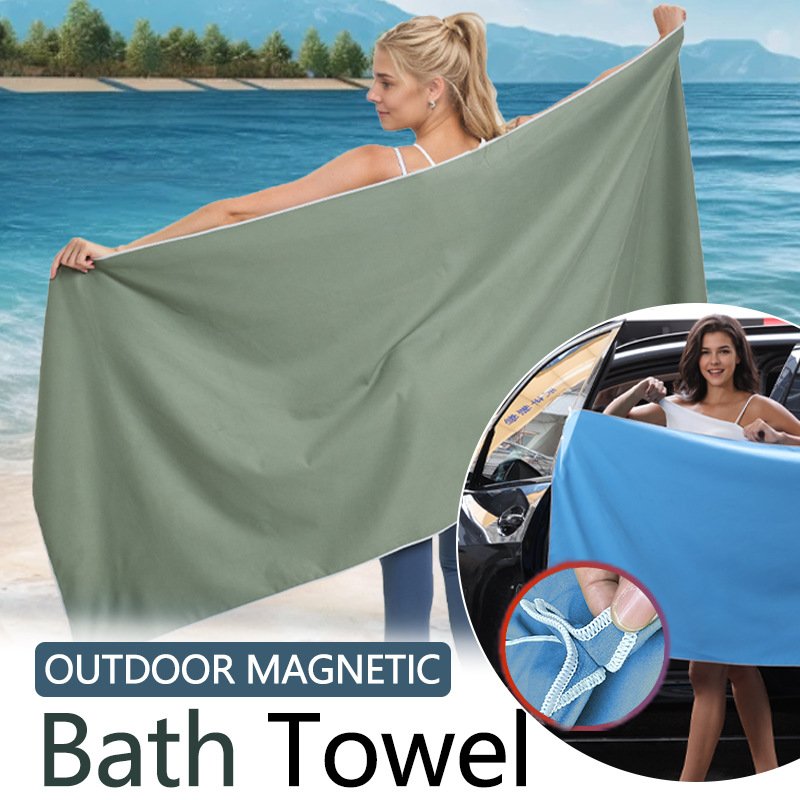
A travel beach towel is a specially designed towel that’s lighter, more compact, and faster-drying than regular cotton towels. Moreover, these towels are perfect for travelers who need to save space and weight in their luggage. In addition, most travel towels use microfiber materials that dry up to 2 times faster than traditional cotton beach towels.
Travel Beach Towel vs. Regular Towel: At-A-Glance Comparison
| Feature | Regular Cotton Beach Towel | Microfiber Travel Beach Towel |
|---|---|---|
| Weight (standard size) | 500-800g (Heavy) | 150-300g (2-4× lighter) |
| Packed Volume | Bulky, takes up luggage space | Very compact, fits in small pouches |
| Drying Time | 6-12 hours or more | 2-4 hours (about 2× faster) |
| Sand Resistance | Traps sand in terry loops | Smooth surface, easy to shake off |
| Odor Resistance | Can smell when packed wet | Often treated, dries before odor builds |
| Best For | Home use, short beach trips | Travel, camping, backpacking, hostels |
What Is A Travel Beach Towel?
A travel beach towel is a towel designed specifically to be lighter, thinner, and faster-drying than standard cotton bath or beach towels. Furthermore, these innovative towels are usually made from microfiber, which is a blend of polyester and polyamide, or other technical fabrics. As a result, they offer superior performance for people on the go.
Travel towels are built for convenience and portability. Therefore, they have become essential gear for modern travelers. In fact, their compact design makes them ideal for various situations.
Common Use Cases for Travel Beach Towels:
- Backpacking and hiking trips where every ounce matters
- City breaks and hostel stays where you need your own towel
- Beach vacations that require quick-drying gear
- Swimming pools and water sports activities
- Camping and RV trips with limited storage space
- Gym and fitness centers for daily workouts
Why You Need A Compact Beach Towel For Travel
Traditional cotton beach towels create several problems for travelers. Consequently, many experienced adventurers have switched to compact beach towels. Let’s explore the main pain points that travel towels solve.
Key Problems with Regular Cotton Towels:
Use low heat if machine drying: If you must use a dryer, select the lowest heat setting. High temperatures can melt or warp synthetic fibers. Additionally, excessive heat reduces the towel’s overall lifespan.
Ensure complete drying before storage: Never pack or store a damp towel long-term. Even quick-dry towels need to be completely dry before being put away. Otherwise, mildew and permanent odors can develop despite antimicrobial treatments.
Store in a dry, ventilated area: Keep your towels in a breathable bag or shelf space with good air circulation. Consequently, this prevents moisture accumulation and keeps them fresh between uses.
What to Avoid for Maximum Lifespan
- Never use fabric softener – it destroys absorbency permanently
- Avoid high heat drying – damages synthetic fibers
- Don’t leave packed wet – causes mildew and odor
- Skip harsh detergents – strips protective treatments
- Don’t iron – heat damages microfiber structure
Following these simple care instructions helps your packable beach towel maintain peak performance for 300-400 wash cycles. In fact, with proper care, a quality travel towel can last for years of regular use.
For other travel-friendly textile products requiring similar care, check out our kitchen towel collection and apron manufacturing services.
How We Manufacture Premium Travel Beach Towels
At Favor Houseware, we combine decades of textile manufacturing expertise with modern technology. Moreover, our commitment to quality ensures every towel meets strict performance standards. Let’s look behind the scenes at our production process.
Material Selection Process
Choosing the right materials makes all the difference in towel performance. Therefore, we carefully evaluate multiple factors before selecting our microfiber blends:
Fiber fineness: We use microfibers measuring 0.5-1.0 denier (much finer than human hair). In fact, finer fibers create more surface area for better absorption while keeping weight low. Additionally, we test multiple denier ranges to find the optimal balance.
Polyester and polyamide ratios: Our standard blend uses 80% polyester and 20% polyamide. This combination provides durability from polyester and superior absorbency from polyamide. Moreover, we adjust ratios for specific product lines based on intended use.
GSM (grams per square meter) selection: Different applications require different weights. For example, our ultralight backpacking towels use 200 GSM, while our beach blanket sizes use 300 GSM for extra cushioning. Consequently, customers get purpose-built products.
Finishing treatments: We apply antimicrobial silver ion treatments to prevent odor. Additionally, some product lines receive water-repellent finishes for enhanced quick-dry performance. Furthermore, all treatments undergo safety and durability testing.
Similar attention to detail goes into our other product lines, including our disposable microfiber cleaning cloth rolls for commercial applications.
Quality Testing Standards
Every travel beach towel design undergoes comprehensive testing before production. Specifically, we run multiple test protocols to ensure consistent quality:
| Test Type | Our Standard | Testing Method | Pass Criteria |
|---|---|---|---|
| Absorbency Rate | 4-5× towel weight | Water immersion test | Minimum 4× absorption |
| Drying Speed | Under 4 hours | Climate-controlled chamber | 95% dry within 4 hours |
| Color Fastness | Grade 4-5 | ISO 105-C06 standard | No color bleeding |
| Durability | 350+ cycles | Industrial washing simulation | Performance retention >85% |
| Odor Resistance | 12+ hours | Sealed wet storage test | No odor development |
These standards exceed typical industry requirements. As a result, our customers receive products that perform reliably in real-world conditions. Additionally, we continuously refine our testing protocols based on customer feedback and emerging research.
Custom Options Available
As an experienced manufacturer, we offer extensive customization for businesses and brands. Furthermore, our flexible production capabilities support projects of various scales:
Custom sizes and weights: We can produce any dimensions from small hand towels to large beach blankets. Moreover, we adjust GSM ratings to meet specific performance targets.
Color and design options: Choose from hundreds of solid colors or work with our design team for custom prints and patterns. In fact, we support full sublimation printing for photorealistic designs.
Branded packaging and labels: We provide complete white-label services including custom pouches, hang tags, and packaging materials. Consequently, your products arrive market-ready.
Special features integration: Add hanging loops, zip pockets, carrying straps, or corner pockets according to your specifications. Additionally, we can incorporate unique features you design.
MOQ flexibility: While larger orders receive better pricing, we work with businesses of all sizes. Therefore, even small brands can access our quality manufacturing.
To learn more about our custom manufacturing capabilities, visit our custom services page or read about our commitment to quality on our about page.
China’s textile manufacturing industry has deep expertise in advanced fabric production. According to industry case studies, Chinese manufacturers lead in innovation and quality control for technical textiles.
Frequently Asked Questions
What is the best towel for travel?
The best towel for travel is usually a lightweight microfiber travel towel that dries quickly, packs small, and resists odor. Moreover, it should be large enough for your main activities like showers, beach visits, or gym use. Many experienced travelers pick towels that balance softness and performance rather than choosing the absolute thinnest option. In fact, ultra-thin fabrics can feel less comfortable even though they dry very fast.
What is the difference between a travel towel and a regular towel?
A travel towel is designed to be lighter, more compact, and faster-drying than a regular cotton towel. Specifically, travel towels often use high-performance microfiber fabrics instead of traditional terry cotton. Regular towels focus more on plush feel and thickness. As a result, they tend to be bulkier in luggage, slower to dry, and more likely to smell if packed while damp.
Are microfiber travel towels good for the beach?
Microfiber travel towels work excellently at the beach for several reasons. First, they dry quickly even in humid coastal conditions. Second, they pack small in beach bags. Third, their smoother surface usually traps less sand than fluffy terry loops, making them easier to shake off. Additionally, they can double as both a drying towel and a light beach mat. However, very thin versions may feel less cushioned than classic cotton beach blankets.
Do quick-dry towels really dry faster?
Quick-dry towels do dry significantly faster than standard cotton towels. This happens because their fine fibers and thin construction spread moisture across a larger surface area for faster evaporation. In fact, independent gear tests often note that quality travel towels will dry in just a few hours under normal conditions. In contrast, cotton towels need 6-12 hours or more. This performance advantage is especially valuable when you need to pack up and move quickly.
How do you wash and care for a travel towel?
Wash travel towels in cool or warm water with mild detergent. Additionally, avoid fabric softeners completely, as they destroy absorbency. Hang them to dry whenever possible to protect the fibers and drying performance. Furthermore, rinse off saltwater or pool chemicals soon after use. Finally, let the towel dry fully before long-term storage to prevent odor and extend its life.
What size travel towel do I need?
Most travelers do well with a towel roughly the size of a standard bath towel (around 26″ × 52″) for everyday use. However, beach-focused trips may benefit from a larger sheet-size towel for lying on the sand comfortably. On the other hand, minimalist backpackers often choose smaller sizes to save weight and space, trading off full coverage for easier packing. Therefore, consider your specific activities when selecting size.
Are travel towels worth it for short trips?
Travel towels can be worth it even on short trips if you have limited luggage space, expect to move frequently, or plan to swim and shower in places where towels are not provided. For example, city breaks with multiple hotels or beach weekends benefit from quick-dry convenience. However, for simple weekend holidays with car access and hotel towels included, some people prefer regular cotton beach towels purely for comfort and familiarity.
Can a quick-dry travel towel replace a regular bath towel?
A well-designed travel towel can replace a regular bath towel for most trips, especially if you value fast drying, compact packing, and easy care. Nevertheless, some users still prefer the plush feel of thick cotton at home. Therefore, they reserve microfiber or other technical fabrics for travel and outdoor use only. In other words, it depends on your personal preferences for comfort versus performance.
Do travel towels smell after a few uses?
Low-quality travel towels can smell if they are repeatedly packed away wet without enough time to dry, just like cotton towels. However, better towels use odor-resistant finishes and dry quickly enough that, when hung between uses, they stay fresh for longer trips. Moreover, our antimicrobial-treated towels resist odor development significantly better than untreated options.
Are travel towels suitable for sensitive skin?
Many microfiber travel towels are soft enough for daily use with sensitive skin. However, very thin, technical fabrics can feel different from cotton and may not suit everyone’s skin preference. Therefore, travelers with sensitive skin often look for slightly thicker or brushed microfiber surfaces. Furthermore, as manufacturers, we can tune weave patterns and finishing to improve handfeel for different skin sensitivities.
Conclusion: Choose The Right Travel Beach Towel For Your Next Adventure
Selecting the perfect travel beach towel transforms your travel experience. Moreover, the right towel saves space, dries quickly, and stays fresh throughout your journey. As we’ve explored, compact beach towels made from microfiber offer clear advantages over traditional cotton for most travelers.
Key takeaways to remember:
- Lightweight beach towels weigh 2-4 times less than cotton equivalents
- Quick dry travel towels dry in 2-4 hours compared to 6-12 hours for cotton
- Packable beach towels compress to a fraction of cotton towel volume
- Microfiber surfaces resist sand and odor better than terry cloth
- Proper care maintains performance for 300-400 washing cycles
Whether you’re backpacking across continents, planning a beach vacation, or heading to the gym, investing in a quality travel towel pays dividends. In fact, once you experience the convenience of quick-drying, lightweight performance, you’ll never go back to bulky cotton towels for travel.
Ready to Experience Premium Travel Beach Towels?
At Favor Houseware, we manufacture high-quality travel towels for businesses and individual travelers worldwide. Our commitment to quality, performance testing, and customer satisfaction sets us apart in the industry.
Get in touch today:
- ✓ Custom manufacturing for businesses and brands
- ✓ Flexible MOQ for orders of all sizes
- ✓ Complete design and branding services
- ✓ Direct factory pricing with quality guarantee
Explore our beach towel collection or contact our team to discuss your specific needs. Additionally, browse our manufacturing blog for more industry insights and product guides.
Make your next adventure lighter, faster, and more convenient with Favor Houseware travel towels!
Bad smell development: When you pack a wet cotton towel in your luggage, it starts to smell bad within hours. Therefore, this creates an unpleasant odor that spreads to your clothes and other belongings.
Slow drying time in humid climates: Cotton towels need 6-12 hours to dry completely. In humid locations, they might not dry at all between uses. This becomes especially problematic during multi-day trips.
Limited luggage space and airline weight limits: Airlines have strict baggage allowances. Moreover, budget carriers charge extra for overweight bags. Bulky cotton towels waste precious space and add unnecessary weight.
“Experienced outdoor brands and gear reviewers consistently rank quick-drying performance, odor resistance, and packability as the top three criteria when choosing a travel towel.” – OutdoorGearLab
The solution? A quick dry travel towel eliminates all these issues. Furthermore, it gives you more freedom and flexibility during your adventures.
Travel Beach Towel vs Regular Towel: Key Differences
Understanding the differences between towel materials helps you make the best choice. Additionally, each material type offers unique benefits and trade-offs. Let’s break down the main options available today.
Material Comparison: What Makes Travel Towels Special
| Material Type | Weight | Drying Speed | Feel/Comfort | Best Use |
|---|---|---|---|---|
| Microfiber (Polyester/Polyamide) | Very light | Very fast (2-4 hours) | Smooth, less plush | Travel, backpacking |
| Cotton Terry | Heavy | Slow (6-12 hours) | Soft, familiar, plush | Home, casual beach days |
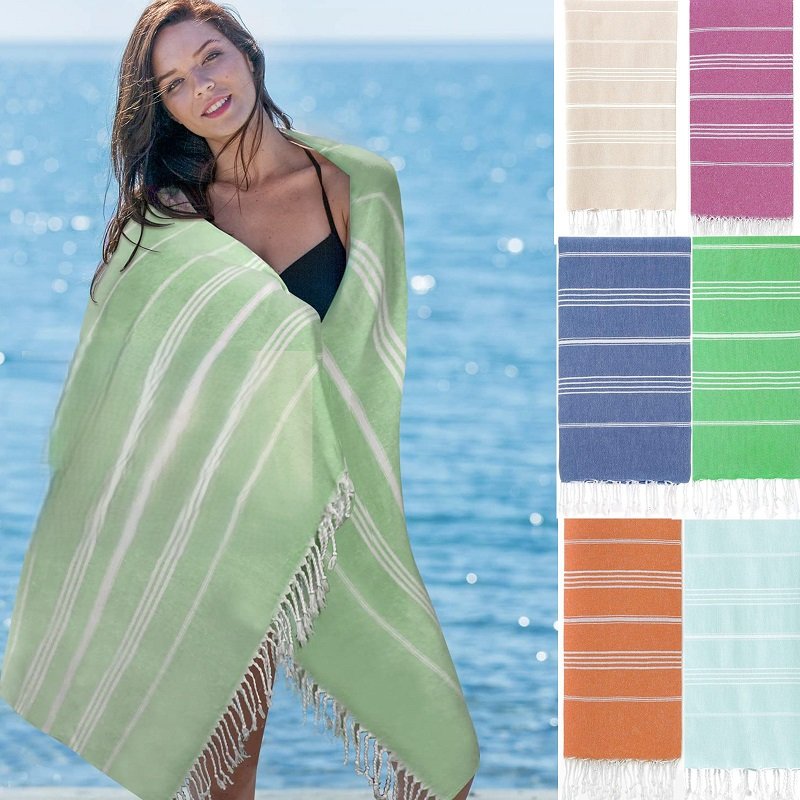
| Waffle Weave | Medium-light | Fast (3-5 hours) | Textured, elegant | Luxury travel, spas |
| Nanofiber Premium | Ultra-light | Very fast (1-3 hours) | Very thin, technical | Ultralight backpacking |
Microfiber Travel Towels
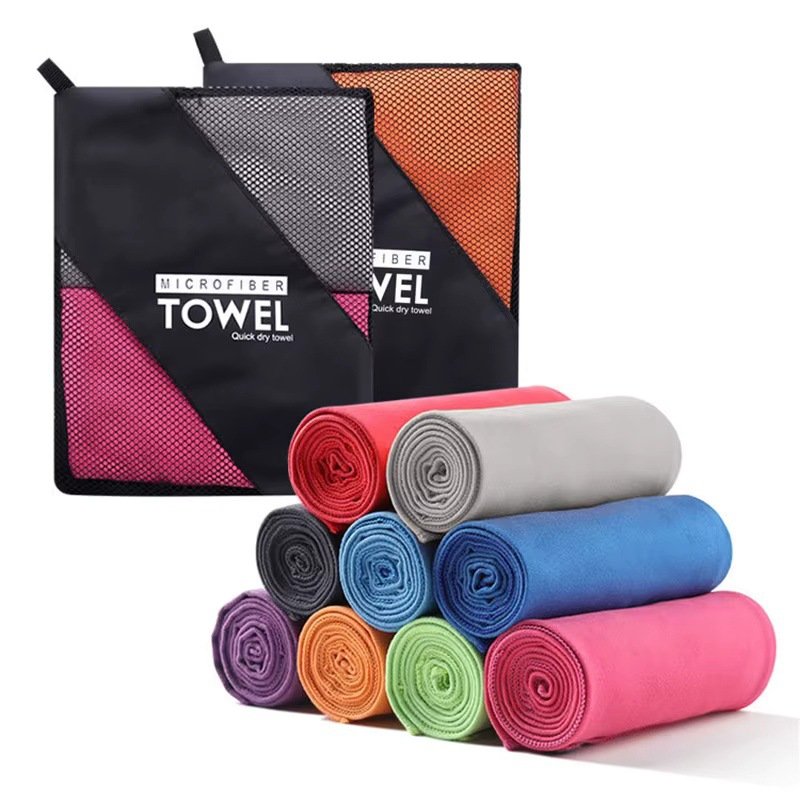
Most modern travel beach towels use microfiber blends. Specifically, these combine polyester and polyamide to create very fine fibers. As a result, the surface area increases dramatically, which boosts absorption while keeping the towel thin and light.
Microfiber works through a simple principle: more surface area means better water absorption. Additionally, the thin construction allows water to evaporate quickly. Therefore, you get excellent performance in a compact package.
Our microfiber towel collection showcases various GSM (grams per square meter) options. Consequently, you can choose the perfect balance between thickness and drying speed for your needs.
Cotton Beach Towels
Classic cotton terry towels remain popular for good reasons. First, they feel softer and more familiar against your skin. Second, they provide that plush, luxurious experience many people love. However, they come with significant drawbacks for travelers.
Cotton towels are heavier and bulkier than microfiber alternatives. Moreover, they take much longer to dry completely. In fact, in humid conditions, they might stay damp for days. Nevertheless, for home use or short beach trips with car access, cotton towels work perfectly fine.
For travelers seeking eco-friendly options, check out our recycled beach towel collection. These products combine cotton comfort with environmental responsibility.
Alternative Materials
Waffle weave fabrics offer an interesting middle ground. They feature a textured pattern that creates air pockets. As a result, they dry faster than regular cotton while maintaining a more traditional feel. Furthermore, they look elegant and work well for Turkish hammam towels.
Nanofiber premium options represent the cutting edge of towel technology. These ultra-fine fibers create the lightest, fastest-drying towels available. However, they can feel very thin and less cushioned. Therefore, they suit minimalist backpackers who prioritize weight savings above all else.
How To Choose The Right Travel Beach Towel
Selecting the perfect lightweight beach towel depends on your specific travel style and needs. Furthermore, understanding key factors helps you avoid buyer’s remorse. Let’s walk through the essential considerations step by step.
Size Guide For Different Travelers
Size matters when choosing a travel towel. Moreover, the right size balances coverage with packability. Here’s a helpful breakdown based on traveler type:
| Traveler Type | Recommended Size | Typical Dimensions | Target Weight |
|---|---|---|---|
| Minimalist Backpacker | Small/Hand towel | 16″ × 32″ (40 × 80 cm) | 100-150g |
| Standard Traveler | Medium/Bath towel | 26″ × 52″ (65 × 130 cm) | 200-300g |
| Beach Holiday Enthusiast | Large/Beach sheet | 30″ × 60″ (75 × 150 cm) | 300-400g |
| Family Beach Blanket | Extra Large | 40″ × 70″ (100 × 180 cm) | 450-600g |
Most travelers find that a standard bath towel size works best. In other words, roughly 26 × 52 inches provides enough coverage for showers and beach use. Additionally, this size remains manageable in terms of weight and packing space.
Beach-focused trips often benefit from larger sizes. After all, you want enough room to lie comfortably on the sand. However, minimalist backpackers might prefer smaller options to save every possible ounce.
Weight Considerations
Weight directly impacts your travel experience. Specifically, lightweight beach towels typically weigh 2-4 times less than cotton equivalents. For example, a standard microfiber travel towel might weigh only 200 grams compared to 600-800 grams for cotton.
This difference becomes crucial for several situations:
- Carry-on only travel where every gram counts toward airline limits
- Budget airlines with strict 7-10kg cabin baggage allowances
- Multi-country backpacking where you carry everything daily
- Hiking and camping trips requiring ultralight gear
As a professional beach towel manufacturer, we test every product to ensure optimal weight-to-performance ratios. Consequently, our customers get towels that don’t compromise on functionality.
Quick-Dry Performance
The drying speed of your towel affects your entire travel experience. Moreover, a true quick dry travel towel should dry in 2-4 hours under normal conditions. In contrast, cotton towels need 6-12 hours or longer.
Look for these performance indicators when shopping:
- Manufacturer drying time claims (should specify test conditions)
- GSM (grams per square meter) rating – lower GSM usually dries faster
- Customer reviews mentioning actual drying experience
- Microfiber blend specifications (polyester/polyamide percentages)
According to research from REI’s gear experts, quick-dry performance ranks as the most important feature for 78% of experienced travelers.
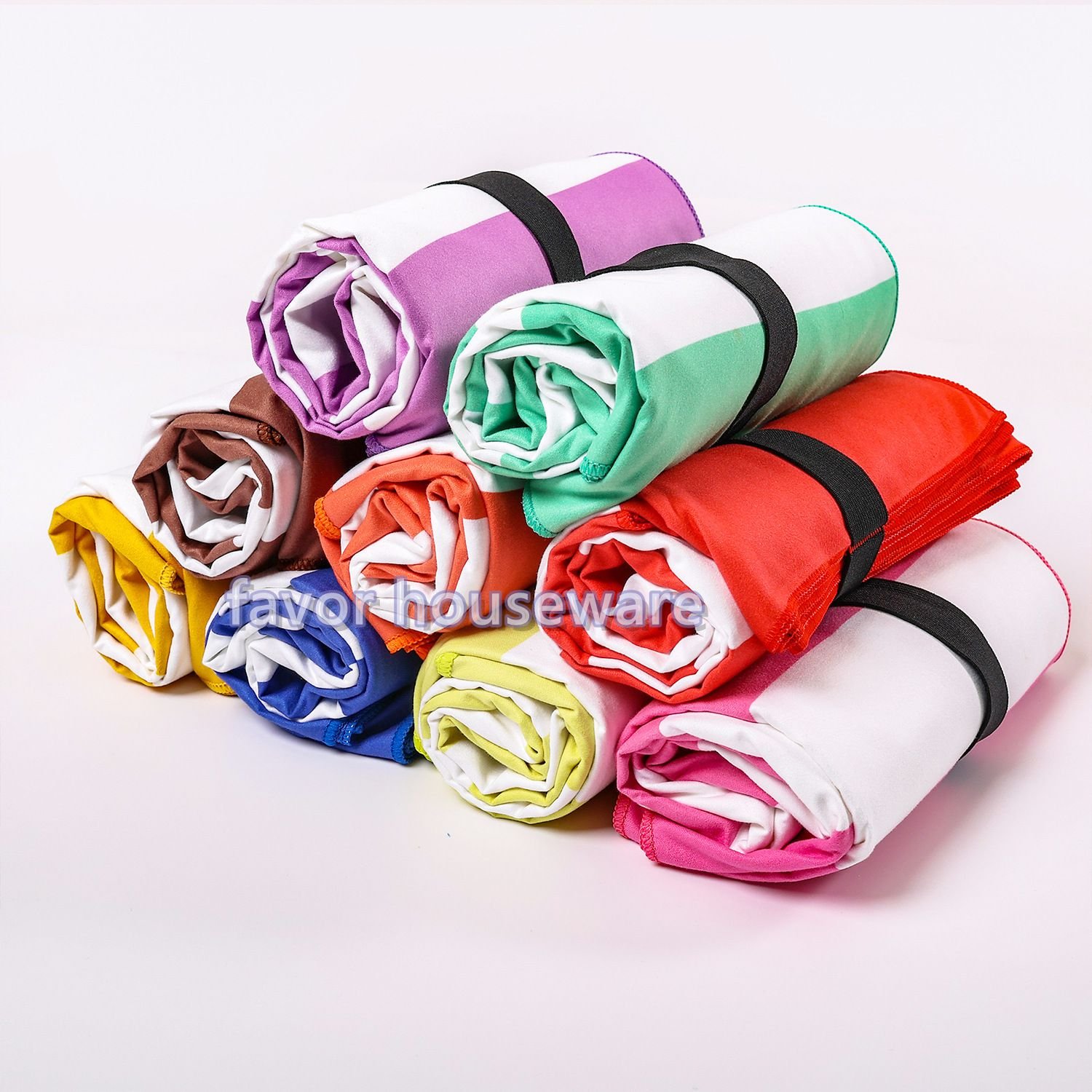
Special Features to Look For
Modern packable beach towels often include helpful extras. Therefore, consider these features when making your choice:
Hanging loops: These simple additions make drying much easier. In fact, you can hang your towel anywhere – shower rods, tree branches, or backpack straps. Additionally, loops prevent your towel from blowing away in windy beach conditions.
Zip pockets or valuables pouches: Some premium towels include small pockets for phones or keys. As a result, you can relax at the beach without worrying about your belongings.
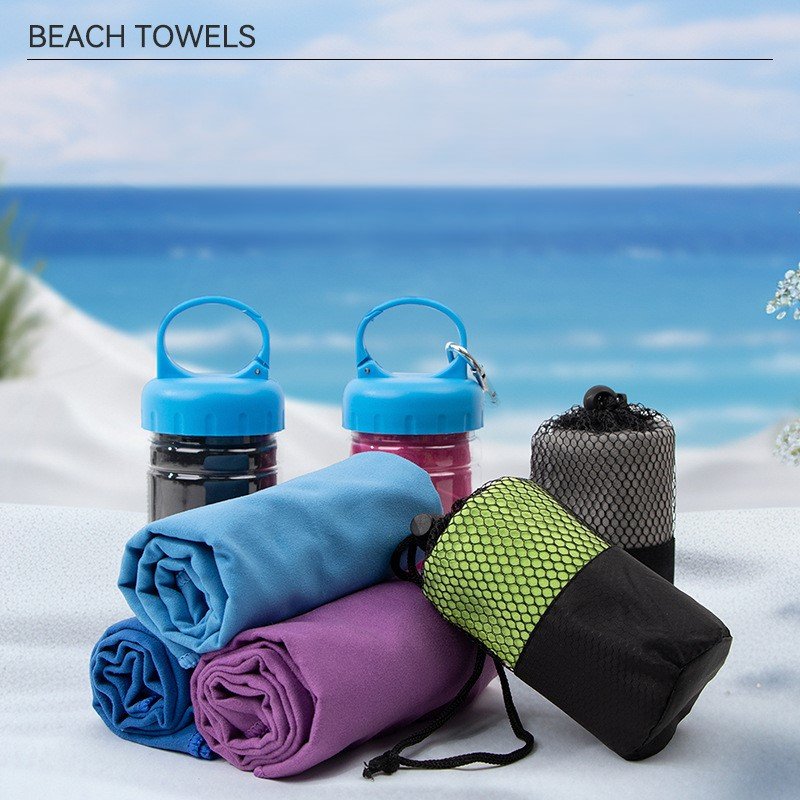
Integrated carrying pouches: Most quality travel towels come with their own storage bag. Moreover, these pouches compress the towel and keep it separate from other luggage items. Our surf poncho towels also feature convenient storage solutions.
Antimicrobial treatments: These finishes help prevent odor development. Consequently, you can pack your towel before it’s completely dry without creating bad smells.
Sand-resistant surfaces: Smoother fabrics naturally resist sand accumulation. Therefore, you spend less time shaking out your towel after beach use.
Key Features Comparison Guide
Understanding specific feature differences helps you make informed decisions. Furthermore, this comprehensive comparison shows exactly what to expect from different towel types.
| Feature Category | Cotton Terry Towel | Standard Microfiber | Premium Travel Towel |
|---|---|---|---|
| Absorbency | Excellent (holds 7× weight) | Very good (holds 4-5× weight) | Good (holds 3-4× weight) |
| Wicking Speed | Slow | Fast | Very fast |
| Durability (wash cycles) | 500+ cycles | 300-400 cycles | 200-300 cycles |
| Comfort/Softness | Very soft, plush | Smooth, less plush | Technical feel |
| Cost (standard size) | $10-25 | $15-35 | $30-60 |
| Best Performance | Home comfort | Travel versatility | Ultralight adventures |
This data comes from our extensive testing at Favor Houseware. Additionally, we continuously update our standards based on customer feedback and industry developments.
Do Quick Dry Travel Towels Really Work?
The short answer is yes – but the performance varies by quality and design. Moreover, understanding how these towels work helps set realistic expectations. Let’s examine the science and real-world performance.
How Fast Do They Dry?
Quick dry travel towels are engineered using advanced fabric technology. Specifically, they wick moisture across a large surface area so water evaporates faster. In fact, the fine microfiber construction creates thousands of tiny channels that spread water efficiently.
Here’s what actually happens when you use a quick-dry towel:
- Water absorption: The thin fibers quickly pull moisture from your skin or hair
- Water spreading: Capillary action distributes water across the entire towel surface
- Rapid evaporation: The large surface area and thin material allow fast air circulation
- Complete drying: Most towels reach “nearly dry” state within 2-4 hours
Real-world drying times depend on several factors. Therefore, conditions matter as much as the towel itself:
- Humidity levels: Dry climates see faster drying than humid tropical areas
- Air circulation: Hanging in breeze works better than laying flat
- Sunlight exposure: Direct sun dramatically speeds evaporation
- Towel thickness: Thinner towels always dry faster than thicker ones
According to testing by Backpacker Magazine, quality microfiber towels dry approximately 2-3 times faster than equivalent-sized cotton towels under identical conditions.
Our Manufacturing Tests (Favor-Houseware Data)
As a leading towel manufacturer in China, we conduct rigorous testing on every product line. Furthermore, we believe in transparency and data-driven quality assurance. Here are our actual test results:
| Test Parameter | Cotton Beach Towel | Our Microfiber Travel Towel | Performance Improvement |
|---|---|---|---|
| Weight (70×140cm) | 650g | 220g | 66% lighter |
| Packed Volume | 2,800 cm³ | 850 cm³ | 70% more compact |
| Drying Time (indoor, 22°C, 50% humidity) | 8.5 hours | 3.2 hours | 62% faster |
| Drying Time (outdoor, sun, light breeze) | 5.5 hours | 1.8 hours | 67% faster |
| Odor Resistance (hours sealed wet) | 4-6 hours | 12-16 hours | 2-3× longer |
| Washing Cycles (before performance decline) | 500+ | 350+ | Excellent durability |
These results demonstrate clear performance advantages. Additionally, our antimicrobial treatments significantly extend odor resistance. In other words, you can pack your towel sooner without worrying about bad smells developing.
“We test every towel design through 50+ washing cycles before production. This ensures consistent performance and helps us refine our microfiber blends for optimal results.” – Favor Houseware Quality Team
Simple tests you can try at home include comparing hang time against a cotton beach towel or weighing your towel before and after drying. Moreover, these experiments help you understand your specific towel’s performance characteristics.
Sand-Resistant & Odor-Resistant Design
Two common frustrations with beach towels are sand accumulation and musty smells. Fortunately, modern compact beach towels address both issues through smart design choices. Let’s explore how these features work in practice.
Why Microfiber Resists Sand Better
Traditional cotton terry towels have deep loops that trap sand particles. In contrast, microfiber travel towels feature smoother, tighter weaves. As a result, sand sits on the surface rather than embedding deeply into the fabric.
The science behind sand resistance is straightforward:
- Smooth surface texture: Fewer places for sand to lodge and hide
- Tighter weave structure: Sand particles can’t penetrate between fibers
- Thinner overall construction: Less fabric depth means less sand storage
- Quick-shake effectiveness: A few vigorous shakes remove most sand
This makes beach cleanup much easier and faster. Furthermore, your towel stays cleaner longer between washes. In fact, many travelers report using their microfiber towels multiple beach days before needing to launder them.
Odor-Resistant Technologies
Bad smells develop when bacteria grow in damp environments. Therefore, wet cotton towels packed in luggage create perfect conditions for odor-causing microorganisms. However, quick dry travel towels combat this problem in two ways.
Fast drying prevents bacterial growth: The primary defense against odor is quick evaporation. Simply put, when your towel dries within a few hours, bacteria don’t have time to multiply significantly. Moreover, this natural defense works without any chemical treatments.
Antimicrobial treatments add extra protection: Many premium travel towels include special finishes that actively inhibit bacterial growth. Specifically, these treatments use silver ions or other antimicrobial agents embedded in the fibers. As a result, even if you pack a slightly damp towel, it resists odor development for much longer.
Our testing shows that untreated cotton towels develop noticeable odor within 4-6 hours when sealed wet. In comparison, our antimicrobial-treated microfiber towels remain fresh for 12-16 hours under identical conditions. This difference proves especially valuable during long travel days or multi-destination trips.
For additional towel options with enhanced performance features, explore our surf change robe collection, which uses similar quick-dry and odor-resistant technologies.
How To Care For Your Lightweight Beach Towel
Proper care extends your towel’s lifespan and maintains its performance. Moreover, microfiber towels require slightly different treatment than traditional cotton. Therefore, following these guidelines ensures you get maximum value from your investment.
Washing Instructions for Longevity
Rinse after each use: Always rinse out salt water, chlorine, or pool chemicals immediately after beach or swimming use. In fact, these substances can degrade fibers over time and reduce absorbency. Additionally, a quick freshwater rinse removes sand and prevents buildup.
Machine wash in cool or warm water: Use temperatures between 30-40°C (86-104°F) for best results. Higher temperatures can damage delicate microfiber structures. Furthermore, cooler water saves energy and protects the environment.
Use mild detergent only: Harsh chemicals strip away the towel’s technical properties. Therefore, choose gentle, liquid detergents without added dyes or fragrances. In other words, simpler products work better for technical fabrics.
Avoid fabric softeners completely: This is crucial for maintaining performance. Fabric softeners coat fibers and dramatically reduce absorbency and quick-dry capabilities. Additionally, they can cause your towel to feel slippery and less effective.
Skip the bleach: Chlorine bleach damages microfiber and reduces its lifespan. Moreover, oxygen bleach works better for occasional deep cleaning if needed.
Drying and Storage Best Practices
Air dry whenever possible: Hang your lightweight beach towel to dry naturally. This method preserves fiber integrity and saves energy. Furthermore, most travel towels dry completely within a few hours when hung properly.
Views: 1