Best Beach Towel Features People Regret Ignoring (2025)
Are you tired of carrying heavy, sandy towels home from the beach? Moreover, do you want a towel that dries quickly and packs easily? In this complete guide, you’ll discover everything about modern beach towel features. Therefore, you can choose the perfect towel for your next beach trip.
Beach Towel Comparison: Which Type Is Right for You?
| Feature | Microfiber | Turkish Cotton | Regular Cotton Terry |
|---|---|---|---|
| Sand Resistance | Excellent – only 0.1 oz remains | Very Good – tight weave repels sand | Poor – loops trap sand |
| Drying Time | 1 hour (3× faster than cotton) | 2-3 hours | 4-6 hours |
| Weight | Very Light (300-400 GSM) | Light to Medium (350-450 GSM) | Heavy (500-700 GSM) |
| Absorbency | Up to 7× its weight | Good absorption, natural feel | Excellent but stays wet longer |
| Best For | Travel, backpacking, gym | Eco-conscious buyers, versatile use | Home pools, resort lounging |
As you can see from the table above, each beach towel type has unique benefits. Furthermore, understanding these differences helps you make a smart choice. Now, let’s dive deeper into the specific features that matter most.
🏖️ Beach Towel Features at a Glance
- Microfiber dries 3× faster than traditional cotton towels in the same conditions
- Sand-free towels retain only 0.1 oz of sand after shaking, compared to several ounces in terry towels
- Best GSM range: 300-400 for travel and quick-dry; 500+ for luxury comfort
- Standard beach towel size: 70-80cm × 150-160cm (perfect for most adults)
- Microfiber absorbs up to 7× its weight in water while staying lightweight
- Oversized towels: 90-100cm × 180-200cm for extra coverage and sharing
What Makes a Beach Towel Truly Sand-Free?
Have you ever wondered why sand sticks to some towels but not others? Interestingly, the secret lies in how the fabric is woven. Sand-free beach towels use special construction that keeps sand on the surface instead of trapping it inside.
The Science Behind Sand-Free Technology
Traditional terry cloth towels have tiny loops all over them. These loops are great for drying off, but they also trap sand like little pockets. On the other hand, sand-free towels use a tight, smooth weave without loops. Therefore, sand simply sits on top of the fabric.
According to Consumer Reports testing, the best sand-resistant towels hold only about 0.1 ounces of sand after shaking. In contrast, regular terry towels can hold several ounces. That’s a huge difference when you’re packing up to go home!
Types of Sand-Free Beach Towel Materials
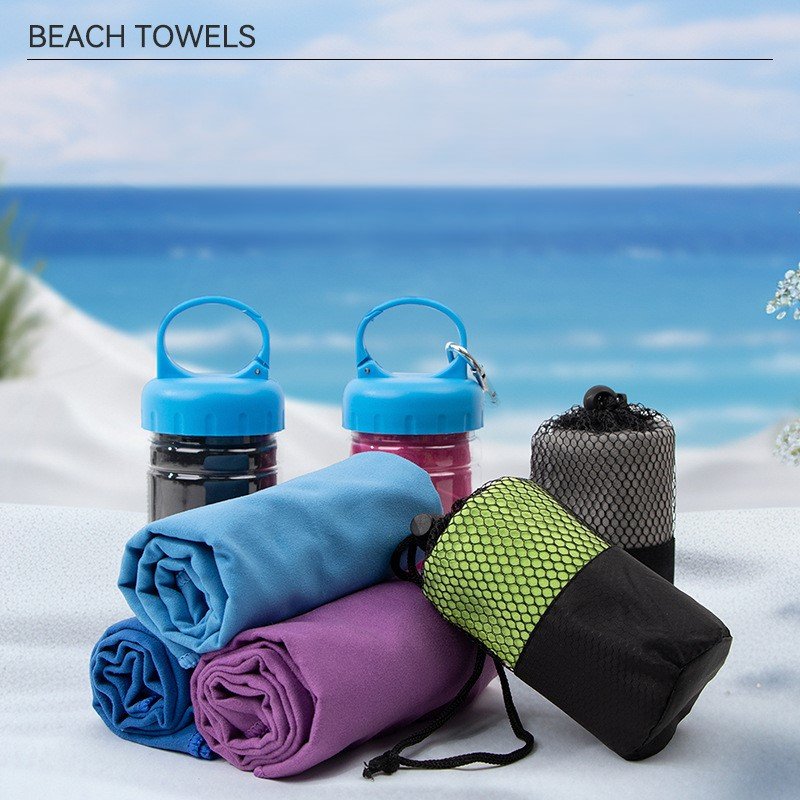
Several materials work well for creating sand-free towels. First, let’s look at microfiber beach towels. These synthetic towels have extremely fine fibers woven tightly together. As a result, sand cannot penetrate the fabric easily.
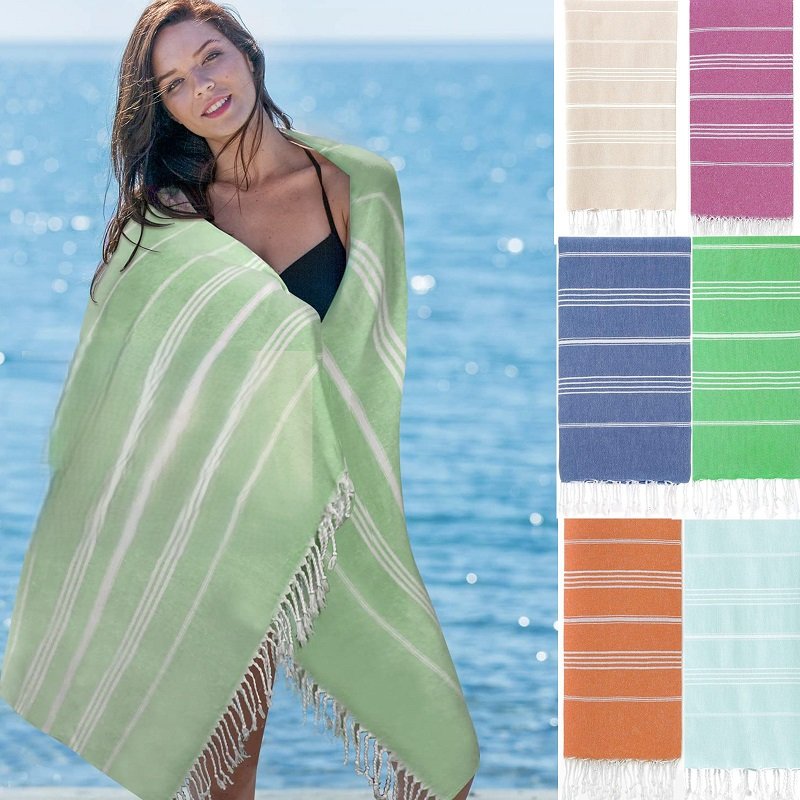
Second, Turkish hammam towels use flat-woven cotton instead of looped terry. Because of this traditional weaving method, they naturally resist sand. Additionally, they offer a soft, natural feel that many people prefer.
“After testing dozens of beach towels, we found that flat-weave and microfiber designs consistently outperformed traditional terry towels in sand resistance. A simple shake removes nearly all sand particles.” – Beach Gear Testing Lab
How to Test If Your Towel Is Really Sand-Free
Want to test your towel at home? Here’s a simple method:
- Sprinkle a handful of dry sand across your towel
- Wait 30 seconds, then shake the towel vigorously
- Check how much sand remains stuck to the fabric
- Compare with a regular towel using the same test
True sand-free towels should lose almost all the sand after just a few shakes. Moreover, any remaining sand should brush off easily with your hand.
Quick-Dry Technology: How Fast Should Your Beach Towel Dry?
Nobody likes carrying a soggy, heavy towel around all day. Fortunately, modern quick-dry beach towels solve this problem. But how fast should they actually dry?
The 3× Faster Drying Advantage
Research shows that microfiber beach towels dry up to 3 times faster than traditional cotton terry towels. For example, in direct sunlight, a quality microfiber towel can go from soaking wet to completely dry in about one hour. Meanwhile, a thick cotton terry towel might take 4-6 hours in the same conditions.
According to outdoor gear testing experts, quick-dry performance depends on three main factors:
- Fabric thickness: Thinner towels dry faster because there’s less water to evaporate
- Weave type: Flat weaves and waffle patterns allow better airflow than loops
- Material composition: Synthetic fibers release moisture faster than natural cotton
Why Quick-Dry Matters for Beach Lovers
Quick-drying beach towels offer several practical benefits. First, they help prevent mildew and musty odors. When a towel stays wet for hours, bacteria can grow quickly. However, fast-drying towels don’t give bacteria enough time to multiply.
Second, quick-dry towels keep your beach bag lighter. A wet cotton towel can double or even triple in weight. Conversely, a microfiber towel stays relatively light even when damp. This makes a big difference if you’re walking far from your car.
Third, you can use the same towel multiple times per day. For instance, you might swim in the morning, hang your towel in the sun, then use it again in the afternoon. This is especially helpful for families with children who swim frequently.
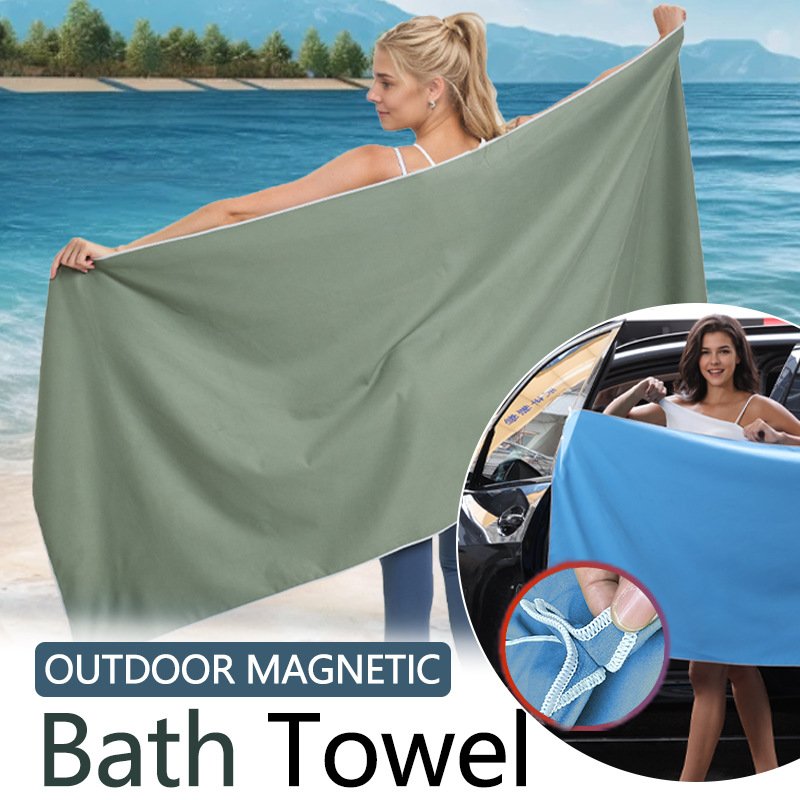
Quick-Dry Technology for Travelers
If you travel often, quick-dry towels become even more valuable. Many hotels and vacation rentals have limited towel supplies. Therefore, having your own quick-dry beach towel means you can wash it at night and use it again the next morning.
Furthermore, quick-dry towels pack smaller when dry. Because they’re typically thinner, they take up less space in your suitcase. This leaves more room for other vacation essentials.
Beach Towel Absorbency: What You Need to Know
While quick-drying is important, your towel still needs to actually dry you off! Luckily, the best modern beach towels balance both features effectively.
The Amazing 7× Water Absorption Rate
High-quality microfiber towels can absorb up to seven times their own weight in water. This sounds almost magical, but there’s real science behind it. Microfiber consists of extremely fine synthetic fibers (much thinner than human hair). These tiny fibers create massive surface area.
Think of it this way: imagine trying to soak up water with rope versus using a sponge. The sponge has way more tiny spaces to trap water. Similarly, microfiber’s ultra-fine structure creates countless tiny spaces for water molecules.
Understanding GSM (Grams Per Square Meter)
When shopping for beach towels, you’ll often see “GSM” mentioned. This measurement tells you how dense and heavy the fabric is. Generally speaking, higher GSM means more absorbent and plush, but it also means slower drying and heavier to carry.
Here’s a helpful breakdown of GSM ranges:
| GSM Range | Feel & Performance | Best For |
|---|---|---|
| 300-400 GSM | Lightweight, quick-drying, less plush | Travel, backpacking, gym bags |
| 400-500 GSM | Balanced absorbency and drying speed | Regular beach trips, camping |
| 500-600 GSM | Very absorbent, softer, slower drying | Home pools, resort use |
| 600+ GSM | Luxury plushness, heavy, very slow drying | Spa-like home experience only |
Balancing Absorbency with Practical Features
The sweet spot for most beach towels falls between 300-450 GSM. At this range, you get good absorbency while maintaining quick-dry performance. Additionally, these towels remain light enough for easy carrying.
However, if you primarily use your towel at home or resorts where weight doesn’t matter, higher GSM options provide a more luxurious feel. As noted by home product reviewers, the “best” GSM really depends on your specific needs and priorities.
Beach Towel Size Guide: Finding Your Perfect Fit
Size matters when it comes to beach towels! A towel that’s too small leaves you exposed to hot sand. Meanwhile, an oversized towel might be unnecessarily heavy and bulky. So, what’s the right size for you?
Standard Beach Towel Dimensions Explained
Most standard beach towels measure approximately 70-80cm wide by 150-160cm long (about 28-31 inches by 59-63 inches). This size works well for average-height adults. Furthermore, it provides enough coverage for lying down while remaining easy to pack.
For comparison, regular bath towels are typically smaller, around 70cm by 130cm. Bath towels are designed for quick drying after showers. However, beach towels need extra length so you can fully stretch out on the sand.
Size Categories and Best Uses
Small/Kids Beach Towels (50-60cm × 120-140cm)
- Perfect for children ages 3-10
- Easier for kids to carry and manage
- Takes up minimal space in bags
- Great for quick pool trips
Standard Adult Towels (70-80cm × 150-160cm)
- Fits most adults comfortably
- Best all-around size for daily use
- Good balance of coverage and portability
- Industry standard for most brands
Large Towels (80-90cm × 170-180cm)
- Extra room for tall people (over 180cm)
- More lounging space and comfort
- Better for sharing with a partner
- Provides good sand barrier around you
Oversized/XL Towels (90-100cm × 180-200cm)
- Maximum luxury and space
- Perfect for families with small children
- Great for picnics and beach parties
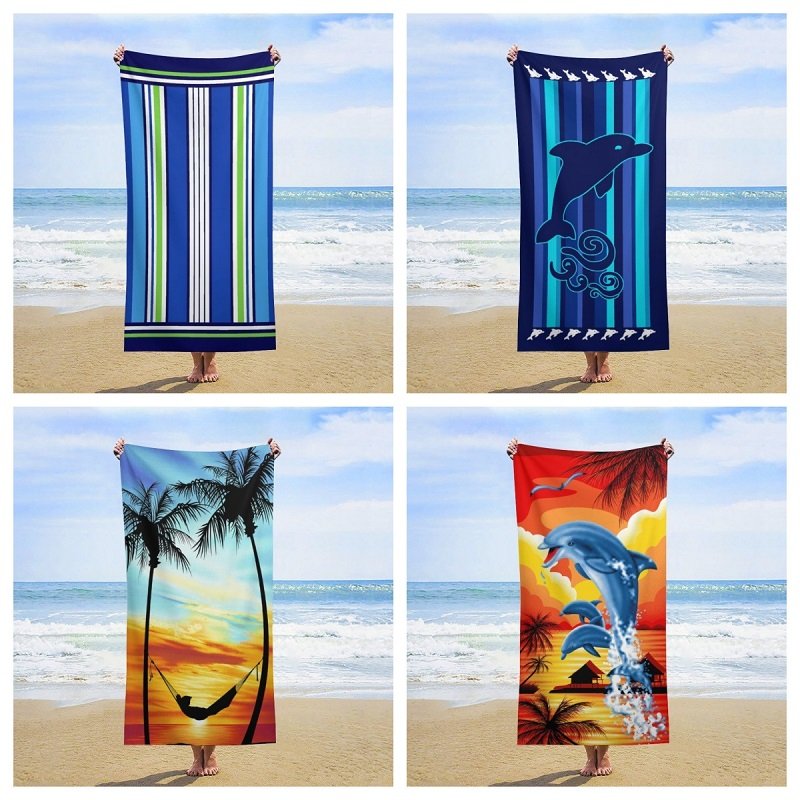
- Makes a statement with bold designs
Special Consideration: Round Beach Towels
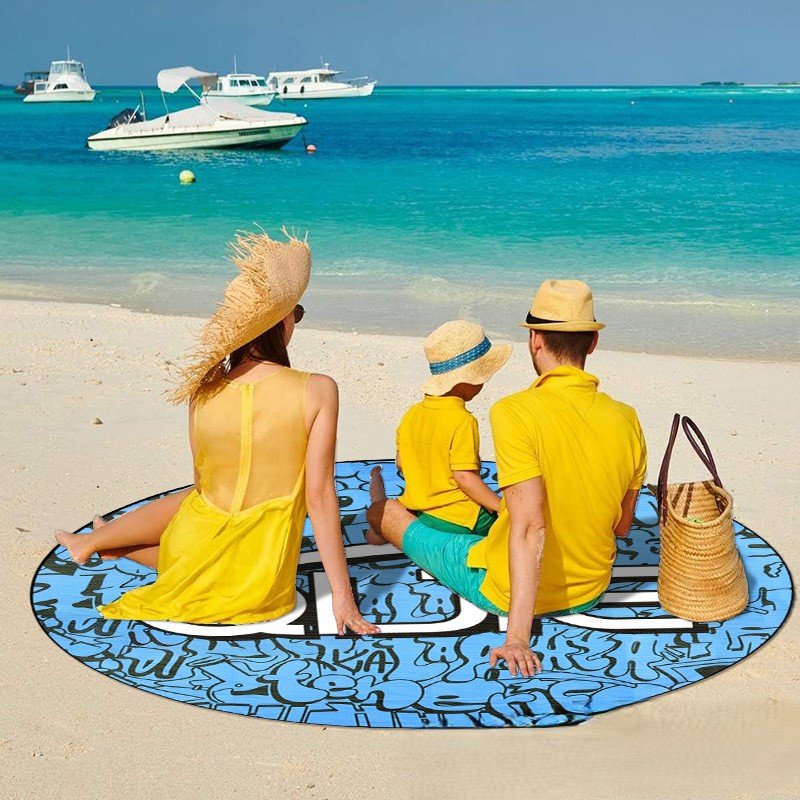
Recently, round beach towels have become trendy. These typically measure 150-160cm in diameter. While they look stylish and provide good coverage, they can be trickier to pack efficiently. Nevertheless, many people love them for Instagram-worthy beach photos!
If you’re interested in versatile options, check out surf poncho towels that combine drying functionality with easy changing privacy.
How Thickness and GSM Affect Comfort, Drying, and Portability
Now that you understand GSM basics, let’s explore how thickness impacts your actual beach experience. This knowledge helps you make trade-offs based on what matters most to you.
Lightweight Beach Towels (300-400 GSM)
These towels feel noticeably thinner in your hand. However, don’t let that fool you—they’re still highly functional! Lightweight microfiber towels in this range offer several advantages:
- Dry incredibly fast (often under 2 hours)
- Pack down to very small sizes
- Weigh almost nothing when dry
- Perfect for backpacking and travel
- Less expensive to ship (good for online orders)
The main drawback is that they provide less cushioning on hard surfaces. If you’re lying directly on sand or pebbles, you might feel uncomfortable. Additionally, some people find the thinner feel less luxurious than plush terry towels.
Medium-Weight Beach Towels (400-500 GSM)
This range represents the “Goldilocks zone” for many beach-goers. Medium-weight towels strike a good balance between absorbency, comfort, and practicality. They feel substantial without being heavy.
According to towel manufacturers, this GSM range works best for regular beach and pool use. You get adequate cushioning on the sand, good absorbency for drying off, and reasonable drying times. Moreover, they’re still light enough to carry comfortably.
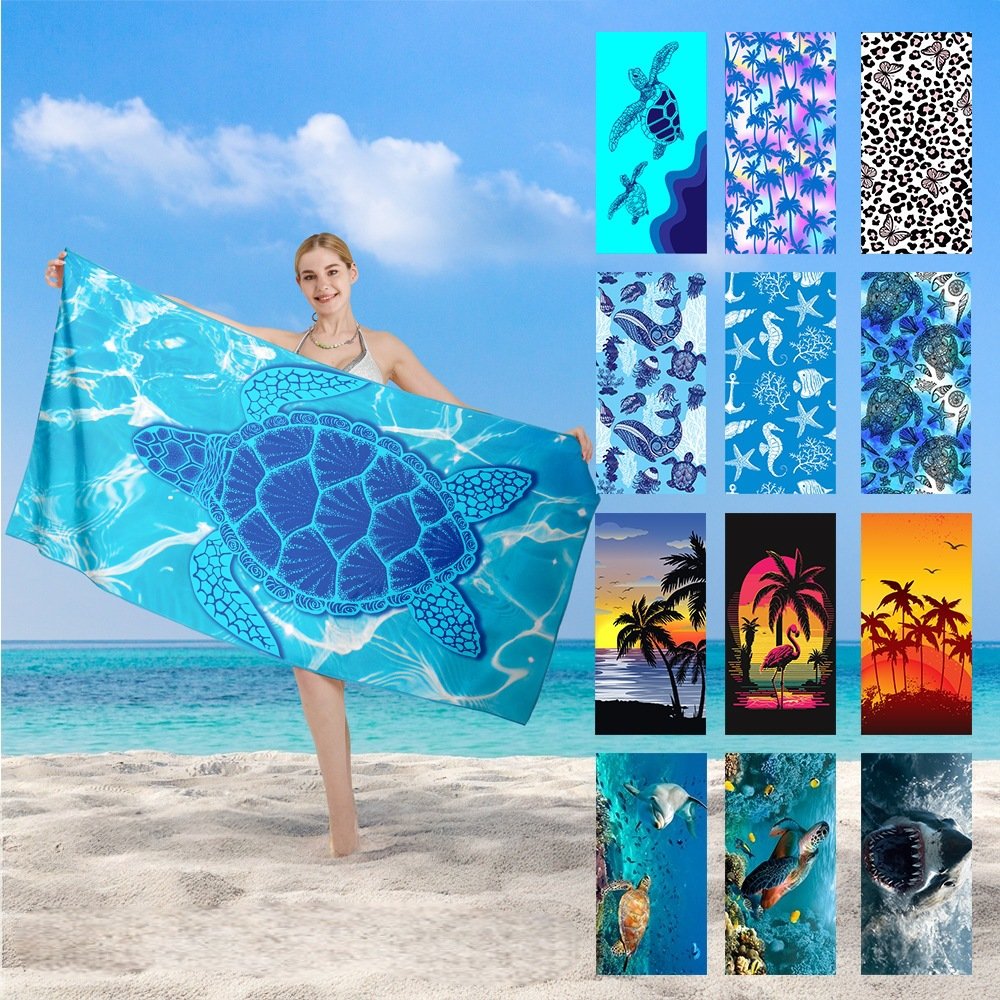
Premium-Weight Beach Towels (500-600+ GSM)
Thick, plush towels in this range feel wonderfully soft and luxurious. They provide excellent cushioning and absorbency. However, they come with significant trade-offs:
- Much slower drying (4-6 hours or more)
- Noticeably heavier, especially when wet
- Take up more space in bags and luggage
- More likely to trap sand in loops (if terry cloth)
- Higher cost due to more material
These towels work best for home pool use or resort vacations where you don’t need to carry them far. If you value that spa-like, cozy feeling above all else, premium-weight towels deliver.
“After years of testing, we recommend 350-450 GSM for travelers and 500+ GSM for home luxury. The difference in user experience is remarkable.” – Textile Product Review Magazine
Making Your GSM Decision
Ask yourself these questions to determine the right thickness:
- Will I need to carry this towel more than 5 minutes from my car?
- Do I swim multiple times per day (requiring fast drying)?
- Am I packing for air travel with luggage limits?
- Do I prioritize soft, plush comfort over everything else?
- Will I use this towel mainly at home or resorts?
Generally, answer “yes” to the first three questions means choosing 300-450 GSM. Answer “yes” to the last two suggests 500+ GSM would suit you better.
Microfiber vs Cotton Beach Towels: Which Is Better?
This is one of the most common questions people ask. The truth is, neither material is universally “better.” Instead, each has distinct advantages for different situations. Let’s compare them side-by-side.
Microfiber Beach Towels: Pros and Cons
👍 Microfiber Advantages
- Ultra-lightweight: Easy to carry all day
- Super absorbent: Holds up to 7× its weight in water
- Fast-drying: Ready to use again in 1-2 hours
- Sand-resistant: Smooth surface repels sand particles
- Compact: Folds down very small for packing
- Durable: Resists wear and tear effectively
- Affordable: Often less expensive than premium cotton
👎 Microfiber Drawbacks
- Less natural feel: Some find texture less cozy
- Can feel clingy: May stick to skin when very wet
- Environmental concerns: Synthetic material, releases microplastics
- Odor retention: Can develop smells if not dried properly
- Heat sensitivity: Cannot use high heat when drying
For the eco-conscious consumer, it’s worth noting that recycled beach towels made from reclaimed materials offer a more sustainable alternative.
Cotton Beach Towels: Pros and Cons
👍 Cotton Advantages
- Natural, soft feel: Many prefer the texture
- Breathable: More comfortable in hot weather
- Traditional luxury: That classic, plush towel experience
- Biodegradable: Better for the environment long-term
- Gets softer: Improves with washing over time
- No static cling: Doesn’t stick to skin
👎 Cotton Drawbacks
- Heavier weight: Especially when wet
- Slow drying: Can take 4-6 hours or more
- Sand magnet: Terry loops trap sand easily
- Bulkier: Takes more luggage space
- Mildew risk: Can develop odors if stored damp
- More expensive: High-quality cotton costs more
The Verdict: Choose Based on Your Priorities
Choose microfiber if you:
- Travel frequently or backpack
- Want the lightest, most packable option
- Need fast drying for multiple daily uses
- Hate dealing with sandy towels
- Prioritize practical performance over feel
Choose cotton if you:
- Prefer natural materials and fibers
- Want that traditional, cozy towel feel
- Mainly use towels at home or resorts
- Don’t mind extra weight and drying time
- Value environmental sustainability
Many beach lovers actually own both types! They use microfiber for travel and active beach days, then switch to cotton for relaxed poolside lounging at home.
Why Turkish Beach Towels Are Worth Considering
Turkish towels (also called hammam or peshtemal towels) have been used for centuries in Turkish bathhouses. Recently, they’ve become popular worldwide as beach towels. But what makes them special?
The Unique Construction of Turkish Towels
Unlike regular terry cloth towels, Turkish hammam towels use a flat-weave technique. This traditional method creates a smooth, thin fabric without loops. As a result, Turkish towels offer several advantages:
- Naturally sand-resistant: Flat weave means sand doesn’t get trapped
- Quick-drying: Thin construction dries faster than terry cloth
- Lightweight: Easy to carry and pack for travel
- Highly versatile: Works as towel, blanket, scarf, or wrap
- Gets softer over time: Improves with each wash
Natural Fiber Benefits
For people who prefer natural materials but want quick-dry performance, Turkish towels offer the best of both worlds. They’re made from 100% cotton, so they’re biodegradable and environmentally friendly. However, their flat weave allows them to dry much faster than traditional cotton terry towels.
According to textile experts, high-quality Turkish cotton uses long-staple fibers. These longer fibers create a smoother, stronger fabric. Moreover, they become increasingly soft with repeated washing, unlike some synthetics that can wear down over time.
Sustainability and Ethical Production
Many Turkish towel manufacturers prioritize sustainable practices. They often use organic cotton and natural dyes. Furthermore, the traditional weaving techniques support artisan communities in Turkey. If you care about ethical sourcing, Turkish towels represent a responsible choice.
“Turkish towels combine ancient craftsmanship with modern needs. They’re proof that traditional methods can still outperform high-tech alternatives in certain ways.” – Sustainable Textile Magazine
How to Choose the Right Beach Towel for Your Needs
Now that you understand all the features, let’s put it together into a practical decision-making framework. This will help you select the perfect towel based on your specific situation.
The Beach Towel Decision Checklist
Work through these questions to identify your ideal towel type:
1. What’s Your Primary Use Case?
- Frequent traveler: Choose lightweight microfiber (300-400 GSM)
- Regular beach-goer: Choose medium-weight quick-dry (400-450 GSM)
- Home pool only: Choose plush cotton terry (500-600 GSM)
- Camping/backpacking: Choose ultra-light microfiber (300-350 GSM)
- Resort vacations: Choose Turkish or medium cotton (400-500 GSM)
2. What’s Your Climate Like?
Climate significantly affects towel performance. In humid tropical areas, quick-dry towels become essential. Otherwise, towels may never fully dry between uses. Conversely, in hot, dry desert climates, even cotton terry towels dry reasonably fast.
- Humid climate: Prioritize quick-dry materials and lower GSM
- Dry climate: Any material works; choose based on comfort
- Windy beach areas: Consider heavier towels that won’t blow away
3. How Sensitive Are You to Fabric Feel?
Some people are very particular about towel texture, while others don’t mind. If you strongly prefer soft, plush towels, microfiber might disappoint you. On the other hand, if performance matters more than feel, microfiber excels.
4. What’s Your Storage and Carrying Situation?
- Small beach bag: Choose compact, lightweight options
- Long walk to beach: Prioritize lightest towels possible
- Car trunk storage: Size and weight matter less
- Air travel: Choose packable towels under 400 GSM
- Home storage: Any size works fine
Quick Recommendation Guide
| Your Situation | Recommended Towel Type | Key Features |
|---|---|---|
| Backpacker / World Traveler | Microfiber, 300-350 GSM | Ultra-light, super compact, fast-dry |
| Family Beach Trips | Turkish or microfiber, 350-450 GSM | Sand-free, quick-dry, easy to clean |
| Gym & Pool | Microfiber, 300-400 GSM | Compact, fast-dry, odor-resistant |
| Home Pool Luxury | Cotton terry, 500-600 GSM | Plush comfort, high absorbency |
| Eco-Conscious Buyer | Turkish organic cotton, 350-450 GSM | Natural, sustainable, biodegradable |
| Beach Sports (surfing, volleyball) | Microfiber or poncho style, 300-400 GSM | Quick-dry, sand-resistant, functional |
For surfers and water sports enthusiasts, consider specialized options like surf change robes that provide both drying and changing privacy.
Durability, Care, and Eco Considerations
A good beach towel should last for years, not just months. Proper care extends towel life significantly. Additionally, understanding environmental impacts helps you make responsible purchasing decisions.
Beach Towel Durability: What to Expect
High-quality microfiber towels are extremely durable. They resist wear, tearing, and fraying effectively. With proper care, a good microfiber beach towel can last 5-7 years or more even with frequent use. The synthetic fibers don’t break down easily.
Cotton towels have different durability characteristics. Terry cloth loops can snag on rough surfaces, zippers, or jewelry. Once loops start pulling, the towel gradually deteriorates. However, flat-weave Turkish towels avoid this problem since they have no loops to snag.
According to home care experts, proper washing extends towel life by 50% or more compared to careless laundering.
Essential Care Tips for Beach Towels
Washing Guidelines
- Rinse after every beach use: Remove salt, sand, and sunscreen immediately
- Use cold or warm water: Hot water isn’t necessary and can damage fibers
- Choose mild detergent: Harsh chemicals break down fabrics faster
- Skip fabric softener: It coats fibers and reduces absorbency dramatically
- Avoid bleach: Especially on colored towels, as it causes fading
- Wash similar colors together: Prevents color bleeding, especially on first wash
“Never use fabric softener on quick-dry towels. It creates a water-repellent coating that defeats the entire purpose of the towel. Your absorbency will drop by 50% or more.” – Textile Care Association
Drying Best Practices
How you dry your towels matters almost as much as how you wash them. Follow these guidelines:
- Air drying is ideal: Hang in direct sunlight when possible
- Tumble dry on low heat: High heat damages elastic fibers in microfiber
- Remove promptly: Don’t leave damp towels bunched up in the dryer
- Shake before drying: Helps towels dry evenly and stay fluffy
- Avoid over-drying: Stop the dryer while towels are slightly damp
Storage Recommendations
Proper storage prevents mildew, odors, and premature wear:
- Always store towels completely dry
- Keep in cool, well-ventilated areas
- Fold loosely rather than tightly compressing
- Avoid damp basements or closed cars
- Rotate towels regularly if you own multiple
Environmental Impact and Sustainability
Both microfiber and cotton have environmental considerations. Understanding these helps you make informed choices aligned with your values.
Microfiber Environmental Concerns
Microfiber towels are made from synthetic materials, typically polyester or polyester-nylon blends. These petroleum-based materials have some environmental drawbacks:
- Microplastic shedding: Tiny plastic fibers release during washing
- Non-biodegradable: Will persist in landfills for hundreds of years
- Production impact: Manufacturing requires fossil fuels and energy
However, microfiber also has some positive environmental aspects:
- Long lifespan: Lasts much longer than cotton, reducing replacement frequency
- Water efficiency: Quick-drying means less dryer energy usage
- Lightweight shipping: Lower transportation emissions due to reduced weight
To minimize microplastic pollution, consider using a Guppyfriend washing bag that catches microfibers before they enter waterways.
Cotton Environmental Profile
Cotton is a natural, biodegradable material, which sounds purely positive. However, conventional cotton farming has significant environmental impacts:
- Water intensive: Cotton crops require enormous amounts of irrigation
- Pesticide use: Conventional cotton uses more pesticides than most crops
- Land use: Requires large agricultural areas
Positive aspects of cotton towels include:
- Fully biodegradable: Decomposes naturally at end of life
- Natural fibers: No microplastic pollution from washing
- Renewable resource: Can be grown sustainably with proper practices
For the most sustainable option, look for organic cotton towels or recycled materials. These minimize environmental harm while still providing natural fiber benefits.
Making Eco-Friendly Towel Choices
If sustainability is important to you, consider these guidelines:
- Buy quality over quantity: One excellent towel beats three cheap ones
- Choose organic cotton or recycled materials: Look for certifications like GOTS or OEKO-TEX
- Care properly to extend life: Proper maintenance prevents premature replacement
- Use washing bags for microfiber: Catches plastic fibers before they reach oceans
- Consider Turkish towels: Often made with traditional, sustainable methods
- Support responsible manufacturers: Research brands’ environmental practices
Frequently Asked Questions About Beach Towels
Let’s address the most common questions people have when shopping for beach towels. These answers will help clear up any remaining confusion.
Do sand-free beach towels really work?
Yes, they genuinely work! Independent testing shows that sand-resistant towels retain only about 0.1 ounces of sand after shaking, compared to several ounces in traditional terry towels. The key is the tight, smooth weave that prevents sand from getting trapped. While no towel is 100% sand-proof in all conditions, smooth microfiber and flat-weave Turkish cotton towels hold dramatically less sand than looped terry cloth.
The effectiveness depends on the fabric construction. Microfiber and tightly-woven cotton create surfaces where sand simply sits on top. A quick shake removes nearly all particles. Meanwhile, traditional terry loops act like tiny pockets that trap sand deep in the fabric.
Are microfiber beach towels better than cotton?
Neither is universally “better”—it depends on your priorities. Microfiber excels for travel because it’s lighter, more compact, and dries 3× faster than cotton. It can absorb up to seven times its weight in water. However, cotton offers a softer, more traditional feel that many people prefer. Higher-GSM cotton feels thicker and more cushioned on the sand, but it’s heavier, slower to dry, and often traps more sand in loops.
Choose microfiber if you prioritize performance, portability, and quick-drying. Choose cotton if you prefer natural materials, softer texture, and don’t mind extra weight and drying time.
What is the best size for a beach towel?
For most adults, a standard size of 70-80cm wide by 150-160cm long works perfectly. This provides enough coverage to lie on comfortably while remaining easy to pack and carry. Taller people (over 180cm) often prefer oversized towels around 90-100cm × 180-200cm for better coverage. Children and minimalist travelers benefit from smaller formats (60cm × 120-140cm) that save space and weight.
Consider how you’ll use the towel. For sunbathing and lounging, bigger is better. For quick swimming breaks and travel, standard or smaller sizes offer better portability.
How thick should a beach towel be?
The ideal thickness depends on your needs. A good quick-dry beach towel typically measures 300-400 GSM, which feels relatively thin but dries faster, packs smaller, and holds less sand. If comfort is your priority and drying speed matters less, higher-GSM cotton terry (500-600 GSM) offers more softness and cushioning but will be heavier and slower to dry.
For travel and frequent beach use, 350-450 GSM provides the best balance. For home pools and resorts where portability doesn’t matter, 500+ GSM delivers luxury comfort.
Are quick-dry beach towels worth it?
Absolutely, especially if you travel frequently or swim multiple times daily. Quick-dry towels reduce the time you carry heavy, wet towels. They lower the risk of musty smells from prolonged dampness. Additionally, they’re easier to pack since they don’t stay soggy in your bag. The main trade-off is that ultra-thin quick-dry towels may feel less plush than thick cotton.
The decision depends on whether portability and convenience matter more than luxury feel. Many people find the practical benefits far outweigh any loss in plushness.
What GSM is best for a beach towel?
Many brands recommend 300-400 GSM as the sweet spot for beach towels. This range combines reasonable absorbency with quick drying and good packability. Above this range, towels feel more luxurious and absorbent but are heavier, slower to dry, and more likely to hold sand. For frequent travelers and families, 350-450 GSM offers the best all-around performance.
If you primarily use towels at home or resorts and prefer maximum softness, 500-600 GSM delivers that spa-like experience.
Why are Turkish beach towels popular?
Turkish (hammam) towels use tightly woven cotton instead of looped terry, making them relatively thin, light, quick-drying, and less likely to trap sand. They also roll up compactly for travel. Furthermore, many use sustainably sourced organic cotton, appealing to shoppers who prefer natural fibers over synthetic microfiber.
Turkish towels offer a unique middle ground: natural material with performance characteristics closer to microfiber. Plus, they become softer and more absorbent with each wash, actually improving over time.
How should I care for a quick-dry or microfiber beach towel?
Wash in cold or warm water with mild detergent. Never use fabric softener—it coats fibers and destroys absorbency. Avoid bleach on colored towels. Tumble dry on low heat or air dry in sunlight. High heat can damage microfiber’s elastic properties. Washing separately from lint-producing fabrics reduces shedding and helps the towel last longer.
Always rinse towels after beach use to remove salt, sand, and sunscreen. This simple step prevents buildup that degrades fabric over time.
How do I choose between sand-free and regular beach towels?
Choose sand-free or quick-dry styles if you travel often, have long walks to the beach, or want to keep sand out of your car and luggage. They’re lighter, dry faster, and hold minimal sand. Choose regular thick terry towels if you mainly use them at resorts or pools near home and care more about softness and cushioned feel than weight and drying speed.
Many families find that sand-free towels make beach cleanup dramatically easier, especially with young children who tend to get sand everywhere.
Finding Quality Beach Towels: Manufacturing Matters
Not all beach towels are created equal, even within the same category. Manufacturing quality significantly impacts performance, durability, and satisfaction. As a professional beach towel manufacturer, we understand what separates excellent towels from mediocre ones.
Signs of Quality Manufacturing
When evaluating beach towels, look for these quality indicators:
- Tight, consistent weave: No loose threads or uneven sections
- Double-hemmed edges: Prevents fraying and extends towel life
- Colorfast dyes: Won’t bleed or fade significantly after washing
- Reinforced corners: High-stress areas should have extra stitching
- Hanging loop: Convenient for drying and storage
- Even thickness: Consistent GSM throughout the entire towel
Why Choose Favor Houseware
At Favor Houseware, we specialize in producing premium beach towels that combine all the essential features today’s consumers demand. Our manufacturing expertise ensures you receive products that perform exceptionally well in real-world conditions.
Our Manufacturing Capabilities
- Complete customization: Sizes from children’s to oversized
- GSM flexibility: 300-600 range for different market segments
- Multiple materials: Microfiber, Turkish cotton, cotton terry, and blends
- Sand-free technologies: Dual-layer and tight-weave construction
- Quick-dry optimization: Specialized weaving for fast drying
- Custom branding: Colors, patterns, logos, and packaging
- Sustainable options: Recycled materials and organic cotton available
Quality Assurance Standards
We maintain strict quality control throughout production:
- Consistent weave quality across all units
- Colorfast, fade-resistant dyes that meet international standards
- Durability testing for long product life
- Absorbency verification to meet specifications
- Compliance with textile safety regulations
Competitive Manufacturing Advantages
Working with an experienced manufacturer like Favor Houseware provides several benefits:
- Efficient production: Large-scale capabilities with quick turnaround
- Cost-effective pricing: Competitive rates for bulk orders
- Flexible MOQ: Reasonable minimum order quantities
- Expert consultation: Guidance on feature combinations for target markets
- Sample development: Prototypes before full production runs
- Global shipping: Reliable logistics to worldwide destinations
Beyond Beach Towels: Complete Product Range
While we specialize in beach towels, our manufacturing expertise extends to related products:
- Microfiber towels for sports and travel
- Turkish hammam towels for versatile use
- Surf poncho towels for changing convenience
- Surf change robes for water sports enthusiasts
- Kitchen towels and aprons for home use
- Cleaning cloths for commercial applications
This comprehensive range means you can source multiple product categories from a single, reliable manufacturer. This simplifies logistics, ensures consistent quality standards, and often provides better pricing through combined orders.
Conclusion: Choose Your Perfect Beach Towel Today
Selecting the right beach towel doesn’t have to be complicated. Now you understand the four critical features that define modern beach towels:
- Sand-Free Technology: Tight weaves in microfiber or Turkish cotton that repel sand instead of trapping it
- Quick-Dry Performance: Materials and construction that dry 3× faster, usually in just 1-2 hours
- Optimal Sizing: From compact 60cm options for kids to oversized 200cm towels for families
- Ideal Thickness: 300-400 GSM for travel and performance, 500+ GSM for luxury comfort
The perfect beach towel balances these features based on your specific needs. Travelers and active beach-goers benefit most from lightweight, quick-dry, sand-resistant towels. Meanwhile, home pool owners might prioritize plush comfort over portability.
Your Next Steps
Whether you’re a consumer seeking the perfect beach towel or a business looking for a reliable manufacturing partner, we’re here to help. At Favor Houseware, we combine advanced textile technology with years of manufacturing expertise.
Our towels excel in all four key areas—sand resistance, quick-drying, appropriate sizing, and optimal thickness. Furthermore, we offer complete customization to match your brand’s vision or personal preferences.
🏖️ Ready to Find Your Ideal Beach Towel?
Whether you need a single towel for your next vacation or bulk orders for your business, we can help you find the perfect solution.
For Individual Buyers: Browse our complete range of beach towels, from ultra-light microfiber to luxurious Turkish cotton. Find exactly what you need for your next adventure.
For Businesses & Retailers: Partner with a trusted manufacturer who understands quality, customization, and reliable delivery. We’ll help you create products your customers will love.
Explore Our Beach Towel Collection →📧 Questions about custom orders, bulk pricing, or specific requirements?
Contact our team for personalized assistance.
Visit our blog for more helpful guides on choosing and caring for beach towels, or learn more about our company and commitment to quality.
Last updated: December 2025 | Favor Houseware – Your Trusted Beach Towel Manufacturer
Views: 6